How to Understand the Latest Coffee Flavor Wheel? How to Identify Coffee Described Flavors
As the authoritative guide to coffee flavor, the flavor wheel lets newcomers quickly categorize the flavors they find in the cup — and once you've learned it and put it into practice, mastering coffee flavor is all but guaranteed.

Of course, it has to be understood correctly. So FrontStreet Coffee's mini-class begins today! Let us walk you through how to appreciate this colorful chart.
1. Reading the Flavor Wheel
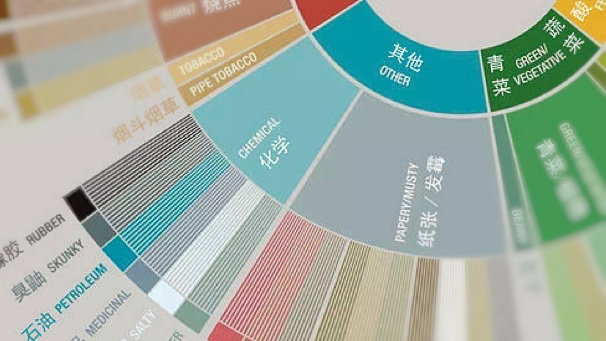
The wheel below was created by the SCAA, merging two earlier versions into one completely new edition. It identifies 85 flavor categories — five fewer than the old version's 90 — consolidating negative flavors and drawing finer distinctions among the positive ones.

The wheel has three rings — inner, middle, and outer. Think of them as the table of contents of an illustrated field guide: find the general category on the inner ring, then narrow down through the distinctions of the middle ring, and finally pinpoint the specific flavor on the outer ring. The inner ring is the outline, with nine main categories: herbal/plant, sour/fermented, fruity, floral, sweet, nutty/cocoa, spicy, roasted, and other.
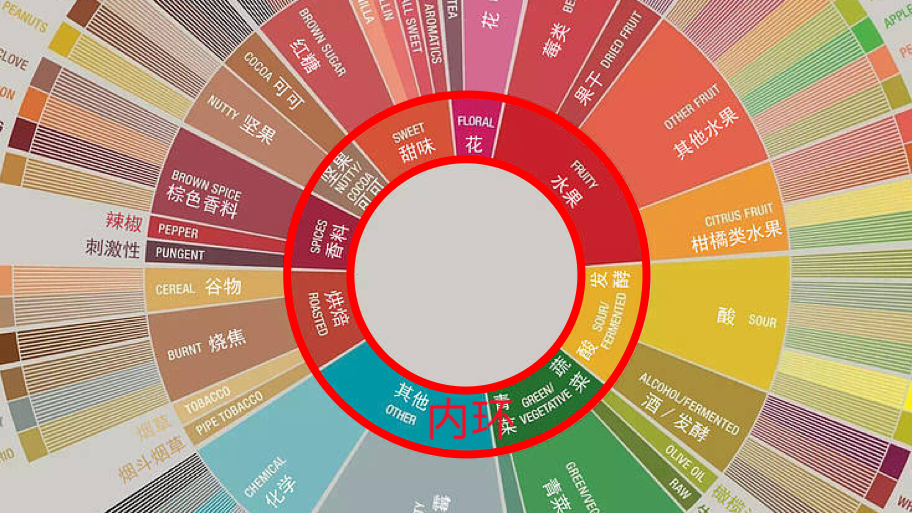
The middle ring splits each category into types. The inner ring's fruity category, for example, divides in the middle ring into berries, dried fruit, other fruits, and citrus.
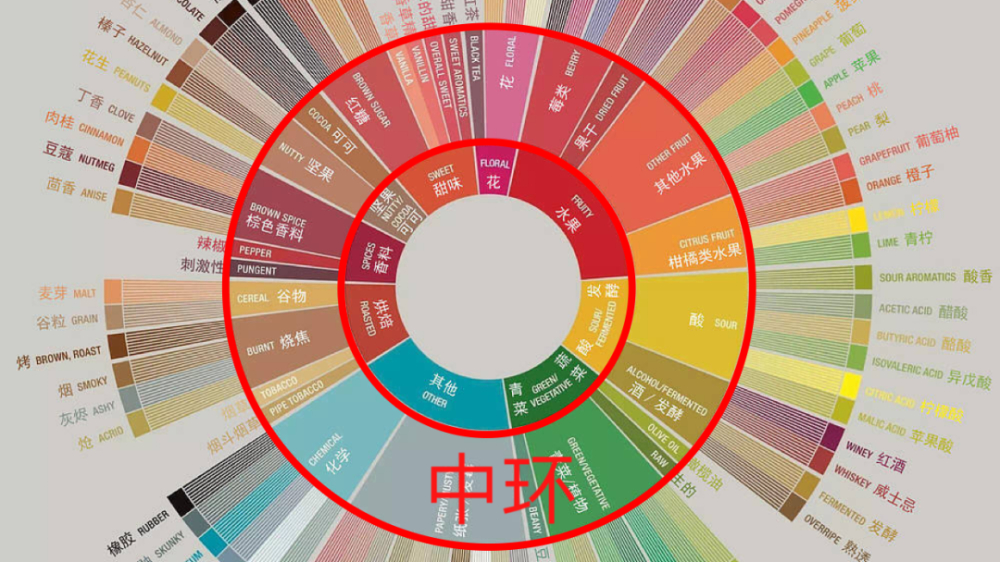
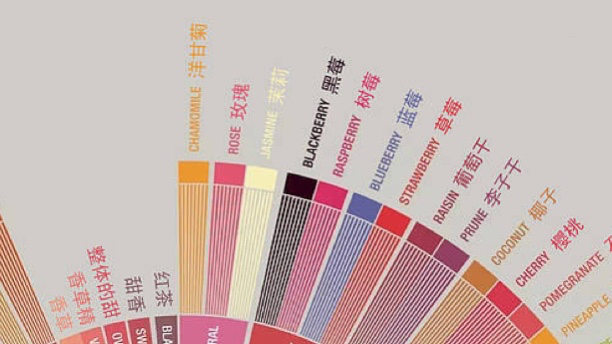
The outer ring breaks everything down to specifics. Citrus in the middle ring becomes distinct individuals on the outer ring: grapefruit, orange, lemon, lime. The floral category is special — besides flowers of various colors, it also includes black tea. When you taste black tea notes in coffee, they actually belong under floral.

Once you understand how the rings relate, you can start training your senses whenever you eat or drink, sorting flavors against the wheel. Then, when you drink coffee, you can identify flavors systematically. Say you taste sourness in a cup: start at the sour category (inner ring) — is it fruity sour, or more like lactic drinks or vinegar?
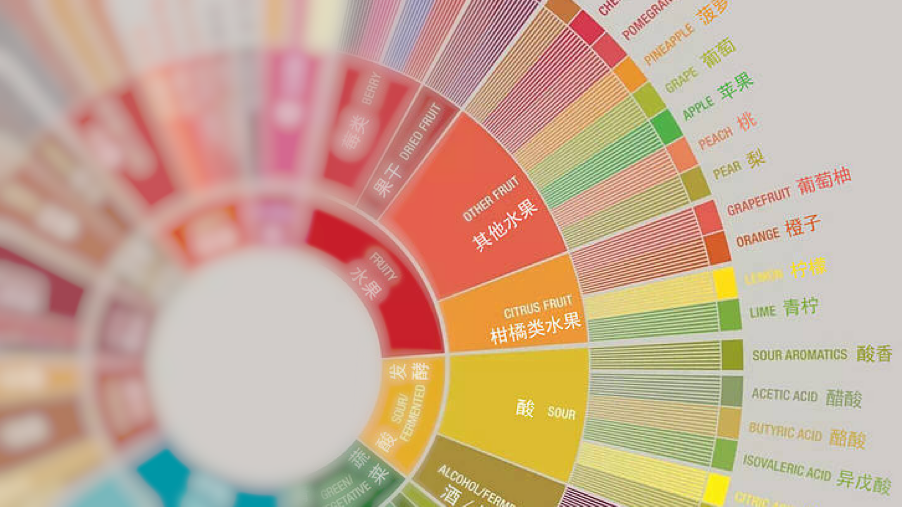
If it points to fruit, search within the fruity middle ring. Higher acidity with a fresh, fragrant edge might be citrus; higher sweetness with some sourness is very likely berry. Once you've narrowed it down, make the final call — which specific flavor is this sourness? Citrus, orange, or grapefruit? In practice these are quite distinct.
2. Color as an Association Anchor
Every color on the wheel was carefully chosen by the London creative agency One Darnley Road, designed so that the hue instantly evokes the corresponding concrete flavor: white jasmine flowers, orange oranges, pink grapefruit. Colors and aromas reinforce each other. Take a descriptor you often see — "white floral fragrance": that refers to elegant, fresh floral notes similar to jasmine.
Flavors in other categories lean toward negative tastes, which is why colors like blue and gray — nothing like food — were used for them.
3. Two Hidden Details of the Flavor Wheel
First: the gaps in the outer ring. The spacing between two specific flavors tells you how similar they are. Rose and jasmine, both floral, sit close together with low distinguishability between them; rose and chamomile are spaced farther apart because the two flavors are easy to tell apart. The gaps reveal flavor similarity.
Second: roast level. Aside from the "other" category, which can appear at any roast degree, the arrangement from floral to sweet traces a cycle from light to dark roast. Floral, fruity, and sour notes mostly show up in light and medium-light roasts; spices, nuts, and roasted notes — products of caramelization — appear more often in medium, medium-dark, and dark roasts, while sweet flavors occupy a significant share of both ends.

Understanding the wheel doesn't mean you can instantly taste every coffee flavor — it only helps you organize the general relationships between flavors. And the flavors we perceive go far beyond its reach. Since the wheel reflects mostly Western flavor references, cultural differences create blind spots: the "longan" note we often taste is comparatively hard for foreigners to identify.
- END -

FrontStreet Coffee Recommendation
Practicing flavor identification? Medium roast is the ideal training ground, since it balances acidity, sweetness, and bitterness in one cup. FrontStreet Coffee's Brazil Queen Estate — a rare Yellow Bourbon from the world's largest coffee producer — is gently sweet and mellow: medium roasted, it shows creamy peanut, chocolate, toasted bread, and sugarcane, and works in a pour-over, moka pot, or espresso machine.
For a sweeter medium roast, the FrontStreet Strawberry Candy Geisha Blend combines honey-processed Costa Rica with washed Panama Geisha: orange-blossom aroma and honeyed sweetness with a rounded finish. And to calibrate your palate against classic roast notes, the Jamaica Blue Mountain No. 1 — medium roasted to fuse acidity, bitterness, sweetness, and body into elegant harmony — offers chocolate, roasted nuts, cream, and caramel in a way few coffees can match.
Important Notice :
FrontStreet Coffee is a long-established specialty coffee roaster in Guangzhou China, selling freshly roasted beans from its own farm in Yunnan as well as dozens of carefully selected single-origin beans from around the world for both pour-over and espresso. The products deliver consistently excellent quality and great value, with shipping within 24 hours. Guangzhou's FrontStreet Coffee shop is recommended by many coffee lovers, and the beans are now available online at the Tmall 。
FrontStreet Coffee has moved to a new address:
FrontStreet Coffee Address: 315,Donghua East Road,GuangZhou
Tel:020 38364473
 Scan and follow the En Gafei WeChat official account. Please indicate that the reprint comes from "En Gafei".