
Why Does Coffee Have Sour Taste? How to Judge Whether Acidity in Coffee Beans is Good or Bad?
Why Does Coffee Have a Sour Taste? How to Judge Whether Acidity in Coffee Beans Is Good or Bad?
Some coffee lovers treat acidity as a defect — proof that the beans are poor quality or stale.

Others see acidic coffee as a hallmark of quality, the gateway to uplifting floral, fruity, and sugary flavors.

Acidity can be either an asset or a flaw. In everyday drinking, how do you tell the good kind from the bad?
Why Does Coffee Have Acidity?
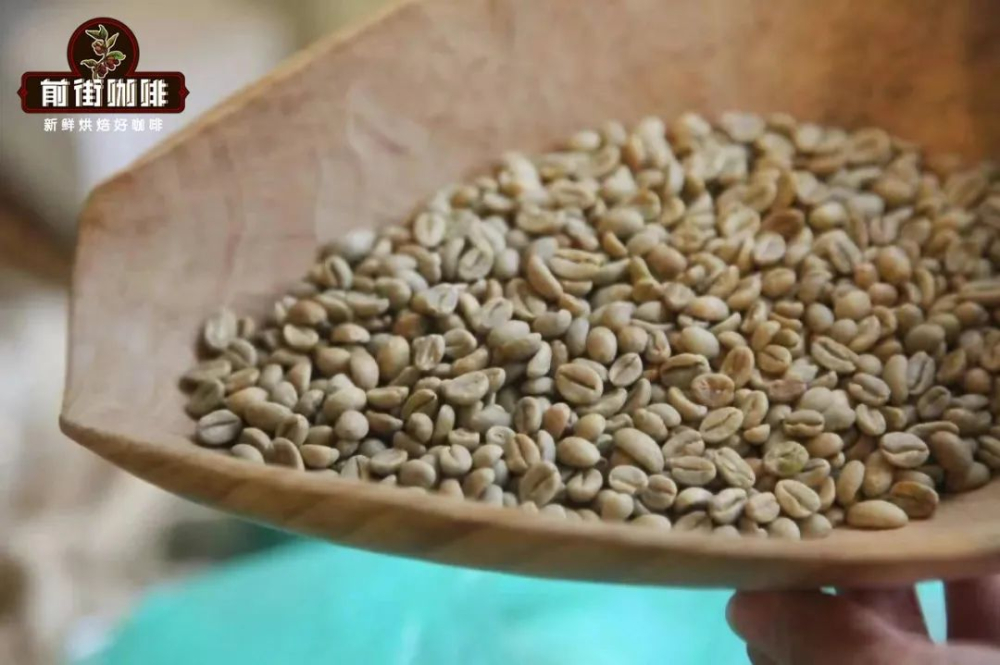
Coffee beans are naturally rich in organic acids, but most break down or vanish during high-temperature roasting. What survives into the roasted bean is limited to chlorogenic acid, quinic acid, citric acid, malic acid, phosphoric acid, acetic acid, and lactic acid.
Chlorogenic acid doesn't dissolve in water, so your taste buds never register its sourness — though it does leave a rough feeling on the tongue. Quinic acid, produced when chlorogenic acid degrades during roasting, is non-volatile and tastes bitter.
"So the acidity we taste comes from citric, malic, phosphoric, acetic, and lactic acids?"
FrontStreet Coffee's answer used to be "yes." But a recent research report suggests taste buds can only truly detect citric acid in coffee — and possibly phosphoric acid.
The Science Behind Coffee Acidity Perception
The acidity we taste isn't entirely from dissolved organic acids. A recent sensory-threshold study on coffee's organic acids, run by CoffeeMind researchers together with the University of Southern Denmark, found that when people report tasting certain organic acids in coffee, the liquid may actually contain no neurologically active concentration capable of triggering that sensation.
The researchers took beans from three origins — Kenya, Bolivia, and Brazil — roasted each to light, medium, and dark levels, then used cupping to measure the actual concentrations of various organic acids in the brewed liquid (green) and compared them against the sensory thresholds humans need to detect those acids (orange).
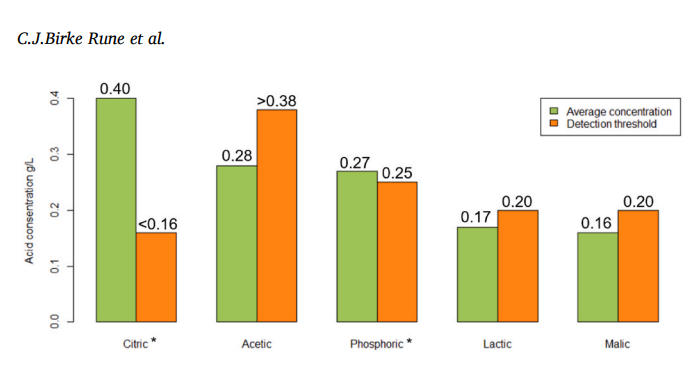
The result: apart from citric acid and phosphoric acid, the actual concentrations of acetic, lactic, and malic acids sit below what our taste buds can detect.
What does that mean? The "apple" we taste isn't coming from malic acid in the cup — and that Yakult-like tang isn't from the easily dissolved lactic acid either.
How We Perceive Non-Citric Acid Flavors
So why can we taste apple, Yakult, and other associations in coffee?
Under the latest SCA cupping form's definition of acidity, these non-citric "acid" flavors arise because the acidity of brewed coffee stimulates our sensory organs and sets off combinations of related peripheral perceptions.
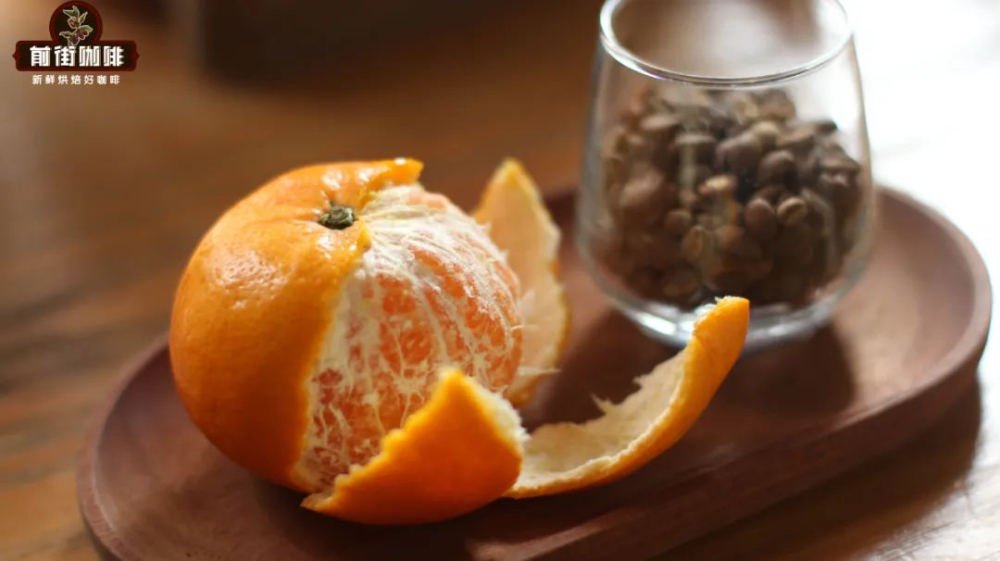
In other words, acidity perception isn't determined by acid alone. It's the interplay of varying degrees of sourness with sweetness and other sensations that triggers food associations. When we taste "apple," it may simply be that the sweet, refreshing sensation outshines the sour, leading us to recall the sweet-tart profile of apple juice.
Evaluating Coffee Acidity: Good vs. Bad
How, then, to judge acidity? The old SCA cupping form scored "acidity" as an isolated category, but in reality acidity can only be assessed alongside other sensations — making a standalone verdict unreliable.

That's why the latest SCA form folds acidity into the broader sensory experience, describing and distinguishing it through taste and other perceptions with two descriptors: "dry acidity" and "sweet acidity."
Undesirable "Dry Acidity / Astringency"
Think: herbaceous, plant-like sourness (typically from poor-quality beans that never fully matured); a grassy sourness like chewing on stalks (usually underdeveloped roasting or inherent quality issues); or wine-like acidity (often the result of extremely light roasts or immature beans).
Desirable "Sweet Acidity / Brightness"
Think: acidity with juice-like, fruit-like, and bright character. Coffees that show it are typically grown at high altitude (1200m+) and harvested only after the cherries have fully ripened — and full of sugar.
FrontStreet Coffee Recommendation
Want to taste "sweet acidity" done right? These medium-roast picks from FrontStreet Coffee balance brightness and sweetness beautifully:
FrontStreet Coffee Yirgacheffe Guodingding (Ethiopia) — The classic gateway bean: bright but gentle citrus and berry acidity wrapped in jasmine florals, with a green-tea-like sweet finish. Proof that good acidity never bites.
FrontStreet Coffee Kenya Cherry Tomato — A washed Kenya from the Thika region (1550-1750m, SL28 and SL34 varieties), given the local 72-hour double-wash fermentation. Expect vivid cherry tomato and dried plum acidity with full, fresh-pressed-juice body, mid-palate sweetness of snow pear and black plum, and a clean finish of yellow sugar and green tea.
FrontStreet Coffee Jamaica Blue Mountain No.1 — Where balance reigns. Cream, caramel, chocolate, nuts, honey, and a whisper of fruit, with soft acidity woven into a smooth, rounded cup — the benchmark for acidity in perfect harmony.
Important Notice :
FrontStreet Coffee is a long-established specialty coffee roaster in Guangzhou China, selling freshly roasted beans from its own farm in Yunnan as well as dozens of carefully selected single-origin beans from around the world for both pour-over and espresso. The products deliver consistently excellent quality and great value, with shipping within 24 hours. Guangzhou's FrontStreet Coffee shop is recommended by many coffee lovers, and the beans are now available online at the Tmall 。
FrontStreet Coffee has moved to a new address:
FrontStreet Coffee Address: 315,Donghua East Road,GuangZhou
Tel:020 38364473
 Scan and follow the En Gafei WeChat official account. Please indicate that the reprint comes from "En Gafei".

