
Pour-Over Coffee Extraction Techniques: How to Brew Juicy Flavors from Kenyan Coffee Beans
A friend recently complained to FrontStreet Coffee: "Every time I buy coffee beans, the flavor notes are all fruit—berries, citrus, stone fruit—but when I brew them at home, I either over-extract everything into bitterness or end up with a cup that's just thin and sour." Naturally, they turned to FrontStreet Coffee for advice on how to brew a cup with that juicy, fruit-punch mouthfeel.
Understanding Juicy Mouthfeel in Coffee
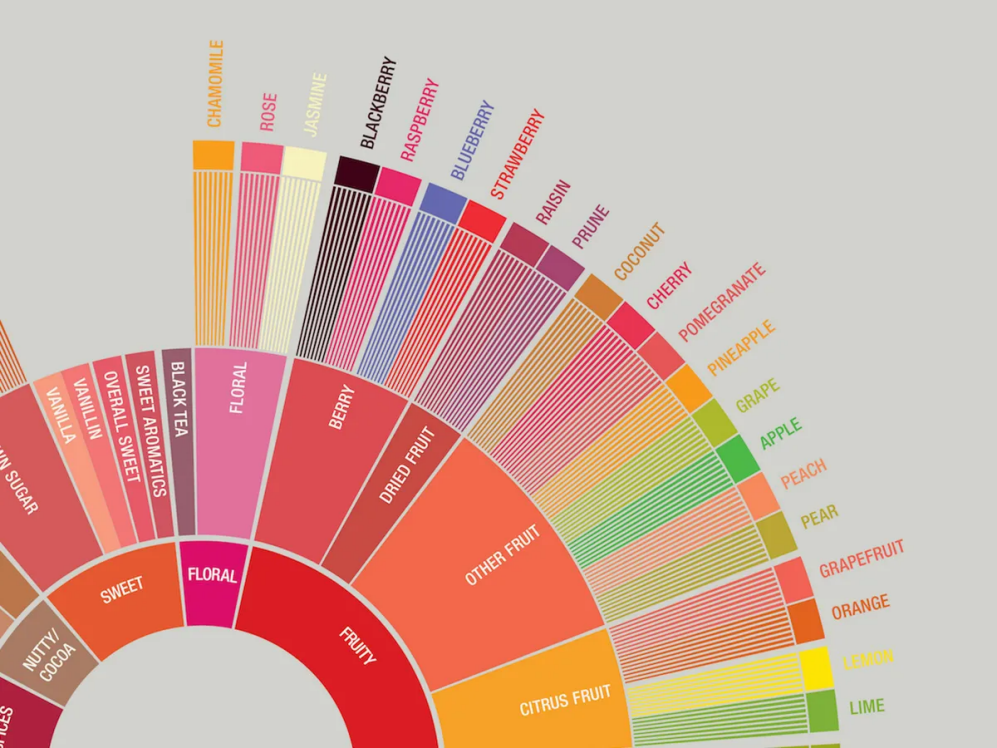
Flavor perception is personal—everyone maps aromas and tastes onto their own memories. But "juicy" has a fairly consistent definition among cuppers: it's the fruity aroma you pick up orthonasally (through the nose), combined with the acidity and sweetness that bloom retronasally (up the back of your throat) after you swallow—together, they recreate the experience of biting into fresh fruit.
The Foundation: Quality Beans Matter
You can't make something from nothing. To brew a cup that tastes like fruit juice, the beans themselves must carry floral and fruit aromatic compounds, and the roast level has to preserve acidity while letting sweetness shine. Juice-like acidity comes in many forms—citric, malic, tartaric, lactic—and fruit descriptors run the gamut: citrus, lemon, passion fruit, apple, pomelo, berries, grapes, apricot, peach, plum. To demonstrate, FrontStreet Coffee picked a classic representative of the juicy style: Kenya Asalia coffee beans.
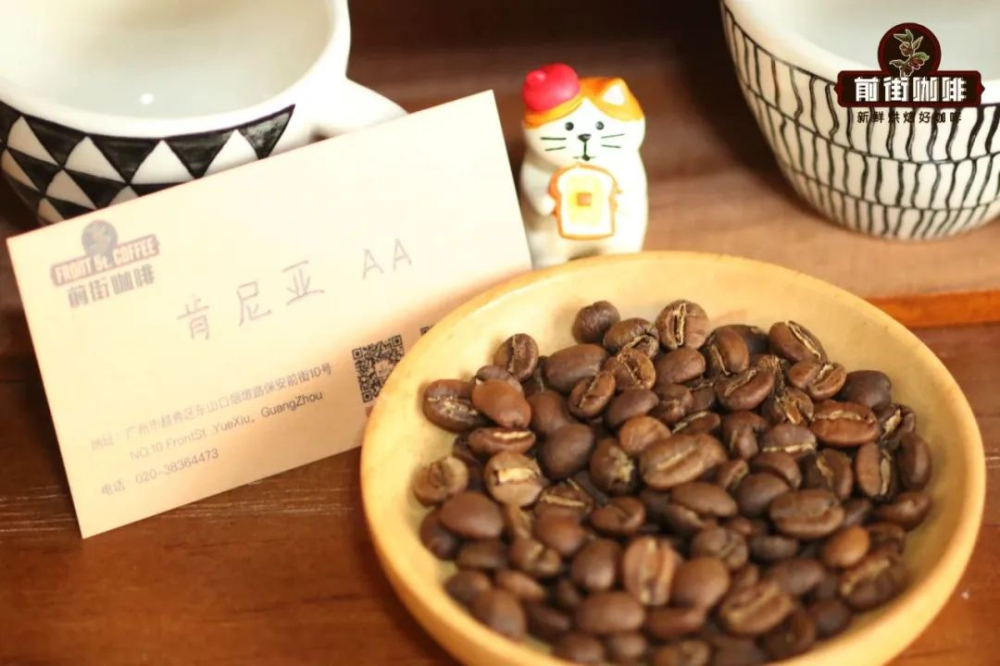
Kenyan beans are famous for their distinctive, layered berry character. When extracted well, they deliver dense acidity alongside rounded fruit sweetness, with a smooth, syrupy body that recalls the burst of juice when you bite into a ripe tomato.
Brewing Parameters for Enhanced Juiciness
Because this bean is loaded with acidic fruit flavors, FrontStreet Coffee wants the fruit character to pop, so the ratio is pushed to 1:16. Using FrontStreet Coffee's standard 15-gram single dose, that means pouring 240 grams of hot water in total. The setup: a V60 01 dripper, 91°C water, and a grind close to fine sugar (EK43s at setting 10, with an 82% pass rate on a #20 standard sieve).

Multi-Stage Extraction Technique
In multi-stage pouring, different compounds in the coffee bed extract at different speeds, with flavors releasing in a rough sequence of acid, then sweet, then bitter. To maximize the share of acidity and sweetness in the cup, the second pour—the one right after the bloom—should carry the most water, flushing out the bulk of those early-stage acidic compounds. Then tapering the water volume in the final stage keeps things balanced, rounding out sweetness and adding body. The result is a cup with vivid, dense fruit acidity that never feels hollow.
FrontStreet Coffee's experience is that a larger pour stream builds more layering and a more pronounced acidity, while a smaller stream yields softer, rounder sweetness. To capture both—bright fruit acidity, rich sweetness, plenty of layering, without a clipped finish or watery body—FrontStreet Coffee pours with a large flow first and a small flow last. Coffee: 15g; Total water: 240g; Water distribution: first segment 30g, second segment 130g, third segment 80g.
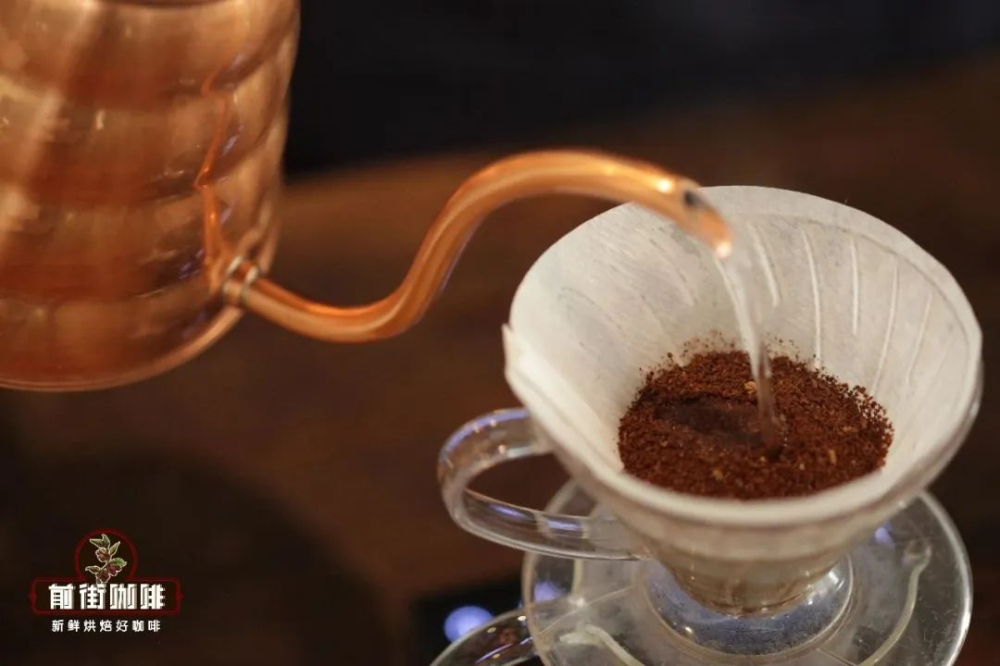
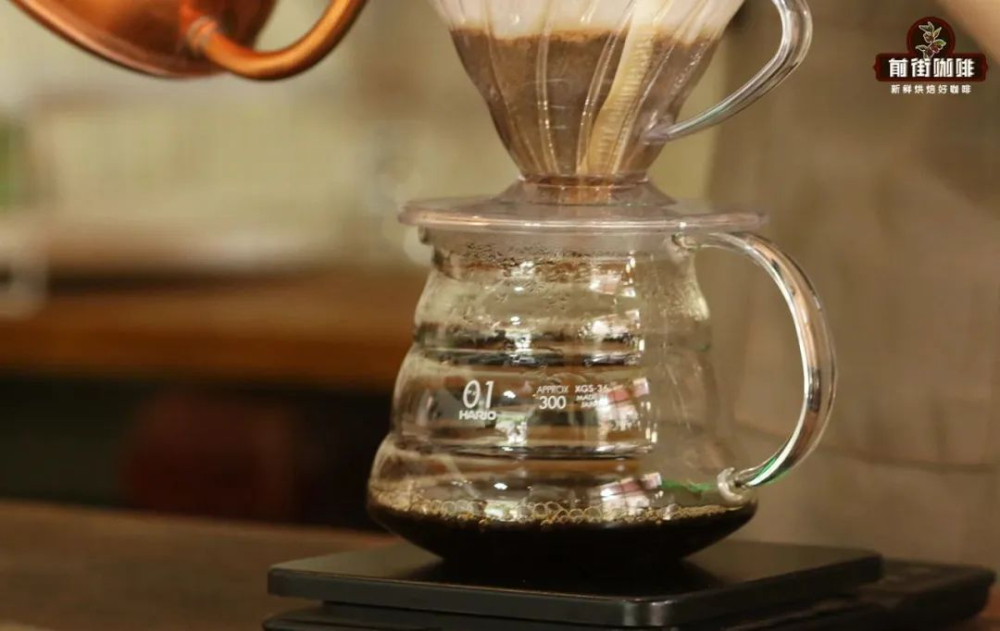
Start by pouring 30g of water and starting the timer; bloom for 30 seconds. For the second segment, use a medium-to-large flow (above 7g/s), pouring quickly in wide circles to add 130g of water. Once all the liquid has drained into the server, switch to a small flow (below 4g/s) and pour slowly in tight circles to add the remaining 80g of hot water. When the bed has fully drained, end the brew around the 2-minute mark (with about 10 seconds of leeway).
Important Technical Considerations
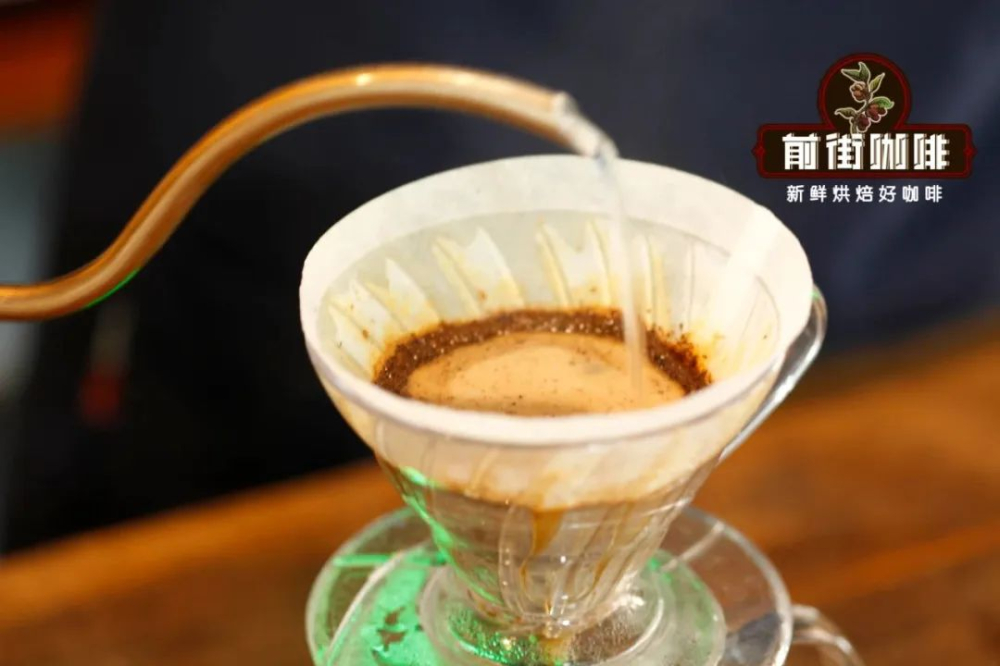
One caveat: because the second pour is so large, pouring too aggressively can pile the coffee bed into a high wall. Once the water level drops, the grounds along the dripper's edge may sit above the water line in the final pour and never get fully extracted, dragging the cup toward under-extraction. Keep the rising water level in check rather than chasing maximum height. FrontStreet Coffee aims for the water level to sit at roughly 3/5 of the dripper's height when the second segment is complete.
Iced Brew Variation
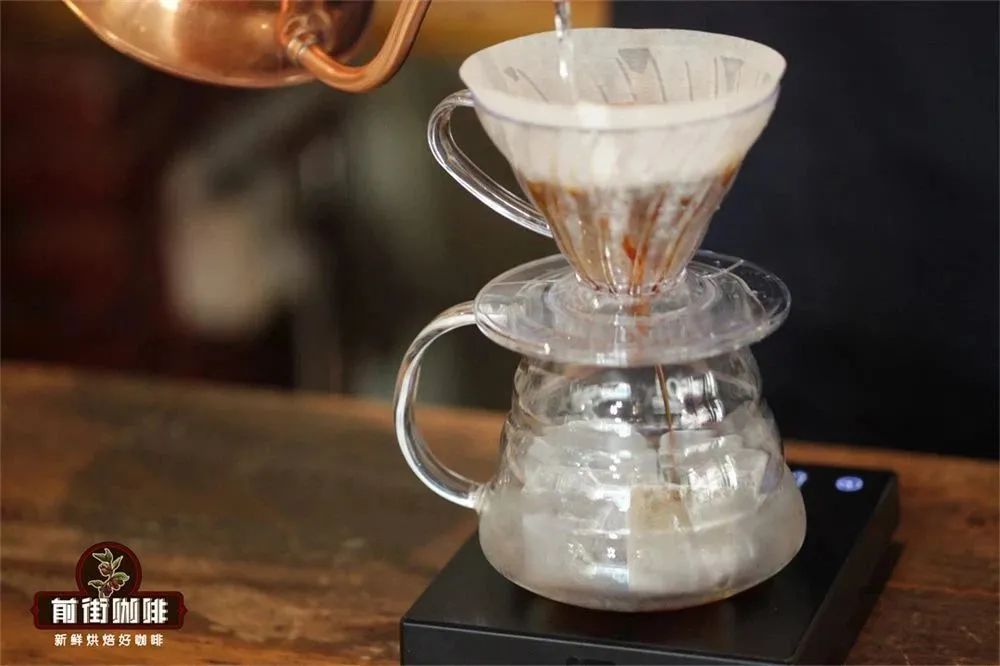
For iced brewing, the shorter contact time from the reduced water volume means you need to extract faster—so grind finer. FrontStreet Coffee dials to 9.5 here; measured on a #20 sieve, the iced-brew grind passes at 82–83%. Keep the 15g dose but shift to a 1:11 ratio: 165g of total water, of which 75g is ice. Water distribution: 30g, 90g, 45g.
Tasting Results
Brewed this way, the hot pour-over spotlights the dense berry acidity Kenyan coffee is loved for—the juiciness leaning toward small cherry tomatoes. The iced version drinks more like a chilled dark plum juice, with a finish of ripe blueberry sweetness. Perfect for summer.
FrontStreet Coffee Recommendation
If this style of bright, juice-like coffee appeals to you, FrontStreet Coffee recommends starting with these beans:
FrontStreet Coffee Kenya Cherry Tomato — a washed Kenyan from the Thika region, grown at 1,550–1,750 meters on SL28 and SL34 varieties and finished with a 72-hour double-washed fermentation. Expect vivid cherry-tomato and dried-plum acidity, a full fruit-juice body, and a clean finish of yellow sugar and light green tea. Light roasted to keep the acidity lively, it's the ideal pick for anyone chasing that juicy mouthfeel in a V60.
FrontStreet Coffee Ethiopia Guji Hambela "Hua Kui" — famous for its intense tropical fruit character: strawberry, passion fruit, jackfruit, even lychee. Pronounced sweetness with almost no bitterness, it's often described as "the coffee that doesn't taste like coffee"—a great match for drinkers who want juicy fruit flavors without sharp acidity.
FrontStreet Coffee Yirgacheffe Guodingding — a washed Ethiopian loaded with citrus, berry, and floral notes plus a green-tea-like finish. Its acidity is soft and bright rather than sharp, making it one of the friendliest entry points into floral-and-fruit pour-overs on a V60.
Important Notice :
FrontStreet Coffee is a long-established specialty coffee roaster in Guangzhou China, selling freshly roasted beans from its own farm in Yunnan as well as dozens of carefully selected single-origin beans from around the world for both pour-over and espresso. The products deliver consistently excellent quality and great value, with shipping within 24 hours. Guangzhou's FrontStreet Coffee shop is recommended by many coffee lovers, and the beans are now available online at the Tmall 。
FrontStreet Coffee has moved to a new address:
FrontStreet Coffee Address: 315,Donghua East Road,GuangZhou
Tel:020 38364473
 Scan and follow the En Gafei WeChat official account. Please indicate that the reprint comes from "En Gafei".

