
Why Drip Bag Coffee Tastes Weak and Fails to Extract Flavor - Differences Between Drip Bag and Pour-Over Coffee

Differences Between Drip Bag Coffee and Pour Over Coffee
Drip bag coffee and pour over coffee are close cousins in method — but with the same beans, pour over usually delivers a better flavor profile.
Why Drip Bag Coffee Falls Short
Two main reasons. First, drip bags use pre-ground coffee, which loses aromatic compounds between grinding and brewing, so it can't match the freshness of beans ground moments before a pour over. Second, the drip bag's filter only does the job of filtration; compared with the dripper-plus-filter-paper combo, extraction uniformity is a notch below.
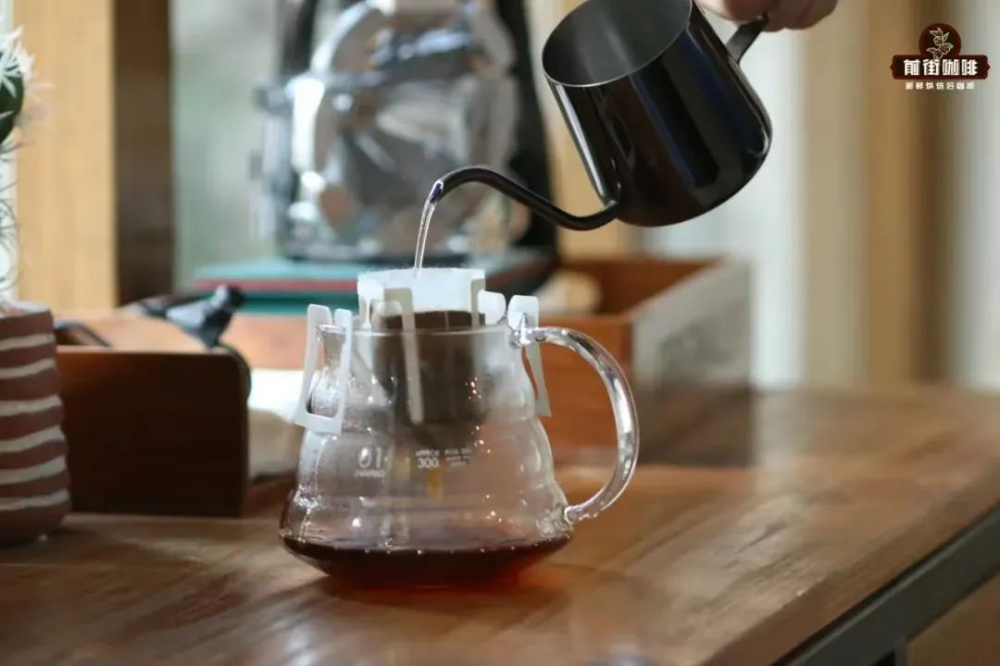
So judging a drip bag by pour over standards isn't quite fair! That said, evaluated on its own terms, there's plenty worth exploring about how to brew a genuinely good cup with this format.
Common Issues with Drip Bag Coffee
From customer feedback, FrontStreet Coffee knows the most common complaint is weakness, usually caused by an uncontrolled coffee-to-water ratio. Too much water, and the coffee is diluted. Unlike pour over, which leans on an electronic scale, drip bags are all about convenience — brew it however is easiest. So some people grab any mug, hang the bag, and fill the cup to the brim.

Standard mugs hold 250–350ml, but a single drip bag contains just 10g of coffee. At a reasonable ratio of 1:15–1:18, the yield should be roughly 130–160ml — about half a standard mug.
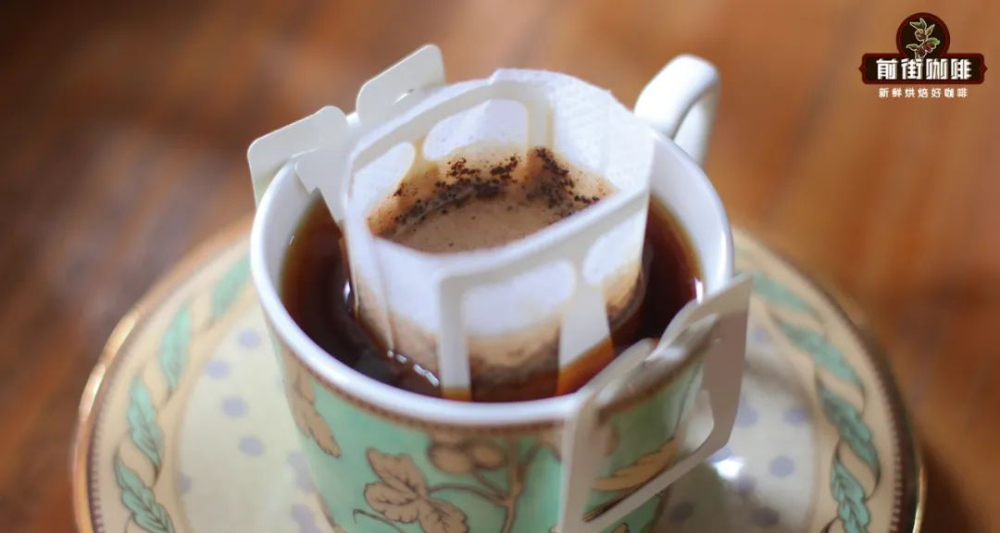
If the coffee tastes thin, another culprit may be a cup that's too short, letting the brewed liquid soak back into the grounds. Cup choice matters. Generally, use a tall mug or glass so the coffee filters cleanly away. In a short cup, the coffee flows back and re-soaks the grounds, making the brew heavier, more bitter, and muddier in flavor.
How to Brew Better Drip Bag Coffee
To brew a better drip bag cup, watch the water temperature, control the ratio, and keep brewed coffee from soaking back into the bag.
FrontStreet Coffee recommends water around 90°C. Without a thermometer or temperature-controlled kettle, boil the water, turn off the heat, remove the lid, and let it sit for 60–90 seconds — it will drop into the 88–95°C range.

Next, figure out your water volume. If you're unsure, use this pouring sequence: first pour to fill half the drip bag and let it bloom for 20 seconds.

For the second pour, fill the bag completely. Once it drips through, pour a third time to fill the bag again, then a fourth and final pour once that finishes dripping. When the last drips are through, remove the bag. This method lands at roughly 150–160ml of total water.
FrontStreet Coffee Recommendation
Drip bags can't replicate fresh-ground pour over, but choosing the right bean gets you most of the way there. FrontStreet Coffee's washed Yirgacheffe Chelbesa (Guodingding) is a reliable pick — clean lemon-citrus brightness, white florals, and a green-tea finish that survives drip bag brewing beautifully. For fruit lovers, the natural-processed Huakui (Boji) delivers strawberry cream, mango, jackfruit, and blueberry with low bitterness and a juice-like sweetness.
If you want the full flavor, though, brew the same beans as pour over with a V60 — its 60-degree cone and free-flowing extraction let florals and fruit acidity shine, and it works with any of FrontStreet Coffee's light-roast African single origins, including the jasmine-and-bergamot Panama Red-Label Geisha for special occasions.
Important Notice :
FrontStreet Coffee is a long-established specialty coffee roaster in Guangzhou China, selling freshly roasted beans from its own farm in Yunnan as well as dozens of carefully selected single-origin beans from around the world for both pour-over and espresso. The products deliver consistently excellent quality and great value, with shipping within 24 hours. Guangzhou's FrontStreet Coffee shop is recommended by many coffee lovers, and the beans are now available online at the Tmall 。
FrontStreet Coffee has moved to a new address:
FrontStreet Coffee Address: 315,Donghua East Road,GuangZhou
Tel:020 38364473
 Scan and follow the En Gafei WeChat official account. Please indicate that the reprint comes from "En Gafei".

