
How Pour-Over Watering Methods Influence Coffee Flavor Profiles
The Importance of Pouring Techniques in Pour-Over Coffee
FrontStreet Coffee often focuses on brewing parameters -- water quality, the right grind size, water temperature, and ratio. As long as those are well controlled, the inherent flavors of the beans generally come through well.
But if you want to push for excellence, you will eventually run into the question of pouring style. Pour-over coffee, after all, emphasizes the "hand" part. Ten thousand baristas have ten thousand different pouring styles. There is no better or worse method -- only what suits you. Before you develop your own style, you need to understand how different pours affect the flavor.
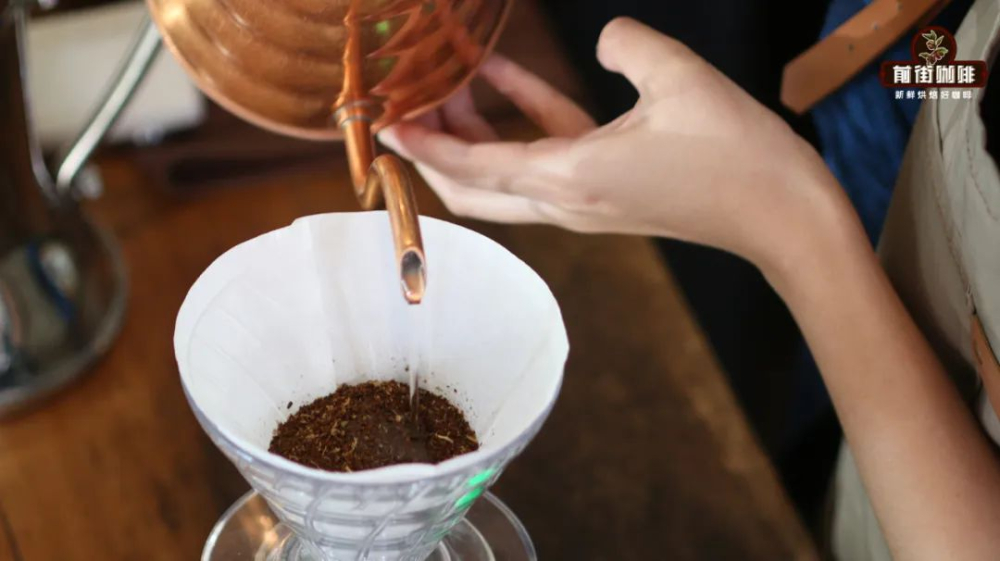
Water Flow Rate
Some people prefer a gentle, continuous stream, pouring leisurely with a small flow; others prefer a generous pour, finishing quickly with a large flow. Some take a middle path, neither too large nor too small.
There is no unified standard for what counts as large or small flow -- it is a relative idea. To offer a clear reference, FrontStreet Coffee defines a flow below 4g/s as small, above 7g/s as large, and 4-7g/s as medium. That is simply FrontStreet Coffee's reference point; you are free to define it your own way.
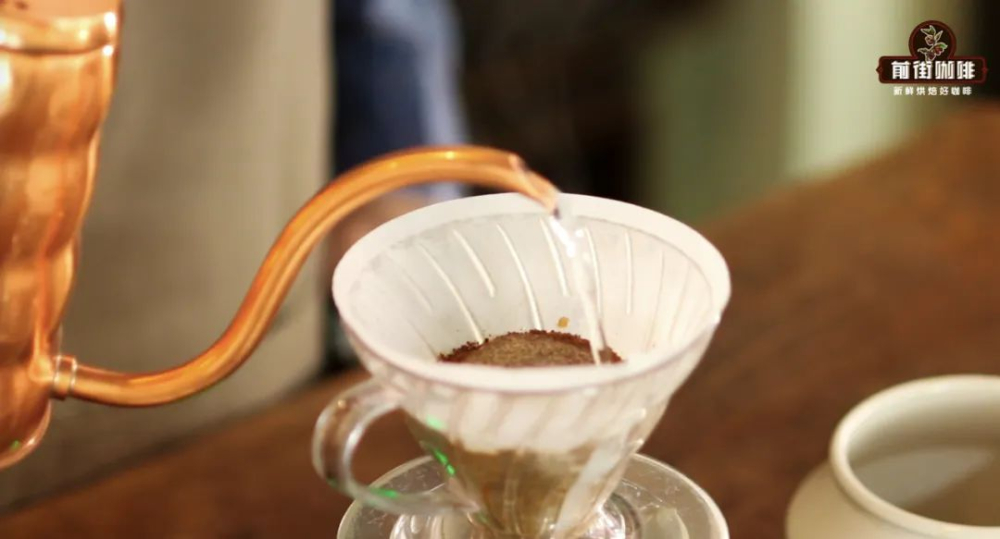
Flow rate directly affects extraction time. With the same amount of water, a large-flow pour finishes faster than a small-flow pour, and a large-flow pour also raises the coffee bed (water level) higher, which naturally speeds up drainage.
As a result, coffee poured with a large flow shows better layering and more prominent acidity. Relatively, the mouthfeel may be less rich, with a risk of thin texture and weak flavor. Coffee poured with a small flow has a richer, fuller mouthfeel and more noticeable sweetness, but may also carry a risk of muddled, cloudy flavors.
Pouring Circle Speed
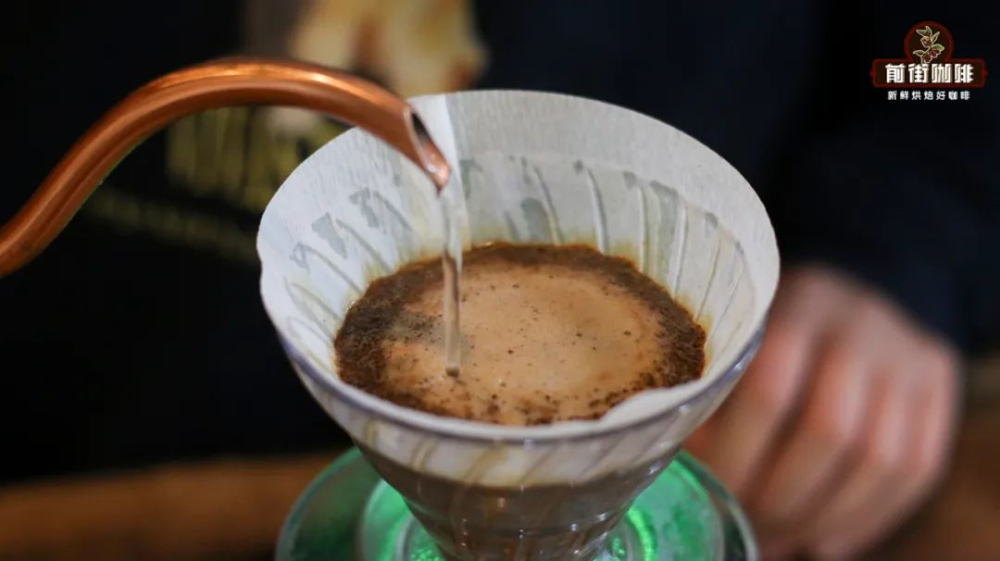
Basically, modern pour-over trajectories are primarily circular, because in a conical dripper, pouring concentric circles is the easiest way to minimize turbulence.
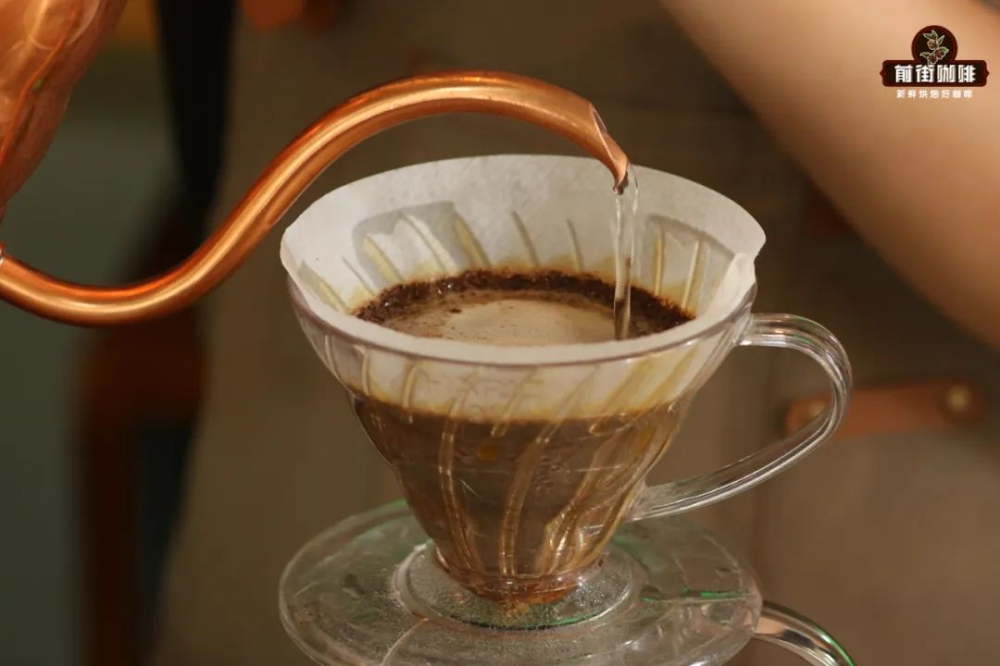
The water stream during brewing acts as a tool to stir the coffee bed. The speed of the circular motion essentially sets the stirring intensity. When the circle moves fast, the grounds are stirred more vigorously and more coffee compounds get extracted; when the circle moves slowly, the stirring is gentler and the extraction rate is a little lower.
When stirring is relatively fast, the coffee flavor is more complex with strong layering. When stirring is relatively slow, the flavor comes across as more gentle, comfortable, and clean.
Pouring Circle Size
Many beginners don't understand the difference between large and small circles, or why some baristas pour in large circles while others pour in small ones.
Pouring in large circles means most of the coffee grounds are directly washed by the stream, which makes aromatic compounds easy to release. The brewed coffee is therefore light, richly layered, gentle, and comfortable. But it is easy to break through the coffee bed, leading to a thin mouthfeel, watery texture, and weak flavor.
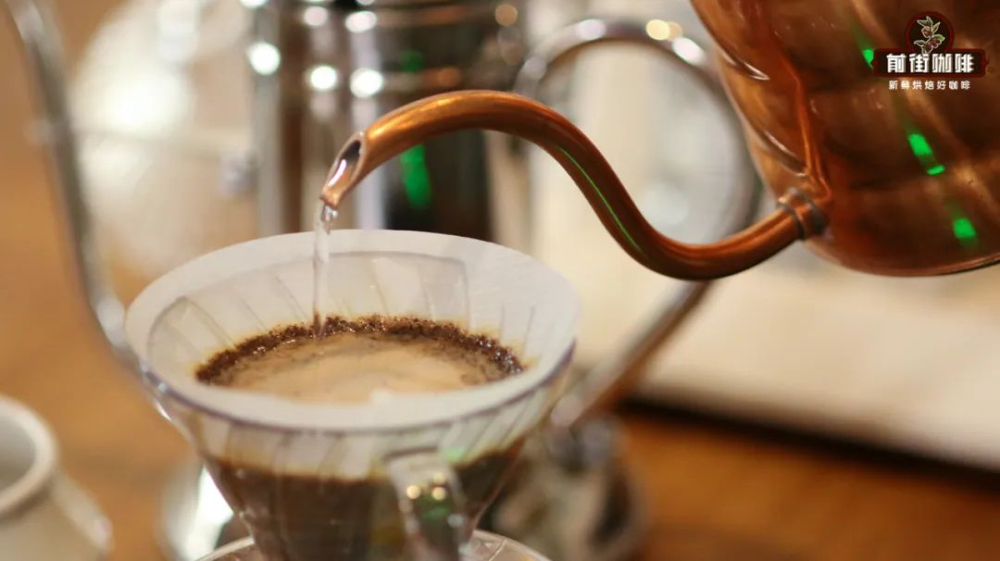
Pouring in small circles means the outer grounds not washed by the stream cling to the edge of the filter paper, so the coffee bed stays thicker. Coffee brewed this way is more concentrated, rich, and full.
Creating Your Pouring Strategy
Only once you understand how these pouring styles steer the flavor can you actually build a plan. If, for example, you want to highlight the coffee's sweet-and-sour fruit flavors and rich layering without a thin mouthfeel, you could pair a medium-to-large flow with fast large-circle pouring in the first half, then switch to a small flow with slow small-circle pouring in the second half.
FrontStreet Coffee Recommendation
Pours like these are designed to showcase florals and fruit, and those are exactly the profiles that reward a V60. FrontStreet's Yirgacheffe Gudingding is a natural first choice: clear citrus, berry, and floral notes with a green-tea finish, and acidity that is soft and bright rather than sharp.
For something louder, FrontStreet's Ethiopia Huakui brings intense tropical fruit -- strawberry, passion fruit, jackfruit -- with low bitterness and a juicy, smooth body that shows off both large- and small-circle pouring.
And if you want a sweet, fruit-forward blend, FrontStreet's Strawberry Candy combines a honey-processed Costa Rican coffee with Panama Geisha for rose, strawberry candy, and dried blueberry aromas with a balanced grape-and-citrus sweetness and an almond finish.
Important Notice :
FrontStreet Coffee is a long-established specialty coffee roaster in Guangzhou China, selling freshly roasted beans from its own farm in Yunnan as well as dozens of carefully selected single-origin beans from around the world for both pour-over and espresso. The products deliver consistently excellent quality and great value, with shipping within 24 hours. Guangzhou's FrontStreet Coffee shop is recommended by many coffee lovers, and the beans are now available online at the Tmall 。
FrontStreet Coffee has moved to a new address:
FrontStreet Coffee Address: 315,Donghua East Road,GuangZhou
Tel:020 38364473
 Scan and follow the En Gafei WeChat official account. Please indicate that the reprint comes from "En Gafei".

