
Iced Pour-Over Coffee Brewing Techniques: Methods, Ice Ratios, and Grinding Parameters
As the days grow warmer, pour-over fans once again turn their attention to iced brewing methods, and more questions about iced technique keep arriving at FrontStreet Coffee. The secret to a delicious iced pour-over is making the coffee rich enough, flavorful enough, and cold enough all at once.
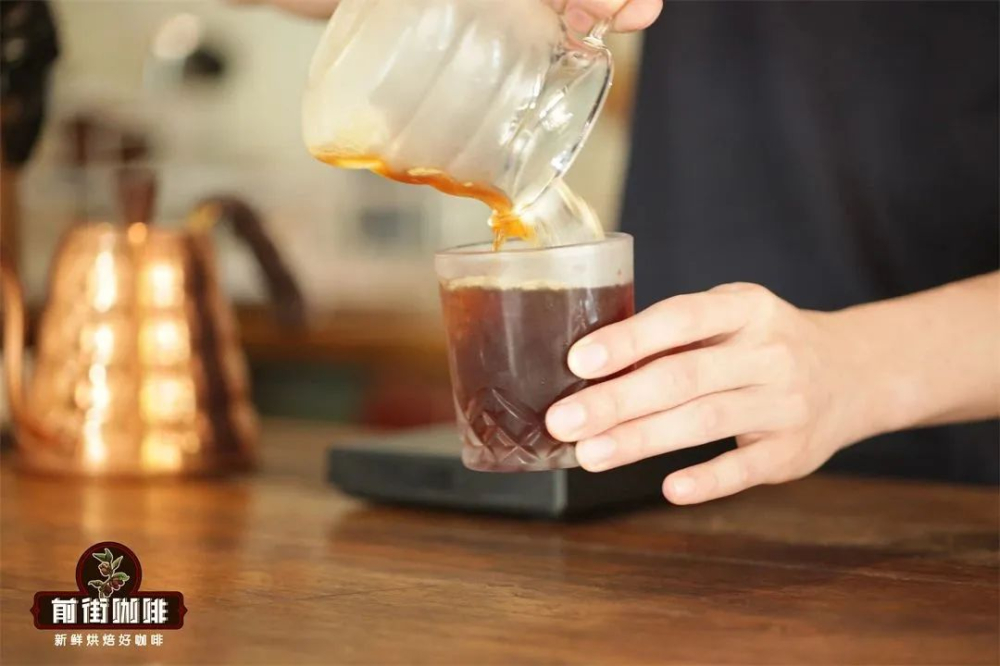
The Extraction Approach for Iced Pour-Over
As we all know, a delicious pour-over needs the right extraction rate and concentration, normally achieved by coordinating grind size, water temperature, ratio, pouring technique, and equipment.

Compared with a hot pour-over, iced coffee adds ice, and the ice plays no role in extraction. So to make sure the extracted flavor compounds are not noticeably diminished, the other parameters need adjusting relative to hot brewing. The most common approaches are a finer grind, an adjusted coffee-to-water ratio, and a changed pouring technique. FrontStreet Coffee does not recommend raising the water temperature, because high heat easily releases bitter compounds, and over-extraction is hard to fix.
Coffee-to-Water-to-Ice Ratio
Because the ice replaces part of the water that would normally be poured, it is kept separate and does not directly take part in extracting the grounds, essentially acting as what is known as "bypass water." After testing iced recipes across many beans, FrontStreet Coffee concluded that a coffee-to-water ratio between 1:10 and 1:12 works best. Too little water leaves the flavor under-extracted; too much leaves no "space" for the ice to do its job, and the coffee turns dilute before it cools.

In an iced pour-over, ice serves two purposes: cooling and dilution. The amount of ice used, therefore, has to cool the coffee quickly without diluting it into something watery. Through repeated trials, a 1:5 coffee-to-ice ratio ensures all the ice melts while the coffee cools properly. For example, with 15 grams of grounds you would use 150 grams of water and 75 grams of ice.
When all the coffee has dripped onto the ice in the lower pot, stir or shake continuously to bring the coffee down to around 5-10°C, so the server feels ice-cold to the touch. At this point some small pieces of ice that melt slowly may float on the surface. If you do not want them to keep diluting the coffee, you can remove them, but be sure to taste promptly so the flavor is not affected by room temperature.

Adjusting to a Finer Grind
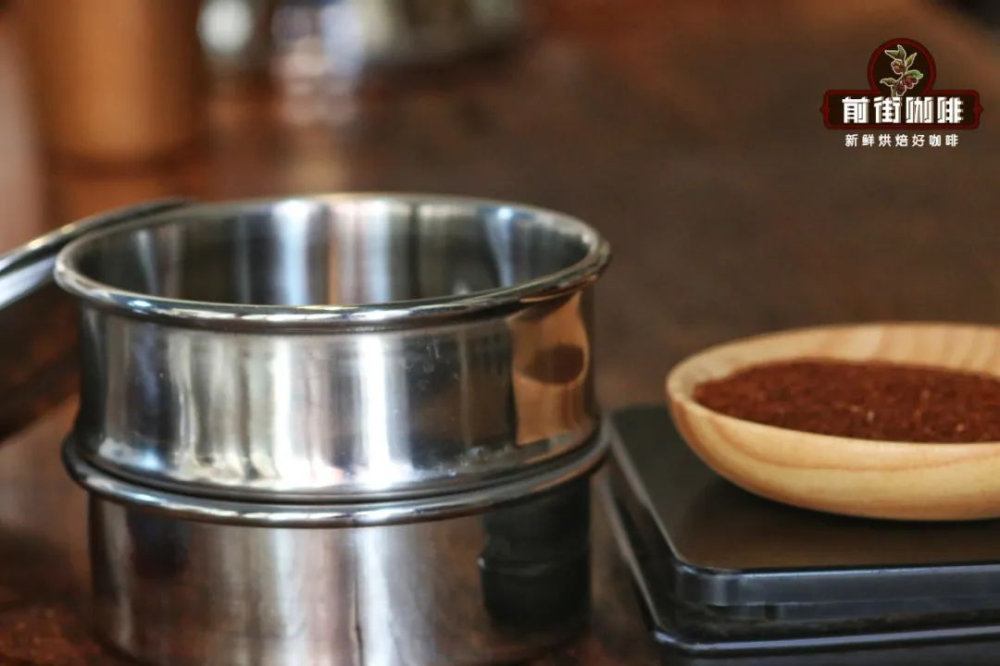
A finer grind serves two purposes: it compensates for the shorter extraction time caused by the reduced water volume, and it lets coffee compounds release more quickly. With the EK43s grinder FrontStreet Coffee uses, for example, a coffee brewed at setting 10 for hot pour-over would move to 9.5 for iced brewing. Measured with a #20 sieve screen, the grind for iced brewing should show a pass-through rate between 82% and 83%.
Adjusting Pouring Technique
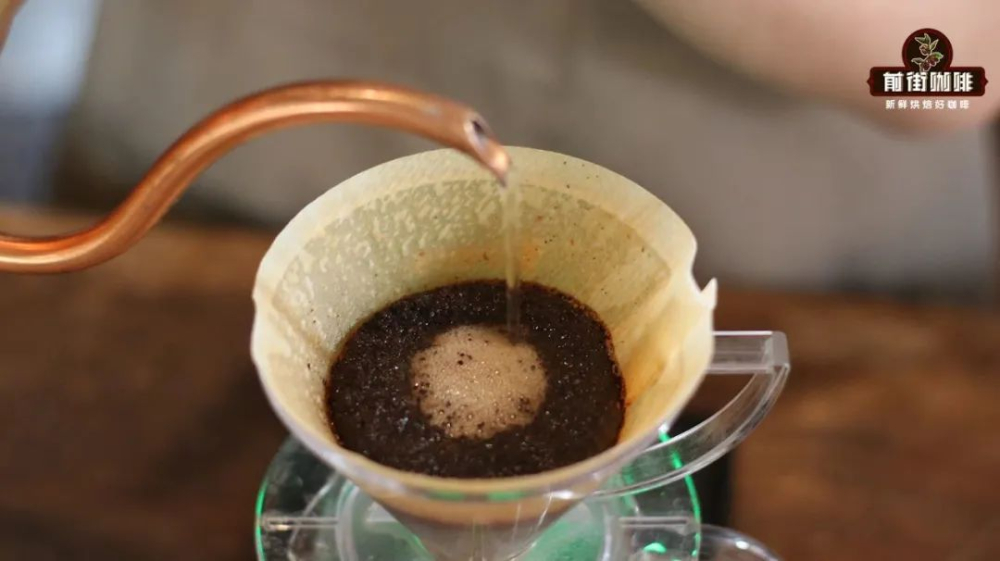
Just like the grind, adjusting the pouring technique compensates for the shorter extraction time caused by the reduced water volume. With 15 grams of coffee, for instance, iced brewing needs only 150 grams of water. If you poured normally, the brew would finish far too quickly, so the technique has to change. FrontStreet Coffee does this by reducing the flow and appropriately increasing the number of pour stages, keeping the total brewing time between 1 minute 40 seconds and 1 minute 50 seconds.

Keeping Coffee Cold
When preparing an iced pour-over, FrontStreet Coffee uses 100 grams of high-hardness large ice cubes and pre-chills the cups in the refrigerator. This does two things: it slows the melting of the ice a little, and it prevents the coffee from warming to room temperature too quickly, which would affect its taste.
If you are not following the standard coffee-to-ice-to-water ratio, alternatives like "ice pouring" or "ice-separation cooling" also work. Ice pouring means pouring concentrated brewed coffee over a large amount of ice, repeating several times to cool it down. This method minimizes the dilution effect compared with adding ice directly, though it consumes more ice. Ice-separation cooling means placing hot brewed coffee in a sealed container and rotating it quickly in ice to cool down; the advantage is that it does not dilute the coffee's concentration and is less likely to affect the flavor.

Choosing the Right Coffee Beans
Not every bean suits an iced pour-over, dark roasts least of all. Dark roasts are characterized by a rich body and overall balance, but they do not show the bright, lifted flavors of a medium-light roast. A hot pour-over can highlight their strengths, but iced they mostly taste roasty and burnt, with a thinner body and reduced balance, sometimes turning unpleasant at low temperature.
FrontStreet Coffee therefore recommends a medium-light, flavor-forward bean for iced brewing, which gives a cleaner cup. Examples include Kenya Assalia, Costa Rica Strawberry Sugar, and Ethiopia Natural Red Cherry. Of course, if you drink nothing but dark roast, iced brewing may still be your cup of tea.
FrontStreet Coffee Recommendation
Iced brewing rewards beans that are bright, aromatic, and clean, and a few FrontStreet single origins fit that description especially well. FrontStreet Ethiopia Huakui, a traditional sun-dried Sidamo, is an obvious pick: because the beans dry inside the fruit and skin, they absorb a great deal of sweetness, so the iced cup shows magnolia, cream strawberry, dried mango, guava, and black tea.
If you want to push the fruit further, FrontStreet Strawberry Sugar, a blend of Panamanian Geisha and Costa Rican honey-processed coffee, brings fine rose and orange notes alongside grape, raisin, and strawberry-candy sweetness, tasting lively and lifted over ice. FrontStreet Kenya Cherry Tomato offers the same refreshment on the acidic side, with sun-dried tomato, pear, black plum, and smoked plum coming through clearly at low temperature, low in bitterness and with a long, lingering finish.
Because iced pour-over uses a finer grind and a tighter ratio, all three reward a steady hand and a slightly slower, staged pour.
Important Notice :
FrontStreet Coffee is a long-established specialty coffee roaster in Guangzhou China, selling freshly roasted beans from its own farm in Yunnan as well as dozens of carefully selected single-origin beans from around the world for both pour-over and espresso. The products deliver consistently excellent quality and great value, with shipping within 24 hours. Guangzhou's FrontStreet Coffee shop is recommended by many coffee lovers, and the beans are now available online at the Tmall 。
FrontStreet Coffee has moved to a new address:
FrontStreet Coffee Address: 315,Donghua East Road,GuangZhou
Tel:020 38364473
 Scan and follow the En Gafei WeChat official account. Please indicate that the reprint comes from "En Gafei".

