
Does Tamping Pressure Affect Espresso Extraction? How Much Pressure Should You Apply When Making Espresso
Why Tamping Matters in Espresso Extraction
Compacting the coffee puck with a tamper is a fundamental step in espresso preparation, and for years the conversation has centered on one thing: keeping the tamp level. An uneven tamp tilts the puck, and a tilted puck almost guarantees that water will find the path of least resistance, producing uneven, inconsistent extraction.
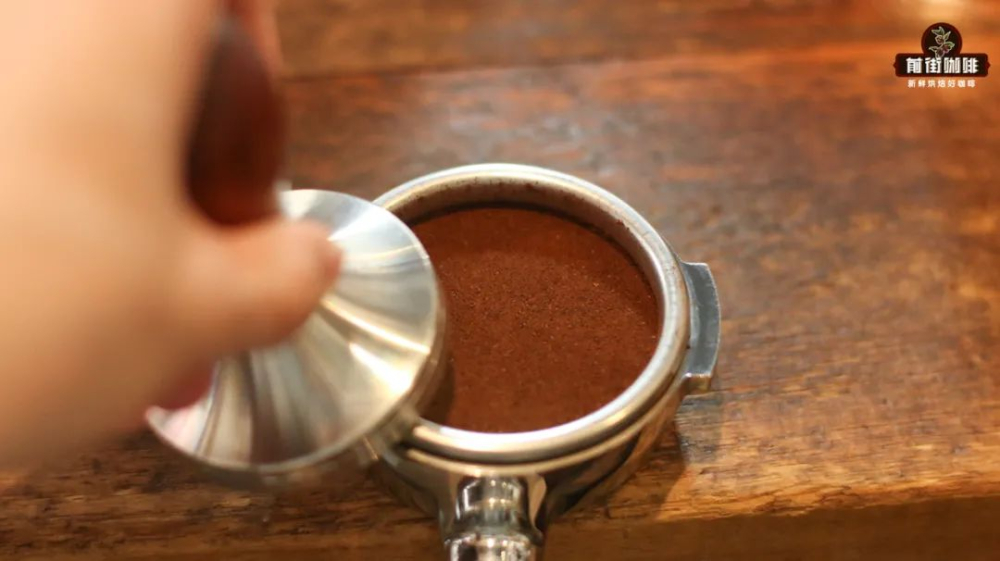
Does Tamping Pressure Actually Matter?
Whether the amount of force matters is a more contested question. One camp argues that tamping pressure should be kept in check, since excessive force packs the grounds so tightly that the flow rate slows down. The other camp holds that once the puck is level and firm, the exact number of kilograms behind the tamp is largely irrelevant, because any force a barista applies by hand pales in comparison to the roughly nine bars of pressure an espresso machine delivers during extraction.
FrontStreet Coffee's Tamping Pressure Experiments
FrontStreet Coffee ran its own tests. With a Galileo grinder set to 1.6, we ground 18.5g of coffee, distributed it, and tamped with 1.8kg of pressure: the shot yielded 37g of espresso in 27 seconds.
With the same grind setting and the same dose, tamping at 9kg stretched the extraction to 36 seconds for the same 37g yield. The flow was noticeably slower, and the first drops took an extra 2-3 seconds to appear.
We then coarsened the grind to 2.2, raised the dose to 19.5g, and tamped with 1.8kg after distribution: 39g of espresso came out in 28 seconds.
Repeating the 2.2 setting with 19.5g of coffee but tamping at 9kg produced essentially the identical result — 39g of espresso in 28 seconds.
In other words, two very different pressures produced nearly the same shot once the grind changed, and the reason lies in how particle size changes puck density.
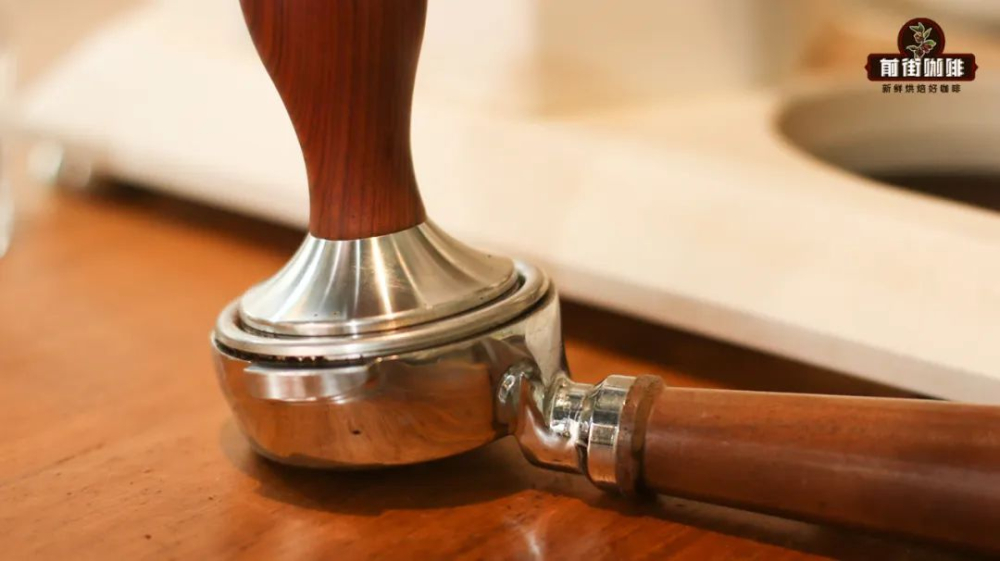
Making Sense of the Results
In the first pair of tests, the finer grind left more air between particles, so tamping force genuinely changed the puck's density. At 1.8kg the puck stayed relatively loose — lower density, faster flow. At 9kg it compressed into a much tighter bed, and the flow slowed accordingly.
In the coarser pair, the gaps between particles were already so large that neither 1.8kg nor 9kg could close them further; both pressures effectively compressed the puck to its maximum practical density. That is why the flow rates and extraction times came out nearly identical, with minimal impact from the extra force.
FrontStreet Coffee Recommendation
Once your tamp is level, the beans matter more than the biceps. For dedicated espresso, FrontStreet Coffee's Classic Blend is our first pick: designed specifically for espresso machines and moka pots, its greatest strength is outstanding crema — even a beginner with a basic home machine can pull a dense, silky layer, making it ideal for lattes, cappuccinos, and Dirty coffee. It follows the traditional Mandheling-and-Brazil formula, with a rich, mellow body that suits seasoned drinkers and newcomers alike.
Shops watching costs should look at FrontStreet Coffee's Black Cocoa Blend: 100% Arabica, ample crema, a smooth chocolatey cup, and a friendly price — quality and value in one bag. FrontStreet Coffee's Commercial Blend served as the workhorse for cafés before the Black Cocoa launched, offering dependable flavor at a lower price than the premium line. And FrontStreet Coffee's Premium Blend is the longest-serving espresso blend on our own bar — nearly ten years of powering our americanos and lattes — built on Brazil Cerrado and Colombia Huila for that classic, familiar espresso character.
If you prefer single-origin espresso (SOE), the Natural Huakui SOE from Guji Hambela in Ethiopia — grown at elevations up to 2300m — delivers a cream-strawberry sweetness after medium roasting, with notes of cream, cocoa, berries, delicate florals, and black tea as an americano or latte. The honey-processed Costa Rica Blackberry SOE runs bright and refreshing as an americano, turning to cranberry cookie, raisin, and nuts with milk, while the Brazil Queen Estate SOE, a distinctive Yellow Bourbon roasted medium-dark, stays low-acid and gentle, expressing butter cookie, macadamia, and toasted bread aromas through the espresso machine.
Important Notice :
FrontStreet Coffee is a long-established specialty coffee roaster in Guangzhou China, selling freshly roasted beans from its own farm in Yunnan as well as dozens of carefully selected single-origin beans from around the world for both pour-over and espresso. The products deliver consistently excellent quality and great value, with shipping within 24 hours. Guangzhou's FrontStreet Coffee shop is recommended by many coffee lovers, and the beans are now available online at the Tmall 。
FrontStreet Coffee has moved to a new address:
FrontStreet Coffee Address: 315,Donghua East Road,GuangZhou
Tel:020 38364473
 Scan and follow the En Gafei WeChat official account. Please indicate that the reprint comes from "En Gafei".

