Over 90% of Chinese People Have Lactose Intolerance? Why is Milk Coffee So Popular in China?
The Truth About Lactose Intolerance in China
Search casually online for "Chinese lactose intolerance" and most articles will tell you the same handful of things: that lactose intolerance is more common among Asians, that China has the highest number of lactose-intolerant people in the world, and that over 90% of Chinese people suffer from it. Then they will show you a map of global lactose intolerance prevalence:
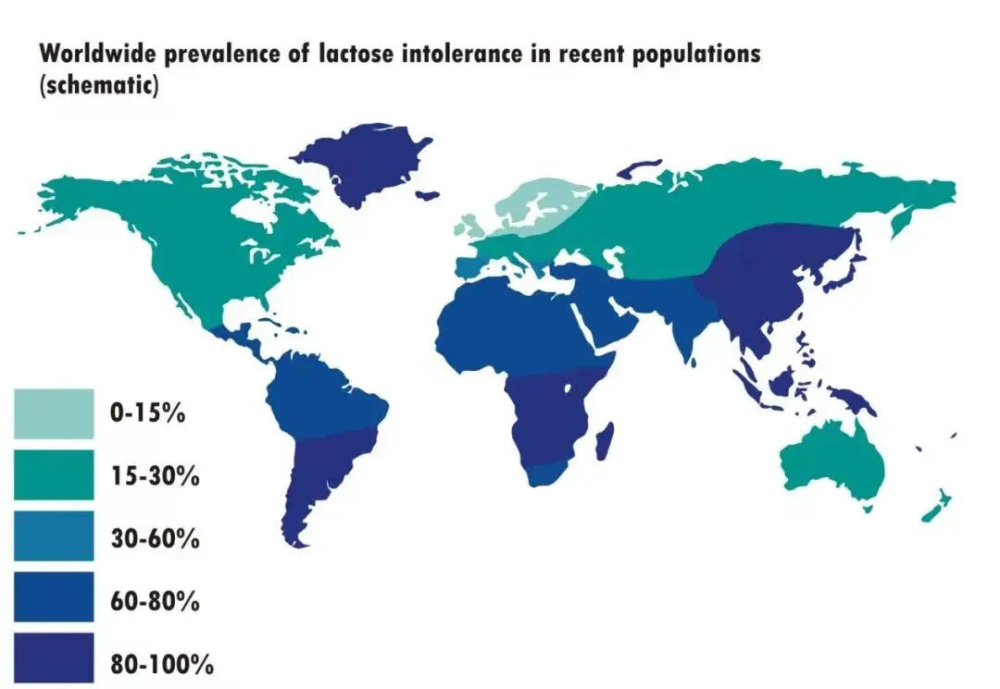
That image came from a foreign website dedicated to lactose intolerance. But when you trace it back to the academic paper it cites (https://academic.oup.com/ajcn/article-abstract/48/4/1142/4716179), the data is actually about the global proportion of people with lactose malabsorption, with prevalence ranging between 15-100% across Africa, Asia, and Latin America.
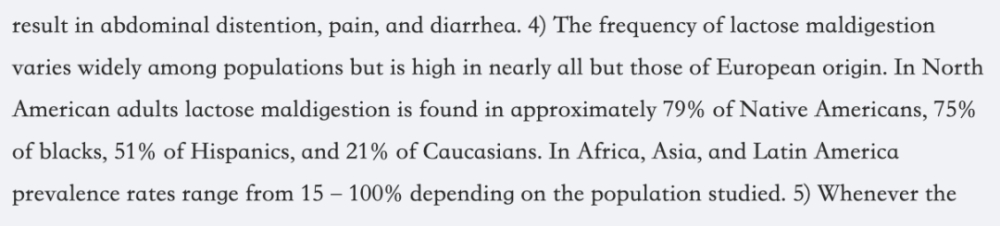
So the numbers were, shall we say, creatively stretched by lactose intolerance websites. Which raises an important question: what is the difference between lactose intolerance and lactose malabsorption? Let's start with how medicine currently defines the two conditions.
Lactose Intolerance – A clinical syndrome in which patients develop symptoms (abdominal pain, bloating, flatulence, nausea, diarrhea) after consuming lactose or lactose-containing foods. Lactose intolerance is not necessarily related to lactose malabsorption.
Lactose Malabsorption – Because of lactase deficiency, ingested lactose cannot be absorbed by the small intestine. Lactose malabsorption is not necessarily accompanied by symptoms of lactose intolerance.
From these definitions it becomes clear that the two conditions do not necessarily track each other. Lactose intolerance produces gastrointestinal discomfort of varying severity, whereas lactose malabsorption simply means the small intestine is inefficient at absorbing lactose, without causing any discomfort at all.
Read the data this way and the picture changes: the vast majority of Chinese people would technically have lactose malabsorption, but the number who actually suffer from lactose intolerance is nowhere near as high as the internet would have you believe.

So why do so many articles claim China has the most lactose intolerance sufferers in the world? We cannot rule out that some brands are clearing the way for particular products, nor that they simply want to raise awareness of the symptoms.
But think about it: if the numbers really were that high, and so many people genuinely felt unwell after drinking milk, milk tea and milk coffee could never have become as popular as they are in China. As the saying goes, existence is rational.
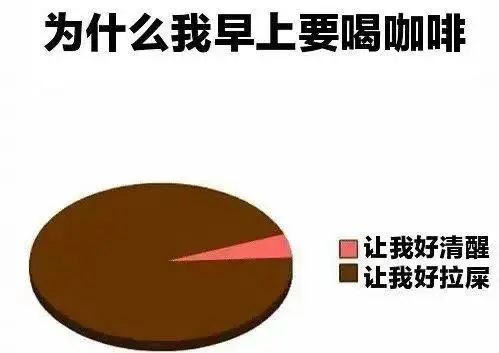
At this point someone always pipes up: "That's not right! I always have to run to the bathroom after a milk coffee!"
Well... that is mainly because the acidity in coffee promotes gastrin secretion, which speeds up gastrointestinal peristalsis. Since coffee's acidity stimulates the gut, it is best not to drink coffee on an empty stomach. Anyone with an already sensitive digestive system who drinks coffee on an empty stomach is more likely to end up with stomach pain, diarrhea, and similar symptoms.
Of course, we cannot rule out lactose either, since the symptoms of lactose intolerance vary from person to person. Some people really do experience nothing more than a mild boost to intestinal peristalsis, which is what sends them to the bathroom. If you want to know whether milk is the culprit, try drinking a glass of milk on an empty stomach the next time you wake up.
Why Do Chinese People Love Milk Coffee So Much?
Either way, the stream of new products merchants keep launching makes one thing obvious: Chinese people genuinely love drinks that contain milk. Milk tea may have gradually cut back its milk content and shifted toward refreshing tea-based drinks, but in coffee the milk keeps going in.
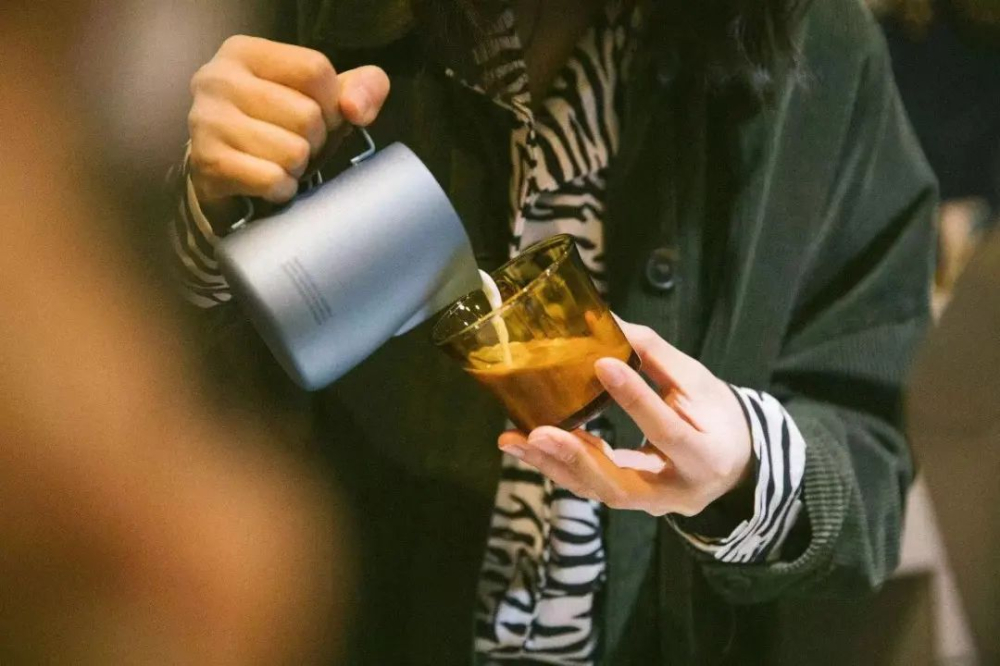
Whole milk, fresh milk, skim milk, purified milk, evaporated milk, cream... the range of dairy on offer is dizzying. The main reason coffee drinks rely so heavily on dairy is that coffee's own flavor profile is actually rather limited.
And at this point another voice chimes in: "Coffee has so many flavors! How can you call it monotonous?"
People's ability to identify tastes varies enormously. Most drinkers can only pick out the acidity and bitterness in coffee, and never detect those notes of cranberry, cedar, or 97% dark chocolate.
So from the perspective of the average coffee consumer, coffee really does taste fairly one-dimensional. Without milk, flavored syrups, or other additions, it simply struggles to grab people's attention.
When Did Chinese People Become Addicted to Milk Coffee?
It may go back to the very first coffees introduced to China, when people drank canned or instant coffee made mainly from Robusta beans. To make it more palatable, most products were bulked out with non-dairy creamer and milk powder. For many people, then, the first cup of coffee was an instant coffee that already contained milk.
After instant and canned coffee came Starbucks, the pioneer of China's coffee shop boom, which further cemented the habit of pairing coffee with milk. Freshly ground coffee has a richer aroma and flavor, but even when diluted with water, the intensity of espresso still reads as bitter to a lot of people.

So people gravitated toward freshly ground coffee with milk. And to better cater to global taste preferences, Starbucks kept rolling out flavored syrups, pushing freshly ground coffee, milk coffee, and flavored coffee to their peak.
Marketing like this naturally shaped a consumer belief: if you want coffee that tastes better and comes in more flavors, coffee with milk is the way to go. As a new generation of coffee drinkers chased novel flavors, the highly adaptable milk coffee became the key to driving traffic for brand after brand.
Milk Coffee vs. Black Coffee
As specialty coffee culture spread, the quality of the beans themselves began to get far more attention over the past decade or two. People started to pursue coffee's original flavors, and methods that showcase the most refined, unadulterated character of the bean, such as light roasts and high-ratio drip coffee, came to be valued and appreciated.
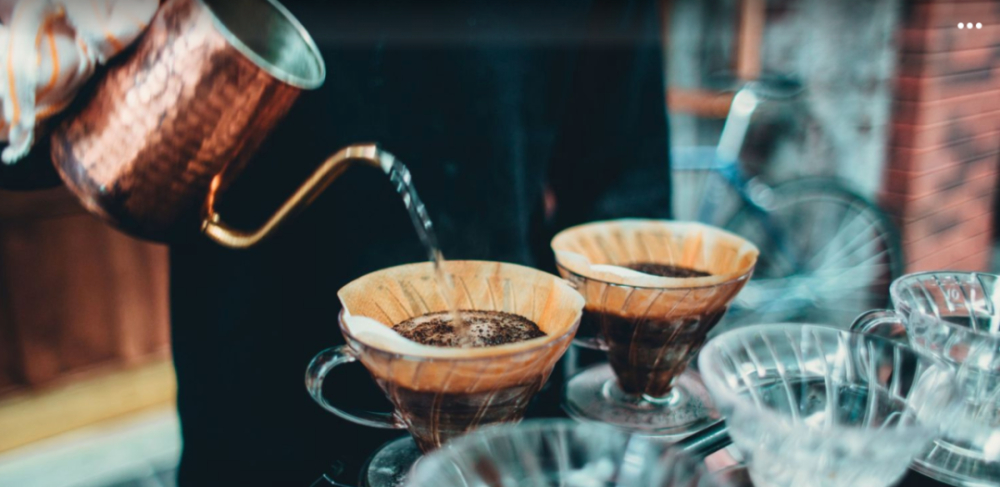
In reality, though, black coffee and milk coffee are both members of the specialty coffee family. Specialty coffee is about professionalism from cultivation all the way to what is placed in front of the consumer. As long as the drinker is satisfied with the whole service and the final product, it is a cup of specialty coffee.

There is no right or wrong here, only personal preference. Specialty coffee grows through constant innovation that produces drinks a broad audience can accept. Whether the work goes into improving the quality of the beans themselves or into creating and reimagining milk coffee, the underlying point is the same: to help more people discover coffee and fall in love with it.
Image source: Internet
FrontStreet Coffee Recommendation
If you enjoy milk coffee and want a bean that stands up to it, FrontStreet's Classic Blend is the first place to look. Designed specifically for espresso and moka pot brewing, its strength is a remarkably thick, golden crema that even a beginner can pull on a non-professional home machine. Built on the traditional Mamba (Mandheling plus Brazil) recipe, it is full-bodied and mellow, and it is the base for the lattes, cappuccinos, and Dirty drinks we reach for every day. It is an easy pick for both home and commercial use.
For those who want a latte with a softer, nuttier profile, FrontStreet's Specialty Blend and Black Cocoa Blend are the best milk companions. Because Brazilian coffee leads the recipe, they bring out complex notes of almond, and walnut, giving a silky, lingering latte. If you are after a rich, caramel-forward crema, choose the Classic Blend or FrontStreet Coffee's Commercial Blend: both contain a small amount of Robusta, which delivers more of that golden foam as well as a fuller body and caramel aroma.
Hand-brewed coffee can take milk too, though the lower strength of pour-over means it is best matched with a medium-dark single-origin so the milk does not swamp the flavor. Roast depth raises a coffee's intensity, and a splash of milk softens it while adding a creamy note. If you are unsure of the roast level, look for tasting notes of chocolate, nut, cream, or cocoa, and reach for FrontStreet's Brazil Queen Estate, Indonesia Mandheling, Bird of Paradise, or Colombia Huila.
Important Notice :
FrontStreet Coffee is a long-established specialty coffee roaster in Guangzhou China, selling freshly roasted beans from its own farm in Yunnan as well as dozens of carefully selected single-origin beans from around the world for both pour-over and espresso. The products deliver consistently excellent quality and great value, with shipping within 24 hours. Guangzhou's FrontStreet Coffee shop is recommended by many coffee lovers, and the beans are now available online at the Tmall 。
FrontStreet Coffee has moved to a new address:
FrontStreet Coffee Address: 315,Donghua East Road,GuangZhou
Tel:020 38364473
 Scan and follow the En Gafei WeChat official account. Please indicate that the reprint comes from "En Gafei".