Breaking! International Coffee Bean Prices Plummet 40%
Why Aren't Coffee Prices Dropping Despite Arabica's 40% Plunge?
Rather than rising on the back of sharply reduced coffee bean production, prices have actually plunged 40% on inflation concerns. Arabica, which accounts for roughly 70% of global coffee production, has seen a severe decline. Does that mean we will finally drink more affordable coffee?
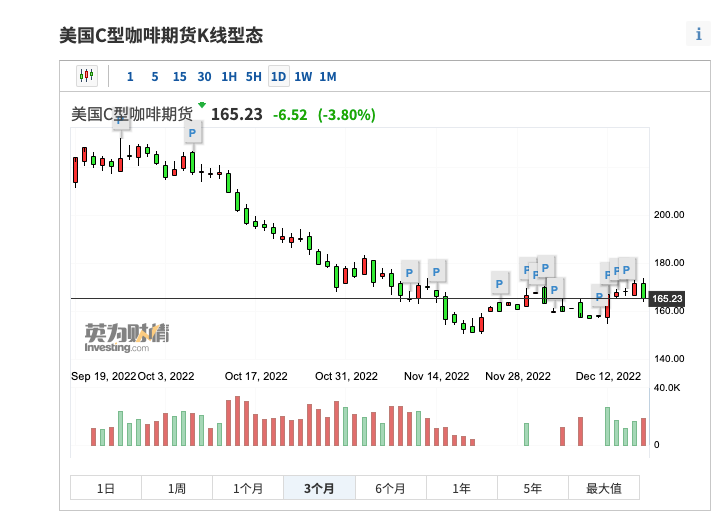
Recently, according to Nikkei News, international prices for premium Arabica coffee beans have tumbled, falling nearly 40% from February's high to their lowest range in a year and five months, as business confidence in Europe, the main consumer market, deteriorates rapidly under inflation.
On November 18th, Arabica futures on the New York Intercontinental Exchange (ICE) closed at 151.3 cents per pound. That price is 38% below the 258.35 cents seen in early February, the recent high. The decline accelerated from October, with prices falling to 150.45 cents on November 21st, the lowest level since July 2021, and they have struggled to recover since. In recent days, prices have been fluctuating around 165 cents, a stark contrast to last year's trend. Starting from the 2020 production season, international coffee futures prices rose significantly on a combination of weather, pandemic-era harvesting labor shortages, and shipping costs.
According to statistics from the U.S. Department of Agriculture, the EU accounts for 26% of global coffee consumption. The Ukraine crisis has driven rapid inflation. According to Eurozone statistics, the consumer price index in the Eurozone rose 10% year on year in November, the second consecutive month of double-digit growth.
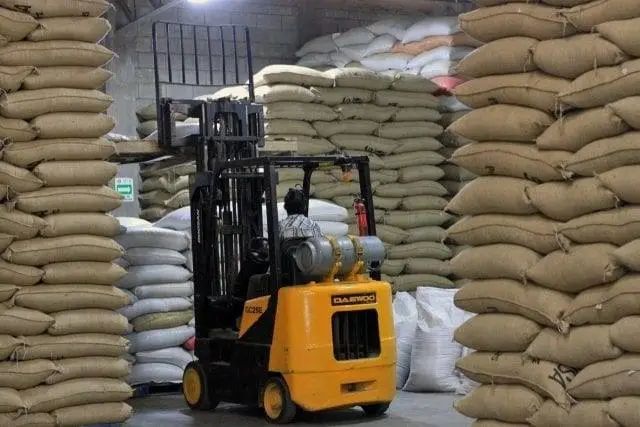
Inflation has led to declining coffee consumption as a luxury item, and coffee inventories at many warehouses show almost no change compared with the end of October. As of December 2nd, inventory at European warehouses in Antwerp, Belgium, had increased by 70% to approximately 550,000 bags, each bag weighing 60 kg. Unable to find buyers, traders can only move beans into these warehouses, hoping to sell them through physical delivery.
In Antwerp, it is reported, approximately 430,000 bags of Arabica beans are awaiting certification, a figure more than four times higher than at the end of October. Industry expert Takano stated: "Certified inventory breaking through 1 million bags is just around the corner. Due to the easing of supply and demand, prices will struggle to rise in the future."
Media reports indicate that over the past two months, spot prices of coffee beans in India, dominated by Robusta, have also fallen significantly. This has left local coffee farmers reluctant to sell easily, choosing instead to wait and watch the price trend.
One local coffee farmer said that if not for an urgent need for money, many farmers would not be willing to sell their beans at current prices. The steep drop in spot prices is not due to any quality problem with the coffee, but to the sharp fall in international futures prices, which has left farmers dissatisfied. In the first week of October, the spot price of Indian Arabica coffee was approximately 16,000 rupees per bag, with each bag holding 50 kg, but it has now fallen to 13,000 rupees per bag. Similarly, the price of fresh Arabica coffee cherries has dropped from 9,100 to 9,400 rupees to 6,400 to 6,700 rupees.
Will Lower Bean Prices Translate to Cheaper Coffee?
Returning to our first question: with raw-material bean prices falling so severely, can consumers expect to drink more affordable coffee? The answer clearly is that it will not show up directly in the end consumer market. International coffee futures prices directly reflect commodity coffee bean prices from Brazilian production regions, as well as daily prices of commodity coffee beans from Yunnan production regions that are linked to them. Compared with commodity beans, specialty coffee beans already carry a premium and are not affected by short-term swings in international futures.
On the contrary, roasters and green-bean dealers who focus mainly on commercial blends will be hit, because they increased their inventory positions at high prices. In a coffee shop's cost structure, coffee beans account for only a small portion. Coffee drinkers, meanwhile, do need to spend more than in previous years. Take domestic Starbucks as an example: some of its products saw small price increases at the end of last year. Starbucks explained that those prices were set after careful evaluation and comprehensive consideration of rent, logistics, store facilities, labor, product development, and customer experience innovation.
So perhaps much of the money we spend on coffee is not really spent on the coffee itself. Even if international Arabica prices fall sharply on futures, that has no direct relationship with whether we can drink a cheaper cup. A drop in coffee prices still looks distant for now. Following this trend, though, if international bean market prices continue to decline, the upward pressure on coffee product prices may at least stop.
FrontStreet Coffee Recommendation
Commodity futures may swing, but specialty Arabica is a different market entirely, and it is where the real variety lies. Among Ethiopia's single-origin beans, FrontStreet Huakui uses the country's most common heirloom varieties and a classic natural process, with cream strawberry, mango, jackfruit, citrus, and blueberry notes and a ripe tropical-fruit character; the same lush berry aroma is what won the coffee first place at that year's TOH green bean competition. FrontStreet Yirgacheffe Gotiti Cooperative is the washed counterpart, a G1 coffee with elegant white florals, citrus, orange, and green tea.
If you want to explore heirloom varieties further, FrontStreet Jamaica Blue Mountain No. 1 is a Typica, one of the archetypal Arabica varieties and among the first to spread from Yemen to India, Indonesia, and Central and South America. Typica is balanced, gentle, and smooth, with a rounded rather than sharp acidity and a full, pure aroma. The Blue Mountain Typica was transplanted from Martinique to Jamaica's Blue Mountains in the 1720s and, over more than 200 years, developed better disease resistance, particularly against coffee berry disease, though it loses its sweet, delicate character once grown outside Jamaica.
For a floral showpiece, FrontStreet Panama Red Label Geisha comes from Panama's most famous estate, located in Boquete in Chiriqui Province, where fertile volcanic soil, ancient forest, and year-round mist and abundant rain create ideal growing conditions. In the cup it is jasmine, citrus, peach, and layered fruit with a creamy body and an oolong-tea finish. FrontStreet Brazil Queen's Estate, a Yellow Bourbon, brings cream, peanut, toast, and sugarcane, and FrontStreet Colombia Sidra, medium-light roasted, shows florals, tropical fruit, grape, dried fruit, and passion fruit with a juicy texture.
Important Notice :
FrontStreet Coffee is a long-established specialty coffee roaster in Guangzhou China, selling freshly roasted beans from its own farm in Yunnan as well as dozens of carefully selected single-origin beans from around the world for both pour-over and espresso. The products deliver consistently excellent quality and great value, with shipping within 24 hours. Guangzhou's FrontStreet Coffee shop is recommended by many coffee lovers, and the beans are now available online at the Tmall 。
FrontStreet Coffee has moved to a new address:
FrontStreet Coffee Address: 315,Donghua East Road,GuangZhou
Tel:020 38364473
 Scan and follow the En Gafei WeChat official account. Please indicate that the reprint comes from "En Gafei".