
Nestlé Announces! Bans Marketing High-Sugar Products to Children Under 16
As coffee consumption becomes ever more daily, essential, and health-conscious, consumers are raising the bar for what they eat and drink - and coffee brands keep expanding their market share to keep up.
Nestle's Global Marketing Ban for Children Under 16
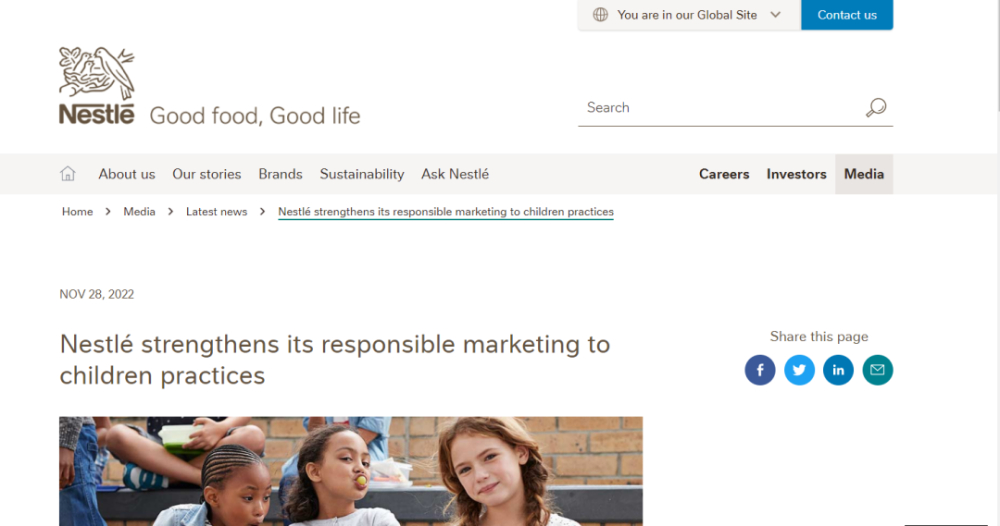
Global food giant Nestle recently announced on its official website that, to further strengthen its industry-leading responsible marketing practices, it will ban advertising of all its products to children under 16 worldwide starting July 1, 2023. The ban covers all confectionery, ice cream, and sugar-sweetened beverages.
It applies across television and online platforms, including social media and gaming platforms, where roughly 25% of the audience is under 16. In addition, Nestle will not collect data from minors and will only work with social media influencers aged 18 and above.
Strategic Shift Toward Healthier Products
Recent moves suggest Nestle is determined to shed its high-sugar image and undergo a "de-sugaring" transformation. In 2018, the company sold its U.S. confectionery business and brought back healthier products - low sugar, zero sugar, zero calories - such as low-sugar beverages, unsweetened chocolate, and sugar-free coffee. From 2016 to 2020, Nestle cut sugar content across its global products by 5.1%.
From an industry standpoint, abandoning high-sugar, high-calorie categories in favor of more natural and healthy products does a lot for Nestle's brand image. In the short term, halting the marketing of high-sugar products to minors will inevitably dent the performance of its confectionery and sugary product lines. But in the long run, the move clearly serves Nestle's bigger goals.
Financial Targets and 2025 Goals
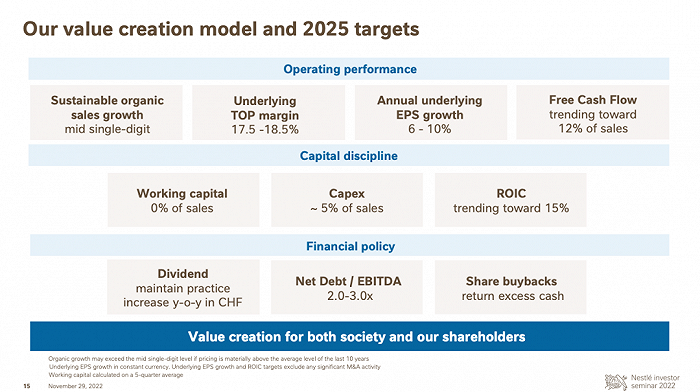
Just before the announcement, Nestle released its latest 2025 targets, stating that after profit margins took a hit from sharply rising cost inflation in 2021 and 2022, it expects the underlying operating profit margin to return to the 17.5%-18.5% range by 2025.
Nestle projects that between 2022 and 2025, the underlying annual growth rate of earnings per share will reach 6%-10% at constant exchange rates. It also plans to generate free cash flow equivalent to 12% of sales and achieve a 15% return on invested capital by 2025.
Innovation in Low-Sugar Coffee Products
Nestle has already launched a lightly sweetened black coffee called "Black Coffee," which is low in sugar, zero in fat, and well suited to the multi-scenario habits of today's young consumers. And it isn't alone: companies across the sector keep pouring investment into low-sugar, low-calorie products. T97, a coffee brand founded just last April, entered the market touting "low-calorie coffee" as its core selling point.
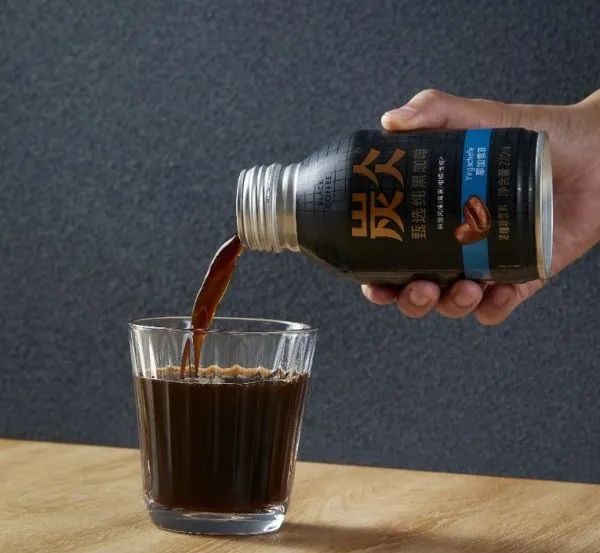
Nongfu Spring, another cross-sector entrant, has kept rolling out low-calorie, low-sugar RTD coffee - black coffee, low-sugar latte, sugar-free latte - and later introduced a premium pure black coffee series named "Yirgacheffe." The competition is clearly getting fiercer.
Brand Transformation for Younger Consumers
Nestle Coffee now has 83 years of history. With consumption upgrading and young consumers becoming the main buying group, Nestle is accelerating its transformation toward a more youthful, healthy, and premium image.
On the marketing side, it has used pop-up stores to catch young people's attention. On the product side, it has launched new specialty fruit-extracted and premium drip coffee lines, while continuously upgrading RTD coffee that wins young consumers over with low sugar, affordable prices, and innovative flavors.
Image source: Internet
FrontStreet Coffee Recommendation
If cutting sugar is on your agenda too, you don't have to give up rich flavor. FrontStreet Coffee's Premium Espresso Blend is a chocolate-and-nut forward espresso blend led by Brazil beans with Colombia beans as support: complex almond, walnut, and other nutty aromas, a pleasant bittersweet edge, and a milky-chocolate sweetness in lattes - all from the coffee itself, no syrup needed.
For a single origin with the same cozy profile, FrontStreet Brazil Queen Estate is the pick: rare Yellow Bourbon from Mogiana's fertile red volcanic soil, low in acidity with cream, roasted peanut, and caramel-cookie notes and a lingering sugarcane sweetness. It shines as pour-over, French press, or Clever brewer coffee, and holds its own through a moka pot or home espresso machine.
Important Notice :
FrontStreet Coffee is a long-established specialty coffee roaster in Guangzhou China, selling freshly roasted beans from its own farm in Yunnan as well as dozens of carefully selected single-origin beans from around the world for both pour-over and espresso. The products deliver consistently excellent quality and great value, with shipping within 24 hours. Guangzhou's FrontStreet Coffee shop is recommended by many coffee lovers, and the beans are now available online at the Tmall 。
FrontStreet Coffee has moved to a new address:
FrontStreet Coffee Address: 315,Donghua East Road,GuangZhou
Tel:020 38364473
 Scan and follow the En Gafei WeChat official account. Please indicate that the reprint comes from "En Gafei".

