
Slow Pour-Over Coffee Flow? It's All About Grind Size - Why Your Coffee Tastes Bitter and Burnt
Pour-over Coffee: Common Issues and Solutions
Pour-over coffee is a brewing method with a great deal of freedom. There are many ways to brew a delicious cup, but plenty of unexpected problems can crop up too. That's why so many people come to FrontStreet Coffee asking, "Why does this coffee taste like this?" or "Why doesn't that coffee taste right when I brew it this way?"

When people visit the shop to talk about pour-over, FrontStreet Coffee often emphasizes that truly mastering pour-over doesn't mean producing a perfect cup every time. It means being able to identify why a coffee turned out poorly and prescribe the right fix. Before that, of course, you need to recognize that a coffee has a defect and build up a store of failure cases to keep updating your understanding. To help, FrontStreet Coffee has compiled a few common situations.
Sticking to Rigid Rules
Some people like to buy the same coffee beans from different roasters for comparison. The beans are the same, but each roaster's roast has its own character. In general, the overall flavor profile won't differ wildly from roaster to roaster, but the finer flavors may be presented differently: some prefer extremely clean acidity, others a balance of sweet and sour, and some prefer to highlight highly sweet, fruity flavors.
In most cases, a universal brewing method can express each roaster's style. Yet a method that one person has grown used to for one bean may taste off when used on another roaster's coffee.
The thought then comes easily: "I'm using the same method for the same beans, so if it doesn't taste good, it must be the beans' fault." In truth, you simply haven't fully understood the beans.

Take Yirgacheffe, which almost every roaster carries. Under normal circumstances, brewing each roaster's Yirgacheffe with a relatively conservative method won't show too much difference. Then one day you hear a roaster recommend brewing Yirgacheffe at 94°C, and the result is excellent. So you come to believe that 94°C is the ideal temperature for Yirgacheffe. Over time, the method becomes a habit, until you try another roaster's Yirgacheffe and think, "No, there's bitterness. I never have this problem with other beans, so it must be the beans' fault." (If temperature feels like too much of a stretch, replace "temperature" with technique, grind size, or ratio and read it again.)
This expression of roasting style is even more pronounced for some lesser-known origins, such as Papua New Guinea's Paradise Bird coffee beans. The bean is known as "Little Blue Mountain" because the Typica grown there came from Blue Mountain, and it is an island-style coffee. Some roasters take it to medium-dark to highlight nutty, chocolatey, non-acidic flavors; others roast it to medium to show a soft, balanced sweet-sour-bitter style; while some roast it to medium-light to express white peach, plum, hawthorn, and other sweet fruit flavors.
So even for the same coffee beans, the same brewing method and parameters naturally won't suit different roast levels. Understand the beans first, and only then can you use the right method. If you're not too familiar with this side of things, you can also ask the bean's merchant for the corresponding brewing parameters. Getting the right parameters means you're already halfway to success.
Main Reasons for Bitter Coffee
Once you have the right parameters, using them correctly becomes the key. Parameters like water temperature and ratio rarely deviate, but grind size is by far the easiest to get wrong. Many people know what the grind should be and still struggle to hit it.

If the coffee grounds show large areas of mud-like consistency after brewing, either the grind is too fine or there is too much fine powder. Water can't pass through, and prolonged soaking of the grounds naturally produces burnt bitterness.
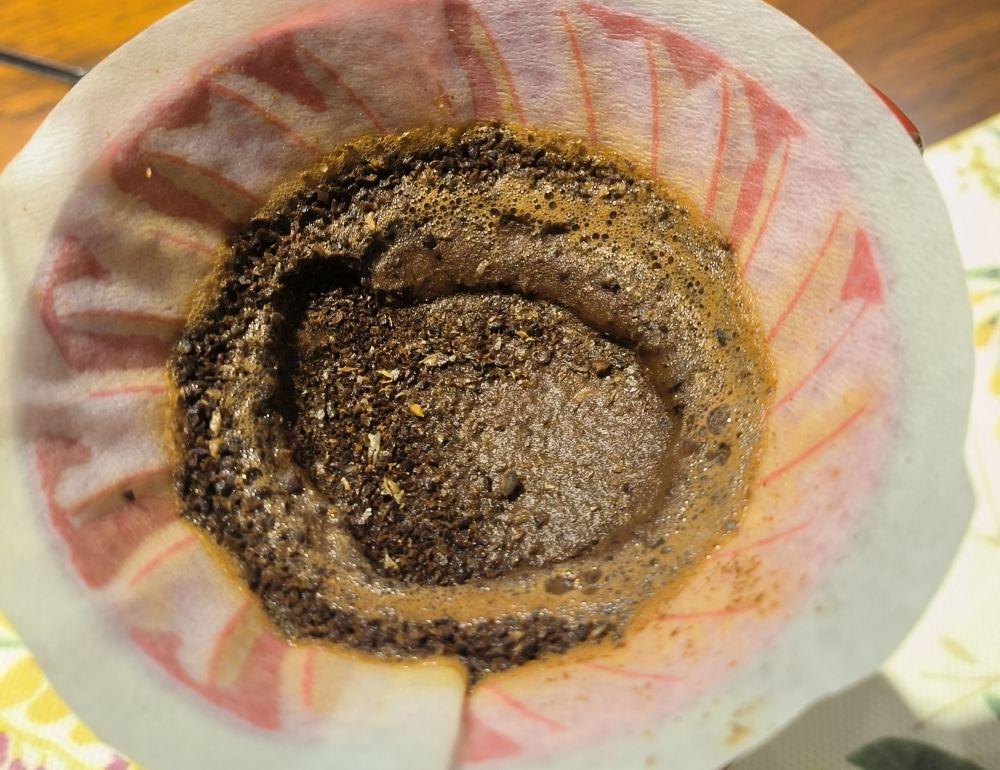
FrontStreet Coffee's method for calibrating grind size is based on the passing rate through a #20 sieve. Medium-light roast coffee uses a grind with a 75-80% passing rate. Medium-dark roast coffee uses a grind with a 70-75% passing rate.
For those without a sieve, you can also judge by the water level's descent speed and time. According to FrontStreet Coffee's brewing parameter standards, the normal extraction time for 1-2 servings of coffee is about 1 minute 50 seconds to 2 minutes 10 seconds. If the grind is too fine, the extraction time extends; if too coarse, it shortens. On that basis, you can get a preliminary read on whether the grind is appropriate from the extraction time.
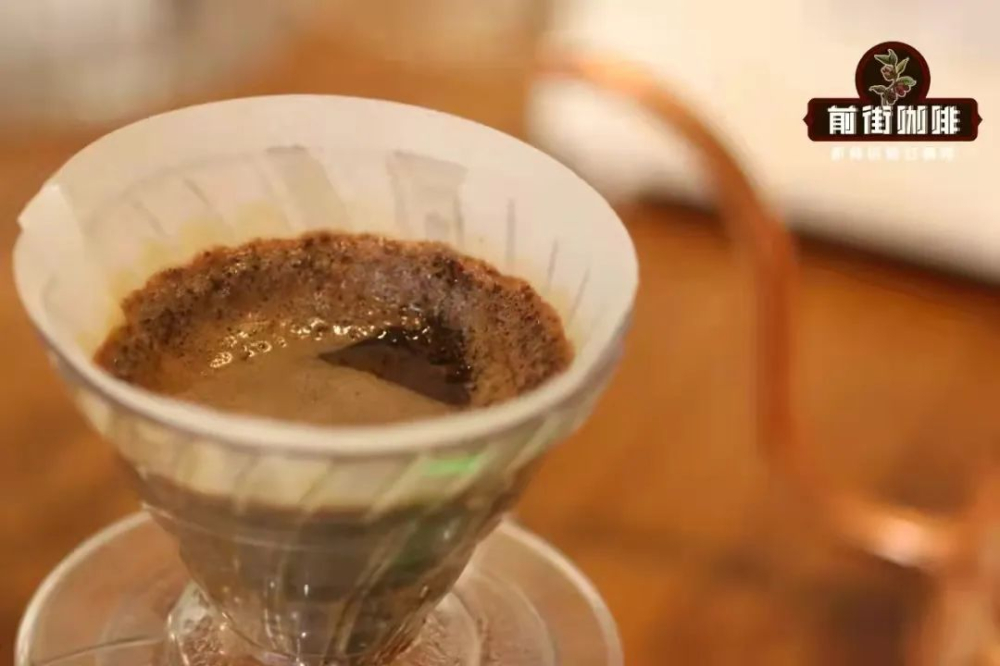
Watch the water level's descent speed as well. Under normal circumstances, the coffee grounds should settle slowly and evenly. If the descent is fast, the grind may be too coarse. If it grows slower and slower, or even clogs, the grind is probably too fine or there is too much fine powder, creating a muddy consistency at the bottom of the bed.
Main Reasons for Weak-tasting Coffee
Still assuming the parameters are correct, a frequent cause of weak coffee is pouring a water circle that is too large and washing down the surrounding grounds. When that surrounding wall of grounds is washed away, water flows straight into the server along the guide ribs without contacting the coffee grounds, so the overall taste is weak and flavorless.
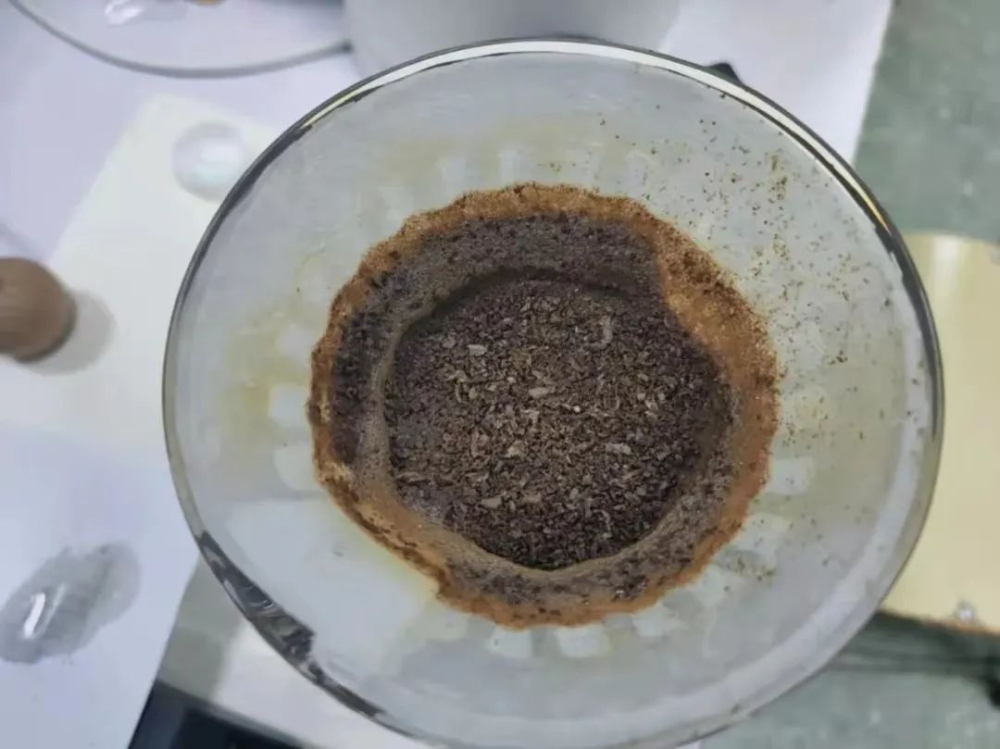
So when pouring water normally, keep the pour circle smaller and don't let the water level rise too high. Let the grounds steep in the water to extract the flavor.
FrontStreet Coffee Recommendation
Because grind size has to match the bean, it helps to start with a coffee whose roast and processing are clearly described. FrontStreet's Papua New Guinea Paradise Bird, the very bean mentioned above, comes from the Paradise Bird estate in PNG's Sigri region. Grown from the same Typica variety as Blue Mountain in volcanic soil at 1,600 to 1,800 meters, and processed with a three-stage washed fermentation, it has a clean, pure cup with pronounced sweetness and very few defects, a dependable choice for anyone who prefers low acidity.
If you'd rather brew something with brighter fruit, FrontStreet's Kenya Tomato is a fine option. It comes from Kenya's Thika region, grown at 1,550 to 1,750 meters from the classic SL28 and SL34 varieties, and processed with Kenya's signature 72-hour double washed fermentation. A light roast keeps its lively acidity and layered fruit, with cherry tomato and smoked plum up front, a full juice-like body, snow pear and black plum in the middle, and a clean finish of brown sugar and green tea.
Important Notice :
FrontStreet Coffee is a long-established specialty coffee roaster in Guangzhou China, selling freshly roasted beans from its own farm in Yunnan as well as dozens of carefully selected single-origin beans from around the world for both pour-over and espresso. The products deliver consistently excellent quality and great value, with shipping within 24 hours. Guangzhou's FrontStreet Coffee shop is recommended by many coffee lovers, and the beans are now available online at the Tmall 。
FrontStreet Coffee has moved to a new address:
FrontStreet Coffee Address: 315,Donghua East Road,GuangZhou
Tel:020 38364473
 Scan and follow the En Gafei WeChat official account. Please indicate that the reprint comes from "En Gafei".

