Why Espresso Machines Use 9 Bar Pressure to Extract Coffee
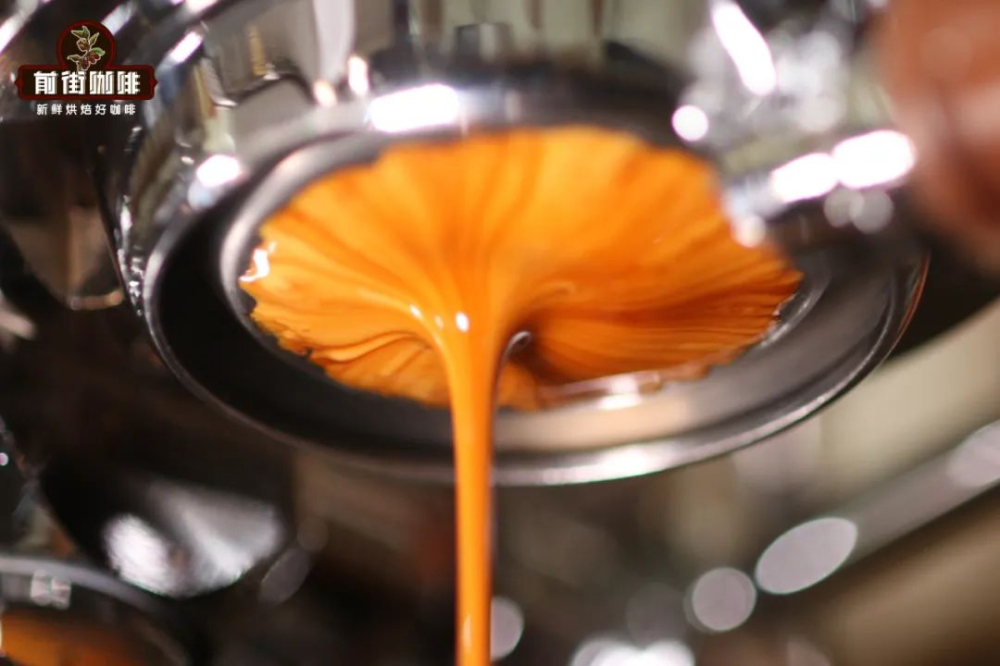
The Critical Role of Pressure in Espresso Extraction
When FrontStreet Coffee explains espresso extraction, we usually talk through the relationships among dose, ratio, grind size, and time. Master those four and you can run an espresso machine with real flexibility. But there's a fifth parameter—mentioned only in passing, yet arguably the most critical of all: pressure.
Espresso differs from every other brewing method in one fundamental way: it uses pressure, while everything else operates at atmospheric pressure. Pressurized extraction is what makes a rich shot possible, and that golden crema can only exist because of pressure.
In extraction tutorials and machine manuals alike, the number is always 9 bar—as if "espresso extraction pressure = 9 bar" were a law of nature. So why did 9 bar become the standard?

Understanding Pump Pressure vs. Extraction Pressure
First, a concept: pressure splits into pump pressure and extraction pressure. The 9 bar everyone quotes is extraction pressure. You can tell which one a gauge is reading: if the needle moves as soon as you press the brew button, it's showing pump pressure. If pressing the button with no portafilter attached moves nothing, but attaching a loaded portafilter makes the needle jump—then the gauge is reading extraction pressure.
Types of Espresso Machine Pumps
The pressure comes from the pump inside the machine, and machines on the market fall into two camps: vibration pumps and rotary pumps. Vibration pumps build pressure through rapid repeated movement of a piston-like structure, and holding pressure steady over a 30-second shot is difficult for them. They're typically rated at 15 bar, but in practice the gauge may climb toward 15 bar at first, then fall rapidly below 9 bar. Some home machines have lower water flow, pushing extraction pressure below pump pressure.

Rotary pumps build pressure through high-speed rotation of metal vanes. Their pressure response is fast and far more stable; they're the standard in commercial machines and high-end home machines, where pump pressure and extraction pressure essentially match.
Pressure Experiment: Different Bars, Different Results
To see why 9 bar won out, try a small experiment across different pressures. FrontStreet Coffee used a rotary-pump machine, which guarantees stable pressure. Baseline parameters: at the standard 9 bar, 20g of coffee yields 40g of espresso in 29 seconds.

Extraction at 6 bar
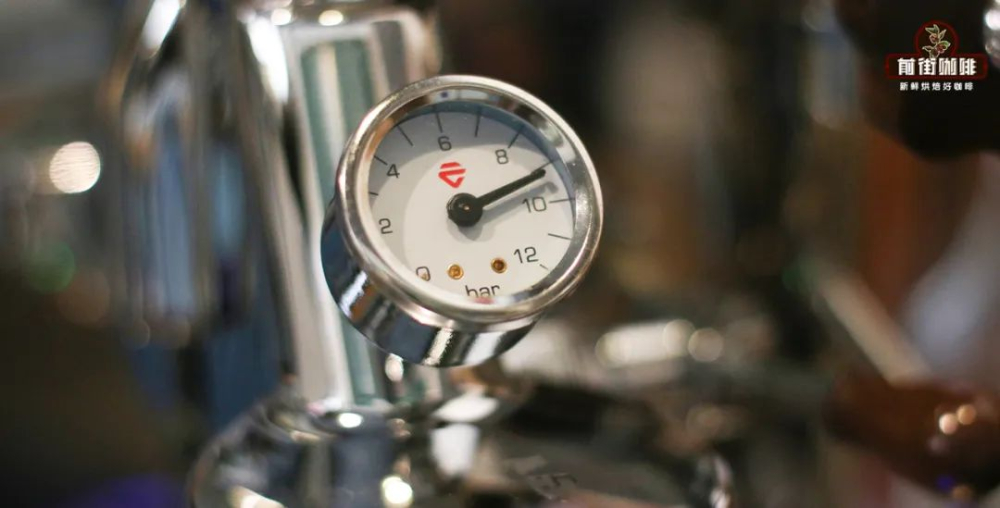
Same parameters, pressure dropped to 6 bar. The group-head gauge took 7 seconds to go from 0 to 6 bar (a 9 bar extraction normally ramps from 0 to 9 bar in 5–6 seconds). Overall flow was slower than at 9 bar, and pulling 40g took 36 seconds.
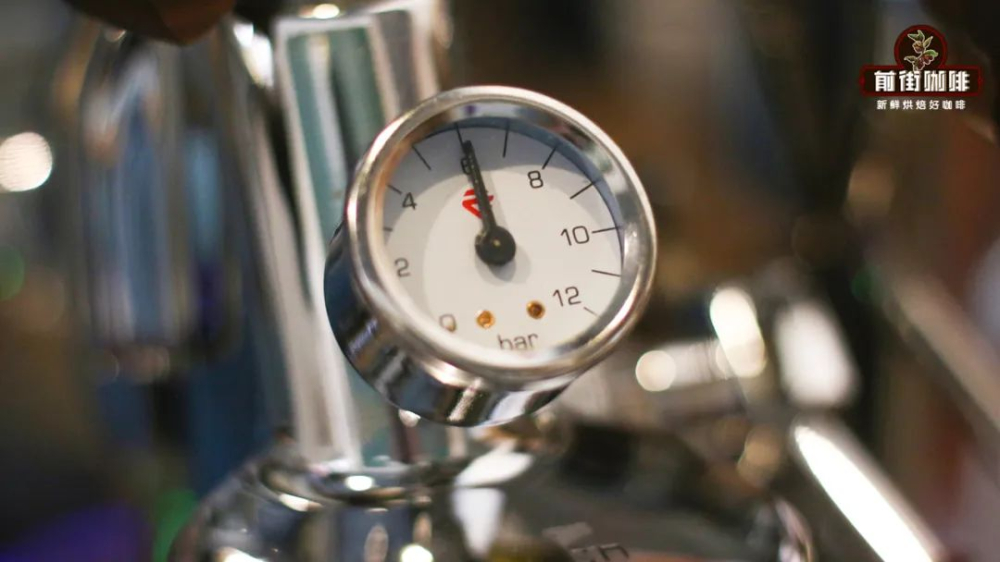
Crema thickness was comparable to 9 bar, but the bubbles were coarser and the crema faded faster. In tasting, the 6 bar shot had less aroma and acidity—a softer, heavier profile.
Extraction at 11 bar
Next, pressure raised to 11 bar: 5 seconds from 0 to 11 bar on the gauge. The initial flow rate matched 9 bar, then ran slightly faster as the shot progressed—final time 27 seconds.
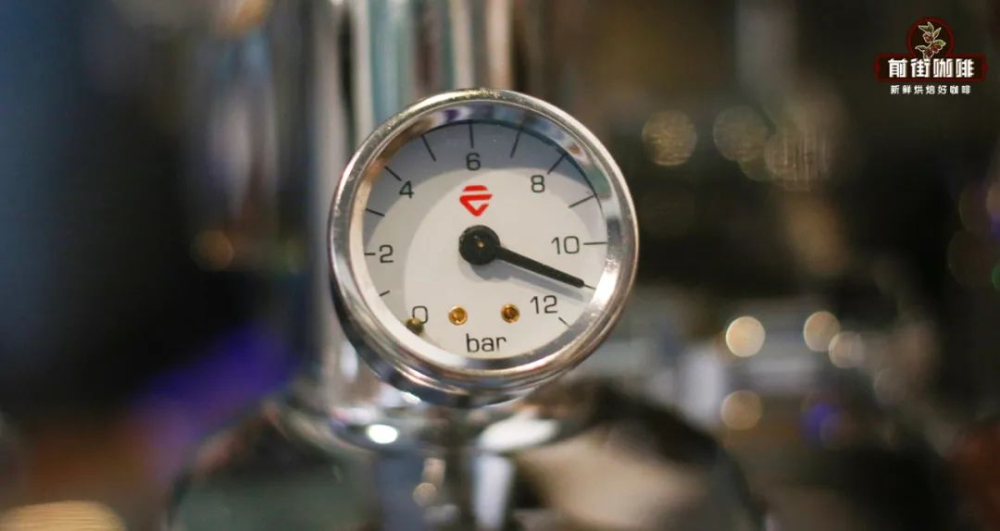
The crema showed little difference. Tasting, though, the 11 bar shot was more intense and richer than the 9 bar version.

The comparison makes the pattern plain: lower pressure means longer extraction, weaker crema, and a "milder" cup; higher pressure means shorter extraction and a richer, more intense flavor.
The Historical Origin of the 9 Bar Standard
Nine bar became the standard back in 1960s and 1970s Italy, as pump-driven machines spread and displaced the older 3–4 bar units. The new machines ran at higher pressure, but higher pressure didn't automatically mean better coffee—extracting above 9–10 bar tended to produce unpleasant burnt, woody flavors. Over time, everyone converged on 9 bar as the sweet spot, delivering both richness and a clean flavor profile, and it became the default for espresso.

Modern Variable Pressure Extraction
With pressure-profiling features now common, more and more brewers manipulate extraction pressure manually to balance flavor compounds. Full 9 bar is no longer the only way to pull a shot.
FrontStreet Coffee Recommendation
Whatever pressure you pull at, the beans make or break the shot. FrontStreet Coffee recommends these espresso-dedicated options:
FrontStreet Coffee Classic Blend (First Choice) — built for espresso machines and moka pots, with abundant golden crema that even novices on entry-level home machines can extract easily. The traditional "Mamba" recipe (Mandheling plus Brazil) delivers a full-bodied, mellow cup with buttery, nutty, spiced dark-chocolate and toast aromatics—effortless latte art included.
FrontStreet Coffee Dark Cocoa Blend (Value Pick) — 100% Arabica, blending Yunnan washed small-bean coffee (mature plum acidity, creamy chocolate aroma when ground) with pulped-natural Brazil. Balanced and highly adaptable—great for Americanos and lattes as well as specialty signature drinks, a dependable partner for cafés watching costs.
FrontStreet Coffee Brazil Fazenda Rainha SOE (Yellow Bourbon) — for a low-acid, gentle single-origin espresso at a friendly price. Medium-dark roasted, it pulls shots of butter cookie, macadamia, and toasted bread with a quiet, sweet disposition and excellent extraction stability.
Important Notice :
FrontStreet Coffee is a long-established specialty coffee roaster in Guangzhou China, selling freshly roasted beans from its own farm in Yunnan as well as dozens of carefully selected single-origin beans from around the world for both pour-over and espresso. The products deliver consistently excellent quality and great value, with shipping within 24 hours. Guangzhou's FrontStreet Coffee shop is recommended by many coffee lovers, and the beans are now available online at the Tmall 。
FrontStreet Coffee has moved to a new address:
FrontStreet Coffee Address: 315,Donghua East Road,GuangZhou
Tel:020 38364473
 Scan and follow the En Gafei WeChat official account. Please indicate that the reprint comes from "En Gafei".