
Iced Pour-Over Coffee Brewing Method: Ratios, Grind Size, and Pouring Steps
An Extremely Simple Iced Pour-Over
Previously, FrontStreet Coffee shared the iced pour-over method used in its own store. Did you find it difficult? For anyone who did — or who found it a chore — FrontStreet Coffee now shares a far simpler approach: the "one-pour" iced brew.
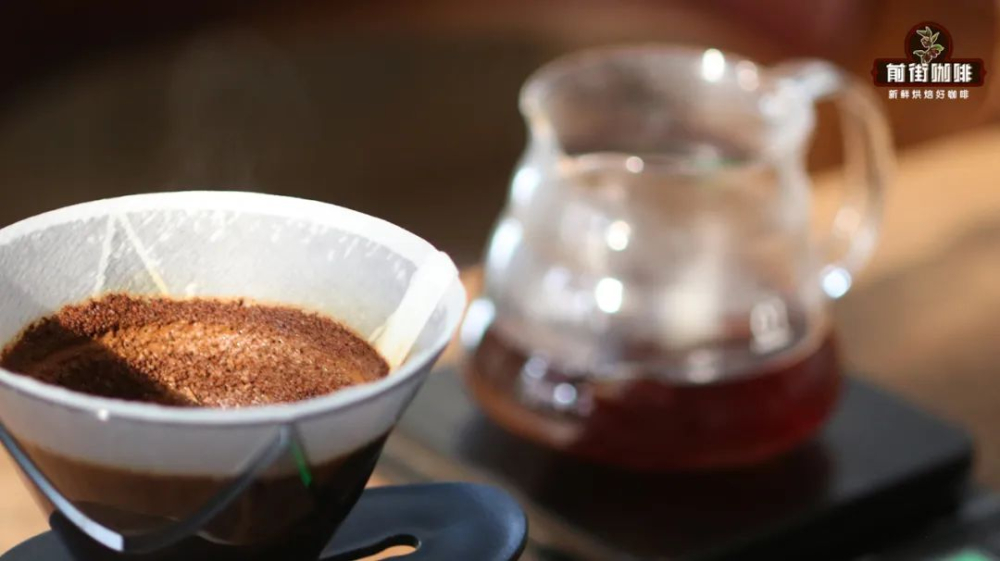
If you are not familiar with the one-pour method, the summary is simple: all the water goes in at once, with no blooming stage.
You can start by watching Mr. Tetsu Kasuya's one-pour iced pour-over video.
Why This Method Suits Home Brewing
FrontStreet Coffee thinks this method is very well suited to home brewing. First, the equipment Mr. Tetsu Kasuya uses in the video — a Hario Smart G hand grinder, a PCT resin gooseneck pour-over kettle and a Mugen cross-star filter cup — is nothing exotic, so there is no equipment gap to worry about. It is easy for a beginner to copy directly.
Tetsu Kasuya's Brewing Process
Here is a brief walkthrough of Tetsu Kasuya's process. The starting parameters were 20 grams of coffee beans at a fine grind — roughly EK-43s setting 7 based on FrontStreet Coffee's own brewing comparisons, while FrontStreet Coffee normally uses settings 9–9.5 for iced pour-over — with water at 93°C, 150ml of water and 80g of ice. Note that the 80g refers to the ice in the server; ice for the glass is calculated separately.
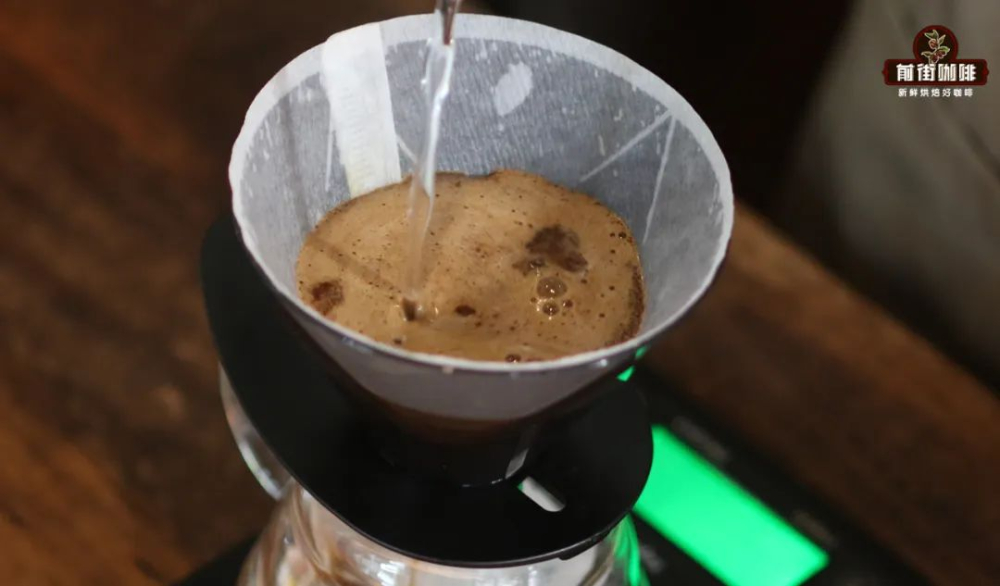
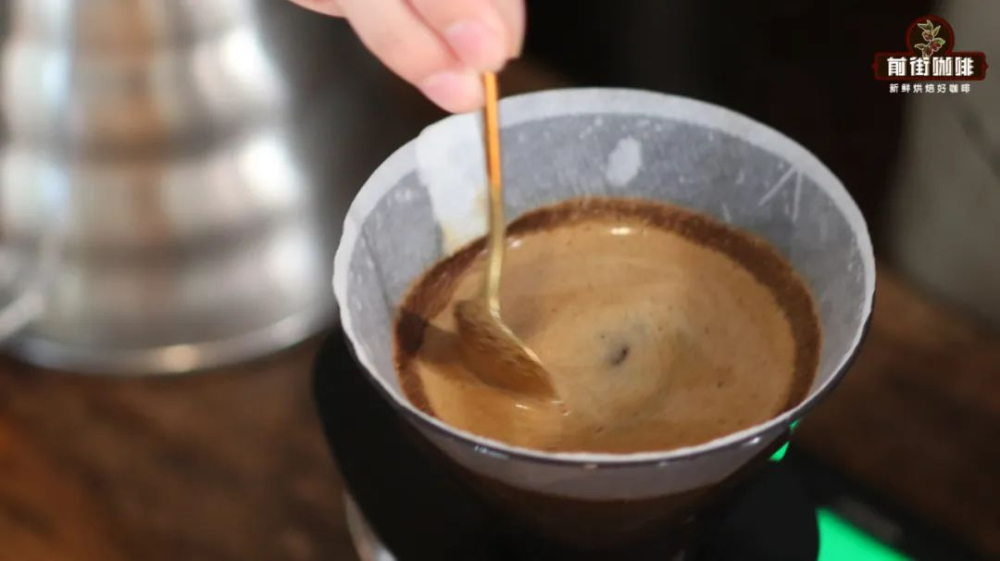
The operation is equally simple. After adding the coffee grounds, pour the 150ml of water directly in a large stream while tracing small circles, taking about 10 seconds. Then stir with a spoon in one direction for 10 circles. Once all the coffee liquid has flowed into the lower server, remove the filter cup and shake the server to speed up cooling. Basically, once the 80g of ice has completely dissolved, the coffee has cooled and is ready to drink.
Flavor Results
FrontStreet Coffee tested this method with several light-roasted coffee beans, and all produced good results. The acidity came out especially bright, refreshing and pleasant.
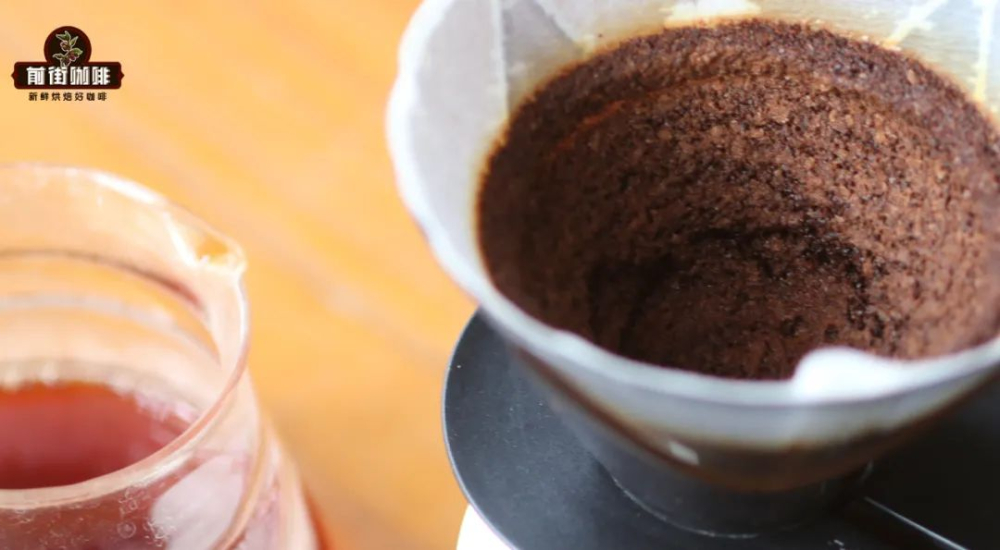
Whether you use this method or the one FrontStreet Coffee's store uses, the underlying logic is the same: extract a reasonably high concentration of coffee at an appropriate extraction rate through a combination of parameters, then cool and dilute it with ice.
Points Worth Noting
Next, a few things worth keeping in mind.
First, the one-pour method is essentially an immersion extraction, so you want the grounds and water to stay in contact as long as possible. That means choosing a slow-dripping filter cup and grinding the coffee finer. The filter cup does not have to be a Mugen — other filter cups known for immersion extraction, including conical ones, work too.
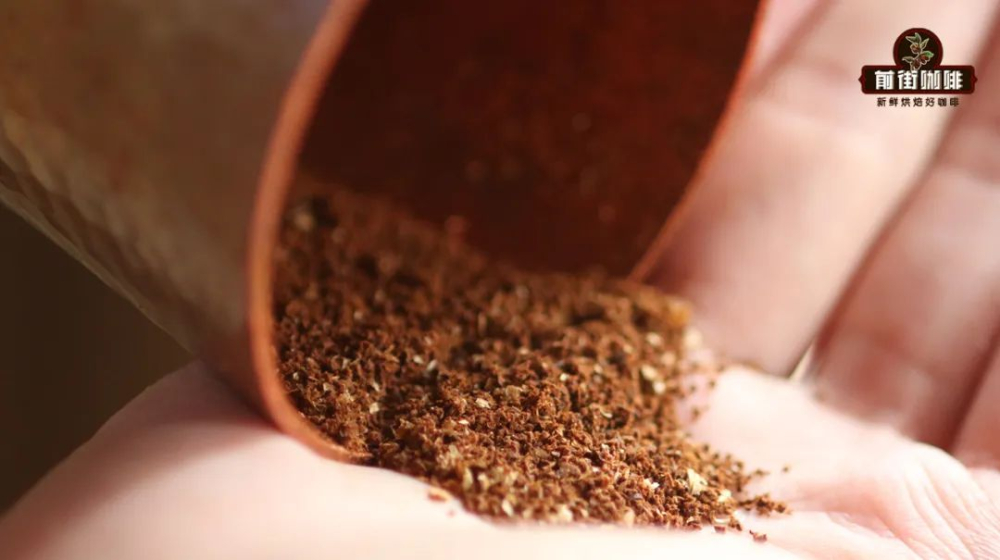
Second, grind quality matters relatively less. Hand grinders that produce more fine particles, for example, do minimal damage here, because unwanted flavors typically come from fine particles being over-extracted during a long soak. Since the coffee-to-water ratio is only 1:7.5, the soak is not long — extraction generally finishes in about 1 minute and 30 seconds. That assumes, of course, that the grind setting is not too extreme. FrontStreet Coffee found that EK43s settings between 4 and 7 all produce good results. At that level the grounds feel rough to the touch, but if they were ground as fine as espresso, bitterness from over-extraction would be inevitable.
Third, the pouring requirements are not strict. The one-pour method demands the least water control, which makes it very beginner-friendly. Because there is no blooming stage, it can lead to a low or uneven extraction rate, so stirring with a spoon compensates for that. Stirring in one direction improves both extraction rate and uniformity. This should feel familiar — with normal pour-over, the water stream itself acts as a "spoon," agitating the coffee bed and raising the extraction rate.
FrontStreet Coffee Recommendation
This method was tested on light roasts, so it rewards beans with clear fruit and floral character. FrontStreet Yirgacheffe Gotingding is a natural starting point: a washed lot from the Gotingding cooperative with bright citrus, berry and jasmine notes and a green-tea-like sweetness that turns especially crisp and refreshing over ice. FrontStreet Ethiopia Huakui pushes the fruit further, with strawberry, passion fruit, jackfruit and lychee aromas, pronounced sweetness and very little bitterness — the kind of coffee people describe as "the least coffee-like coffee."
For something more savory and structured, FrontStreet Kenya Little Tomato is a washed Kenyan bean from the Sika region, grown at 1,550–1,750 meters from the classic SL28 and SL34 varieties and given a 72-hour double-washed fermentation, then roasted light. It opens with dried cherry tomato and floral notes, then a bright, solid acidity like fresh juice, a sweet mid-palate of snow pear and black plum, and a clean, long finish of brown sugar and light green tea. And if you want the iced pour-over at its most delicate, FrontStreet Panama Boquete Geisha is washed processed and shows the orange-blossom-and-honey character and fine fruit acidity that make Geisha worth the fuss.
Important Notice :
FrontStreet Coffee is a long-established specialty coffee roaster in Guangzhou China, selling freshly roasted beans from its own farm in Yunnan as well as dozens of carefully selected single-origin beans from around the world for both pour-over and espresso. The products deliver consistently excellent quality and great value, with shipping within 24 hours. Guangzhou's FrontStreet Coffee shop is recommended by many coffee lovers, and the beans are now available online at the Tmall 。
FrontStreet Coffee has moved to a new address:
FrontStreet Coffee Address: 315,Donghua East Road,GuangZhou
Tel:020 38364473
 Scan and follow the En Gafei WeChat official account. Please indicate that the reprint comes from "En Gafei".

