
Why Does Pour-Over Coffee Flavor Change with Temperature? Best Drinking Temperature and Time for Pour-Over Coffee
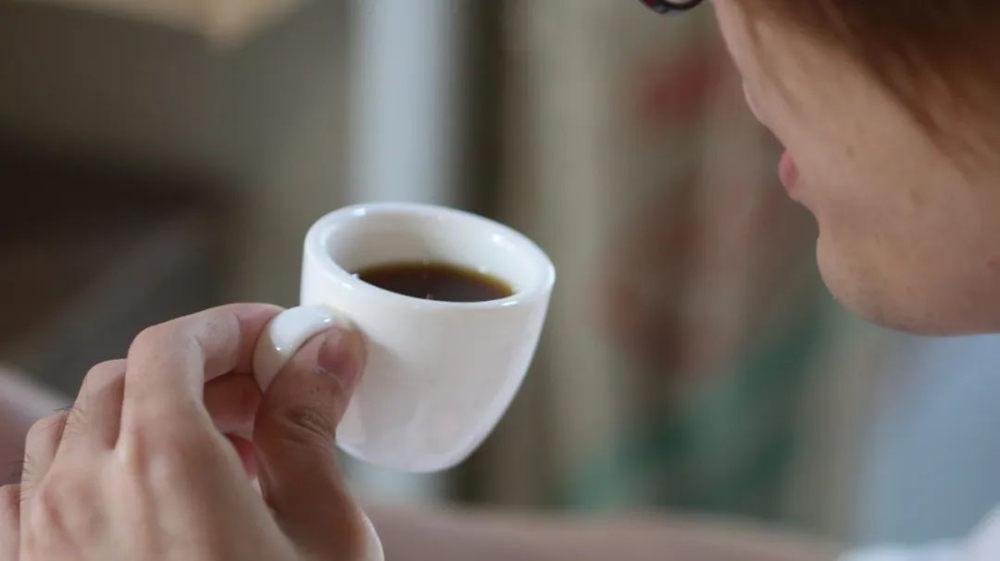
The Art of Coffee Tasting: From Hot to Cold
"Taste your coffee from hot to cold..." Sound familiar? When evaluating coffee, we do start at high temperatures, but there's no need to rush. As the minutes pass and the cup cools, we can follow the flavors as they evolve. Is this actually the right way to do it?
The practice comes from coffee cupping. Cupping serves two purposes: assessing a coffee's flavors and testing its quality. That's why a full cupping session typically runs 30–50 minutes. Throughout the session, tasters sample the coffee from hot down to cool, so they can catch any flavor defects and track how the cup changes as it loses heat.

Why Do Coffee Flavors Change with Temperature?
Why does the same cup taste different as it cools? Two variables are at work: the coffee's flavors themselves are changing, and temperature changes how we perceive those flavors. The first is the coffee changing; the second is us changing.
Take cupping as an example. The extraction works like this: hot water steeps the grounds for 4 minutes, then the crust is broken, the floating grounds skimmed off, and tasting begins. But for the rest of the session, the liquid stays in relatively still contact with the grounds at the bottom of the bowl—so extraction never actually stops, it just slows to a crawl compared with the initial steep.

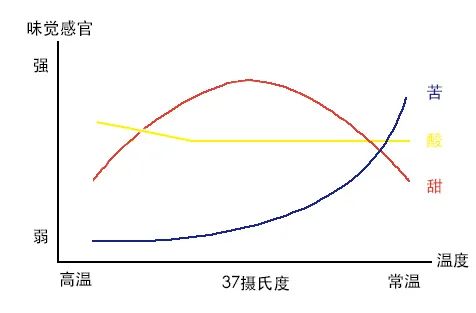
The other factor is that temperature shapes our sensitivity to taste. Think of the sour, sweet, and bitter notes we pick up in coffee. Between 10–40°C, our taste buds register sourness at almost exactly the same intensity, but as the temperature climbs beyond that, sour perception sharpens noticeably.
Sweetness behaves differently: we're relatively deaf to sweet flavors above 50°C and below 35°C, while perception peaks at temperatures near body temperature.

Bitterness is the reverse—it's hard to detect when hot, but once the coffee cools to room temperature, our sensitivity to bitter flavors becomes acute. (Now you know why Guangdong herbal tea is meant to be drunk while hot!)
Temperature Zones for Coffee Tasting
Because our perception of sour, sweet, and bitter shifts with temperature, tasting at different points in the cooling curve reveals different sides of the coffee. Cupping is therefore divided into three temperature zones—high, medium, and low—for a complete evaluation.
The high-temperature zone runs roughly 50–70°C. Above 70°C, the coffee is simply too hot to taste and the flavors are hard to read. In this zone you're mainly picking up the coffee's flavor profile—the general direction. Most people find it nearly impossible to separate subtle differences between coffees when they're this hot. A fruit-acid coffee, for instance, won't show its particular fruit in this zone, but you can tell immediately that it belongs to the fruit-acid family.
The medium-temperature zone, roughly 35–50°C, is where the delicate work happens. This is when subtle flavors become detectable, and it's also the range where our perception of sour and sweet is sharpest. The low-temperature zone runs from about 35°C down to room temperature. Negative flavors tend to surface here, which is exactly why cuppers taste all the way down through the low zone—only then is the evaluation of the beans complete.
How to Taste Pour-Over Coffee
If you want the full picture of a pour-over, by all means start hot, move through the medium zone, and finish cool, noting the flavors at each stage. Some coffees genuinely shine at low temperatures—Geisha, for example, often reveals green tea and honey notes as it cools.

If your goal is simply to enjoy a pour-over at its best, FrontStreet Coffee suggests drinking it through the high and medium temperature zones. Coffees led by bitter notes, for instance, taste balanced and full-bodied at medium-high temperatures, when our perception of bitterness is at its dullest. But as the cup cools—even with no negative flavors developing—our sharpening sensitivity to bitterness can make the same coffee taste "bitterer" and hard to finish.
FrontStreet Coffee Recommendation
Coffees that change this dramatically with temperature deserve a dripper that shows off every stage of the curve, and few do that better than the Hario V60. Its 60-degree cone and fast, unrestricted flow pull a remarkably three-dimensional extraction from bright, floral coffees. The FrontStreet washed Worka Gedeb from Yirgacheffe is a perfect candidate: jasmine and citrus when hot, layered berry and honeyed sweetness in the medium zone, and a clean green-tea finish as it cools.
For a cup that evolves like a Geisha without the estate price, the FrontStreet Boquete Washed Geisha from Panama delivers orange blossom, citrus, and berry notes with a silky balance—green tea and honey emerging beautifully at lower temperatures. If you lean toward sweeter, juicier cups, the natural-processed Huakui from Ethiopia brings strawberry, passion fruit, and jackfruit that stay vivid from the first hot sip to the last cool one.
To taste the full arc, brew with a 1:15 ratio at 90–91°C, grind close to fine granulated sugar, and sip patiently from hot to cool—you'll get a different coffee at every stage.
Important Notice :
FrontStreet Coffee is a long-established specialty coffee roaster in Guangzhou China, selling freshly roasted beans from its own farm in Yunnan as well as dozens of carefully selected single-origin beans from around the world for both pour-over and espresso. The products deliver consistently excellent quality and great value, with shipping within 24 hours. Guangzhou's FrontStreet Coffee shop is recommended by many coffee lovers, and the beans are now available online at the Tmall 。
FrontStreet Coffee has moved to a new address:
FrontStreet Coffee Address: 315,Donghua East Road,GuangZhou
Tel:020 38364473
 Scan and follow the En Gafei WeChat official account. Please indicate that the reprint comes from "En Gafei".

