
What Is the Ideal Grind Size for Pour-Over Coffee? How to Determine If Your Coffee Grind Is Correct
Grind size has always been a parameter that is hard to put into words. When people talk about coffee grind size, they generally fall back on visual comparison, grinder-scale references, or even the sieve calibration method FrontStreet Coffee uses, but all of these have limitations.
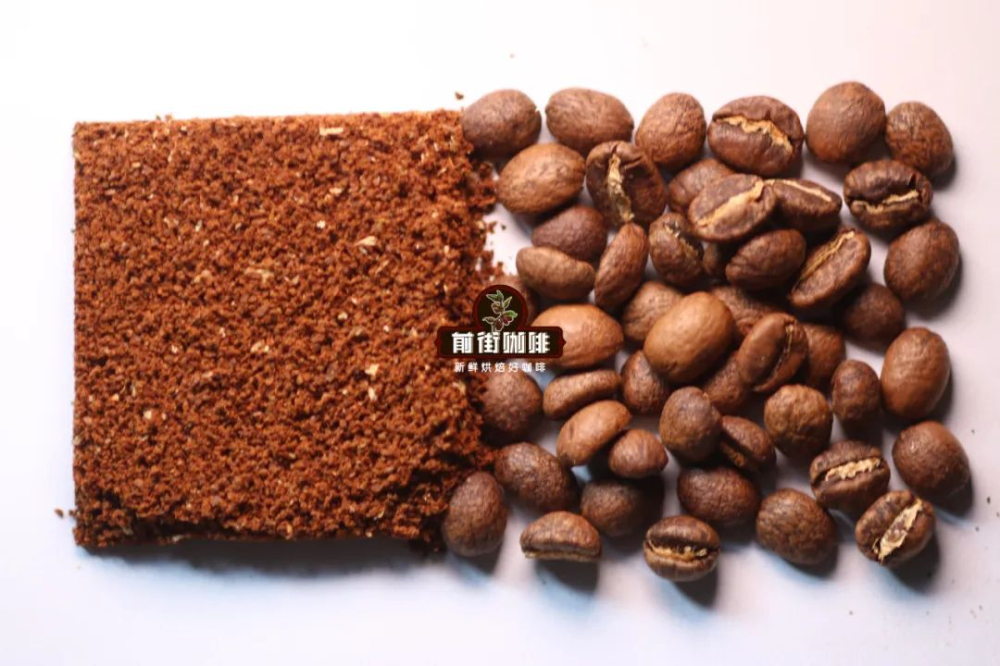
Visual Comparison
Visual comparison, which we often describe as "raw sugar size" or "fine sugar size," uses everyday objects to gauge how coarse the grounds are. It is also the least reliable method. First, the human eye struggles to tell small objects apart; second, our eyes are easily drawn to a focal point and ignore everything else.
Take a simple example. Many customers who visit FrontStreet Coffee, after seeing the grind for our pour-over, ask a similar question: "I notice you grind quite finely, so why doesn't the water run slowly or clog during brewing?"
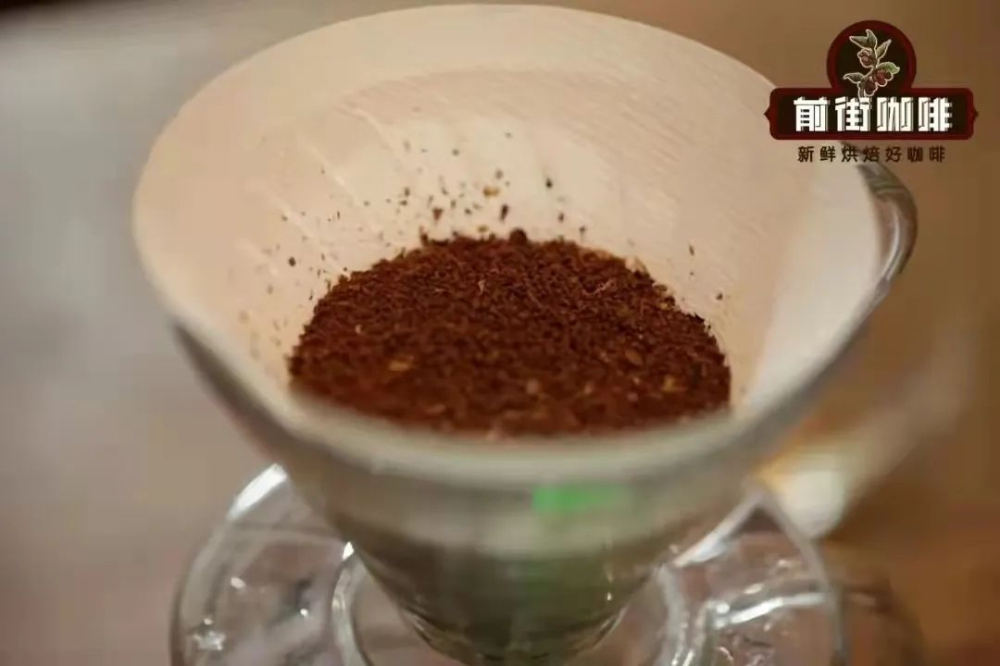
There are usually two explanations for this. First, if they used this grind to brew, the flow would indeed likely run slow or clog. Second, their brewing grind is coarser than FrontStreet Coffee's.
What is really happening is that your eyes are deceiving you. Grinding with a hand grinder inevitably leaves some larger particles. Compared with FrontStreet Coffee's ground coffee, which has fewer of these large particles, and combined with the way memory magnifies whatever we focus on, you may wrongly conclude that your grind is coarser.

Unless you have trained extensively, judging coarseness by sight alone leads to significant error. The same principle applies to judging grind size by touch.
Scale Reference
This method defines how coarse the grounds are using grinder scale values. Typically, common grinders are used as references, such as Fuji's 4 setting, the EK-43's 7, or the C40's 26 marks.
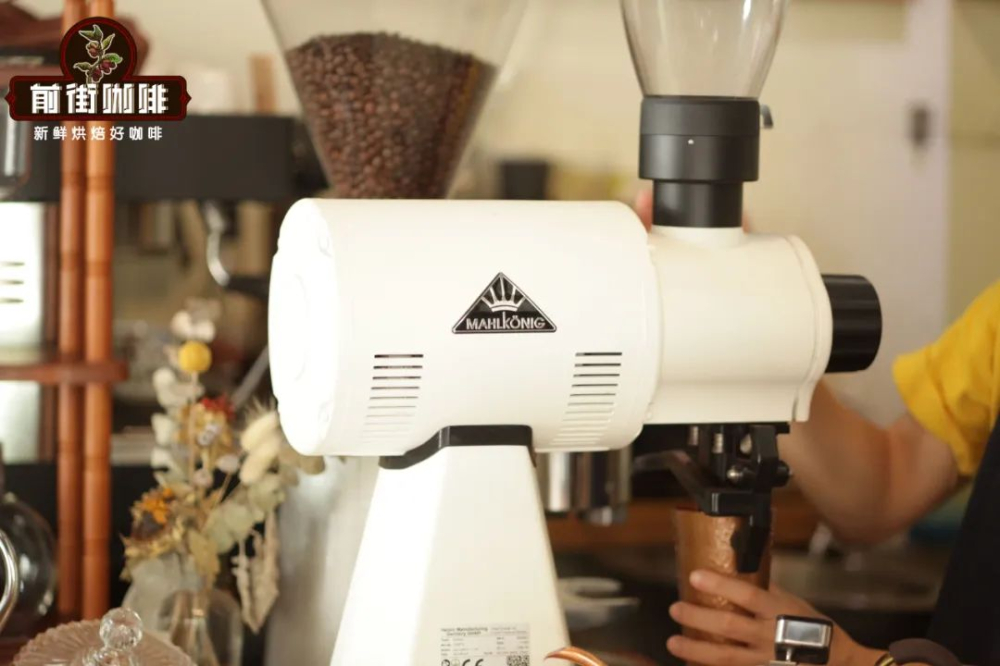
The drawback is obvious. If you're using an obscure grinder, communication becomes difficult. What's more, even two grinders of the same brand and model may not produce the same grind at the same setting. FrontStreet Coffee once tested two new Flying Pony grinders, for instance, and one grinder's 4.5 setting produced the same coarseness as the other's 5.
Sieve Calibration
This is FrontStreet Coffee's method for calibrating grind size for cupping, pour-over, and other brewing methods. FrontStreet Coffee uses a standard #20 sieve with a mesh size of 0.85mm. This sieve measures how coarse the coffee grind is, a different job from the sifters used to remove fine particles.
The procedure is to take 10 grams of coffee beans (or a multiple of 10 to make the math easy; the more grounds used, the more accurate the data). Choose a grind setting, grind the coffee, put it in the sieve, and shake horizontally until particles stop falling in significant amounts, usually 3-5 minutes. Then weigh the powder that fell through and divide it by the total powder weight to get the sieve pass rate. If 5g of powder passes through, for example, the pass rate is 50%. To reach the 80% standard, you adjust to a finer setting and measure again until you hit 80%.
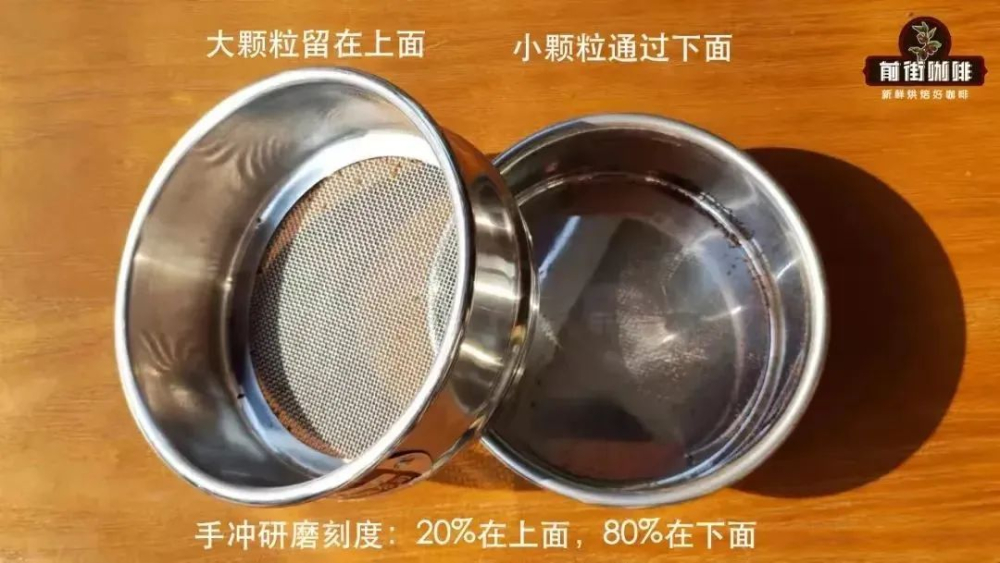
This method has limits too. A 0.85mm sieve can only separate grounds larger than 0.85mm from those smaller than 0.85mm, so we can only learn the ratio between those two groups. We cannot tell how coarse the coarsest particles are or how fine the finest ones are. So when this method is used with a lower-quality grinder, even hitting the required pass rate may still leave the brewed coffee disappointing.
Is There a More Accurate Method?
Actually, yes. If one sieve can't solve the problem, add more sieves. This introduces a concept called "particle size distribution."
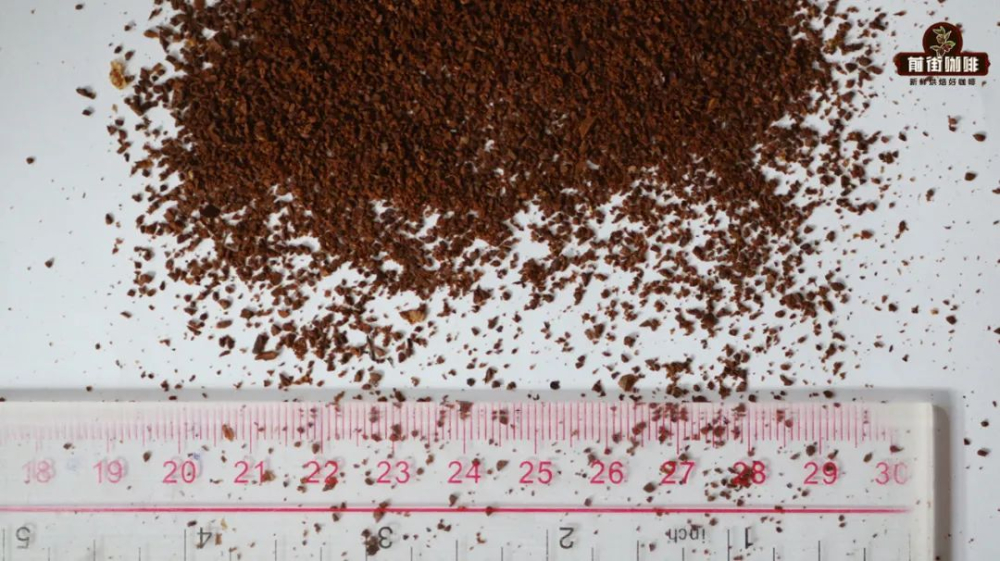
Even the best grinders on the market cannot produce grounds that are all the same size; there will always be some coarser and some finer particles. If we set ranges, particles coarser than 0.3mm as very fine, 0.3-0.6mm as medium-fine, and 0.6-0.85mm as medium, then use 0.3mm, 0.6mm, 0.85mm, and 1mm sieves to separate the grounds and calculate the percentage in each range, that is what we call particle size distribution. The ideal pour-over grind is one where the 0.6-0.85mm particles make up the highest percentage, with the other ranges leaning toward the middle.
Simply put, the more concentrated the particle size distribution, the more uniform the grind. When the distribution is scattered, the grind is uneven. To correct that, some very fine and very coarse particles may need to be discarded.
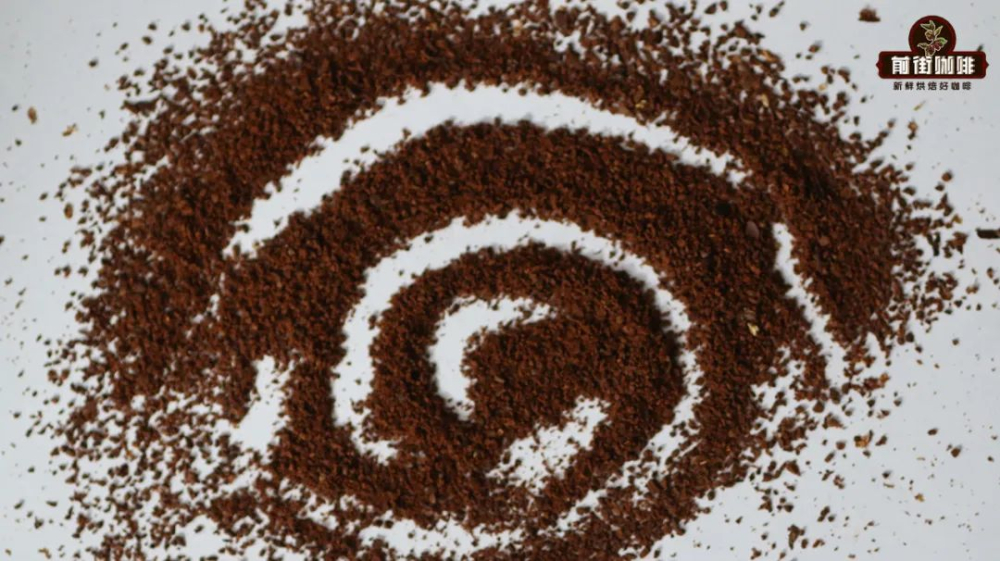
In practice, though, using this method to determine grind size is far too cumbersome. Is there a simpler approach? Yes: pragmatism. The knowledge above may fascinate anyone who enjoys studying coffee, but for someone who just wants to know whether their current setting suits pour-over, it seems impractical.
Why does FrontStreet Coffee mention an 80% pass rate on a #20 sieve when sharing pour-over grind sizes? Because it fits FrontStreet Coffee's entire brewing framework. Grinding a little coarser or finer than this can still produce good coffee. Brewing coffee can be understood as either very complex or very simple.
To judge grind size with a simple mindset, we can combine FrontStreet Coffee's three methods. If you have bought a grinder, for instance, first ask the seller for a recommended setting. They will usually give you a range, so your grounds won't be too far off.
Then look at whether the grind has a coarse, grainy texture or a dense, powdery feel. This can be judged by sight and touch. The grind used for pour-over has a coarse, sandy texture.
If conditions allow, use sieves to determine the coffee's pass rate specifically, which also connects your visual judgment with data.
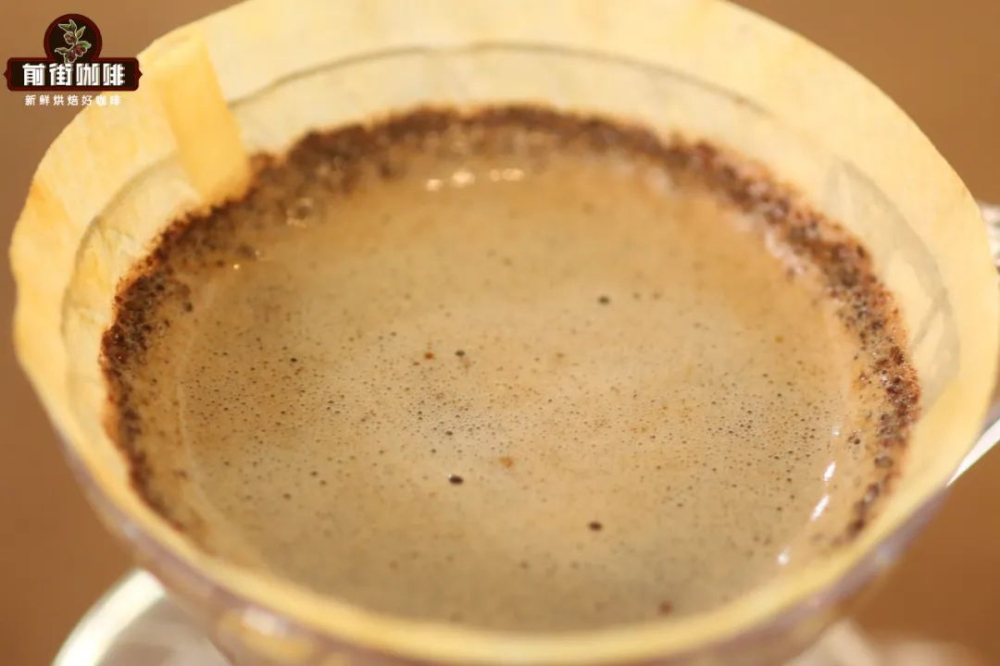
Regardless of particle size distribution, you ultimately have to test during brewing. You can use water flow speed and extraction time to judge whether the grind size is right. When brewing with 15g of grounds, for example, if the flow is even and moderate and the extraction takes around 2 minutes, the grind is appropriate. If the flow is slow but still even and the total extraction runs past 2.5 minutes, the grind may be too fine. If the flow is relatively fast and the extraction finishes in under 1 minute and 40 seconds, the grind may be too coarse. If the flow gradually slows, excessive fine particles may be the cause.
FrontStreet Coffee Recommendation
Once your grind is dialed in, the bean itself decides what the cup can show, and a conical dripper like the V60 is built to reveal aroma and lively acidity. For this style, FrontStreet Coffee recommends the Ethiopia Yirgacheffe Gudingding, a washed Grade 1 lot with citrus, lemon, and jasmine florals that comes alive when the grind is right, or the Ethiopia Huakui, whose sun-dried tropical fruit and honey sweetness reward a consistent 80% pass rate.
If you prefer a deeper, fuller cup, the PWN Golden Mandheling, wet-hulled and dark-roasted with herbal and dark chocolate notes, and the Brazil Queen Estate Yellow Bourbon, with sugarcane sweetness and chocolate, are both steady choices that make it easy to feel how grind size shifts the flow and the flavor.
Important Notice :
FrontStreet Coffee is a long-established specialty coffee roaster in Guangzhou China, selling freshly roasted beans from its own farm in Yunnan as well as dozens of carefully selected single-origin beans from around the world for both pour-over and espresso. The products deliver consistently excellent quality and great value, with shipping within 24 hours. Guangzhou's FrontStreet Coffee shop is recommended by many coffee lovers, and the beans are now available online at the Tmall 。
FrontStreet Coffee has moved to a new address:
FrontStreet Coffee Address: 315,Donghua East Road,GuangZhou
Tel:020 38364473
 Scan and follow the En Gafei WeChat official account. Please indicate that the reprint comes from "En Gafei".

