
Flavor Characteristics of Finca Rivense del Chirripó Black Honey Process Geisha Coffee Beans from Costa Rica's Brunca Region
Café Rivense del Chirripó
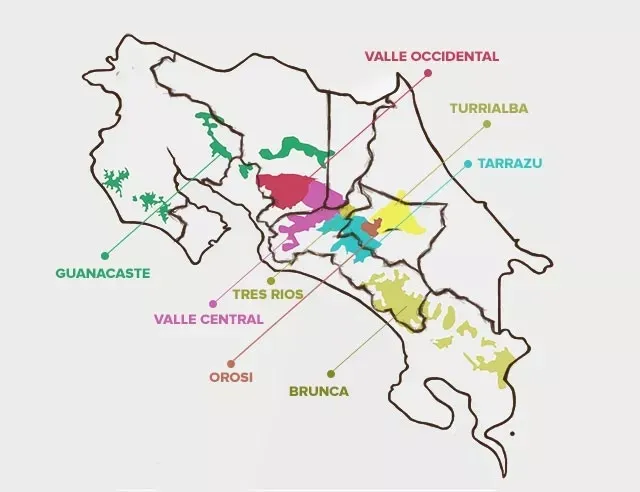
Café Rivense del Chirripó sits in Costa Rica's Brunca region at an altitude of roughly 1,550 meters, facing the country's highest peak in the Chirripó range.
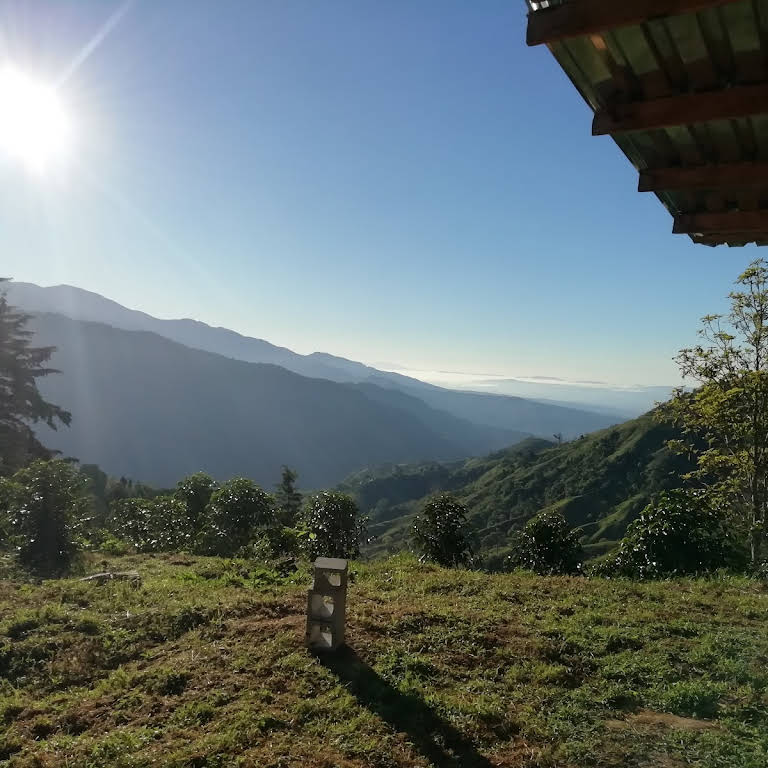
In 2005, Régulo Gerardo Ureña Chacón and his wife Isabel Rojas bought this 8-hectare farm to start growing coffee. Tending the trees in the morning, they could watch the magnificent scenery of the Chirripó range—hence the name Café Rivense del Chirripó.
The micro-region lies between Costa Rica's two highest peaks: Cerro de la Muerte (3,491 meters at its highest) and Chirripó Mountain (3,820 meters). The valley between them creates a unique microclimate exceptionally well suited to coffee.
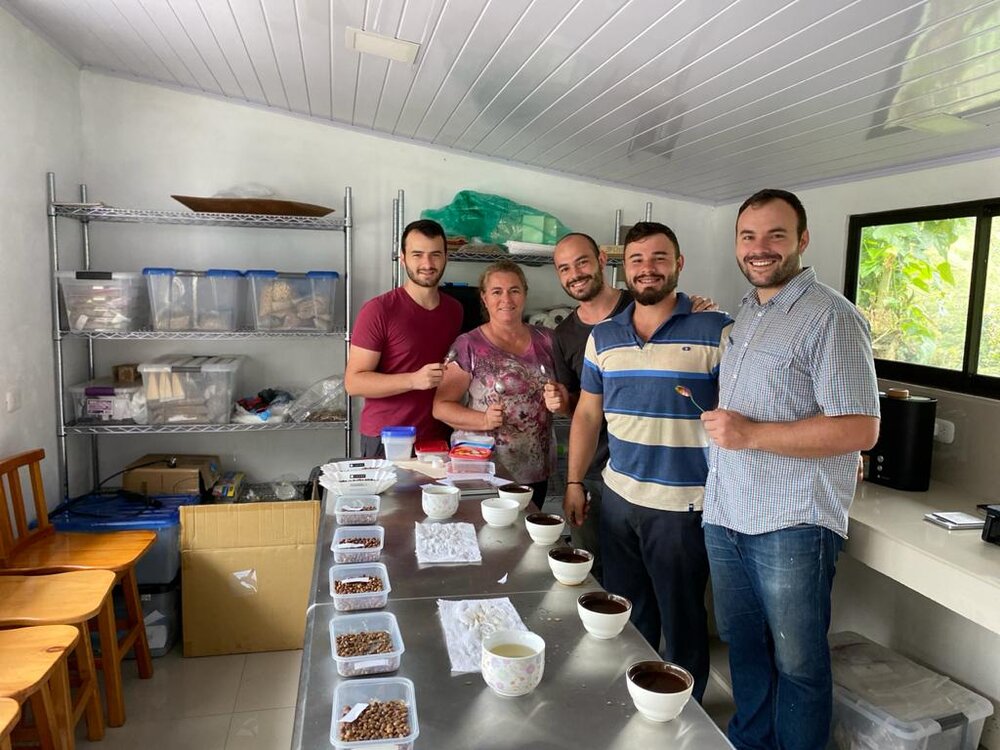
The early years were hard: the harsh environment and the family's inexperience caused plenty of problems in cultivation. But through the couple's constant experimentation and years of dedicated work, the farm took 5th place in the 2019 Cup of Excellence (COE). Today, Café Rivense del Chirripó also processes green coffee for surrounding farmers and sells it to overseas markets, while encouraging growers to join in producing high-quality specialty coffee.
The farm has always been committed to environmental protection. From cultivation to green-bean processing, it runs sustainable management systems to minimize its carbon footprint: measured doses of organic fertilizer matched to soil composition keep the trees nourished without excess chemicals; all water resources on the farm are protected; and fruit trees are planted to shade the coffee while feeding surrounding wildlife. In this green environment, the quality of the coffee cherries is better assured too.
Black Honey Processing
All cherries at Café Rivense del Chirripó are dried naturally or semi-naturally, producing coffee of very high sweetness while saving substantial water.
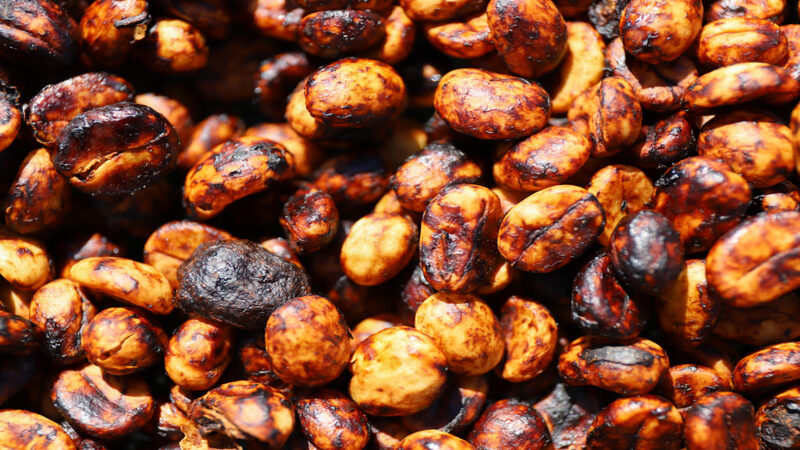
The Ureña Rojas family harvests cherries at peak ripeness to capture the fruit's maximum sugar content. The skin and pulp are removed in a dry environment, keeping the mucilage layer completely intact; the parchment beans, still coated in mucilage, then sun-dry on raised beds for 12–15 days. Because the mucilage layer is thickest in black honey, drying takes time and the temperature must stay controlled to ensure even drying and thorough sugar conversion. Every step—drying, hulling, classification, packaging, export—is strictly managed to guarantee batch traceability.
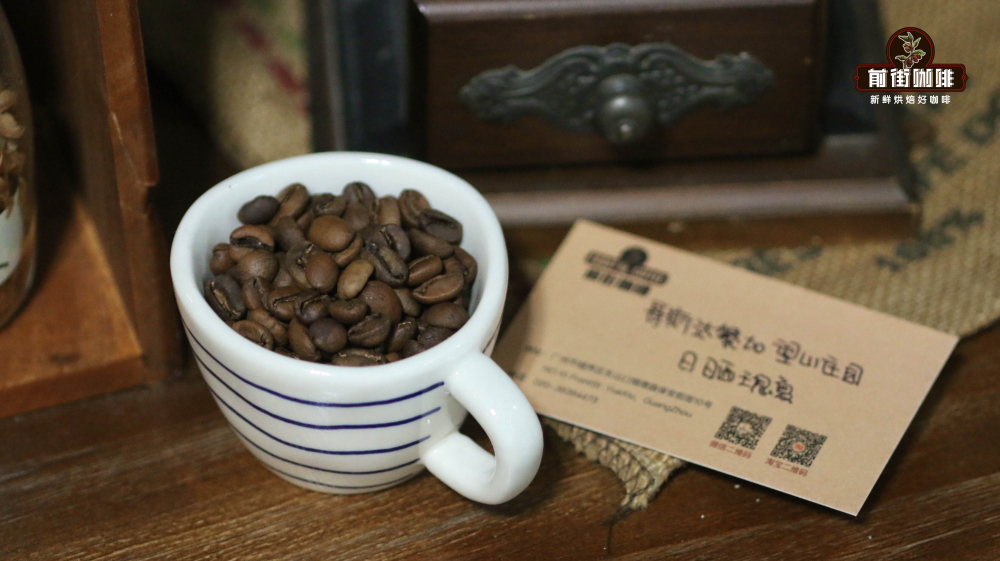
FrontStreet Coffee: Café Rivense del Chirripó Black Honey Geisha Coffee Beans
Origin: Costa Rica, Brunca Region
Farm: Café Rivense del Chirripó
Variety: Geisha
Altitude: 1,550m
Processing: Black Honey
Flavor Notes: Dried Fruit, Honey, Fermented Fruits, Cherry
The black honey Geisha that FrontStreet Coffee acquired leans heavily fruity. To preserve more of the fermented sweetness, FrontStreet's roaster uses a medium-light roast. In cupping, the dry aroma shows rich fermented notes of dried fruit and berries, while the cup delivers high citrus, cherry, and cantaloupe sweetness with soft acidity and a full body.

Brewing Reference
This black honey Geisha belongs to Costa Rica's high-altitude SHB (Strictly Hard Bean) category. To draw out its rich fruity layers, FrontStreet Coffee suggests a higher water temperature and a finer grind. The harder the bean, the finer the grind needed to increase the extraction surface area and raise the extraction rate.
Dripper: V60
Water Temperature: 90-91°C
Coffee Dose: 15g
Ratio: 1:15
Grind Size: Fine sugar size (78% pass through #20 sieve)

Three-Stage Extraction: Add the grounds to the V60, wet the bed with twice the coffee's weight in water, and bloom for 30 seconds. Then, with a small stream, pour in concentric circles from the center outward until you reach 125g, and pause. Once the bed drops to half the dripper's height, resume the same fine stream for the third pour up to 225g. Remove the dripper once all liquid has drained, for a total time of about 2 minutes (allowing 10 seconds of variance).
Brewed this way, the black honey Geisha offers rich fermented aromas of cantaloupe and tropical fruit, balanced berry and cherry acidity, and a fruit-tea finish that grows more pronounced as the cup cools—full sweet-and-sour character throughout.
FrontStreet Coffee Recommendation
If this black honey Geisha intrigues you, here are more Gesha experiences worth exploring, drawn from FrontStreet Coffee's range:
FrontStreet Coffee Panama Boquete Gesha (Washed) — the ideal first taste of the classic "Gesha flavor": orange-blossom honeyed sweetness, oolong-tea texture, and delicate fruit acidity with clear layering. An entry-level Panama Gesha that lets newcomers experience high-quality Gesha at an approachable price—excellent as pour-over, drip bags, cold brew, or Clever dripper.
FrontStreet Coffee Gesha Village Gold Label (Ethiopia, Natural) — from the estate founded beside Ethiopia's original Gesha forests, this is the Gesha 1931 variety, the estate's top non-auction coffee, drawn from just 10% of total production and finished with an elaborate natural process. Inherently complex and layered, it impresses from the distinctive dry aroma through to the long, fragrant finish—competition-grade coffee for advanced drinkers.
FrontStreet Coffee Granana Estate Gesha (Ethiopia, Medium-Light Roast) — from a single-variety farm in Yirgacheffe whose processing station sits amid 700 hectares of largely untouched, shade-rich land. Hand-picked ripe cherries are sun-dried on raised beds for 14–20 days depending on the weather. The cup shows bright citrus acidity, elegant ginger-flower aroma, and full sweetness of mature fruit, with the silky texture and refined finish typical of the Gesha variety. Medium roast also makes it a superb choice for a Gesha SOE espresso.
Important Notice :
FrontStreet Coffee is a long-established specialty coffee roaster in Guangzhou China, selling freshly roasted beans from its own farm in Yunnan as well as dozens of carefully selected single-origin beans from around the world for both pour-over and espresso. The products deliver consistently excellent quality and great value, with shipping within 24 hours. Guangzhou's FrontStreet Coffee shop is recommended by many coffee lovers, and the beans are now available online at the Tmall 。
FrontStreet Coffee has moved to a new address:
FrontStreet Coffee Address: 315,Donghua East Road,GuangZhou
Tel:020 38364473
 Scan and follow the En Gafei WeChat official account. Please indicate that the reprint comes from "En Gafei".

