
How Beginners Can Learn to Appreciate Single-Origin Coffee: How to Describe Pour-Over Coffee's Flavor Characteristics

How Beginners Can Learn to Appreciate Single-Origin Coffee
After years of development, specialty coffee has grown into a scientific system. From the cultivation and processing of green beans at the raw level to roasting and then to brewing and tasting, complete bodies of knowledge are now in place.
Improvements in green bean quality, roasting, and brewing ultimately serve one goal: giving us a better experience when we taste coffee. Learning to taste is therefore an important part of coffee education. Coffee tasting also has professional courses, such as Q-Grader for industry professionals and SCA Coffee Sensory Tasting courses for enthusiasts.

These courses can help people who already have some coffee knowledge organize what they know and calibrate their sensory perception of coffee flavors. For complete beginners, the expensive tuition and the knowledge gained are far from proportional. FrontStreet Coffee therefore does not really recommend that newcomers impulsively sign up for coffee courses. You can observe and pick up some readily available basic knowledge first, then decide.
Of course, the booming growth of specialty coffee has also drawn in many people who want to understand and learn about coffee, including some eager to taste flavors the way professionals do, able to rattle off dozens of descriptors for a single cup. On the question of where beginners should start, FrontStreet Coffee has a few suggestions worth trying.

Drink More
Ask a barista, "Why are you so sensitive to coffee flavors?" and the answer is likely to be, "Drink often, and you will be able to taste the flavors by drinking more."
That makes perfect sense. Every coffee flavor, every taste memory, is accumulated through continuous tasting and remembering. Unless you have an extraordinary tongue or a memory strong enough to lock in a flavor after a single taste, you still need to drink coffee frequently and note the characteristics of each one.

Even if you take a professional tasting course, you still need to keep tasting coffee to build your flavor library. Otherwise, all the expensive tuition gets you is a certificate.
Set Aside Flavors, Judge Tastes First
If you force yourself to name flavors from the very beginning, no matter what, that is demanding and rushed. Coffee tasting is a long-term accumulation with no crash course. If you are a beginner learning to describe coffee flavors from scratch, FrontStreet Coffee suggests you first forget about flavor descriptions and start with the most basic act of drinking coffee and expressing how you feel.

Coffee sensory perception is a fairly subjective judgment, depending on personal taste preferences and sensitivity to different tastes. Coffee tasting, however, carries objectivity within that subjectivity. When judging a coffee's quality, you cannot decide based on your own preferences; you describe objectively. Whatever taste you detect, you describe that taste.
Distinguishing the taste of a cup of coffee is the simplest part, because there are only five basic tastes, sweet, sour, bitter, salty, and umami, and coffee mostly shows just three: sweet, sour, and bitter. FrontStreet Coffee offers an example. When we taste a washed Yirgacheffe coffee bean, the first sip reveals a very obvious sourness. At that point we need to decide whether it is a stimulating, sharp acidity, a sweet-and-sour fruit acidity, a gentle, slight sourness, or a fermented, vinegar-like sourness.

When we taste a Brazilian coffee bean, we can clearly perceive that the cup is full of bitterness, but again we need to decide whether it is a comfortable bitterness, a strong, stimulating bitterness, an unpleasant burnt bitterness, a bitterness that gives way to sweetness, or a slight sweetness emerging from the bitterness with some chocolate notes.
Try applying this comparative method across different types of coffee and ranking them. If coffees A, B, and C are all sour coffees but ranked by acidity, A is greater than B is greater than C, then judging by the quality of that acidity, A's is somewhat stimulating, sharp, and uncomfortable. B, though also very sour, is comfortable and pleasant to drink. C has a good sweet-and-sour balance, sour and sweet at once, like drinking a complex fruit juice.
Use this method first to remember the tastes of coffee, and build the subconscious habit of tasting coffee flavors whenever you drink a cup.

Understand Flavors
The coffee flavors we describe are made up of taste and aroma. Aroma is the source of many flavors. We borrow other objects to describe coffee flavors partly because we can taste flavors in coffee that resemble those other objects, such as fruits, and partly because it helps people who have never tasted this coffee get a picture of its profile. The descriptors we use are therefore all common foods from daily life that we eat often.
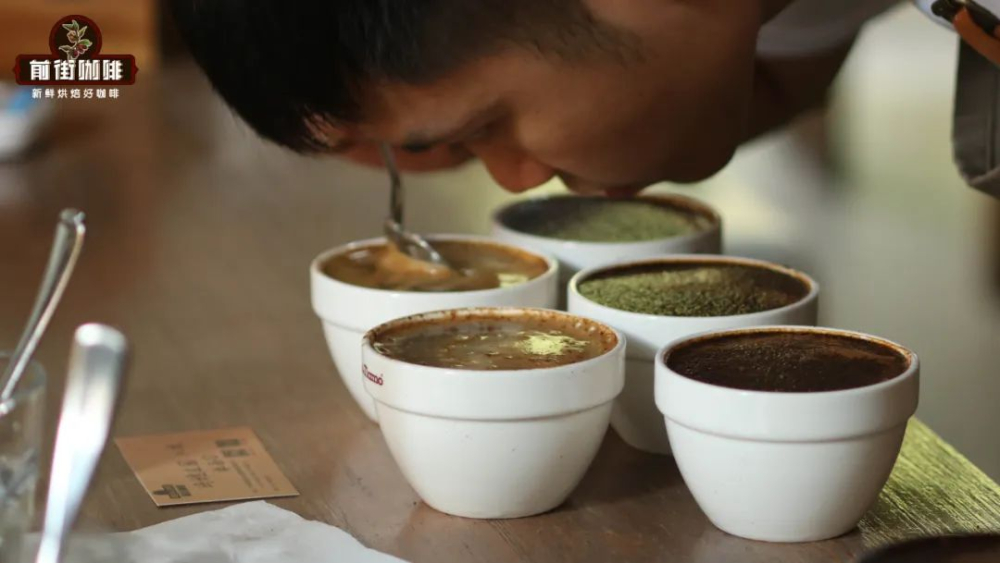
FrontStreet Coffee offers an example to make this clear. If a barista introduces a coffee bean as having strawberry flavor, breaking it down means that, in terms of taste, the bean's sweet-and-sour balance resembles the sweet-and-sour sensation of berries like strawberries, while in terms of aroma, you can perceive the aromatic character of strawberries in the coffee.
In coffee descriptions, rose, jasmine, vanilla, mango, roasted sweet potato, and honey are all reflected through aroma. So beyond drinking and tasting more coffee, you also need to appreciate carefully the aromatic character of the foods around you in daily life. Only by storing those flavors in your mental flavor library will you react immediately and identify a flavor next time you meet a similar aroma in coffee.
FrontStreet Coffee Recommendation
There is no better way to train your palate than to taste a few well-known single origins side by side. FrontStreet's Washed Gutiti Cooperative coffee from Ethiopia is many drinkers' first stop in specialty coffee, with bright citrus, berry, and floral notes and a green-tea sweetness. Its gentle, luminous acidity feels like the natural sweet-and-sour of fruit rather than a sharp bite, which makes it very easy to accept when you are just starting out.
Once you want more intensity, FrontStreet's Sun-Dried Huakui from Ethiopia is famous for its tropical aroma of strawberry, passion fruit, and jackfruit, with clear sweetness and almost no bitterness. Tasted one after the other, these two beans make it easy to feel the difference between washed and natural processing, which is exactly the kind of comparison that builds your flavor memory.
Important Notice :
FrontStreet Coffee is a long-established specialty coffee roaster in Guangzhou China, selling freshly roasted beans from its own farm in Yunnan as well as dozens of carefully selected single-origin beans from around the world for both pour-over and espresso. The products deliver consistently excellent quality and great value, with shipping within 24 hours. Guangzhou's FrontStreet Coffee shop is recommended by many coffee lovers, and the beans are now available online at the Tmall 。
FrontStreet Coffee has moved to a new address:
FrontStreet Coffee Address: 315,Donghua East Road,GuangZhou
Tel:020 38364473
 Scan and follow the En Gafei WeChat official account. Please indicate that the reprint comes from "En Gafei".

