The Correct Method for Making Coffee with a French Press | Comparison Between French Press and Pour-Over Coffee
Why Choose a French Press?
At FrontStreet Coffee, we often hear people sigh that "pour-over is just too hard to pick up" or that no matter how long they've been brewing, they still can't get consistent results. If that sounds like you, the French press might be exactly the brewer you need.
The French press's biggest advantage over pour-over is that it strips away most of the manual technique, and with it, most of the variables. Once you've dialed in a set of solid French press parameters, you can handle practically any coffee bean with confidence and brew a good cup almost effortlessly.
Grind Size
Grind size is the single most important parameter in any brewing method, and the French press is no exception. Just as with pour-over, many brewing problems trace back to an incorrect grind.
For a French press, go slightly coarser than you would for pour-over. Measured against a #20 sieve, aim for roughly a 70% pass-through rate - what we usually describe as a "coarse sugar" texture.
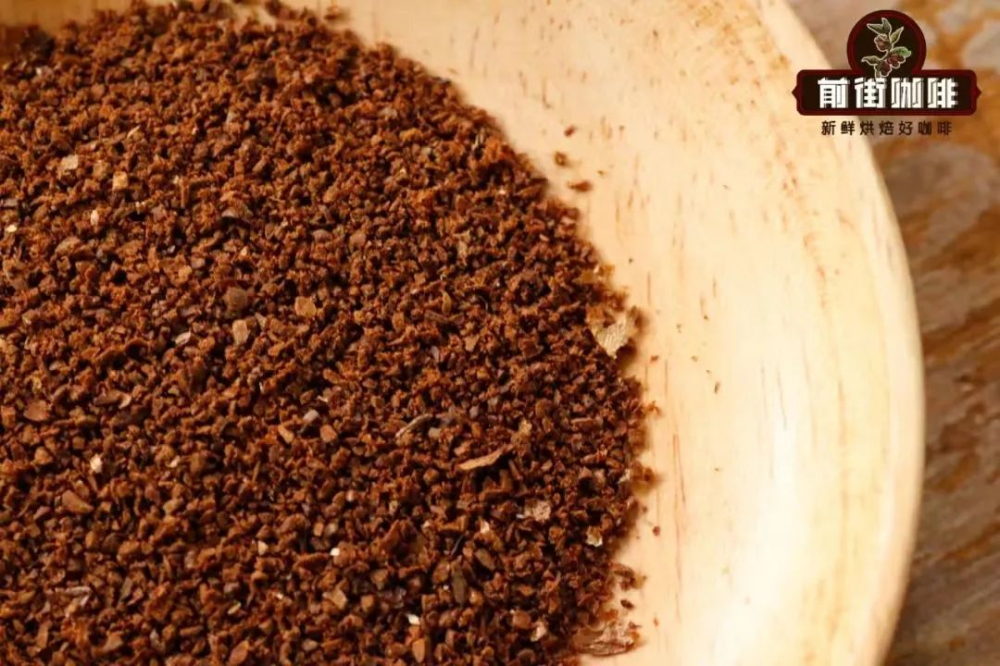
A common question is whether you should grind light roasts finer and dark roasts coarser, as many people do with pour-over. The answer is no - and this is precisely where the French press shines. People often get lost trying to figure out the right grind for each individual bean, especially when juggling several varieties. With a French press, one grind works for every roast level. Because it is an immersion method, you control extraction through steeping time rather than through grind; pour-over, being a percolation method, depends on the grind to regulate contact time. That makes the French press far more forgiving.
Coffee-to-Water Ratio
FrontStreet Coffee generally recommends a 1:16 ratio. With 15 grams of coffee, that means 240ml of water, which yields a brew of around 1.1-1.2% concentration - a very comfortable drinking range. If you prefer something stronger, a 1:15 ratio works well too.
Water Temperature
Since the French press method calls for all the water to be poured in at once, the brew temperature drops steadily throughout the steep. That means you should start a little hotter than you would for pour-over. For medium-light roast (acidic) beans, use 93-94°C; for medium-dark roast (low-acid) beans, 89-90°C is ideal.
Brewing Time
Time is the most freely adjustable parameter in French press brewing. Because there's no deliberate stirring to speed up extraction, the grounds need a longer steep than pour-over for their compounds to slowly permeate into the water. FrontStreet Coffee recommends a steep of 3 minutes 30 seconds to 4 minutes: about 4 minutes for medium-light roasts, and 3 minutes 30 seconds for medium-dark roasts. Steep too long and harsh, bitter flavors will creep in.
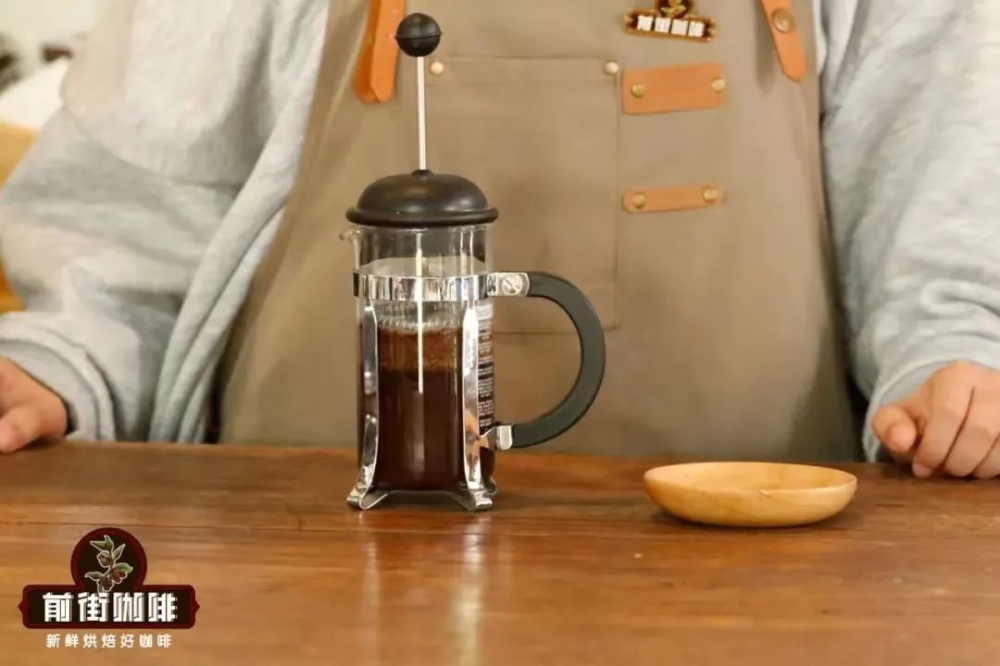
Step-by-Step Instructions
For this walkthrough, FrontStreet Coffee used its Brazil Queen Estate Yellow Bourbon, a medium-dark roast. Prepare 15 grams of beans and grind them on an EK43s at setting 11, which gives a grind with a 70% pass-through rate on a #20 sieve.
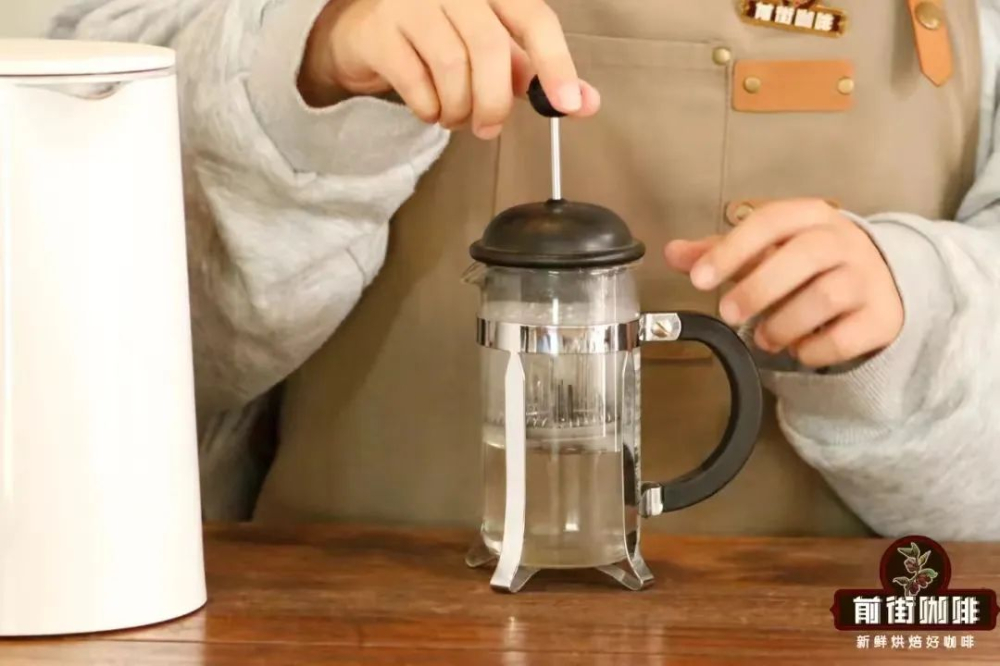
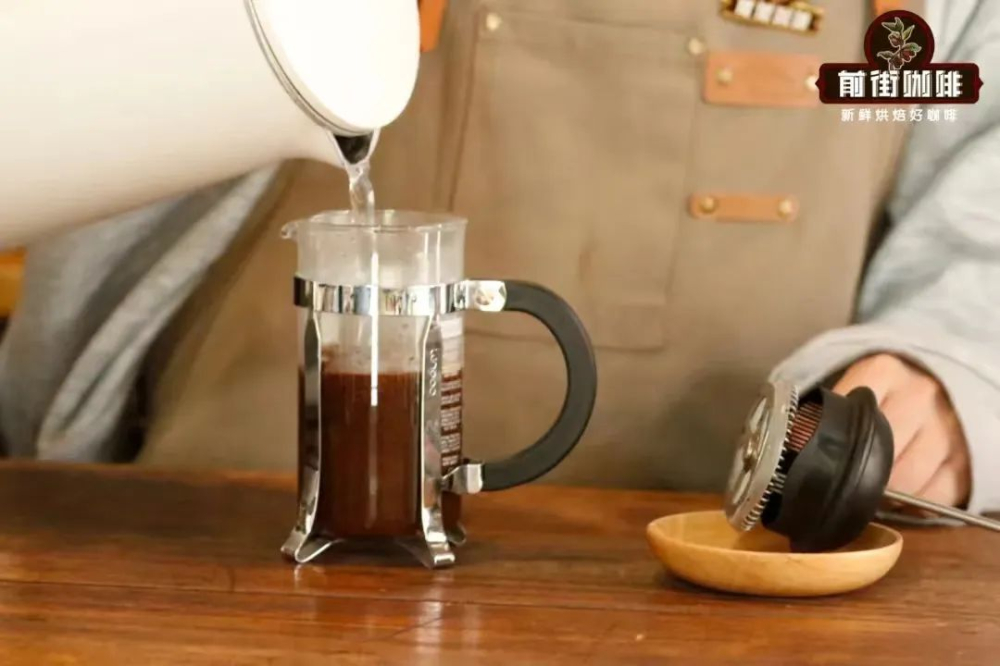
Add the grounds to the press, then pour in 240ml of 90°C water. Raise the plunger and set the lid on top, then wait 3 minutes 30 seconds. When the time is up, press the plunger down slowly and steadily so the floating grounds sink to the bottom. Finally, pour out all the coffee in one go - if any liquid is left sitting on the grounds, it will keep extracting and turn bitter.
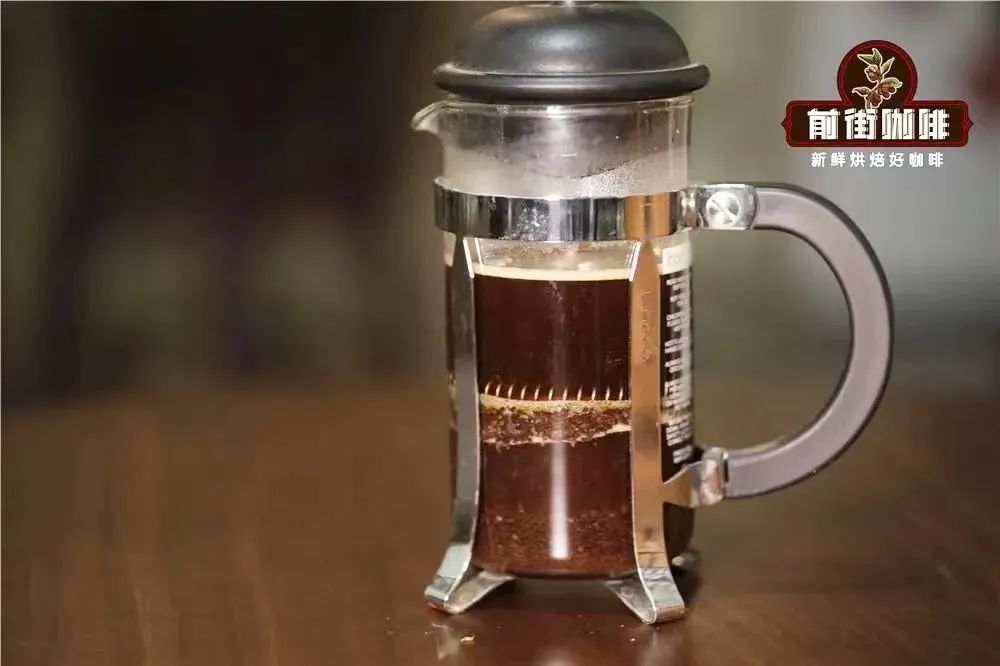
A French press brew will show a layer of fine oils on the surface, along with some fine sediment. That's perfectly normal: the metal mesh filter has relatively large openings, so fine particles and oils pass through freely. The oils actually enrich the mouthfeel, and any sediment settles out if you let the cup rest for a moment before drinking.
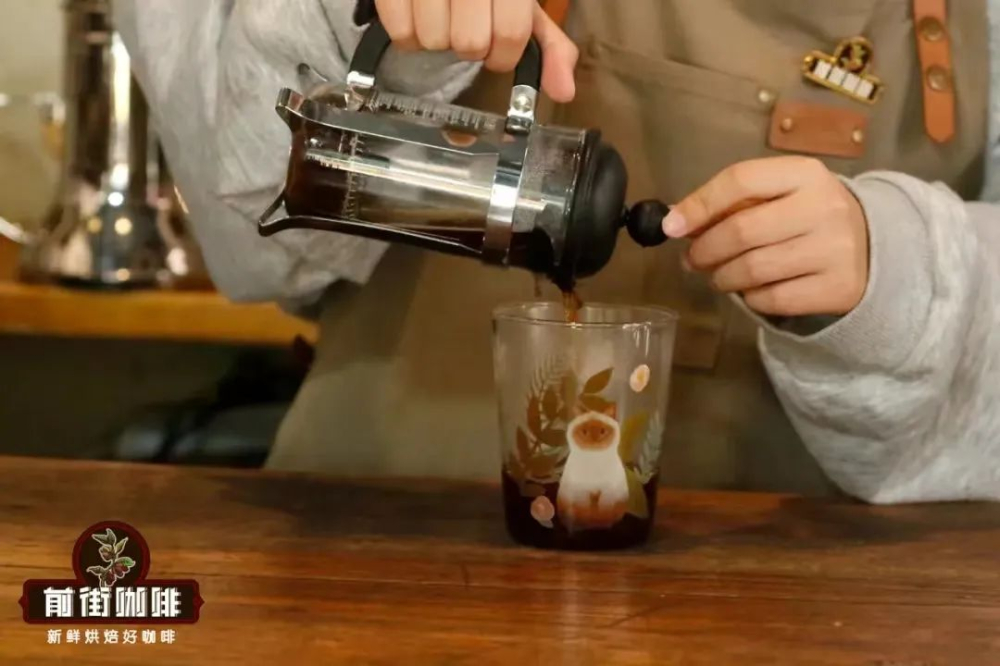
That's really all there is to it. Once your parameters are set, the whole process boils down to five steps: add grounds, add water, wait, press, pour.
FrontStreet Coffee Recommendation
Because the French press is a full-immersion brewer with a metal mesh, it naturally produces a fuller-bodied cup with rich oils - which makes it a great match for medium to medium-dark roasts. If you love a heavy, low-acid black coffee, FrontStreet Coffee recommends the PWN Golden Mandheling: one of Asia's most celebrated specialty coffees, triple hand-sorted plus once machine-sorted for uniform, bright beans, and roasted medium-dark to bring out dense notes of spice, caramel, cedar, and dark chocolate. Pressed in a French press, it delivers a mellow, full-bodied cup with excellent crema.
If you prefer something fragrant and lively, try FrontStreet Coffee's Strawberry Candy - a Geisha blend custom-built from Costa Rica honey-processed coffee and Panama washed Geisha, capturing the very best of Central American flavor. Steeped in a French press, it opens with rose, citrus, grape, and dried blueberry aromatics, and with a splash of milk it turns into a strawberry gummy sweetness.
Important Notice :
FrontStreet Coffee is a long-established specialty coffee roaster in Guangzhou China, selling freshly roasted beans from its own farm in Yunnan as well as dozens of carefully selected single-origin beans from around the world for both pour-over and espresso. The products deliver consistently excellent quality and great value, with shipping within 24 hours. Guangzhou's FrontStreet Coffee shop is recommended by many coffee lovers, and the beans are now available online at the Tmall 。
FrontStreet Coffee has moved to a new address:
FrontStreet Coffee Address: 315,Donghua East Road,GuangZhou
Tel:020 38364473
 Scan and follow the En Gafei WeChat official account. Please indicate that the reprint comes from "En Gafei".