
I Have an Idea to Open a Coffee Shop, But I'm Not Sure If It's Feasible
I recently came across a question along the lines of "I have an idea to open a coffee shop, but I'm not sure if it's feasible." Before starting this article, let me sum up the author's position: "Don't consider opening a coffee shop just because you can't find a suitable job and happen to have some savings, because 'loving coffee' and 'running a coffee shop' are two completely different things." Of course, this article aims to say more than just that.
The reason I'm sharing this topic is that the original poster's idea is also the idea of many people, so it is worth taking the opportunity to briefly discuss the problems built into that thinking. Since the original post is quite long, I'll present it in a four-panel format.
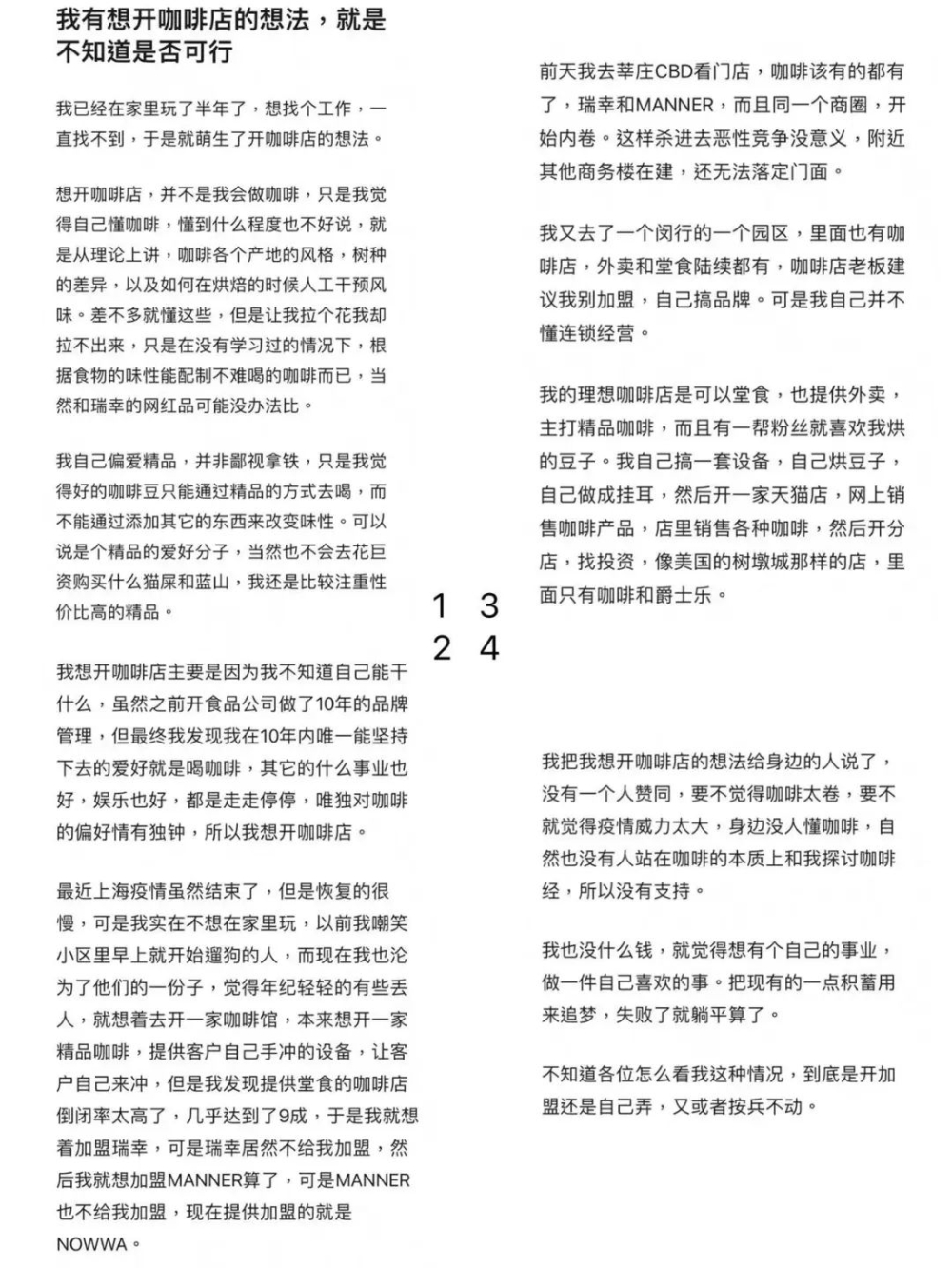
First, let's address a critical misconception from the original poster: they equated specialty coffee with pour-over coffee, specialty coffee with single-origin coffee, and single-origin coffee with pour-over coffee. This is also an issue I noticed after scanning the comment section, where none of the netizens' responses pointed it out. Although the poster claimed not to look down on latte coffee, they had subconsciously created a "hierarchy" based on preparation method.
Understanding True Specialty Coffee
In fact, the terms "specialty coffee" and "single-origin coffee" have caused deep misunderstandings among many domestic consumers because of the way they are expressed in Chinese.
The original term for "specialty coffee" is "Specialty Coffee," which refers to coffee beans cultivated under specific climate and geographical conditions that possess unique regional flavor characteristics. It is not limited to high-scoring, expensive single-origin beans. If a blended coffee is made using beans that meet those conditions, it can also be called a specialty coffee.
The original term for "single-origin coffee" is "Single Origin Coffee," which refers to coffee beans from a single producing country, region, estate, or plot, not single-variety coffee. Single-origin beans are the opposite of blended beans. A blend can mix beans from region A and region B, but single-origin coffee can only come from region A.
Ethiopia's native varieties, for example, do not refer to one specific variety but are a mix of many. Because they are grown in the same place, however, they still belong to single-origin coffee.
This means single-origin coffee equals specialty coffee, but specialty coffee does not equal single-origin coffee. Single-origin coffee can showcase unique regional flavors through every preparation method, and the same applies to specialty coffee.
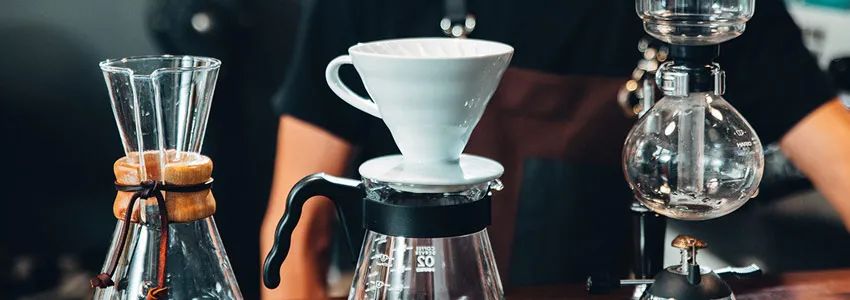
The president of the Specialty Coffee Association of America (SCAA) once said that specialty coffee cannot be defined solely by the quality and score of the beans, but depends more on the preparation process. From selecting green coffee beans to presenting them to consumers, every step in the entire chain must maintain the highest quality standards to be defined as specialty coffee.
That means that beyond the green beans meeting quality standards, the roaster and brewer must understand the beans well enough to extract reasonable flavors through appropriate methods and showcase the unique characteristics of the coffee's origin. This method is not limited to drip brewing.
Professional Expertise in Coffee
The poster's statement that "I think good coffee beans can only be enjoyed through specialty methods and cannot have their flavor profile altered by adding other things" only shows a fondness for tasting pour-over coffee and the purity it brings, but this does not represent specialty coffee as a whole. If you want to open a specialty coffee shop without a correct understanding of specialty coffee, that is already a significant disadvantage.
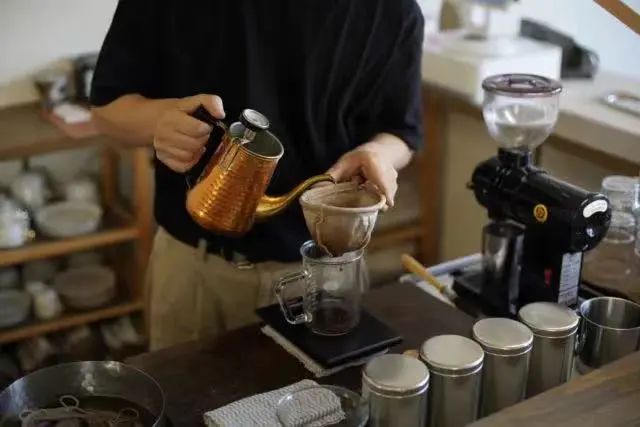
It is certainly possible for a coffee shop to focus on pour-over coffee and sell its own roasted beans. The poster also mentioned that they love drinking coffee, can identify origins through tasting, and know that different varieties and roast levels bring different flavor expressions, yet they said nothing about any research into brewing.
So they came up with the idea of providing equipment for customers to brew their own coffee. As noted above, the most important factor in specialty coffee is the person who can draw out the unique characteristics of the beans. As a shop owner, if you have no stable brewing skills and have not researched other brewing methods, what reason would consumers have to trust you or your brand?
Making a delicious dish requires the chef's understanding of ingredients and the right cooking method. The same goes for coffee roasting. Knowing about coffee varieties and how roast levels affect flavor is one thing, but not understanding why the same variety from different regions can differ so much, or how the same variety grown at different altitudes in one region can show different expressions, how to set a roast plan based on the condition of the green beans, or how every second and each change in temperature and drum speed affects the beans, are often the most important areas of knowledge.
Coffee roasting looks easy: just roast it through. Coffee brewing looks easy too: just pass water through the grounds. But to make beans show their best through roasting, or to extract the right flavor compounds when water passes through the grounds, takes extensive knowledge, research, and practice. That process takes a very long time and is not easy.
Business Considerations for Coffee Shops
So if the original poster truly wants to open a specialty coffee shop, I suggest first taking relevant courses, then continuously researching the subject and expanding and applying what is learned. The biggest sign of a shop is the owner or barista themselves.
What about hiring baristas? That is very costly. The poster is in Shanghai, where both rent and labor costs are extremely high. From the moment a shop opens, without balanced income it will lose money continuously. And a coffee shop does not get customers the instant it opens. A new coffee brand needs time to build its reputation. Many of the coffee shops we see today that are doing well and have great reputations were either built with significant investment or established over time.
Based on the economic situation the poster described, I still would not recommend impulsively investing all your hard-earned savings without understanding the reality.
Liking to drink specialty pour-over coffee and running a coffee shop are two completely different things. Specialty coffee pursues the quality of the beans, the quality of the coffee produced, and the value of the barista, but very few people can truly appreciate it. Apart from enthusiasts who have studied coffee to some degree, the general public does not have much interest in or pursuit of coffee flavors. A coffee that is not too sour or bitter and offers good value is considered good coffee.
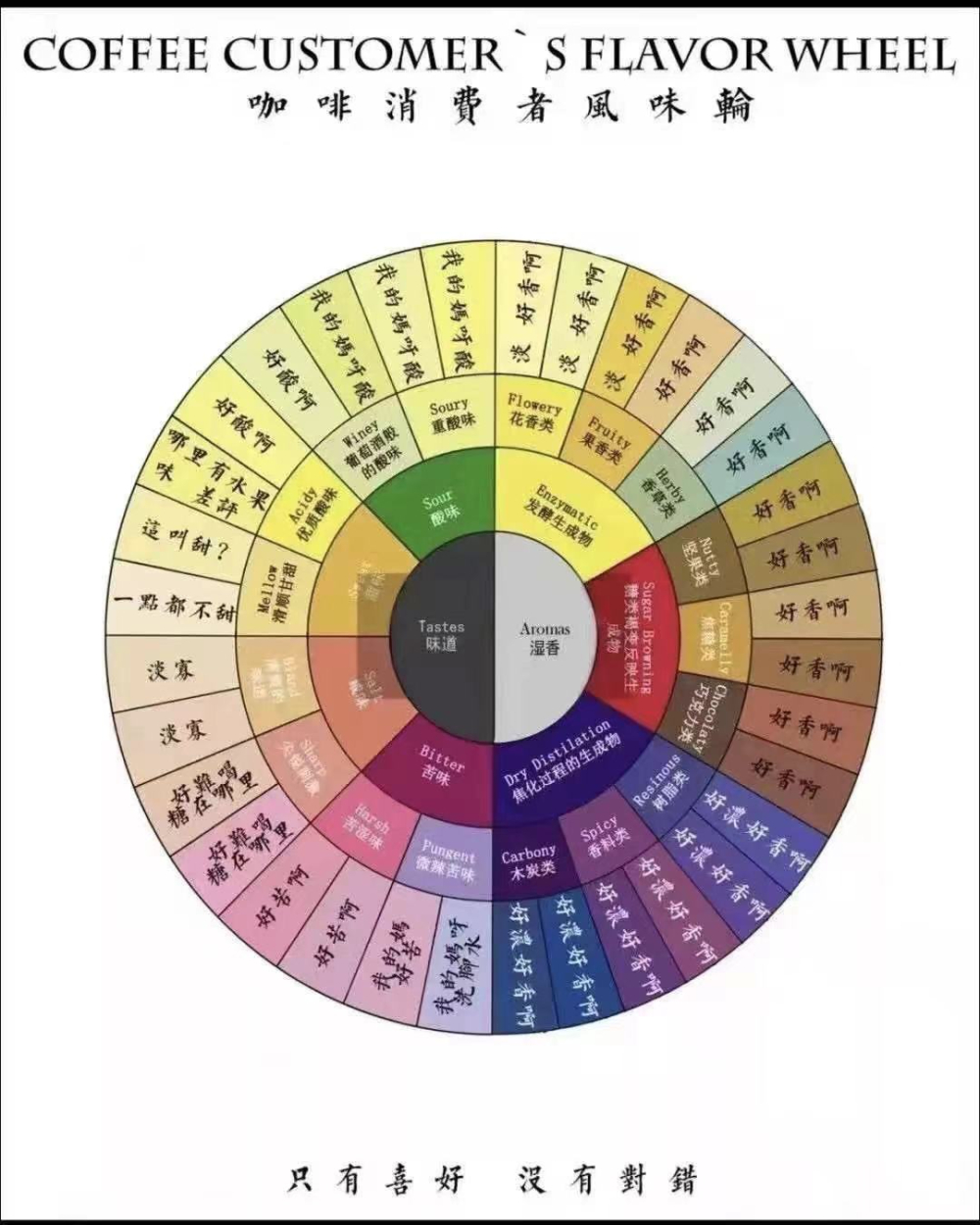
If a coffee shop does not offer coffee with added ingredients that make the flavor more acceptable to the general public, the number of people who will discover and patronize it will be very limited, and those customers cannot support its operation.
Online and Franchise Options
To enter Tmall, a major Chinese e-commerce platform, you must first register your brand trademark. To sell pre-packaged food, you also need a food business license. Beyond that, entering Tmall requires paying a security deposit, typically ranging from 100,000 to 150,000 yuan depending on the store type. For every order transaction, Tmall also deducts a commission in real time, generally 3% to 5%. So even without opening a physical store, selling your own roasted beans online through Tmall involves considerable expense.
Finally, there is the franchise issue. As the poster mentioned, competition between coffee chain brands is intense, and the brands available for franchising are not the mainstream chains that consumers typically frequent. In a saturated coffee shop market like Shanghai, if it is not a mainstream chain brand, operating costs and expenses are also very high. The franchise fee alone can run to hundreds of thousands, plus monthly rent, labor, and raw material costs, which is no easier than opening an independent coffee shop.
Conclusion
Of course, if you truly want to open a coffee shop, consider doing so in an area that is not a first- or second-tier city. But regardless of what coffee business model you choose, the most important thing is that the owner has in-depth knowledge of coffee and a clear understanding of running a business, because operating a coffee shop is inherently a business.
Rather than "waiting and seeing" as some netizens suggested, it is better to start studying coffee thoroughly, understand what it takes to open a coffee shop, and then open a shop you can support and operate based on future circumstances.
Don't plan to "lie flat" from the beginning. This money could be used for more meaningful things. Not recommending it now does not mean it will never be suitable. Facts are not absolute, and dreams only leave no regrets once they are realized.
Image source: Internet (images unrelated to text)
Question source: Douban
FrontStreet Coffee Recommendation
Whether you are opening a shop or simply deepening your own understanding, tasting across styles is the fastest way to learn what specialty coffee really means. FrontStreet Yirgacheffe Washed Coffee shows the bright, delicate side of the spectrum, with citrus, berry, and floral notes and a green-tea-like sweetness that makes it a very approachable first stop, and FrontStreet Ethiopia Huakui delivers tropical fruit and low bitterness in a juicy, smooth cup.
For a contrast in the opposite direction, FrontStreet PWN Golden Mandheling is wet-hulled in the Sumatran style and deep roasted, with low acidity and a full, lingering body packed with herbal and dark chocolate notes and a faint earthy touch; it makes an excellent everyday single origin for a shop to place beside its fruitier offerings, showing that rich, mellow coffee belongs on the specialty shelf just as much as bright pour-over beans.
Important Notice :
FrontStreet Coffee is a long-established specialty coffee roaster in Guangzhou China, selling freshly roasted beans from its own farm in Yunnan as well as dozens of carefully selected single-origin beans from around the world for both pour-over and espresso. The products deliver consistently excellent quality and great value, with shipping within 24 hours. Guangzhou's FrontStreet Coffee shop is recommended by many coffee lovers, and the beans are now available online at the Tmall 。
FrontStreet Coffee has moved to a new address:
FrontStreet Coffee Address: 315,Donghua East Road,GuangZhou
Tel:020 38364473
 Scan and follow the En Gafei WeChat official account. Please indicate that the reprint comes from "En Gafei".

