
Do Disposable Coffee Cups Release Hundreds of Millions of Plastic Particles When Exposed to Hot Water?
The Hidden Danger in Your Daily Coffee: Microplastics
Coffee is the drink working professionals reach for to get through the day. And as everyone knows, brewed coffee is a liquid, which means it needs a container. But how many of us actually remember to bring our own cup every single day? More often than not, we end up with the disposable cup the café hands us. American researchers have now found that when to-go coffee cups and similar plastic products sit in hot water for just 20 minutes, they release trillions of plastic particles.

Our dependence on coffee has made one cup a day the standard routine. Five working days a week means steadily ingesting a meaningful amount of plastic. And this isn't hypothetical—back in 2018, Austrian scholars warned that human bodies had already been contaminated with microplastics. In 2019, researchers in Austria confirmed that every 10 grams of stool samples contained 20 microplastic particles.
More recent studies have shown that these microplastics turn up not only in human blood but in lung tissue as well. Plastic, clearly, has become one of the invisible threats to human health.
Understanding Microplastics vs. Nanoplastics
It's worth noting that "microplastics" carry two definitions depending on particle size. What most people call microplastics are plastic particles smaller than 5 millimeters—small, but still visible to the naked eye. Smaller still are "nanoplastics," below one-millionth of a meter (1 micron), which generally can't be seen even under a standard microscope.
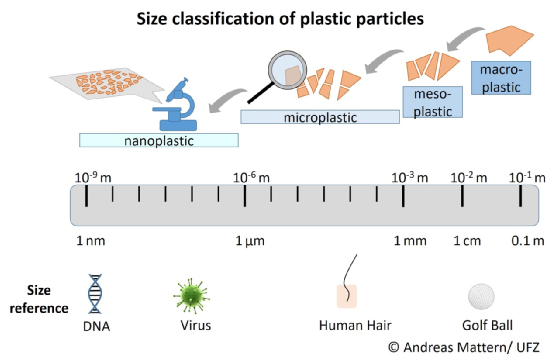
Research Findings on Plastic Leaching
Researchers at the National Institute of Standards and Technology (NIST) studied two plastic products in everyday use: the LDPE plastic film lining commonly found inside disposable hot beverage cups, and the oil-resistant food-grade nylon used in baking liners.
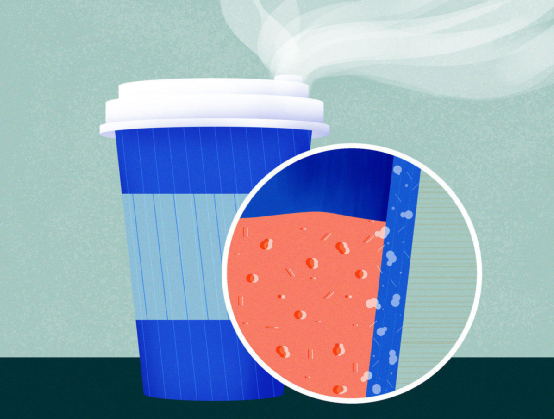
What they found: when these plastics meet hot water, they release trillions of particles per liter. The concentration of nanoparticles released into hot water from the food-grade nylon was seven times higher than from the LDPE lining.
Using scanning electron microscopy (SEM), the researchers observed that the particles averaged between 30 and 80 nanometers, with only a handful exceeding 200 nanometers.

The Invisible Threat in Your Hot Drinks
When you're strolling down the street happily sipping a hot coffee, tea, or milk drink, you're thinking about how good it tastes—not that even in an establishment with spotless food hygiene, your hot beverage still carries billions of invisible microplastic particles. Knowing that, doesn't the drink in your hand suddenly seem a little less appetizing?

Because nano-sized plastics can enter biological cells and interfere with their normal function, the health implications are serious. The U.S. Food and Drug Administration (FDA) regulates the plastics used in food packaging—food-grade nylon (common in tea bags) among them—and specifies that they should not lose more than 1% of their mass under high-temperature conditions. Yet the new analytical technique used in the NIST study revealed mass losses of up to 10%, far beyond the FDA's safety threshold.
What's more, the corresponding author of the NIST study pointed out that there is no commonly used test for measuring how quickly LDPE dissolves from hot beverage cups—tests exist only for nylon plastics.
A Simple Solution: Bring Your Own Cup
So can we still enjoy a hot coffee without worrying? Absolutely—just bring your own reusable cup when you head out and the problem is neatly solved. It saves resources, too, and spares you any doubts about how well the shop's cups were cleaned.
Image source: Internet
For professional coffee knowledge exchange and more coffee bean information, follow Coffee Workshop (WeChat public account: cafe_style)
For more premium coffee beans, add FrontStreet Coffee on WeChat, ID: kaixinguoguo0925
FrontStreet Coffee Recommendation
While you're investing in a reusable cup, it's worth investing in beans worth putting in it. For brewing at home or at the office, FrontStreet Coffee's entry-level specialty selections make the decision easy. The washed Yirgacheffe Worka Gedeb from Ethiopia delivers white jasmine, bright citrus, and lemon acidity with a soft tea-like finish—an approachable, crowd-pleasing daily cup at an everyday price.
If you prefer something rounder, the FrontStreet Brazil Cerrado Red Bourbon brings creamy peanut, toast, caramel, and hazelnut in a smooth, low-acid body that works through pour-over, moka pot, French press, or espresso machine alike. And for drinkers who love tropical fruit, the natural-processed Huakui from Ethiopia offers strawberry, passion fruit, jackfruit, and honeyed sweetness with virtually no bitterness—one of the most convincing arguments for drinking your coffee from a clean cup you trust.
Important Notice :
FrontStreet Coffee is a long-established specialty coffee roaster in Guangzhou China, selling freshly roasted beans from its own farm in Yunnan as well as dozens of carefully selected single-origin beans from around the world for both pour-over and espresso. The products deliver consistently excellent quality and great value, with shipping within 24 hours. Guangzhou's FrontStreet Coffee shop is recommended by many coffee lovers, and the beans are now available online at the Tmall 。
FrontStreet Coffee has moved to a new address:
FrontStreet Coffee Address: 315,Donghua East Road,GuangZhou
Tel:020 38364473
 Scan and follow the En Gafei WeChat official account. Please indicate that the reprint comes from "En Gafei".

