Siphon Coffee Brewing Tutorial with Diagrams - Siphon Coffee Stirring Methods, Time, Grind Size, and Parameters

Today the siphon brewer looks like a gloriously vintage piece of equipment. Many coffee shops no longer brew siphon coffee, or offer it only as a specialty rather than a staple. As a siphon enthusiast, though, if I can't find it out in the world, I simply make it at home. In this article FrontStreet Coffee explains siphon coffee in the simplest possible terms.
Siphon Brewer Structure
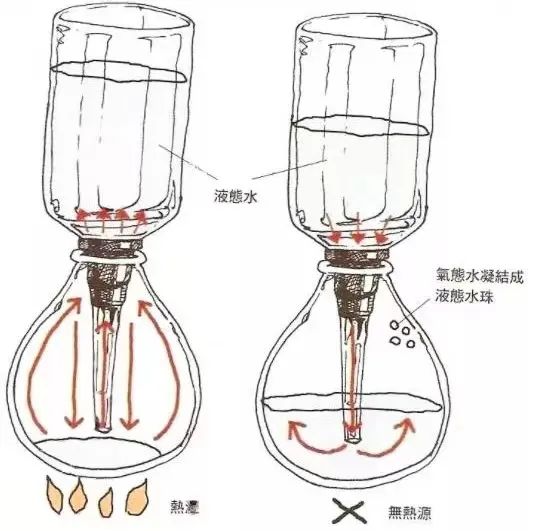
A siphon brewer has three basic parts: an upper chamber, a lower chamber, and a stand. The stand attaches to the lower chamber to hold and support it. The lower chamber is roughly spherical, which ensures even heating. The upper chamber is cylindrical, narrowing at the bottom into a long, thin tube, with a rubber ring seated at the narrowing.
When the upper chamber sits on the lower chamber, the rubber ring seals them together. Heating the lower chamber creates steam pressure that pushes water up into the upper chamber, where the grounds meet the water. Remove the heat, and the finished coffee falls back into the lower chamber—the siphon cycle complete.
Filter Cloth vs. Filter Paper
Nobody wants a cup full of grounds, so you need a filter. The two common options are flannel filter cloths and round filter papers. Flannel is the traditional choice: it lets the coffee's oils through, but it's fussy to use and clean.
Filter paper is the modern option: it filters cleaner, blocking fines (and not only fines—oils too). If you're brewing just for yourself and not very often, FrontStreet Coffee suggests flannel to experience siphon coffee's full flavor.

Heat Sources
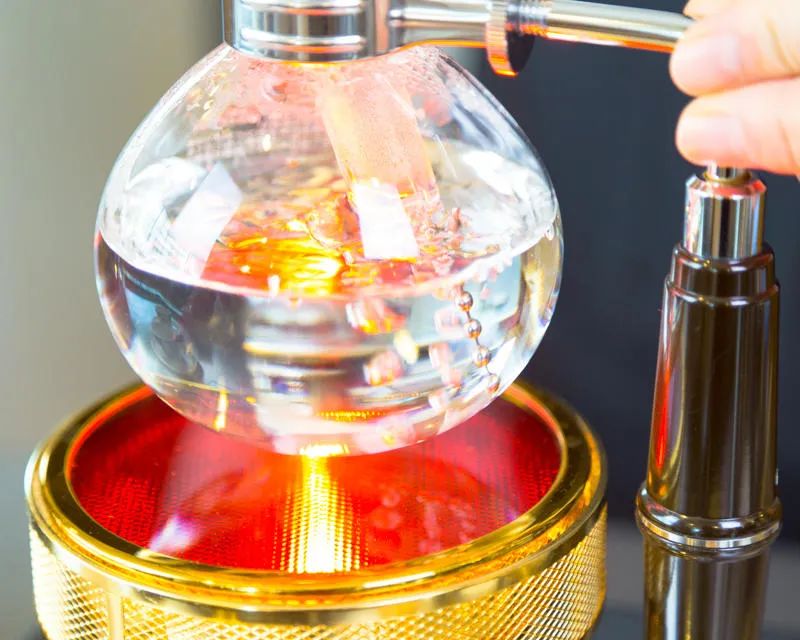
Common heat sources include gas stoves, induction cookers, and alcohol lamps. Gas and induction offer adjustable, fast, and stable heating, at slightly higher cost. Alcohol lamps are cheap but unstable and slow.
FrontStreet Coffee believes any of these can make excellent coffee, provided you adjust for their heating behavior—but if you have the choice, go with gas or induction.
Pre-Infusion vs. Post-Infusion
There are two schools on when to add the grounds. Traditionalists add them first (pre-infusion). The other camp argues that grounds added early meet the water as it rises, letting some coffee "sneak out" early and extract unevenly—so they wait until all the water has climbed to the upper chamber (post-infusion). It mirrors the pour-over debate about whether the timer starts at the bloom or with the first pour.
FrontStreet Coffee recommends post-infusion for beginners: it removes one more source of instability.

Grind Size
Siphon coffee is ground finer than pour-over. FrontStreet Coffee's measurements put it at roughly 90% passing through a #20 sieve. On the shop's EK43s that's setting 9; on a C40 hand grinder, 20 clicks.

Coffee-to-Water Ratio
Siphon ratios generally run from 1:10 to 1:12, with 1:12 the most common. For a single serving at home, try FrontStreet Coffee's usual parameters: 18 grams of coffee to 200 milliliters of water.

Stirring Methods
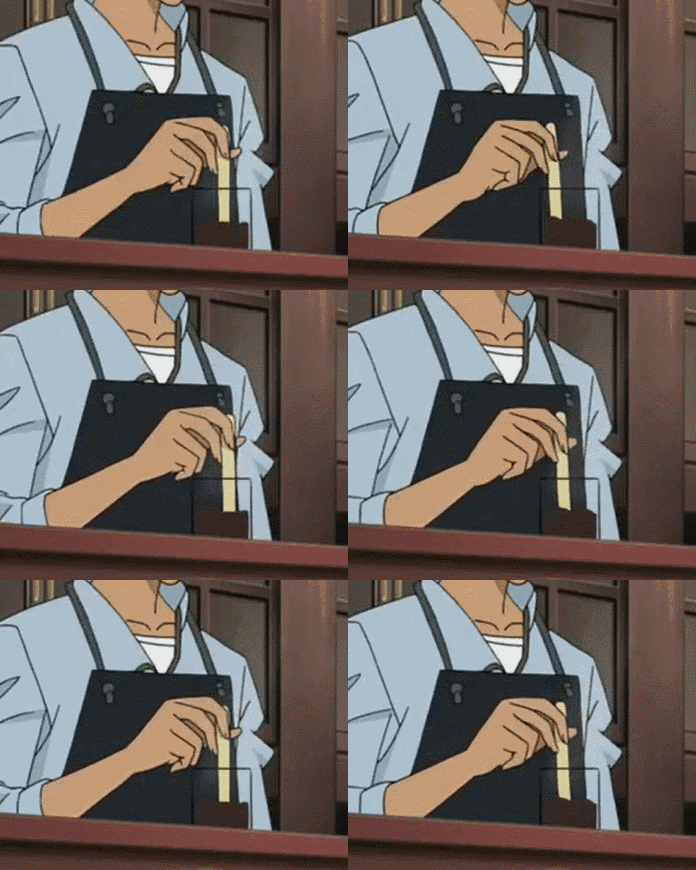
There are many ways to stir: rotational, cross-stirring, Z-shaped, infinity-shaped, the patting method, and more.
FrontStreet Coffee suggests beginners start with the patting method: pat the grounds layer along the trajectory shown below, with the stirring rod pivoting around the center, both ends swinging back and forth out of phase.
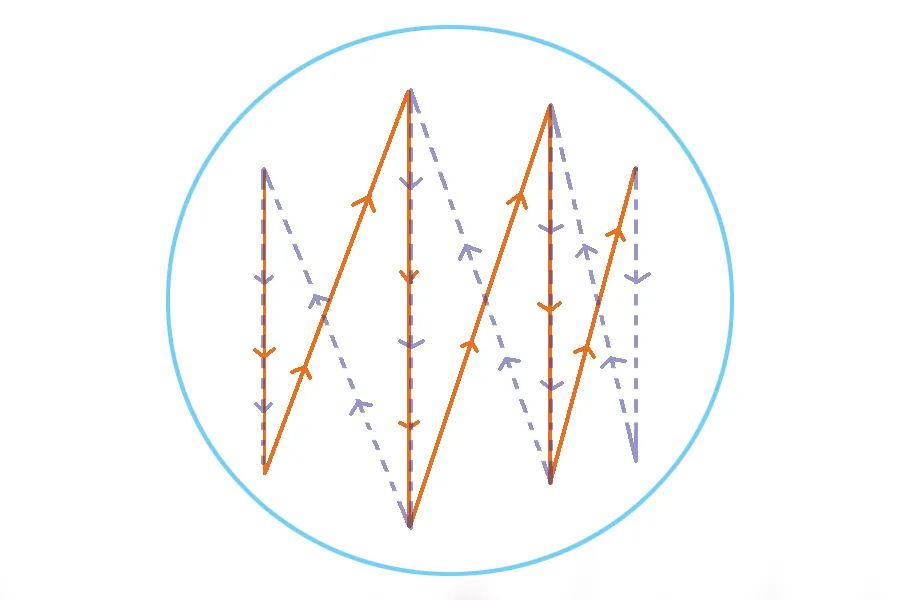
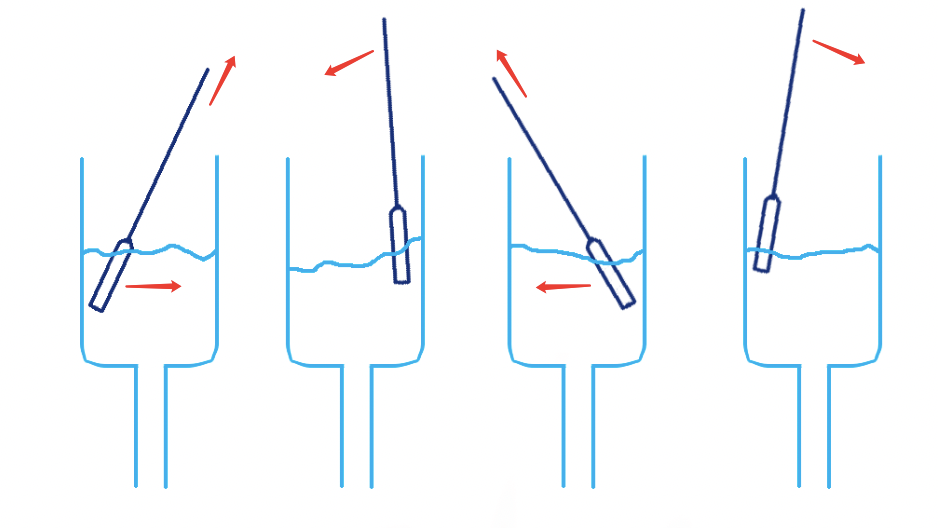
The patting method isn't the only way—it's just easier to control and friendly to newcomers.
When to Cut the Heat
When do you turn off the heat? Some people judge by smelling the aroma, which takes real personal skill and resists description in words. FrontStreet Coffee recommends beginners rely on timing. With post-infusion, start the clock when the grounds go in; with pre-infusion, start when you pick up the stirring rod. Cut the heat at roughly 50–70 seconds.

A Complete Brew, Step by Step
Here is FrontStreet Coffee's usual routine:

1. Pour 200 milliliters of hot water into the lower chamber, wipe it dry, and switch on the heat.

2. Insert the upper chamber at an angle, with the safety ball touching the bottom of the lower chamber.

3. When small bubbles rise continuously in the lower chamber, straighten the upper chamber and press it down firmly. Wait for the water to be drawn upward.

4. Add the grounds and start timing. In the first stage, use the patting method to press all the grounds into the water so they absorb evenly.

5. In the second stage, at 25 seconds, stir with the method described above, clearly separating the coffee into three layers: liquid, grounds, and foam.

6. In the final stage, stir in one direction from 50 seconds, then remove the heat at 60 seconds and let the coffee fall back.


Siphon coffee made this way is wonderfully aromatic and rich. It lacks the clarity of pour-over, but the oils floating on its surface add real body.

In FrontStreet Coffee's view, siphon brewing is plainly more trouble than pour-over: you need a heat source before you even start, you can't take your eyes off the extraction, and afterward everything must be cleaned promptly, including washing the flannel. In a busy shop, it gets even more demanding.
FrontStreet Coffee Recommendation
Siphon brewing's full-bodied, oil-rich character flatters certain beans. FrontStreet Coffee's Brazil Queen Estate, low in acidity with intense nut and cocoa aromatics and caramel sweetness, stays smooth and rounded in the siphon's immersion environment—equally at home in a moka pot or espresso machine.
For the classic full-flavored profile that siphon was born to brew, FrontStreet Coffee's Jamaica Blue Mountain No. 1, medium roasted, unites cream, caramel, chocolate, and nut flavors in its famously balanced acidity-sweetness-bitterness triad. And if you want fruit aromatics alongside that body, the FrontStreet Strawberry Candy blend adds floral and sweet fruit notes while still pouring beautifully from any method, siphon included.
Important Notice :
FrontStreet Coffee is a long-established specialty coffee roaster in Guangzhou China, selling freshly roasted beans from its own farm in Yunnan as well as dozens of carefully selected single-origin beans from around the world for both pour-over and espresso. The products deliver consistently excellent quality and great value, with shipping within 24 hours. Guangzhou's FrontStreet Coffee shop is recommended by many coffee lovers, and the beans are now available online at the Tmall 。
FrontStreet Coffee has moved to a new address:
FrontStreet Coffee Address: 315,Donghua East Road,GuangZhou
Tel:020 38364473
 Scan and follow the En Gafei WeChat official account. Please indicate that the reprint comes from "En Gafei".