
Panama Geisha Coffee Pour-Over Blockage: What to Do When Coffee Won't Flow Through?
Some friends ask FrontStreet Coffee: "You recommend a brew time of 2 minutes, but when 2 minutes pass there's still a lot of water pooled in my dripper!" That friend is almost certainly experiencing a blockage.
Why Does Blockage Occur?
FrontStreet Coffee lists some common culprits.
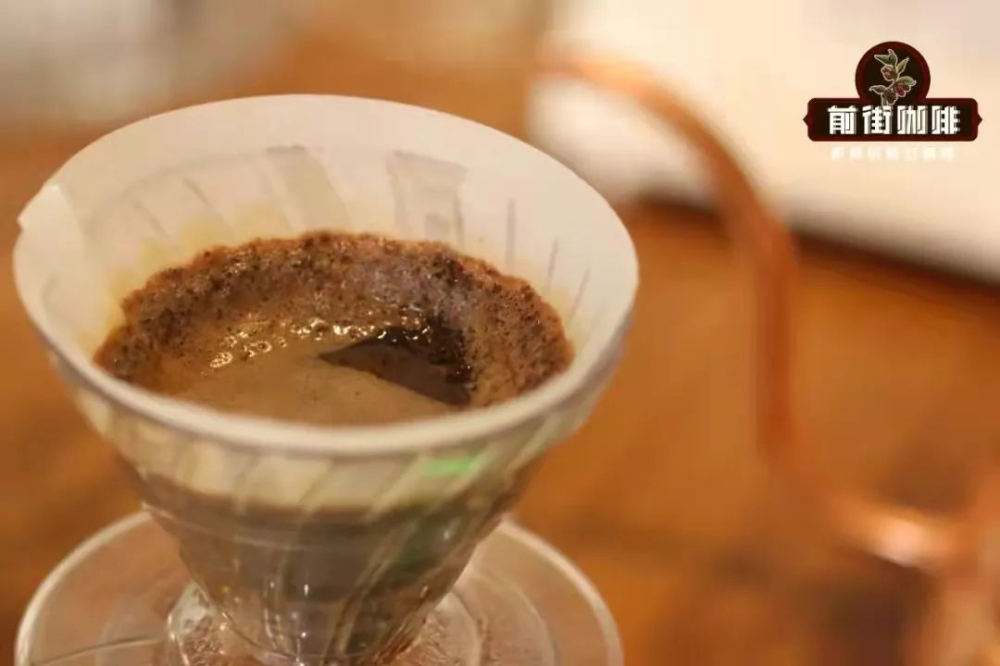
Grind Size Issues
FrontStreet Coffee has shared many approaches to mastering pour-over grind size, and we believe the most scientific is using a sieve to calibrate coarseness. Our measured data suggests that medium-light roasts brew best at a 75-80% pass rate through a #20 sieve (0.85mm), and medium-dark roasts at 70-75%.

If water drains very slowly or stalls completely, too-fine grounds are a likely cause.
Grinder Quality Issues
This is the most common cause of blockage. Many casual coffee drinkers don't research equipment deeply and settle for a grinder that's "good enough" - and while the grind may look acceptable, the difference shows up immediately in the brew.
Poor-quality grinders produce extremely uneven particle sizes with lots of powdery fines. During brewing, those fines migrate down and clog the outlet, stopping the water from flowing through.
To work around this, FrontStreet Coffee recommends buying a fine-particle sieve to sift out the fines that cause the blockage.
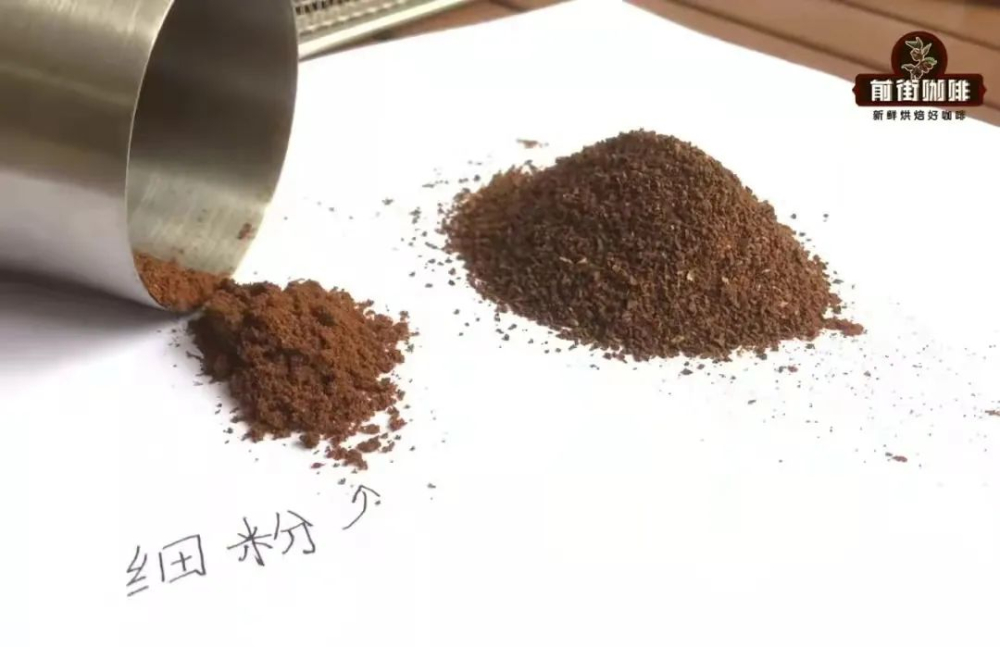
Light Roast Level
Have you noticed that darker roasts expand more, with more fines and oils floating on the surface, while lighter roasts expand less, with fewer fines and oils? Light roast coffee is actually more prone to blockage than dark roast.
Light-roast beans have more intact fibers and higher density. During brewing, many grounds sink and settle at the bottom, easily compacting into a blockage.
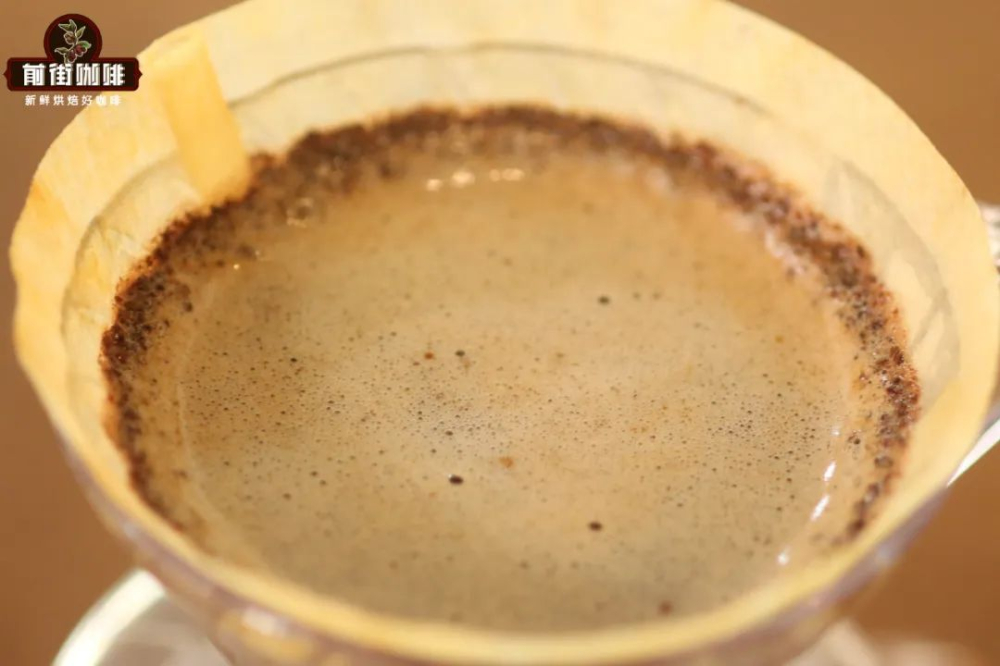
For example, FrontStreet Coffee has found in practice that Panama washed Geisha can clog slightly, because Geisha beans are inherently hard and typically roasted light. When brewing light roasts, we recommend "vigorous stirring" to churn up the grounds settled at the bottom.
Habit of Large Circular Pouring
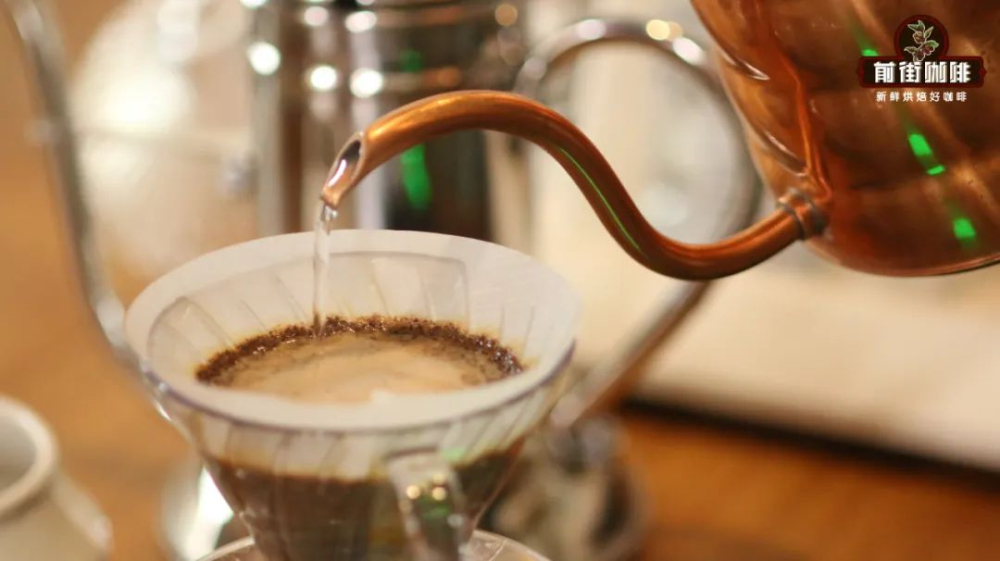
FrontStreet Coffee's pouring guidance goes like this: after the bloom, pour in outward spirals like "mosquito coils," reaching the outer circle before spiraling back to the center; on the final pour, circle along half the radius of the liquid surface. The last pour exists precisely to churn the bottom layer of grounds so the fines adhere to the dripper walls.
If you pour in the largest possible circles, you wash all the grounds off the walls down to the bottom - and naturally cause a blockage.
FrontStreet Coffee Recommendation
Geisha is the classic example of a hard, dense, light-roast bean that loves to clog a dripper, so it deserves both the right technique and the right beans. Panama is where Geisha made its name - discovered by Esmeralda and sent to the 2003 Best of Panama competition, where its average cupping score of 94.6 shattered the contest's history. For those signature orange-honey aromatics, juicy fruit acidity, and tea-like sweetness, the top-tier FrontStreet Esmeralda Red Label (grown at 1,600-1,800 meters, cupping above 90 points, single-lot traceability like the Jaramillo plot) and Green Label are the benchmarks.
Newcomers can taste classic Geisha character affordably with the entry-level FrontStreet Boquete Geisha - oolong-tea body, delicate fruit acidity, and clear layering - or explore the variety's birthplace with Ethiopia's Granana Estate Geisha: medium-light roasted for bright citrus acidity, elegant ginger-flower aroma, and the refined Geisha finish. To keep pour-overs flowing freely with these dense beans, FrontStreet Coffee suggests a #20 sieve pass rate of about 78% (roughly fine-granulated sugar), water at 91 degrees Celsius, 15g of coffee in a Hario V60 at a 1:16 ratio, and a three-stage pour - 30g bloom for 30 seconds, then to 125g, then to 225g - finishing in about 2 minutes 10 seconds to 2 minutes 20 seconds.
Important Notice :
FrontStreet Coffee is a long-established specialty coffee roaster in Guangzhou China, selling freshly roasted beans from its own farm in Yunnan as well as dozens of carefully selected single-origin beans from around the world for both pour-over and espresso. The products deliver consistently excellent quality and great value, with shipping within 24 hours. Guangzhou's FrontStreet Coffee shop is recommended by many coffee lovers, and the beans are now available online at the Tmall 。
FrontStreet Coffee has moved to a new address:
FrontStreet Coffee Address: 315,Donghua East Road,GuangZhou
Tel:020 38364473
 Scan and follow the En Gafei WeChat official account. Please indicate that the reprint comes from "En Gafei".

