
Analysis of 2021 WBrC Champion's Brewing Technique and Parameter Strategy - Introduction to High-Level Sweetness Balanced Pour-Over
The 2021 World Brewers Cup Champion: Matt Winton's Innovative Approach
Because of the pandemic, international coffee competitions essentially came to a halt in 2020, which made the 2021 events particularly remarkable. The champion of the 2021 World Brewers Cup (WBrC) was the Swiss competitor Matt Winton.
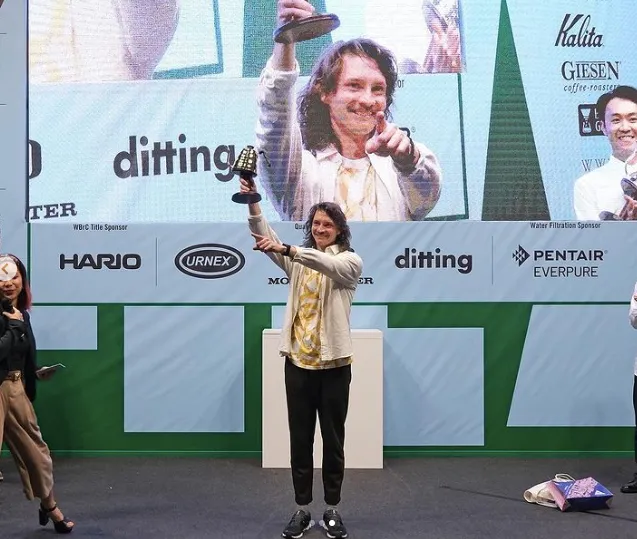
A major talking point about both the champion and the runner-up in this competition was that they did not use Geisha or single-origin beans, but instead built their routines around blended coffee.
It is worth noting that there is no inherent superiority or inferiority between single-origin and blended beans. Matt introduced his formula as 60% natural Eugenioides, the parent variety, and 40% washed Catucai.
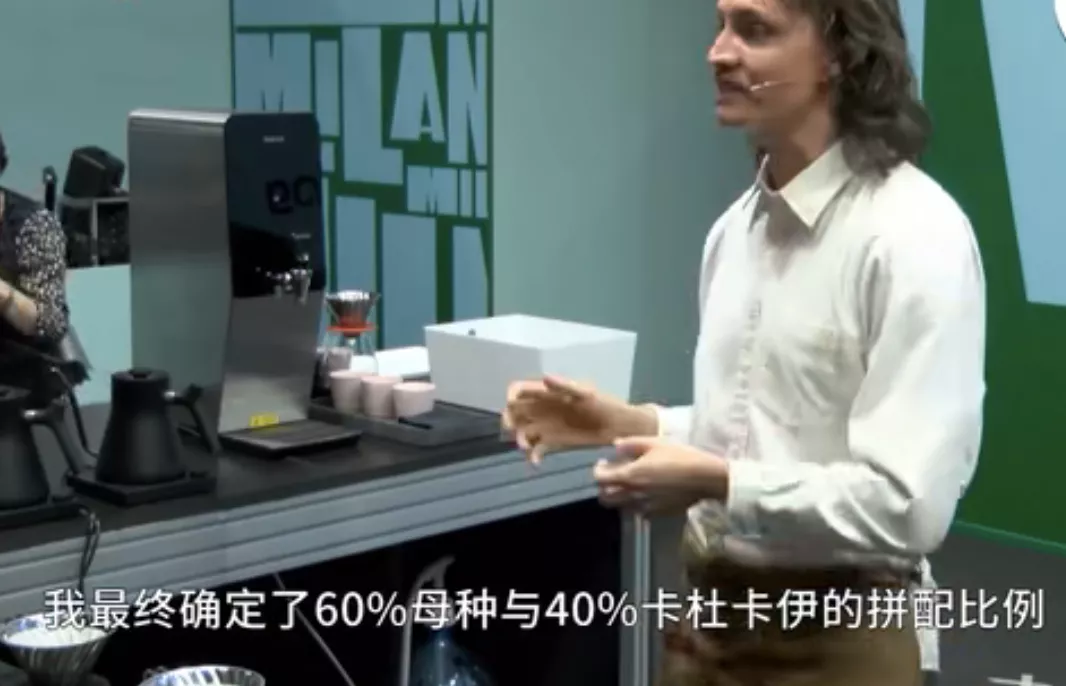
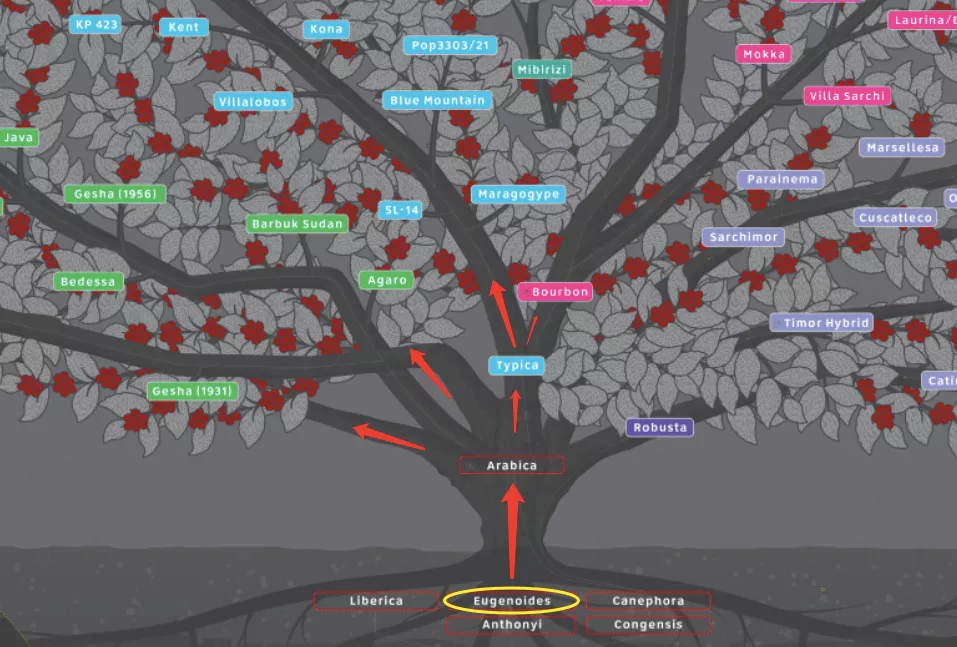
Does Eugenioides sound unfamiliar? Consider that the Arabica we know is actually a hybrid descendant of Eugenioides and Canephora, and it may suddenly make sense. Because its Chinese name is hard to pronounce, it is often simply referred to as the "parent variety." As Matt explained during the competition, the parent variety shows very high sweetness with virtually no perceptible acidity or bitterness, thanks in part to the cultivation standards at Finca Santuario and its natural processing method.
Super-sweet coffee alone is not enough for competition, though; it needs some acidity for balance. Matt chose washed Catucai from Hacienda La Florida in Ecuador. Catucai is not uncommon in Central and South America, but choosing Ecuador as an origin is somewhat unconventional. Even so, Hacienda La Florida is a Tier 1 estate in Ecuador, which guarantees its quality. This bean was there to provide the uplifting, pleasant and clear acidity.
Matt's Brewing Technique and Parameters
In short, while the beans Matt selected were not the competition-standard Geisha, they were certainly Tier 0 quality. The blending approach also helped refresh the judges' palates and spark their interest.
Bean quality of that level is not something we can easily replicate, since it takes money. The idea of a blended pour-over, however, is worth learning from. Just as the push for single-origin beans was essentially about improving quality and creating better flavors, today's "specialty blend" concept follows the same principle.
Next, let's look at Matt's brewing parameters. In the competition video he shared them directly: a metal V60 dripper, 20 g of coffee grounds, 300 g total water at a 1:15 ratio, a relatively coarse grind, and 5 pour segments including the bloom. For water temperature he used two kettles, the first three pours at 93 degrees C and the last two at 88 degrees C.
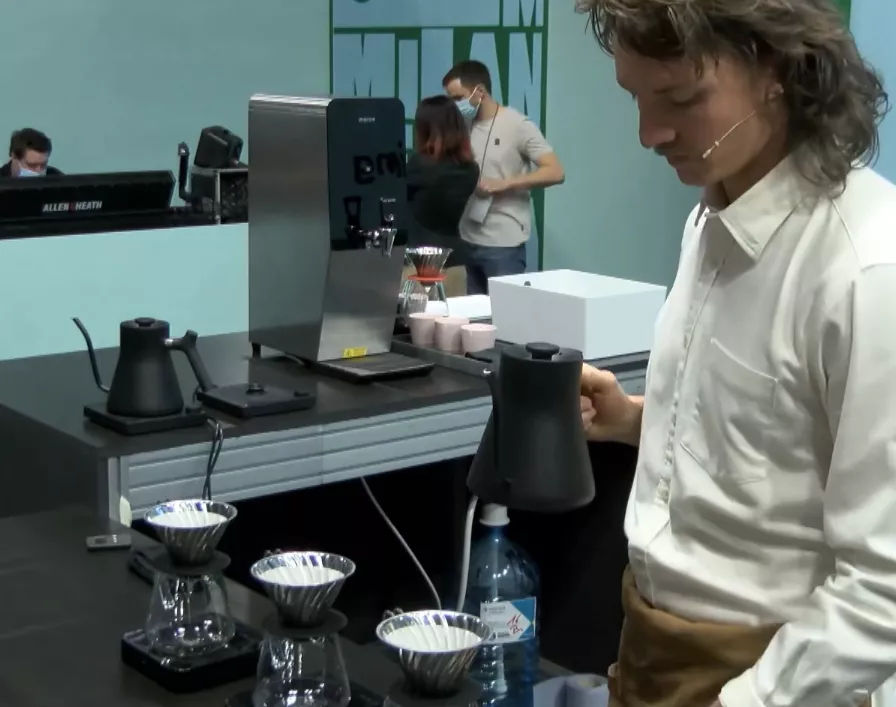
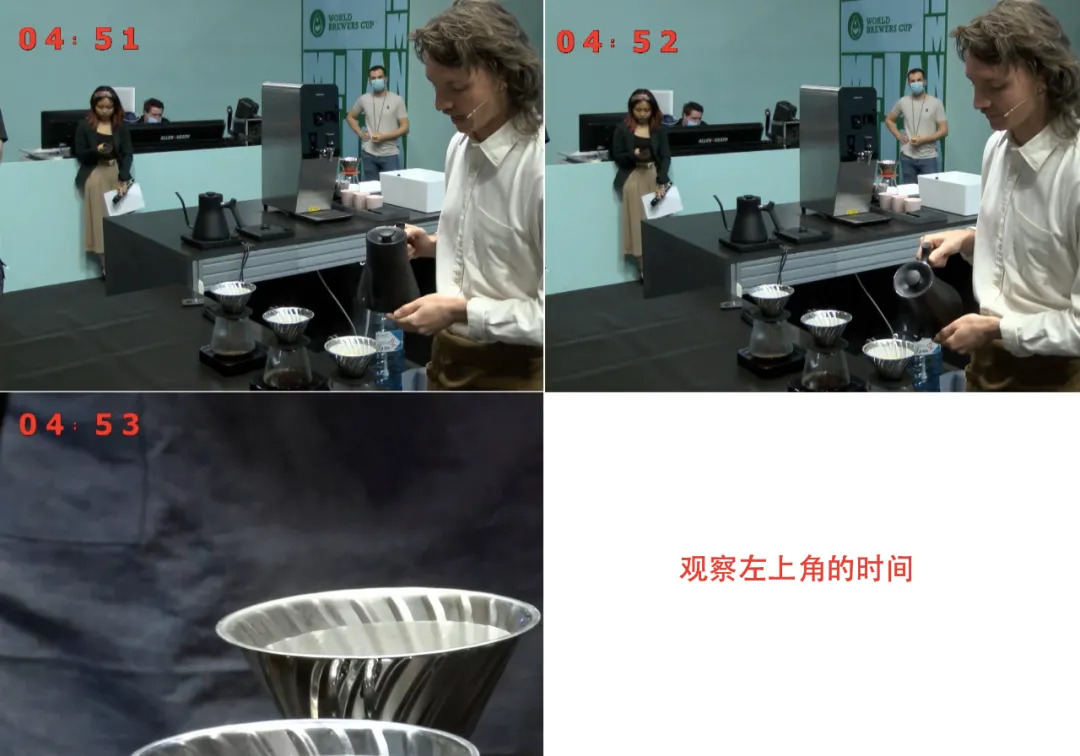
The extraction time ran from when Matt began his first pour, at the competition timer reading of 3:42, to when he removed the first dripper, at a timer reading of 6:25, taking 2 minutes and 43 seconds.
Matt did not specify the exact ratios for each pour segment. By carefully observing the pouring technique and the flow rate in the video, his method resembles Tetsu Kasuya's 4:6 method, though with differences in pour ratios and water temperature. Based on the timing, the approximate pour amounts were 60 g, 80 g, 60 g, 60 g and 40 g.
Analysis of the Brewing Techniques
With the basic parameters covered, let's look at which aspects of these techniques are worth borrowing.
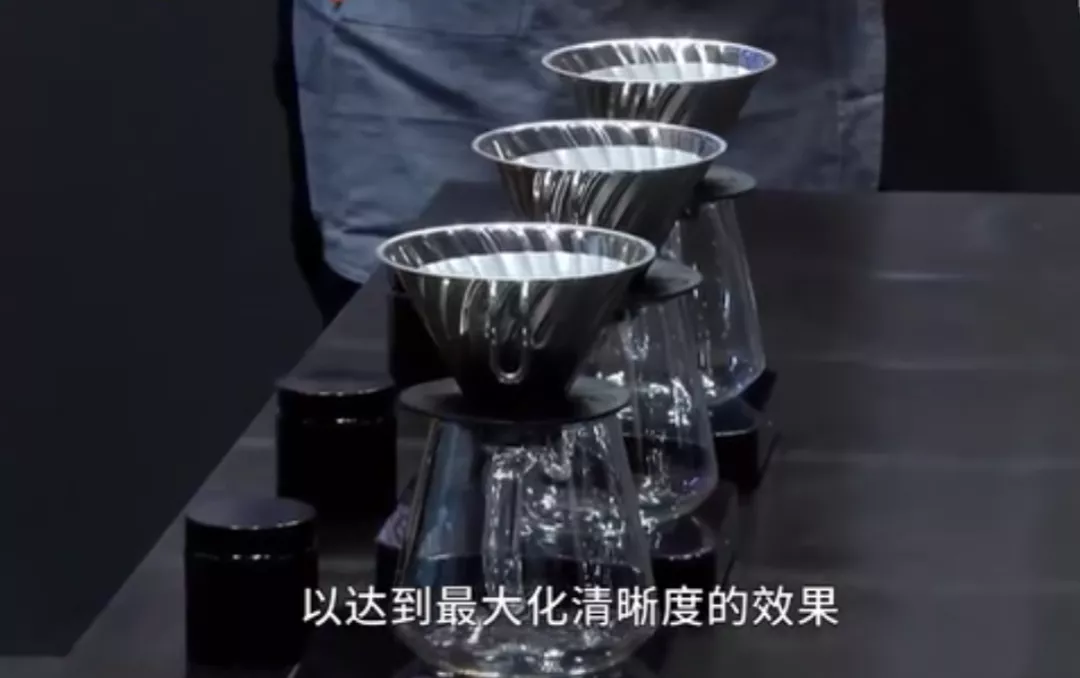
First, Matt used a metal dripper, explaining that it maximizes the expression of acidity and flavor. FrontStreet Coffee believes that dripper material does affect how coffee expresses flavor, though in regular brewing the difference is usually not significant.
Second, brewing with different temperatures is quite popular. Current theory holds that higher temperatures extract more compounds and lower temperatures extract fewer. The early to middle stages of extraction produce pleasant flavors, while the later stages tend toward bitterness and astringency. Using higher temperatures early and in the middle extracts more of the desirable compounds, while lower temperatures later reduce extraction and create balance.
Third, you can watch Matt's competition video on Bilibili to observe his pouring technique: fixed-point pouring followed by high-flow, rapid stirring, then a return to fixed-point pouring. His brewing philosophy is close to the 4:6 method: coarse grind, high flow, rapid stirring and consistent ratios. One small detail worth noting is that after circular pouring, Matt focuses on fixed-point center pours while keeping his eyes on the electronic scale. If a stage does not reach his target water amount, he adds supplemental water.
In other words, after countless brewing experiments, the impact of pouring technique on the coffee in competition becomes minimal. The focus shifts to the soundness of the brewing plan and the execution. During the second pour, for instance, when he realized he had not reached his desired water amount at the end of the pour, his choice was to add water rather than ignore it, even though that action might look less fluid.
Competitions are time-limited and one-time only, with no do-overs. That means anything tied to scoring gets particular attention from competitors, and no competitor would choose a high-difficulty or extreme technique to take a risk. In competition, competitors pick more scientific brewing theory and safer methods. So setting aside the approaches that demand heavy financial investment, the other brewing ideas are very much worth learning from.
Key Takeaways
Matt's technique and parameter choices were very safe and highly compatible: a coarse grind, high temperature for the opening pours and lower temperature for the closing ones, split into 5 segments. That produced a coffee with rich layering, virtually eliminating the risk of over-extraction while preserving high flavor clarity. Combined with his carefully chosen blended beans, the sweet parent variety and the clear, bright Catucai with its distinct acidity, along with his experimentally formulated water and details like dripper material, there is a great deal to learn here about blended pour-over formulation and attention to detail.
FrontStreet Coffee Recommendation
Matt's win showed that a blend can beat a single origin, but the variety he deliberately set aside still sets the benchmark for competition coffee, and that is Geisha. If you want to taste what all the fuss is about, the FrontStreet Boquete Geisha from Panama is the entry-level way in. It is estate-grade and grown at 1,600 meters on fertile volcanic soil, and when brewed it shows the classic Geisha combination of jasmine, green tea, honey, citrus and orange.
For something closer to the top of the pyramid, the FrontStreet Emerald Estate Red Label is picked from a single plot above 1,700 meters, each lot cupped at 91 points or above, and shows a refined orange-blossom-honey character. The FrontStreet Emerald Estate Green Label blends lots from several plots to express the estate's signature high-altitude Geisha profile at a friendlier price, while the FrontStreet Geisha Village Gold Label is a Geisha 1931 selection, roughly 10% of the village's total output and often the choice of competition baristas.
Important Notice :
FrontStreet Coffee is a long-established specialty coffee roaster in Guangzhou China, selling freshly roasted beans from its own farm in Yunnan as well as dozens of carefully selected single-origin beans from around the world for both pour-over and espresso. The products deliver consistently excellent quality and great value, with shipping within 24 hours. Guangzhou's FrontStreet Coffee shop is recommended by many coffee lovers, and the beans are now available online at the Tmall 。
FrontStreet Coffee has moved to a new address:
FrontStreet Coffee Address: 315,Donghua East Road,GuangZhou
Tel:020 38364473
 Scan and follow the En Gafei WeChat official account. Please indicate that the reprint comes from "En Gafei".

