
What is Kopi Luwak Coffee? Is There a Difference Between Civet Coffee Beans and Palm Civet Coffee Beans?
Mention "feces" during a meal and most people recoil — "ew, disgusting." Yet humans can be remarkably and consistently dualistic about certain things. Say "civet coffee," and the reaction goes beyond disgust into something else entirely: "Oh?! Civet coffee? That must be expensive!"
Businesspeople around the world were quick to capitalize on the "civet droppings" concept, exploiting that curiosity by importing "civet coffee" and harvesting the profits for years. In some restaurants, a single cup sells for over a thousand yuan. Expensive? There will always be someone willing to pay for the novelty.
As the mystique grew, so did demand. To feed it, producers turned to cruel methods — targeting the very civets that make the coffee. Palm civets, close relatives of the civet, couldn't escape the same fate of being caged to "produce feces."
From Humble Origins to Global Fame
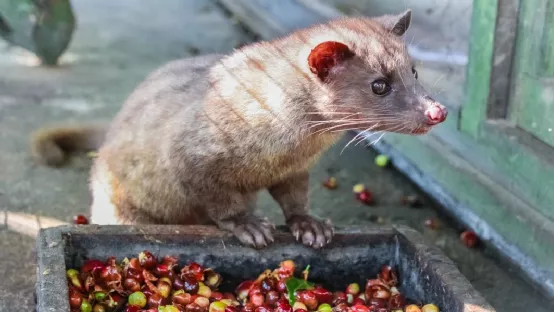
Civet coffee was originally the coffee of the poor. Its worldwide fame came quickly after an article in National Geographic. In the local Indonesian language, Kopi Luwak literally means civet coffee — "Kopi" is coffee, "Luwak" is the civet.
The Dark Side of Production
After round after round of commercial hype, something once considered practically worthless saw explosive demand. But wild civets produce coffee so slowly that supply could never keep up. Locals began capturing civets and imprisoning them, force-feeding them nothing but coffee cherries (civets are omnivores) to ramp up production.
Later, people discovered that palm civets produced similar results after eating coffee cherries, so they were caged too. Add some clever packaging and strategic concealment, and the whole concept became distorted — palm civet coffee quietly rebranded and sold as civet coffee...
Truth vs. Commercial Exploitation
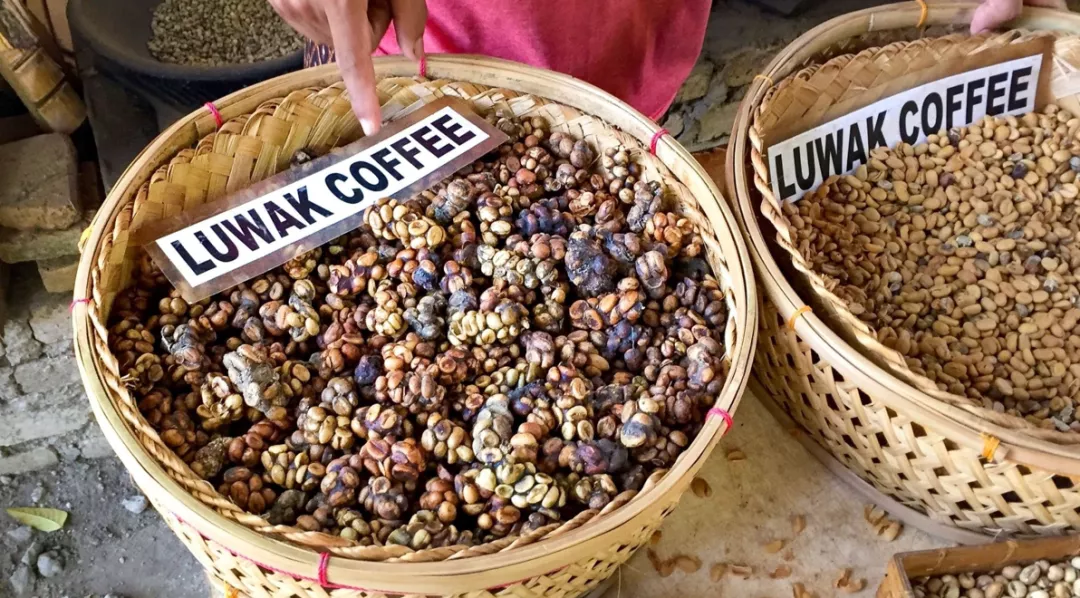
Authentic civet coffee comes from wild civets that treat coffee cherries as an after-dinner dessert, so they select only fully ripe cherries. That natural process is extremely slow — which is exactly why some people devised the practice of trapping wild civets in narrow cages and feeding them nothing but cherries.
And because wild civets are so few, many merchants turned to palm civets — same family (Viverridae), different species — as substitutes. It's worth repeating: civets and palm civets may share a family, but they are not the same animal.
Ethical Concerns and Market Changes
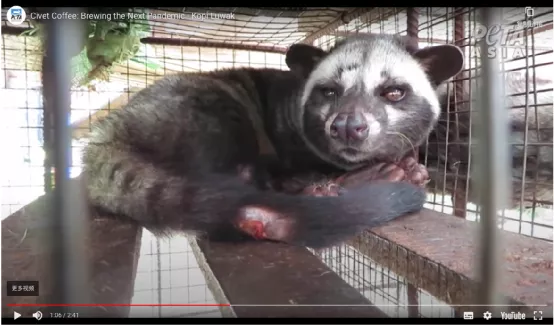
Part of the recent shift in public opinion may trace to a video released by PETA showing caged civets and palm civets — revealing the cruelty behind so-called "wild civet coffee." People began paying attention, and many started boycotting the product.
Alternatively, it may have been the panic after scientists identified civet-family animals among the hosts of the novel coronavirus. The East India Company — not the one founded in 1600, but a coffee trading company established by a coffee merchant in 1987 that applied to use the original East India Company's coat of arms as its trademark in 1990 — had traded civet coffee for many years and recently announced it would stop selling the product and pull it from its shelves. Most of the market shift, though, comes down to weakened consumer spending after the pandemic and growing concern for wildlife protection.
Because of their monotonous diet, cramped living conditions, and coexistence with their own waste, these small animals develop serious psychological problems — some begin biting their own tails, leaving open wounds that go untreated. Local staff have admitted the animals suffer mental health issues and that the wounds are self-inflicted. Others have conceded that the claimed "wild sources" are merely wild-raised animals, and that genuinely wild-collected civet coffee beans are extremely rare.
Quality Considerations
So does civet coffee even taste good? Consider what it actually is: viverrids force-fed unripe coffee cherries, from trees grown in the low-altitude forests of Indonesia...
Low-altitude cultivation plus unripe processing — it's hard to believe it tastes good.
Image source: Internet
Video source: PETA UK's YouTube channel
FrontStreet Coffee Recommendation
The good news is you don't need novelty gimmicks to taste the best of Indonesia. FrontStreet Coffee's wet-hulled Mandheling comes from the Lake Toba region of Sumatra's Lintong area — a medium-dark roast with low acidity and a rich, full body, layered with caramel, dark chocolate and toast aromas and a long, sweet finish. It's everything classic Mandheling should be, no cages involved.
For the pinnacle of Indonesian coffee, choose FrontStreet Coffee's PWN Golden Mandheling: machine-sorted plus multiple rounds of hand-sorting for density, size, shape and color produce plump, uniform beans with minimal defect and far less earthy, grassy taint. Freshly roasted, it reveals sandalwood, herbal, spice, toasted hazelnut, caramel and dark chocolate flavors — clean, mellow, and wonderfully layered, equally suited to your own daily cup or as a gift.
Important Notice :
FrontStreet Coffee is a long-established specialty coffee roaster in Guangzhou China, selling freshly roasted beans from its own farm in Yunnan as well as dozens of carefully selected single-origin beans from around the world for both pour-over and espresso. The products deliver consistently excellent quality and great value, with shipping within 24 hours. Guangzhou's FrontStreet Coffee shop is recommended by many coffee lovers, and the beans are now available online at the Tmall 。
FrontStreet Coffee has moved to a new address:
FrontStreet Coffee Address: 315,Donghua East Road,GuangZhou
Tel:020 38364473
 Scan and follow the En Gafei WeChat official account. Please indicate that the reprint comes from "En Gafei".

