How to Add Water for Pour-Over Coffee Bloom: Water Amount and Bloom Time for Light Roast Coffee
The Coffee Bloom: Understanding This Essential Brewing Step
Nearly every mainstream brewing method around the world includes the "coffee bloom" step, even though the terminology and the exact operation vary slightly.
Today the purpose of the bloom is easy to explain: it is essentially about releasing gases from the coffee grounds so that subsequent extraction works more efficiently.
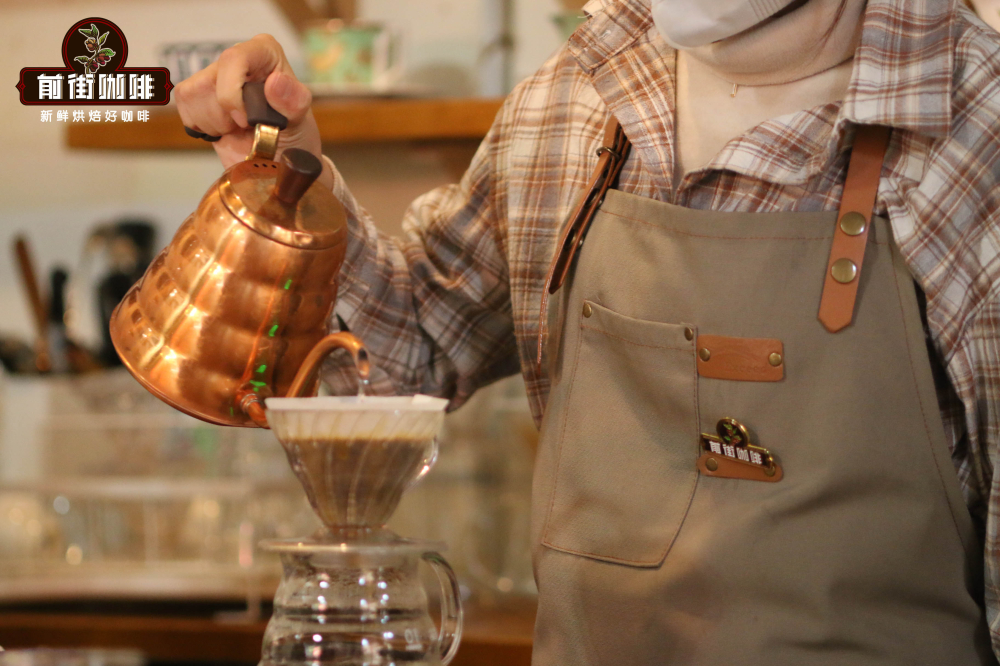
Although the history of pour-over coffee is relatively short, FrontStreet Coffee has not found documented records of when the bloom practice emerged and became popular, so we can only understand it through indirect analysis. There is now a global consensus on why we bloom, but the literal meaning of the term is worth exploring. Think back to when you first met the word "bloom": what did you take from its literal meaning?
Coffee bloom is expressed in English as "bloom," which literally means "flowering." That literal sense has no connection to what we call the bloom step. FrontStreet Coffee believes the term relates to the change in the coffee bed when water is poured. When hot water hits a dry coffee bed, the layer of grounds swells and expands, much like a flower opening.
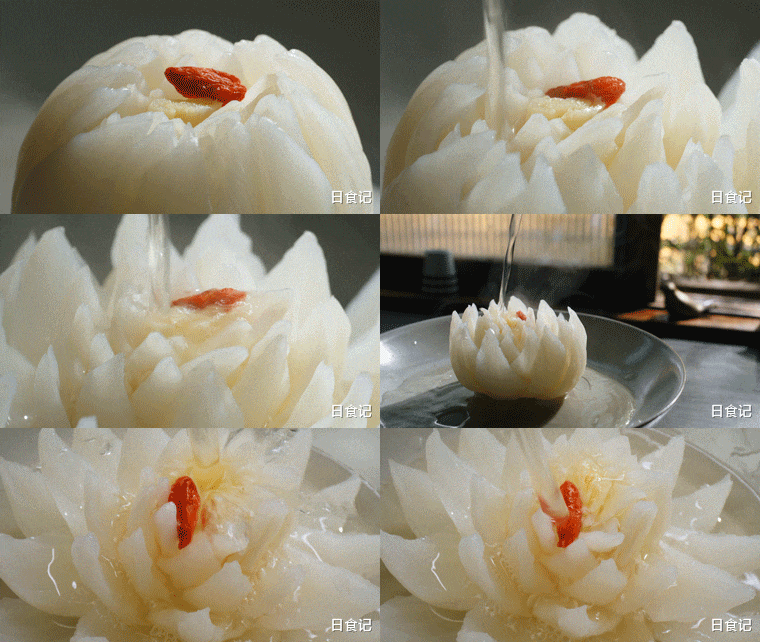
Image Source: Rishi
What we call the "bloom" is sometimes also referred to as "stewing." Think of cooking rice in an electric rice cooker: even after it signals that cooking is finished, an experienced elder will stop you from opening the lid, saying the rice should rest a while longer so it becomes softer and more fragrant.
Based on how pour-over methods spread, here is a bold speculation: the use of "bloom" to describe this step likely emerged when Hong Kong and Taiwan learned from Japan. Japan uses the term "murashi" for the bloom. This is only speculation without data to prove it, and anyone who knows better is welcome to correct us.
The reason most brewing methods include a bloom, besides improving extraction efficiency, is to make the brewing process more stable and controllable. Imagine pouring water in the same circular direction to ensure even watering and uniform extraction. If the grounds release bubbles one by one, those bubbles disrupt the coffee bed, creating turbulence and potentially leading to extremely uneven extraction.

Bloomed, but not completely bloomed: large bubbles continue to emerge during the subsequent pour.
So the ultimate purpose of blooming is to exhaust these active carbon dioxide gases, leaving only some mild gases that are insignificant.
Everyone has developed techniques for this, basically revolving around how to pour the water, how much to pour, and how long to bloom. Some pour drop by drop to release the gases, some pour a larger amount at once, and some extend the bloom time. The most common form you might encounter is pouring twice the weight of the coffee in water and waiting 30 seconds.
For more on how to perform bloom pouring well, you can click here [link].
Setting aside the advanced bloom techniques and focusing only on ordinary circular pouring, FrontStreet Coffee will discuss how much water to use for the bloom and how long to bloom.
The amount of bloom water is generally determined by the amount of coffee grounds. FrontStreet Coffee has commonly seen 1x water, 1.5x water, the most common 2x water, 2.5x water, and 3x water. In theory the optimal state is 2x water, because coffee grounds can absorb at most twice their weight in water. Pouring more than 2x is similar to the "saturation rescue" in "The Wandering Earth": excessive pouring just to wet the grounds completely, with the surplus eventually dripping into the lower pot.
FrontStreet Coffee believes 1.5-2x water is more appropriate. In fact, if you watch closely, you will find that even with 2x water poured, some coffee liquid flows into the lower pot in advance, meaning the interior of some grounds has not yet been wetted. This can be avoided through technique. First, the beans must be properly rested, and then, following the principle that "a coarser grind calls for a gentler, finer pour," pouring 1.5-2x water will generally exhaust the active gases.
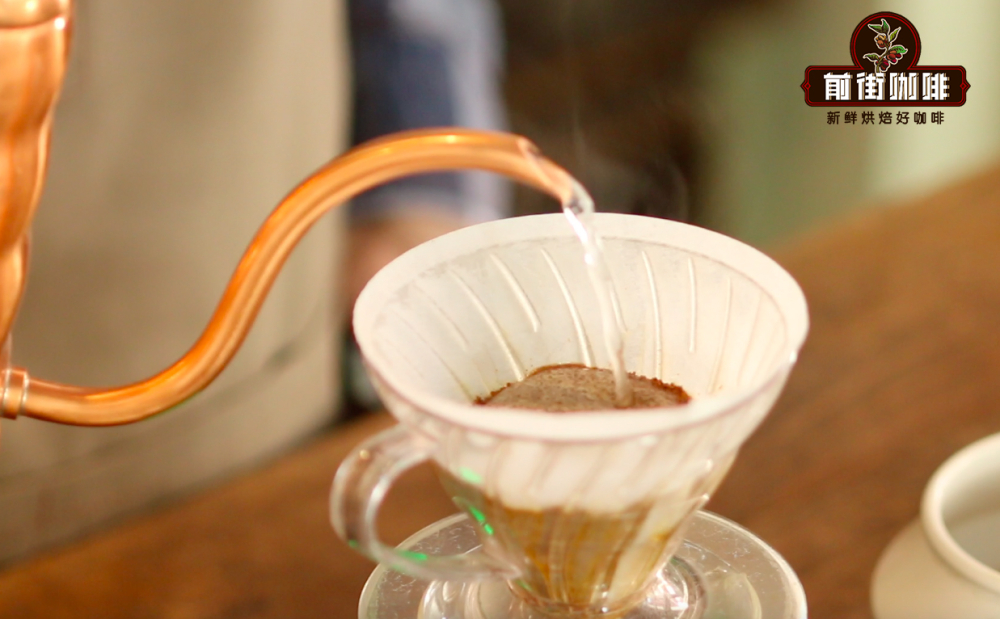
How long should the bloom last? That depends on how the grounds release gas, and typically falls between 20 and 40 seconds. Once all the grounds are wetted, the remaining step is simply waiting for them to release their gases. Generally, when brewing during the bean resting period, gas emission is faster, with many large bubbles spraying out as the bed swells. Well-rested beans tend to release gas more moderately during the bloom.
You can judge the bloom time by watching how the grounds expand. As you pour, the coffee bed slowly swells. After the pour finishes, the center of the swollen bed keeps rising and releasing gas, breathing like lungs as it expands and contracts. When that movement ends and the bed no longer changes, the bloom is complete. If you still do not pour and wait another 5-8 seconds, the bed will develop many holes and gaps, indicating over-blooming.
FrontStreet Coffee previously ran experiments in which controlling the bloom at 20 seconds produced less apparent sweetness, with prominent acidity and aromas leaning fresh and subtle, and noticeable astringency once the coffee cooled.
With a bloom of 28-30 seconds, the coffee had rich, sweet, and fragrant notes, a balanced taste, and a long aftertaste.
When blooming for more than 40 seconds, the coffee developed bitter and astringent flavors, with even more pronounced bitter mixed flavors after cooling.
FrontStreet Coffee Recommendation
A good bloom starts with a fresh, evenly rested bean. FrontStreet Yirgacheffe Gudingding Cooperative is a washed Ethiopian coffee with citrus, berry, and floral notes and a green-tea-like sweetness, and its aromatics are especially vivid during the bloom; FrontStreet Sun-Dried Huakui, with its berry, floral, jackfruit, and honey character, releases a striking amount of gas and swells dramatically, which makes it a satisfying bean to practice on.
If you brew light roasts on a V60, look for beans with lively acidity and clean aromatics. FrontStreet Strawberry Candy Geisha Blend shows rose, orange, grape, and blueberry notes, while FrontStreet Kenya Cherry Tomato brings bright cherry tomato and dark plum acidity with a full, juicy body. Both reward a careful bloom and a steady circular pour.
Important Notice :
FrontStreet Coffee is a long-established specialty coffee roaster in Guangzhou China, selling freshly roasted beans from its own farm in Yunnan as well as dozens of carefully selected single-origin beans from around the world for both pour-over and espresso. The products deliver consistently excellent quality and great value, with shipping within 24 hours. Guangzhou's FrontStreet Coffee shop is recommended by many coffee lovers, and the beans are now available online at the Tmall 。
FrontStreet Coffee has moved to a new address:
FrontStreet Coffee Address: 315,Donghua East Road,GuangZhou
Tel:020 38364473
 Scan and follow the En Gafei WeChat official account. Please indicate that the reprint comes from "En Gafei".