
How to Taste Coffee Flavors: A Guide to Sensory Perception and Flavor Description
"How can a plain cup of black coffee possibly have flavors of strawberry, tomato or mango?"
"The coffee flavor wheel is the most successful marketing campaign since diamonds." "I followed your advice to eat more fruit, and the more I eat, the more I realize coffee does not taste like the fruit I eat."

We have to admit that some people are genuinely gifted, with many having exceptionally sensitive senses of smell and taste who can easily tell the flavor differences between object A and object B. Most of the world, though, is ordinary. Ordinary people can also tell flavors apart, but the boundaries are blurred: they notice a difference yet cannot put it into words. There are not that many geniuses in this world. Most people whom society calls geniuses have simply found the right method and then doubled their effort. Finding the right approach and applying it well is what matters. With the wrong method, even the hardest worker achieves little.
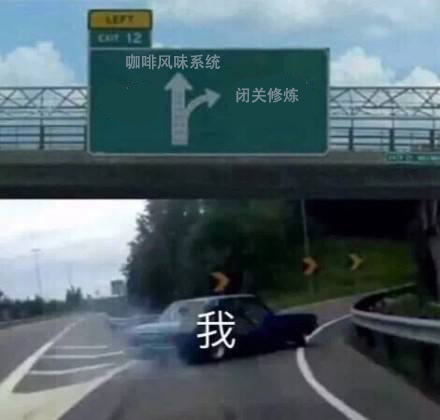
Why We Describe Coffee as Strawberry, Tomato or Dark Chocolate
Picture a conversation two people might have over coffee. "This coffee tastes great." "What makes it great?" "It is sweet and sour, with a bit of bitterness, but the bitterness is acceptable." "Let me try... and this is what you call sweet and sour? It is clearly bitter to the point of being sour."
People have different thresholds for sweet, sour and bitter, so a flavor you find very sweet, I might perceive as bitter. This is where flavor descriptions help, by making communication easier. Foods we meet daily, like strawberries, tomatoes and dark chocolate, have distinctly different flavors that most ordinary people can tell apart.
It is important to remember, though, that coffee is still coffee. Even when described as having strawberry notes, it remains coffee; certain aromas or flavors simply remind you of strawberries.
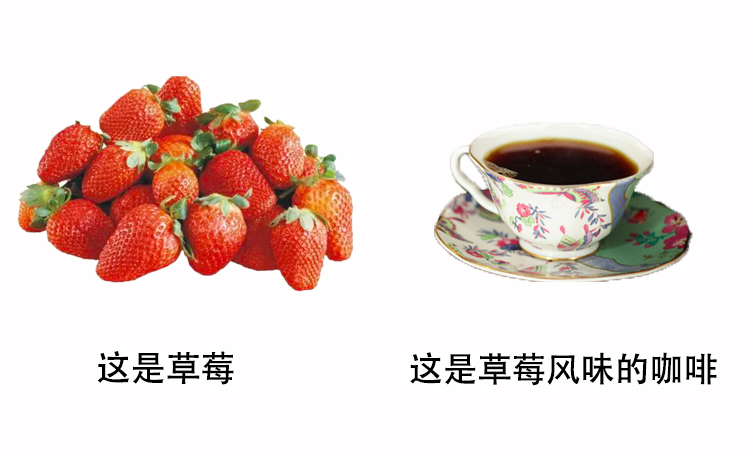
So when a coffee is described as having citrus, floral or honey notes, it may simply smell like flowers, carry a citrus-like acidity or aroma, or have a honey-like quality similar to drinking honey water.
Whether a merchant wants to convey a coffee's flavor to consumers or enthusiasts want to talk with each other, flavor descriptions make the conversation more concrete.
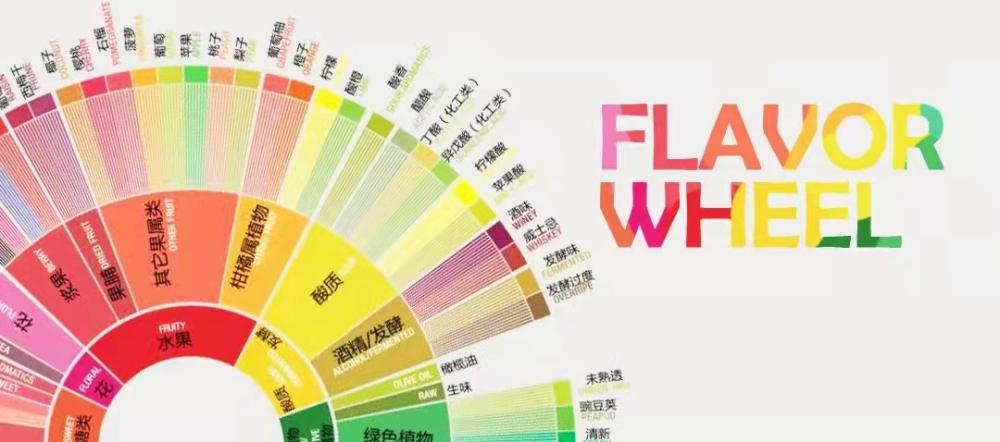
To make that communication easier, though, standards matter, and that is what led to the coffee flavor wheel. It broadly includes all possible flavor types in coffee, the pleasant and the unpleasant alike. But this does not make it the final word on coffee flavor. Different regions develop different people. Americans created the flavor wheel to match their own flavor standards and expressions. Europeans, for example, often describe coffee as red currant, a term we rarely use, because differences in eating habits lead to different expressions.
The Role of the Coffee Flavor Wheel
The purpose of the flavor wheel is to categorize our understanding of coffee flavors systematically, giving a reference point when describing coffee, rather than serving as a scoring sheet that decides right or wrong. FrontStreet Coffee offers an example: student A thinks this coffee has pineapple flavor, while student B thinks it has mango. That does not necessarily mean one of them is wrong. Looked at broadly, they both detected tropical fruit, so disagreement over the specific subcategory is quite normal.
For instance, tasting a coffee with rich fermentation notes, student C thinks it is good coffee with jackfruit aroma, while student D considers it bad coffee with rotten fruit flavor. Professional coffee evaluation has standards for whether fermentation is excessive, but for general appreciation, they could both be right.
How to Taste and Describe Coffee Flavors
As for how to taste coffee flavors and how to describe them, FrontStreet Coffee has suggested experiencing common food flavors more, eating more fruit and drinking more coffee. Clearly that advice is still too broad. FrontStreet Coffee has therefore concluded that what is actually needed is a systematic learning framework.
Courses such as SCA Sensory and Q Grader programs all follow a scientific, specific learning framework when teaching people to appreciate coffee flavors. To learn or master a skill, you first need to clarify your purpose and identify your weaknesses.
① Cannot taste coffee flavors
For those who cannot taste coffee flavors, FrontStreet Coffee recommends starting with diet: keep it light, then begin trying coffee, starting with simple cups to distinguish the direction of sweet, sour and bitter. Use a 5-level standard to rate the degree of sweetness, sourness and bitterness in a cup. Cultivate your senses gradually, then move on to point ②.

② Don't know how to describe flavors
A large part of flavor comes from aroma. If you drink coffee while pinching your nose, you will taste only sweet, sour and bitter. At this stage, then, make good use of your nose to smell the coffee. When drinking, use a sipping method to atomize more of the liquid and engage the retronasal olfactory senses.
On the other hand, you need to build up your knowledge of flavor descriptions. The coffee flavor wheel, as noted, is not absolute, but there is currently no more scientific diagram expressing the relationships among coffee flavors. Learn to categorize coffee flavors. A coffee with explosive floral and fruit notes, for example, logically would not also carry dark chocolate or nut flavors.
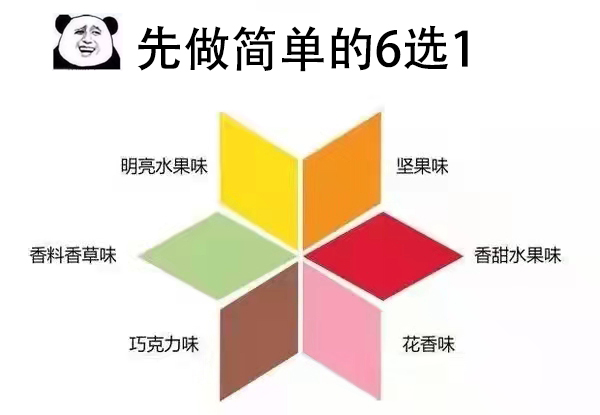
③ Lack confidence in expressing coffee flavors to others
Another aspect is enriching your flavor memory bank. You cannot describe a flavor you have never tasted unless you are the kind of person who just memorizes things for tests. Taste more and experience more; there are no shortcuts.
FrontStreet Coffee has observed, though, that some people can taste flavors and sense a coffee's character but simply cannot put them into words. This type usually comes from a self-taught background and lacks confidence in their skills, though there may also be gaps in key knowledge they have not noticed. The solution is simple: they need recognition, whether from taking part in coffee exchange meetings to gain others' approval or from enrolling in coffee sensory courses to earn an instructor's recognition. If you have friends in the same position, try encouraging them too.

FrontStreet Coffee Recommendation
If you want to practice naming the nutty and chocolate side of coffee, the easiest place to start is a classic Brazil. FrontStreet Queen's Estate comes from a small, carefully managed farm and uses the Yellow Bourbon variety, whose bright yellow cherries roast into a cup full of Brazil's signature nut, cream, roasted peanut and caramel-cookie notes, with low acidity and a sweet, lasting finish. It works in a pour-over, French press, moka pot or home espresso machine.
To taste how processing shapes flavor, try FrontStreet Lindong Mandheling. It comes from the Lintong region of Sumatra, is graded G1, and is wet-hulled and dark roasted to draw out dark brown sugar, spice, herb, nut and dark chocolate aromas. Its thick, low-acid body is a good contrast with the brighter cups above and a useful reference point when you are learning to describe what you smell and taste.
Important Notice :
FrontStreet Coffee is a long-established specialty coffee roaster in Guangzhou China, selling freshly roasted beans from its own farm in Yunnan as well as dozens of carefully selected single-origin beans from around the world for both pour-over and espresso. The products deliver consistently excellent quality and great value, with shipping within 24 hours. Guangzhou's FrontStreet Coffee shop is recommended by many coffee lovers, and the beans are now available online at the Tmall 。
FrontStreet Coffee has moved to a new address:
FrontStreet Coffee Address: 315,Donghua East Road,GuangZhou
Tel:020 38364473
 Scan and follow the En Gafei WeChat official account. Please indicate that the reprint comes from "En Gafei".

