
How Many Minutes Does It Take to Brew Pour-Over Coffee? What Affects Extraction Time and Flavor
Brewing a good cup of pour-over coffee is not difficult, but understanding the brewing data is. Common questions include "How fine should the coffee grounds be?", "What pouring technique makes coffee taste good?" and "Is my brewing time correct?"
FrontStreet Coffee has already provided extensive information on grind size and brewing technique, so this time we will go deeper on the question of brewing time.
What Is the Ideal Pour-Over Brewing Time?
If you simply want to know whether your brewing time is right, FrontStreet Coffee will give a direct answer: using a No. 01 dripper with 15 g of coffee grounds as the benchmark, the overall time should be controlled between 1 minute 50 seconds and 2 minutes 30 seconds, which is considered a good range.
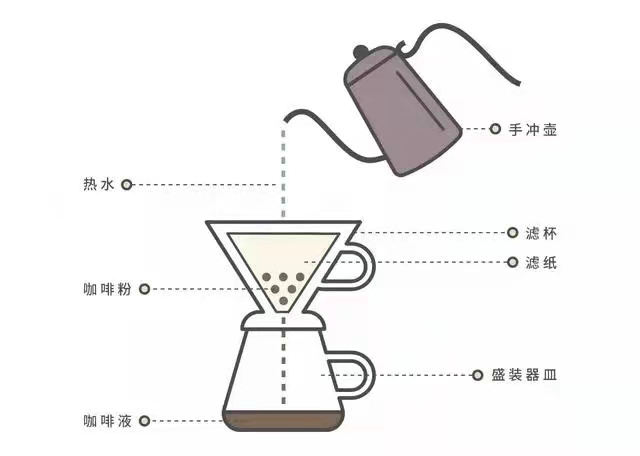
What we call "brewing coffee" is professionally known as coffee extraction — using hot water as a medium to dissolve flavor compounds from the grounds. This process takes time. Generally, the longer the extraction, the more substances are extracted — but not everything soluble in coffee is desirable. That is why extraction duration needs to be controlled.
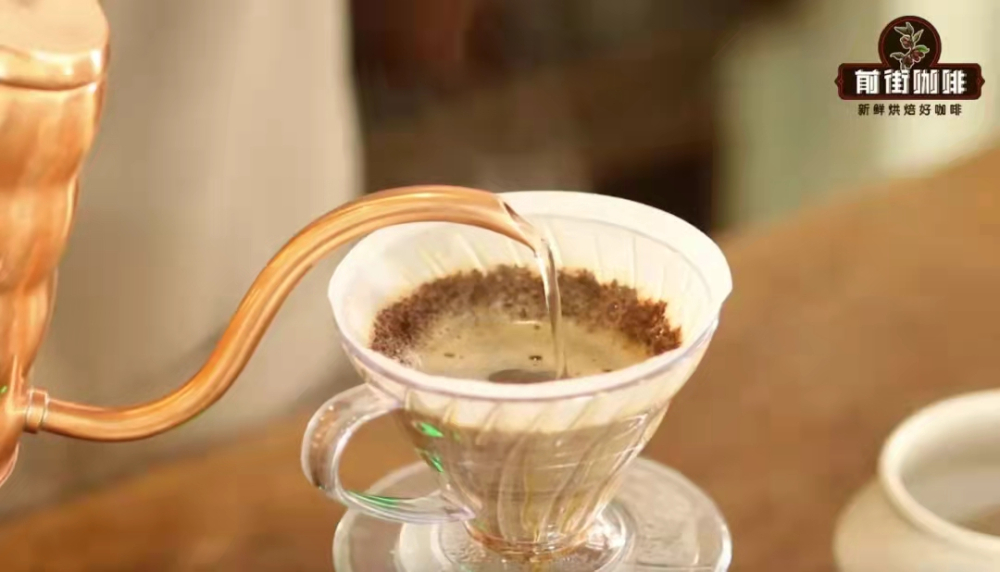
For drip coffee around the 2-minute mark, soluble substances are released rapidly from the grounds, reaching an extraction rate of 18% (18-22% is considered the ideal extraction range under the Golden Cup Standard). After 5 minutes, over 80% of soluble substances will have dissolved, equivalent to over 24% of the coffee bean.
In other words, with a normal brewing pattern, if extraction time is much shorter than 2 minutes your coffee may taste thin, under-flavored and watery. If it runs much longer than 2 minutes, you may hit the bitter, astringent flavors of over-extraction.
Factors Affecting Brewing Time
Controlling extraction between 1 minute 50 seconds and 2 minutes 30 seconds gives better flavor. To master flavor skillfully, you need to understand at least a few of the factors that affect time.
1. Bloom time calculation. Extraction time runs from the moment hot water contacts the coffee until the coffee liquid in the dripper has completely filtered through. So you should start the timer when you begin the bloom pour. Some people prefer to start it after finishing the bloom pour, which obviously introduces a larger error.
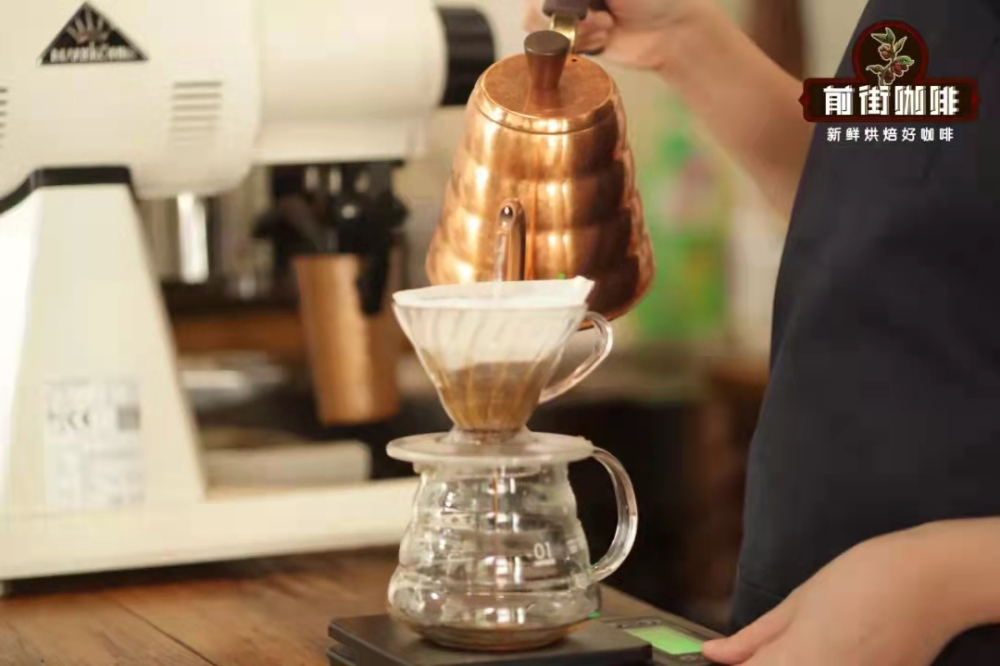
Another point is that the length of the bloom itself affects the final extraction time. FrontStreet Coffee's 1 minute 50 seconds to 2 minutes 30 seconds range is based on a 30-second bloom. If you extend or shorten the bloom, the final extraction time lengthens or shortens accordingly.
2. Grind fineness. This is easy to understand: with coarser grounds, water passes through more easily and needs less time. Finer grounds have fewer gaps, making it harder for water to pass through — and possibly causing blockages — so they need more time. Note, though, that not all beans share the same grind setting. It is best to calibrate with a #20 sieve, with a pour-over grind size achieving a 75-80% pass-through rate.
3. Dripper and pouring technique. We often hear that using a Kono dripper makes coffee richer, or that a certain pouring technique makes coffee taste better. Part of the reason is the deliberate extension or shortening of extraction time.
"Because we're afraid of extracting bitter flavors from dark roast coffee, we grind coarser." "With coarser grinding, the water flows faster, so the taste is thinner." "To stop dark roast coffee from being too thin, we brew longer in a Kono dripper." This may sound circular, but it contains real extraction science.
High water temperature and fine grinding raise the unit extraction efficiency — the amount of substance dissolved per second tends to be higher — making it easy to extract the bitter compounds from the later stages. That is why coarser grinding is needed: each second dissolves less. But coarsely ground coffee also flows faster, leading to insufficient time and a thin taste. We can use slower-flow drippers or pouring techniques such as segmented pouring to deliberately extend the extraction time and achieve the control we want.
Dripper Design and Pouring Techniques
"Drippers with more and longer guide channels have faster water flow; conversely, drippers with fewer and shorter guide channels have slower water flow. The more pouring segments, the longer the extraction time; the fewer the segments, the shorter the extraction time."

FrontStreet Coffee Recommendation
Once you have the timing down, the beans themselves shape the brew. For light roasts, FrontStreet Ethiopia Gutingding is a first stop for many people getting into specialty coffee, and Yirgacheffe remains enormously popular. It typically carries vivid citrus, berry and floral notes with a green-tea-like sweetness in the finish, and unlike the "sour coffee" many people imagine, a good Yirgacheffe's acidity is soft and bright — more like the sweet-tartness of fruit than a harsh sourness — which makes it very approachable for anyone starting pour-over. FrontStreet Ethiopia Huakui has been one of the most successful star products of the specialty market in recent years, with extremely prominent tropical fruit aromas — strawberry, passion fruit, jackfruit and even lychee — clear sweetness, very little bitterness and a smooth, juicy entry. FrontStreet Kenya Tomato is a Kenyan specialty washed bean built around vivid cherry-tomato and smoked-plum acidity with a full juiciness; it comes from Kenya's Sika region, grown at 1,550-1,750 meters with the classic SL28 and SL34 varieties, plump and rounded beans, and Kenya's signature 72-hour double washed fermentation to draw out the fruit while keeping the cup clean and pure, then a light roast to preserve lively acidity and layered fruit.
At the top of the light-roast world, FrontStreet Panama Esmeralda Red Label Geisha is something of a legend. It usually shows extremely elegant jasmine florals along with delicate citrus, bergamot and black tea notes; the overall cup is clean and transparent with a long finish and rich layers. Though it generally costs more than ordinary specialty coffee, its distinctive aroma remains one of the ultimate experiences many coffee lovers chase.
For medium-dark roasts, FrontStreet PWN Indonesia Golden Mandheling is deep-roasted with very low acidity and a thick, lingering body, opening with abundant herbal and dark chocolate aromas and a faint earthy note — layered and suited to anyone who likes a heavy cup without acidity. FrontStreet Brazil Queen Farm is very low in acidity and balanced, with intense nut and cocoa aromas and clear caramel sweetness; smooth without astringency, it works as pour-over, espresso or moka pot. FrontStreet 2013 Yunnan Sun-dried Typica is clean, weaving citrus and caramel aromas, and the medium-dark roast adds a little nut, chocolate and brown sugar with medium acidity and harmonious layers. FrontStreet Papua New Guinea Paradise Bird, from the Sigri region's Paradise Bird estate, is a near-"little Blue Mountain" Typica grown at 1,600-1,800 meters on volcanic soil, reaching AA grade with plump beans and a very low defect rate; triple washed fermentation gives a clean, pure cup with outstanding sweetness and low acidity.
Important Notice :
FrontStreet Coffee is a long-established specialty coffee roaster in Guangzhou China, selling freshly roasted beans from its own farm in Yunnan as well as dozens of carefully selected single-origin beans from around the world for both pour-over and espresso. The products deliver consistently excellent quality and great value, with shipping within 24 hours. Guangzhou's FrontStreet Coffee shop is recommended by many coffee lovers, and the beans are now available online at the Tmall 。
FrontStreet Coffee has moved to a new address:
FrontStreet Coffee Address: 315,Donghua East Road,GuangZhou
Tel:020 38364473
 Scan and follow the En Gafei WeChat official account. Please indicate that the reprint comes from "En Gafei".

