
Introduction to Techniques for Extracting Sweetness in Pour-Over Coffee: A Detailed Guide to the Rao Spin Stirring Method by the Coffee Godfather
The Rao Spin: A Different Approach to Pour-Over Coffee
FrontStreet Coffee has covered plenty of Japanese pour-over methods, all of them "slow, gentle, and elegant." Today, though, we want to share a simple method that embodies the opposite - a kind of "brutalist aesthetic." It's called the "Rao Spin."
The name comes from Scott Rao, who shared the technique. In one of his blog posts, he made it clear that the method wasn't his invention and the true originator is unknown - but it caught on widely after Rao's videos, so the "Rao Spin" it became. After all, Arabic numerals weren't invented by Arabs either.
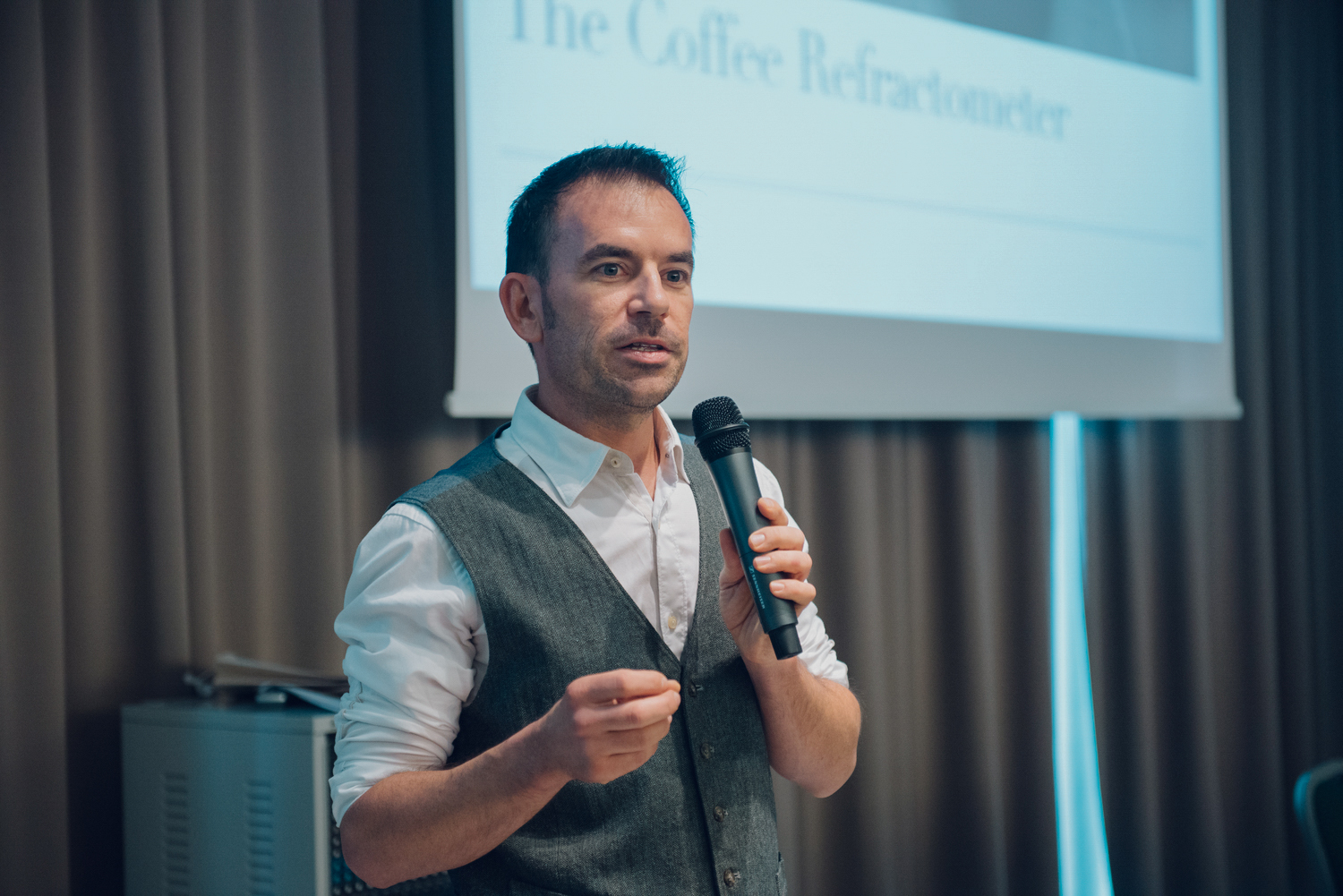
The method is remarkably straightforward, and remarkably effective at producing a delicious cup (even if the process isn't much to look at). Elegant or rough - any method that brews a good coffee is a good method. Behind this "brutalist" approach sits some fairly rigorous brewing logic, and if you're still learning the fundamentals of pour-over, it's worth exploring.
FrontStreet Coffee will walk through some clips from Scott Rao's YouTube channel to show how it works.
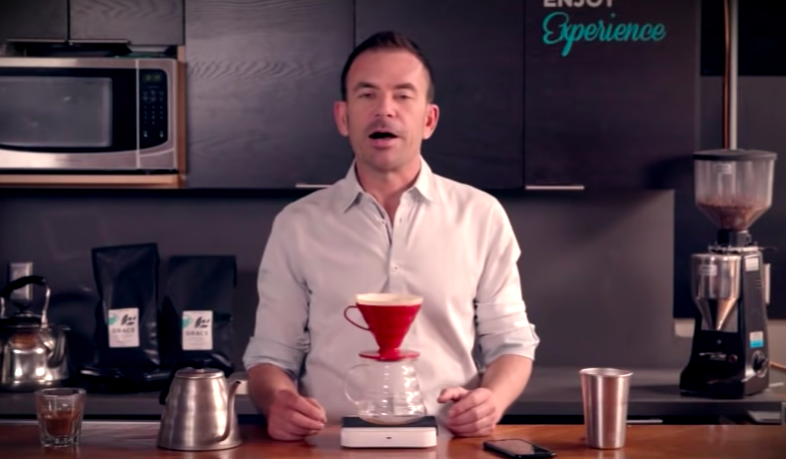
In the video, Rao first explains his views on dripper materials and paper filter choice. In his opinion, resin is the best option: it doesn't get hot to the touch and helps retain more heat during extraction.
For paper filters, he suggests soaking several brands in hot water for 10 minutes, then tasting the water and picking the one that imparts the least flavor.
The Brewing Process
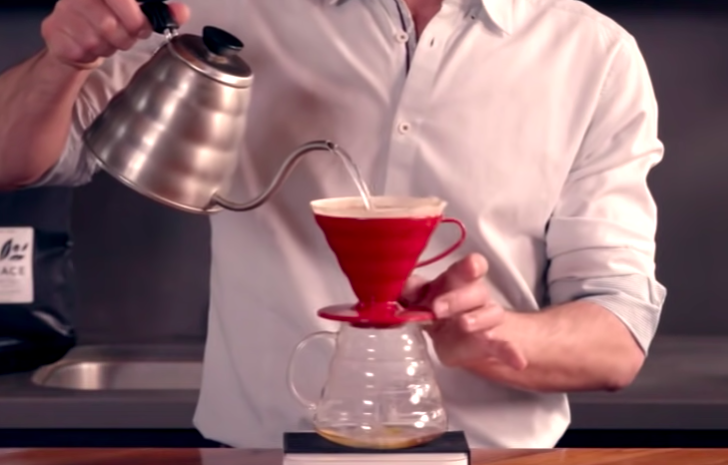
Following standard procedure, he first rinses the filter paper and preheats the equipment. He used 22g of Colombian Cauca coffee beans. He didn't specify a grind size, but judging from the coffee bed, FrontStreet Coffee estimates it's on the quite fine side - roughly an 85% pass-through rate. The water temperature wasn't stated either; given that he left it unspecified and used default settings, Rao most likely brews at 95-96 degrees C.
First, Rao pours three times the coffee's weight in water for the bloom - about 60ml. Right after pouring, he takes out a small spoon and gently stirs the coffee bed so the grounds absorb water evenly. (A blessing for anyone with an unsteady pouring hand.)
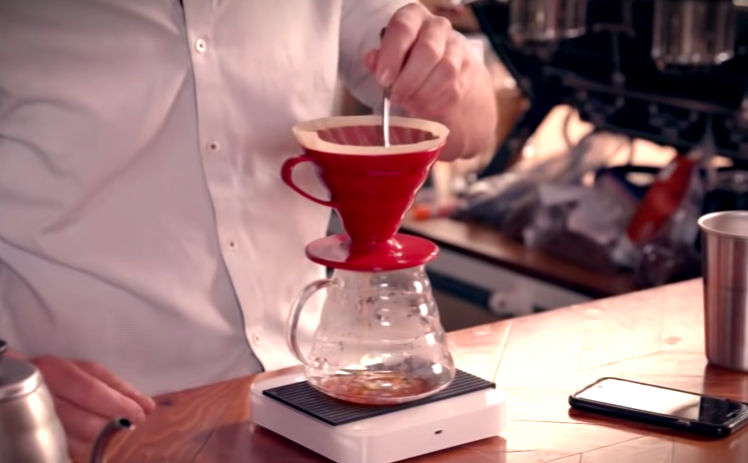
The bloom lasts 45 seconds, during which a good amount of coffee liquid has already dripped into the server - but it still does the job of a full bloom.
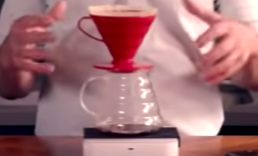
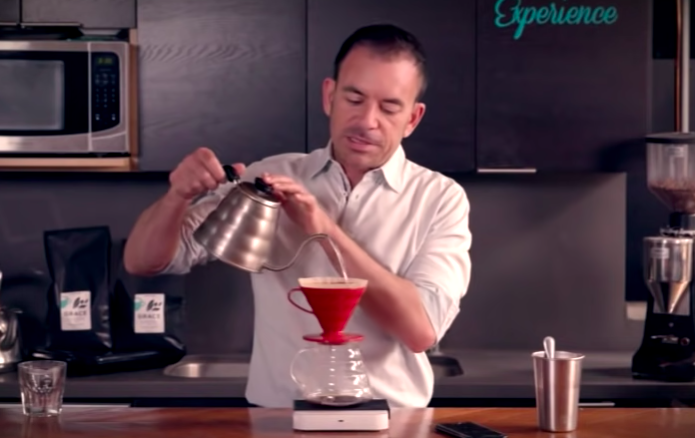
Next is the main pour, straight up to the target volume of 360ml. The flow is generous and the water column tilts at a noticeable angle, but Rao says that's fine. (Another blessing for the pouring-challenged.) What matters, he notes, is keeping the pour level - don't move it up and down.
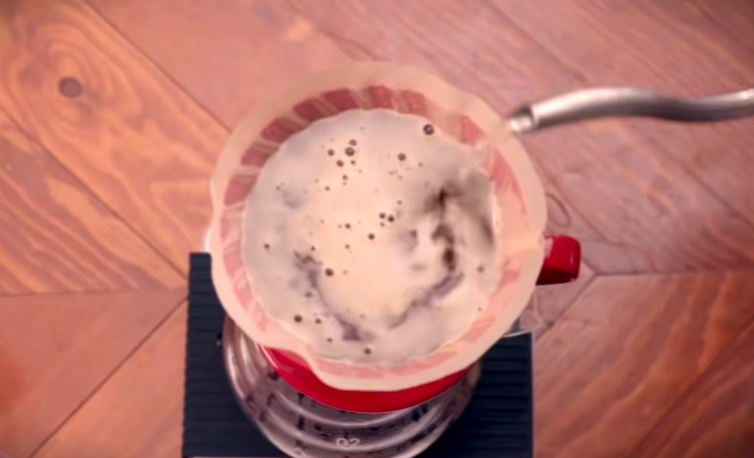
Seen from above, the water level rises quickly; this phase of pouring mainly serves to agitate the coffee grounds.
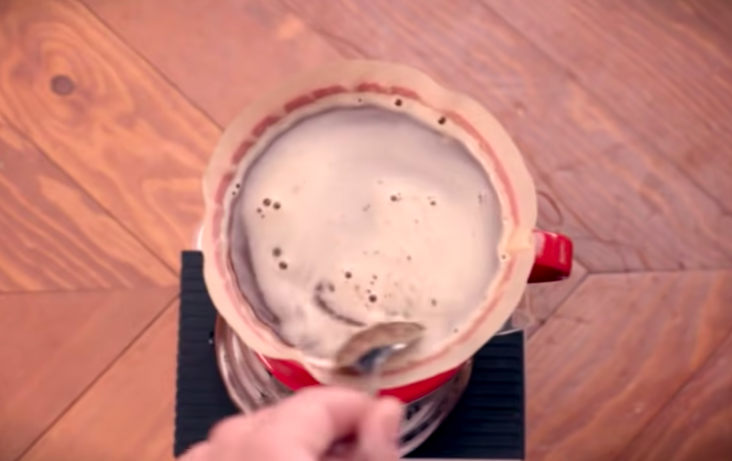
Once the pour is done, he immediately takes out the trusty little spoon again and "scrapes" around the edges, pushing any grounds stuck to the walls back into the water - true equal treatment for every particle, uniform extraction all around.
At about 1 minute 45 seconds, when the liquid level has dropped to roughly halfway, he holds the dripper and gives it a gentle shake, 2-3 times. Same goal as before: get every ground down to the cone's bottom instead of clinging to the walls.
Rao points out that shaking once or three times makes no meaningful difference to the flavor, so don't panic if you shake a little too much.
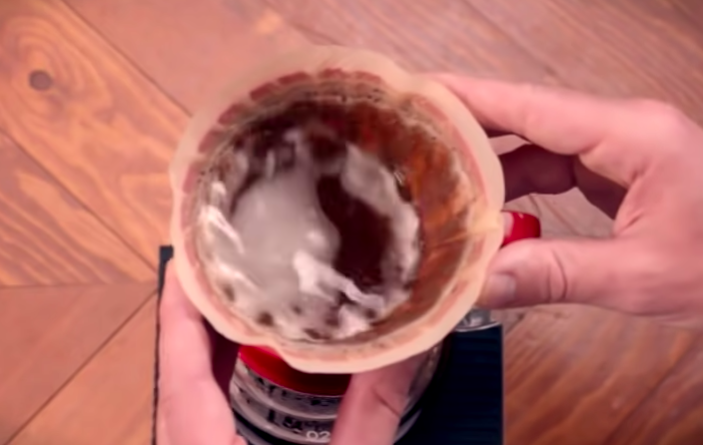
The rest is just letting it drip to completion. As you can see, the finished coffee bed is perfectly flat, with no clogging.
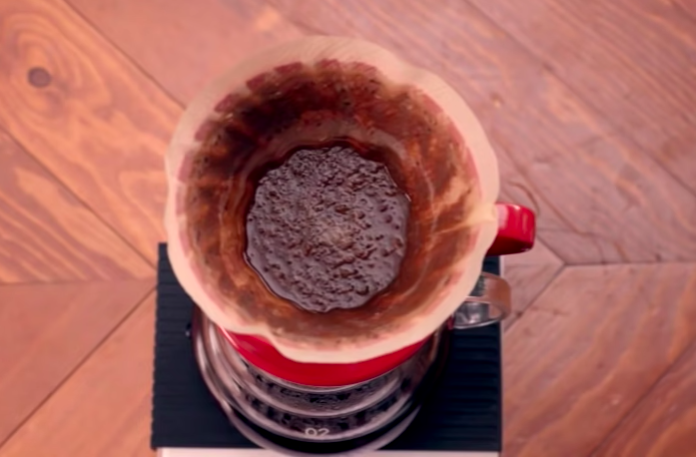
Brewed this way, the coffee extracts very evenly and the flavors come through fully. That said, as FrontStreet Coffee noted in a previous article, there is a risk of over-extraction - and it comes mainly from the grind.
From Rao's demonstration it's clear the grounds are very fine yet cause no clogging, which suggests the fines have been sifted out. This method also demands a lot from your grinder. On a typical mid-priced hand grinder, brewing 20g of sifted coffee would take at least 30g of whole beans once you've discarded both the coarse boulders and the ultra-fines.
More than anything, this method teaches how much uniform extraction matters to flavor. If you can't achieve it indirectly, just do it directly - physically.
FrontStreet Coffee Recommendation
The Rao Spin's high-agitation, fine-grind style shines brightest with a quality dripper like the classic Hario V60, whose 60-degree cone and single large outlet reward good technique with layered, aromatic cups. If you're trying it with light-roast beans, FrontStreet Coffee recommends FrontStreet Ethiopia Yirgacheffe Guodingding, a washed Yirgacheffe with bright citrus, berry, and jasmine notes, or FrontStreet Ethiopia Hambela Natural, bursting with strawberry, passion fruit, and jackfruit aromatics - both showcase the lively acidity and floral sweetness that the V60 extracts so well.
If you grind fine but prefer a lower-acid cup, FrontStreet PWN Indonesia Golden Mandheling is a great match: wet-hulled with low acidity, a thick and velvety body, and herbal, dark chocolate, and caramel notes. FrontStreet Brazil Fazenda Rainha (Queen Estate), with its nutty, cocoa, and caramel sweetness, also handles fine grinds gracefully while staying smooth and balanced.
Important Notice :
FrontStreet Coffee is a long-established specialty coffee roaster in Guangzhou China, selling freshly roasted beans from its own farm in Yunnan as well as dozens of carefully selected single-origin beans from around the world for both pour-over and espresso. The products deliver consistently excellent quality and great value, with shipping within 24 hours. Guangzhou's FrontStreet Coffee shop is recommended by many coffee lovers, and the beans are now available online at the Tmall 。
FrontStreet Coffee has moved to a new address:
FrontStreet Coffee Address: 315,Donghua East Road,GuangZhou
Tel:020 38364473
 Scan and follow the En Gafei WeChat official account. Please indicate that the reprint comes from "En Gafei".

