Coffee Malicious Rights Protection with Tenfold Compensation? What Problems Exist in Coffee Bean Production Standards and Quality
The Intermediate People's Court of Pingxiang City, Jiangxi Province, has closed out a second-instance sales contract dispute — and the final ruling ordered the seller to refund the buyer in full and pay compensation worth ten times the purchase price.
The facts of the case: in August 2020, a consumer surnamed Zhou, who runs a guesthouse in Jiangxi, bought 10 boxes of black coffee worth 3,750 yuan from an online shop — partly to serve guests, partly for personal use, since Zhou drinks coffee regularly. After brewing and drinking it, Zhou experienced dry heaving, heart palpitations, and a dry throat.
The shop had marketed the coffee as an imported product, so Zhou asked for the customs entry inspection reports. Customer service only confirmed the coffee came from South Korea and never produced the paperwork. When Zhou examined the product itself, the coffee had no outer packaging — just three small bags of loose solid coffee with no Chinese labels, and tags missing the manufacturer, production address, and ingredient list.
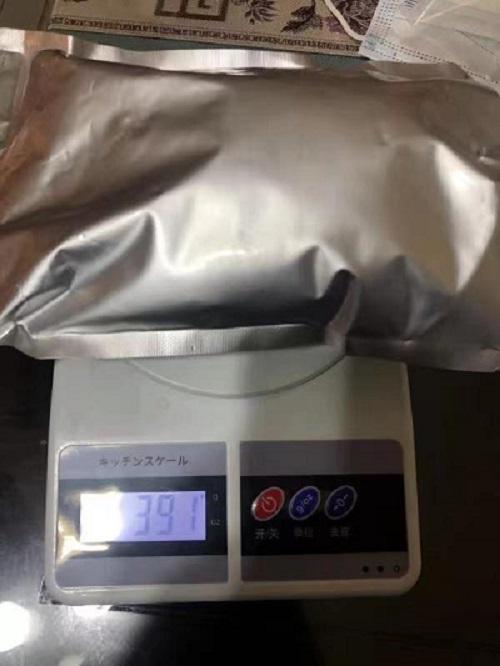
Zhou therefore sued the shop for selling "three-no products" (goods with no manufacturer information, no production date, and no quality certification), demanding a 3,750 yuan refund plus tenfold compensation of 37,500 yuan — 41,250 yuan in total. Notably, Zhou had bought coffee from other online shops as well and had repeatedly pursued tenfold compensation claims in court on the grounds of substandard products...
The Shop's Defense and the Court's Ruling
The shop, unsurprisingly, pushed back. It argued that Zhou was not a true consumer: he ran a guesthouse, bought the coffee mainly to serve guests, and thus purchased for business rather than personal use. It also pointed out that Zhou had bought similar products multiple times and demanded compensation almost immediately afterward — suggesting the purchases were made with compensation in mind.

After hearing the case, the court held that Zhou still qualified as a consumer under the Consumer Rights Protection Law. As a matter of legislative principle, whether a person falls under that protection cannot be judged solely on the subjective purpose of the purchase.
More importantly, the products showed no manufacturer information, production dates, or food safety certification, and the shop offered no evidence that the goods met quality standards. The court therefore found that the products did not comply with food safety standards.
Coffee Production Standards and Market Realities
Here is where the case exposes a bigger problem. The industry's standard production norm for coffee beans is NY/T 605 — but in today's specialty coffee market, that standard shows its age. Specialty coffee has very different freshness expectations than the commercial coffee NY/T 605 was written for: beans are best consumed within 5–30 days of roasting, and customers expect to receive freshly roasted coffee. Yet NY/T 605 requires mandatory pesticide-residue testing on every batch before it leaves the factory, and completing those factory reports takes roughly 10–25 days.
Producing coffee beans under NY/T 605 can therefore create gaps that malicious claimants know how to exploit — chiefly false production qualifications and questionable quality inspection reports. Many small roasters don't own factories and operate through affiliated third-party production licenses, with the shipping location far from the actual production site, sometimes in a different province entirely: roasting in Hubei, for instance, while the business and shipping hub sits in Hangzhou or Shanghai. Customers genuinely do receive freshly roasted beans in that window — but the timeline makes completing NY/T 605 factory reports impossible.

With a qualification-affiliation arrangement of this kind, a producer nominally using NY/T 605 may have questionable production credentials, and the timing simply doesn't allow for the required factory reports. On both counts, there is real risk — which suggests coffee production standards need to catch up with the market.
The root cause is that when NY/T 605 was drafted, freshness wasn't a major concern; supermarket coffee was often roasted six months or more before purchase. As consumer expectations for roast dates have grown sharper, the standard's deficiencies have become glaring, and small specialty businesses relying on it may face complaints over false production qualifications or inspection reports.
What This Means for Coffee Sellers
In this case, the shop really had sold "three-no products," so the tenfold compensation claim was properly upheld. But the logic cuts both ways: had Zhou used the coffee commercially, he too would have been selling non-compliant goods, and his guests could have sued him on exactly the same grounds. For anyone producing, distributing, or selling coffee, the takeaway is simple — make sure everything you sell meets the applicable laws and regulations.
Image source: Internet
FrontStreet Coffee Recommendation
One of the best ways to avoid the gray market entirely is to buy from roasters with transparent sourcing. For newcomers to specialty coffee, FrontStreet recommends starting with Ethiopia: the Natural Huakui (from Sidama, with its classic notes of berries, florals, jackfruit, melon, and honey) or the washed Yirgacheffe from the Gedingding cooperative, perfumed with jasmine, lemon acidity, and berry tones — a heritage dating back to the government's introduction of washed processing in the 1970s.
Brazil is another budget-friendly entry point: FrontStreet's Cerrado Red Bourbon daily-driver delivers cream, peanut, and cocoa with a soft, balanced cup, while the higher-grown Yellow Bourbon from Queen Estate adds a sugarcane sweetness to its layered nuttiness. And for those who dislike acidity, FrontStreet's Mandheling line — from Lintong or the thrice hand-sorted PWN Golden Mandheling — offers the distinctive herbal, spice-laden richness that Sumatra's wet-hulled processing is famous for.
Important Notice :
FrontStreet Coffee is a long-established specialty coffee roaster in Guangzhou China, selling freshly roasted beans from its own farm in Yunnan as well as dozens of carefully selected single-origin beans from around the world for both pour-over and espresso. The products deliver consistently excellent quality and great value, with shipping within 24 hours. Guangzhou's FrontStreet Coffee shop is recommended by many coffee lovers, and the beans are now available online at the Tmall 。
FrontStreet Coffee has moved to a new address:
FrontStreet Coffee Address: 315,Donghua East Road,GuangZhou
Tel:020 38364473
 Scan and follow the En Gafei WeChat official account. Please indicate that the reprint comes from "En Gafei".