What is the Latte Coffee to Milk Ratio? A Complete Guide to Making Latte Coffee Correctly
What Is the Latte Coffee-to-Milk Ratio? A Complete Guide to Making Latte Coffee Correctly
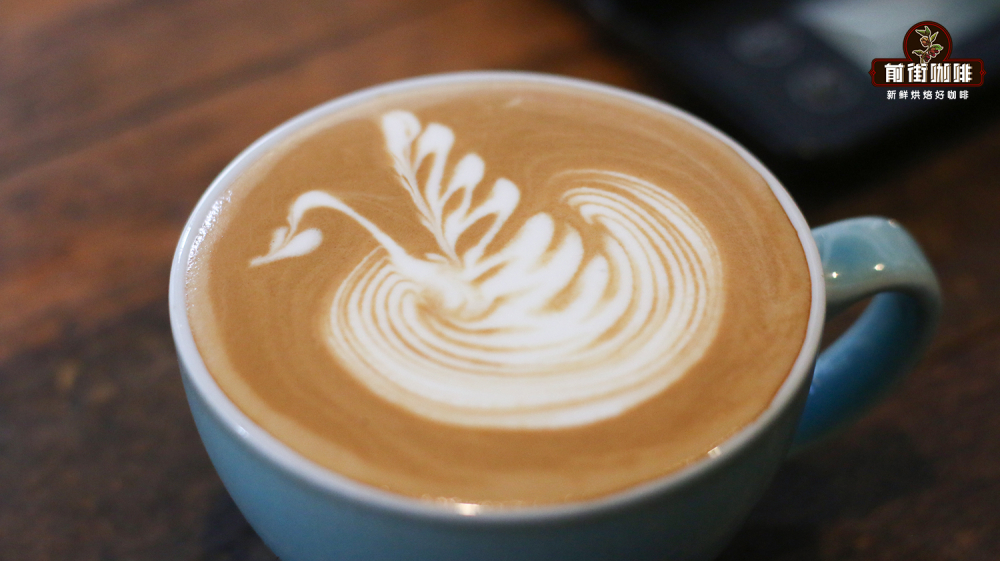
For a delicious latte, FrontStreet Coffee believes the decisive factors are the quality of the beans and milk, the coffee-to-milk ratio, and the extraction and blending technique.
First: Choose the Right Ingredients
Lattes look simple and appear on nearly every café menu, yet they taste different from shop to shop. The main reason is the raw materials—above all, the milk and the coffee beans.
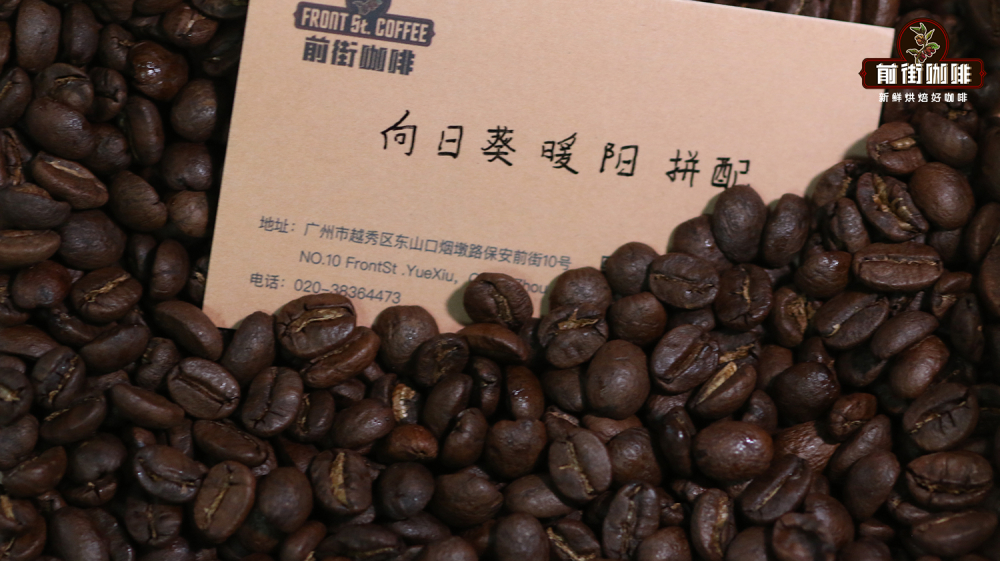
The beans' flavor profile sets the direction of the drink. Most espresso blends give iced lattes rich nutty, chocolatey, coffee-forward flavors; a few instead highlight the sweet richness of the milk. The Sunflower Warm Sunshine blend used at FrontStreet Coffee is designed to express caramel, chocolate, and vanilla cream—proof of how much the choice of espresso beans shapes a latte.
Milk matters just as much. Even within whole fresh milk alone there are a dozen or more common varieties: some full-flavored and thick, others light and thin. The goal isn't to chase maximum thickness or the strongest milk flavor, but to find milk that pairs well with the coffee. Heavy-handed milk buries the coffee; noticeably watery milk makes the latte taste diluted.

Second: Get the Coffee-to-Milk Ratio Right
Get the ratio wrong and no technique will save the drink. Too much milk and the coffee disappears; too little and bitterness dominates. Making a good latte means finding the balance.
FrontStreet Coffee doesn't believe in a single fixed ratio—it all depends on how the espresso tastes and how it marries the milk. But there is a general range: between 1:5 and 1:8.
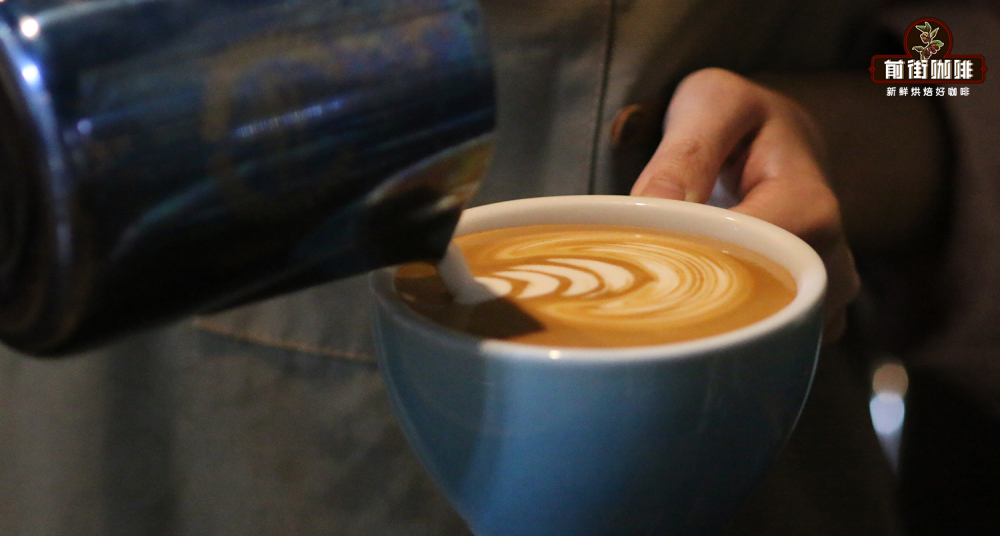
FrontStreet Coffee currently pulls its lattes from the Sunflower Warm Sunshine blend, a combination of Yirgacheffe Red Cherry and Honduras Sherry beans. Its bitterness is moderate, with flavors of sherry-wine aroma, chocolate, vanilla cream, and brown sugar—nowhere near as bitter as traditional espresso blends. Paired with the right amount of milk it reads as smooth milk chocolate, which is why we use a 1:6 coffee-to-milk ratio: 40g of espresso topped with 240ml of steamed milk.
Third: Execution
A properly extracted espresso and fine, dense microfoam are the foundation of a good latte. For extraction, FrontStreet Coffee recommends pulling 40g of liquid from 20g of coffee in 25-30 seconds. For steaming, stretch the milk from 5/10 full to 6/10 full, finishing between 55 and 60 degrees Celsius.
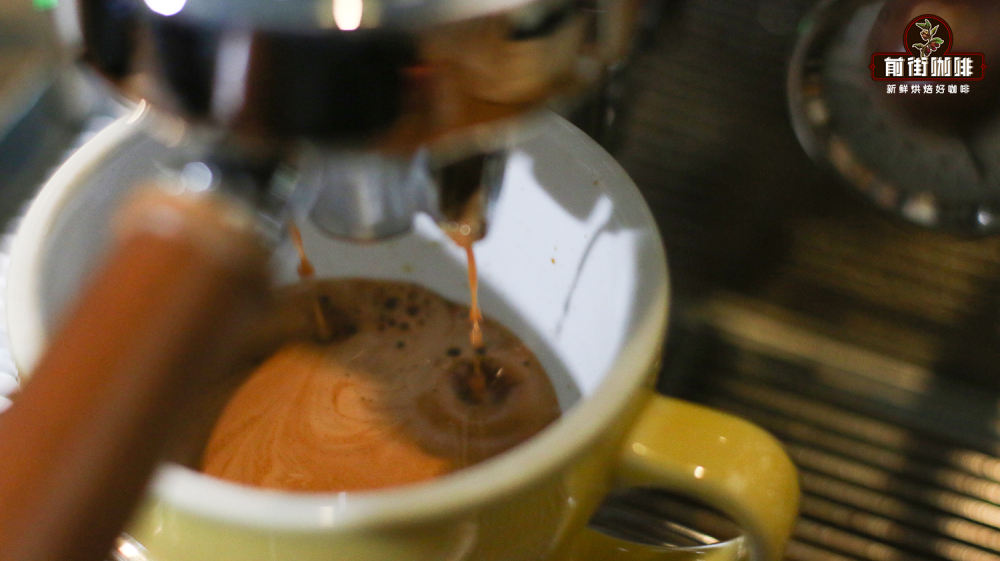
Then comes the blend. Only when milk and espresso are fully integrated does the flavor stay consistent sip after sip; blend them unevenly and you get a mouthful of milk followed by a mouthful of straight coffee.
Good blending first requires the crema and microfoam to merge evenly, which shows as a uniform color across the surface—the so-called "golden circle." The surface should also be fine and smooth, free of large bubbles.
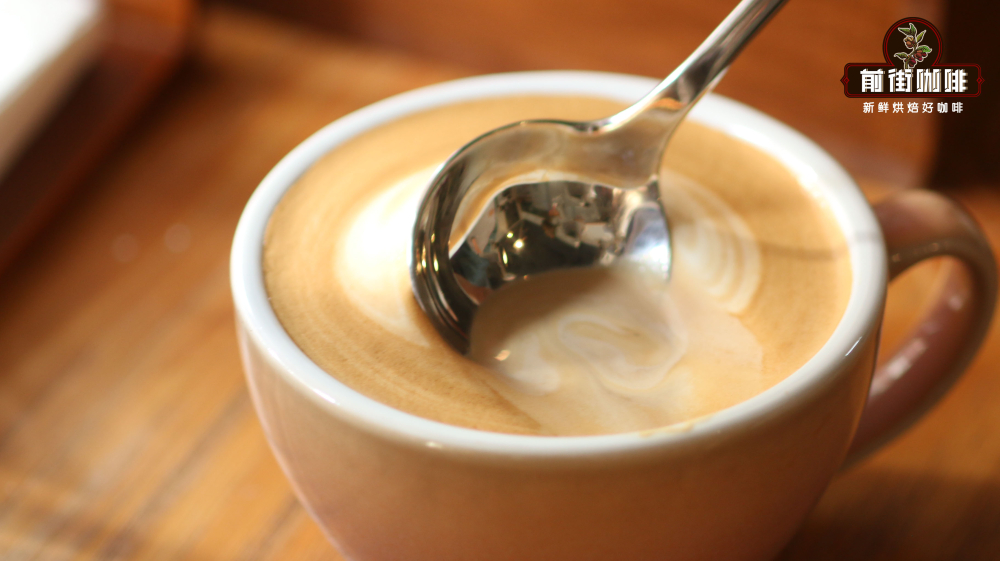
Blending Technique
1) Get the "hardware" right first: the espresso needs thick, rich crema and the milk foam must be fine and fluid. Poor blending is usually foam that's too thick—dense foam floats on top instead of mixing. Before pouring, a gentle swirl of both the cup and the pitcher improves fluidity and raises the success rate considerably.

2) Spout height: for latte art you bring the spout close to the surface to paint white patterns on the crema. Blending is the opposite—if the spout is too low, masses of foam float on the surface and the blend turns uneven; too high, and the falling stream punches air bubbles into the cup. As a rule of thumb, keep the spout 5 to 10 centimeters above the coffee surface. Habits vary, so there's no rigid standard for height and distance.
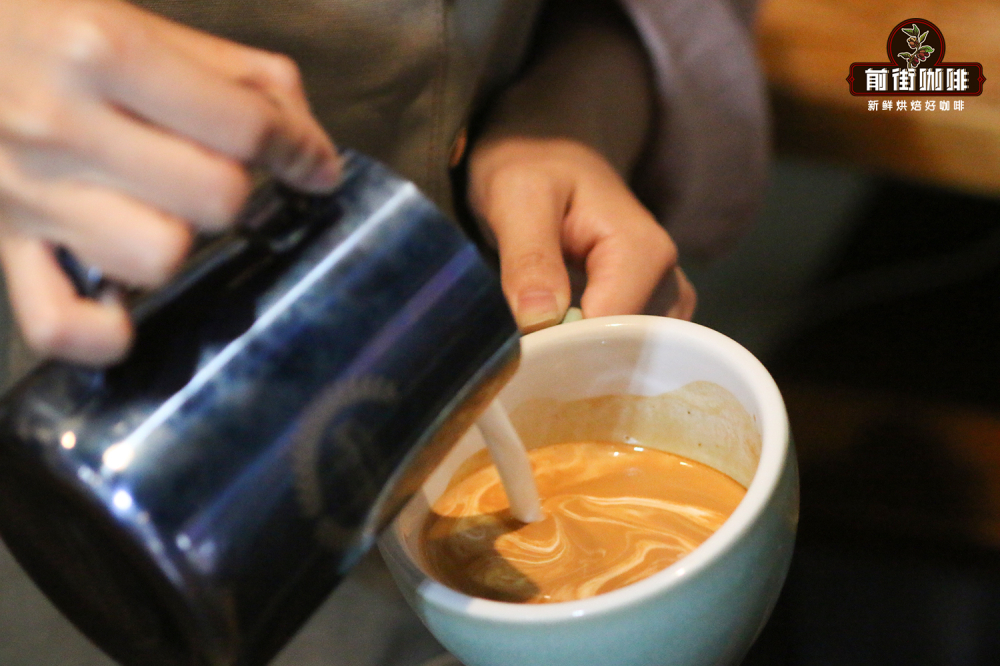
3) The motion: blend by stirring in one direction. Hold the cup in your left hand and the pitcher in your right, the two hands offset half a circle from each other and moving in relative circles. The stirring from different heights mixes coffee and milk quickly and completely. Make the circle as large as you can without scraping the walls, and gradually straighten the hand holding the cup as you pour.
FrontStreet Coffee Recommendation
Different beans meet milk differently—choose with the brew method in mind:
For espresso machines and moka pots: FrontStreet Premium Blend, Black Cocoa Blend, Classic Blend, and Commercial Blend. Espresso and moka pots share one goal—a concentrated coffee base that becomes an americano with water or a latte with milk. Most espresso blends are medium-dark roasted, driving the latte toward nut and chocolate. With Brazil leading the recipe, the Premium and Black Cocoa blends pour lattes of almond, walnut, and mixed nut flavors with a silky body; the Classic and Commercial blends contain a small share of Robusta, producing extra golden crema and pushing body and caramel aroma to the max. The Classic Blend—the traditional Mocha-Java style recipe—is the top pick for beginners and pros alike, delivering dense crema even on basic home machines.
For pour-over with a splash of milk: FrontStreet PWN Golden Mandheling, Paradise Bird (PNG), and Fazenda Rainha (Brazil). Pour-over is lighter and usually drunk black, so pick medium-dark single origins whose chocolate, nut, cream, and cocoa profiles won't be buried—a little milk softens the cup while letting the dairy aroma through. Colombia Huilan also fits this role nicely.
For cold brew with milk: FrontStreet Strawberry Candy Geisha Blend and FrontStreet Colombia Pink Bourbon (Sidra). Cold extraction favors the small, sweet-tart flavor molecules first, so fruit- or wine-toned medium roasts work best: passion-fruit Pink Bourbon, rose-scented Strawberry Candy (a Costa Rica honey-process and Panama Geisha blend), or raisin-toned Mozart, each staying balanced and legible with a little milk—very easy to make at home.
Important Notice :
FrontStreet Coffee is a long-established specialty coffee roaster in Guangzhou China, selling freshly roasted beans from its own farm in Yunnan as well as dozens of carefully selected single-origin beans from around the world for both pour-over and espresso. The products deliver consistently excellent quality and great value, with shipping within 24 hours. Guangzhou's FrontStreet Coffee shop is recommended by many coffee lovers, and the beans are now available online at the Tmall 。
FrontStreet Coffee has moved to a new address:
FrontStreet Coffee Address: 315,Donghua East Road,GuangZhou
Tel:020 38364473
 Scan and follow the En Gafei WeChat official account. Please indicate that the reprint comes from "En Gafei".