What's the Difference Between Bourbon Coffee Beans and Arabica Coffee Beans? An Introduction to the Original Arabica Coffee Varieties

What's the difference between Bourbon and Arabica coffee beans?
Coffee is broadly divided into three species: Arabica, Robusta, and Liberica, with commercial production dominated by Arabica and Robusta. Arabica commands more attention in the market because it contains less chlorogenic acid and offers more delicate flavors. Robusta, on the other hand, resists disease and pests better and yields far more, but its cup tends to be bitter and one-dimensional, which is why it is generally used for commercial coffee where flavor complexity is not a priority.
In specialty coffee, however, "variety" means more than simply Arabica. Arabica and Robusta describe the species level; finer distinctions are made between varieties within a species—Typica, Bourbon, Geisha, and so on.
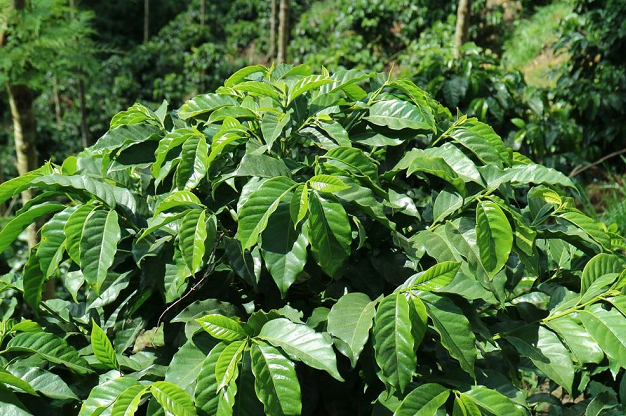
Even within the Arabica species, different varieties produce different flavors and yields—Caturra is high-yielding, Geisha is famously delicate. And any discussion of varieties has to start with the two oldest: Typica, and the Bourbon variety we're covering today.
The Origin of the Bourbon Variety
In the 18th century, the French carried round coffee seeds from Yemen to Réunion Island, which was then known as Bourbon Island—hence the variety's name. Bourbon took root there and gradually adapted to the local environment. Yet despite its early introduction, the variety didn't spread widely until the years leading up to the mid-19th century. In 1860 Bourbon reached Brazil, and from there it spread rapidly across Central and South America, where these countries still grow and produce Bourbon coffee today.
The Color Variations of Bourbon
Anyone who has read about Bourbon has likely come across its color variants: Red Bourbon, Yellow Bourbon, and Pink Bourbon. Red Bourbon is probably the most common, since coffee cherries generally ripen from green to pale yellow, then orange, then a rich red at peak picking time, finally darkening to deep purple when overripe.

Trained pickers judge ripeness by cherry color, harvesting at the moment of highest quality. Underripe cherries mean the seeds haven't accumulated enough nutrients to develop delicate flavors, while overripe cherries easily pick up over-fermented notes. One of FrontStreet Coffee's Yirgacheffe coffees comes from the Red Cherry Project, which pays farmers a premium for fully red cherries—raising both farmer income and bean quality in a genuine win-win.
Back to the color variants: Red Bourbon is simply named for its red cherries, and the same logic applies to Yellow and Pink Bourbon. Yellow Bourbon is generally believed to be a cross between Red Bourbon and another variety. Its cherries ripen yellow, it was first discovered in Brazil, and Brazil remains its main producer. Beyond the yellow fruit, Yellow Bourbon yields relatively little and is vulnerable to wind and rain, so it has never been widely planted.

Pink Bourbon is rarer still. It is a hybrid of Red and Yellow Bourbon, and what makes it scarce is that the pink cherry color is governed by recessive genes, which are easily disturbed—keeping that pink hue stable in the field is genuinely difficult.
How Does Bourbon Coffee Taste?
To understand Bourbon's flavor, FrontStreet Coffee believes you should start with Brazil. Although Bourbon spread across many Central and South American producing countries, its weaknesses destined it for gradual replacement. As one of the two oldest Arabica varieties (alongside Typica), Bourbon has poor disease and pest resistance and modest yields; its sole virtue is excellent cup quality. Many countries therefore prefer its natural mutations such as Caturra, or other hardier, higher-yielding varieties.

FrontStreet's Brazilian Yellow Bourbon comes from Queen Estate in the Mogiana region and is processed as a natural, showing distinct nutty and creamy notes. Alongside the Queen Estate lot, FrontStreet also carries a Red Bourbon from the South Minas region, processed semi-naturally, which tastes of nuts and chocolate with a caramel finish. Compare the two and a pattern emerges: the base note of the Bourbon variety is nutty, with a pronounced, pleasing sweetness.
FrontStreet Coffee's Pour-Over Reference for Queen Estate Coffee
FrontStreet Coffee wants to showcase Queen Estate's classic regional character—its rich chocolate aroma—so the beans get a medium-dark roast. Cupping confirmed very obvious sweetness, so we brew with three pours to bring out more layers.

Dripper: Medium-dark roasts present a rich, rounded mouthfeel, so FrontStreet chooses the KONO dripper with its slower flow rate. The KONO's upper section is a smooth curve with short diversion ribs along the bottom third, letting the filter paper sit flush against the walls. This restricts upward airflow and forces hot water downward, creating a siphon-like extraction that releases aromatic compounds from the coffee bed more fully.
Grind Size: Darker-roasted beans are more porous; once ground they absorb water readily and release solubles quickly, which can easily pull out woody bitterness. FrontStreet's barista therefore grinds coarser, using a medium grind (70% pass rate through the Chinese standard #20 sieve) to reduce over-extraction.

Water Temperature: For lighter roasts FrontStreet uses hotter water to unlock the aromatics of dense beans. But a medium-dark Brazilian coffee has already undergone longer caramelization; high-temperature water would push it toward concentrated, burnt bitterness. A slightly lower temperature softens that bitterness, so FrontStreet uses 87-88°C.
Coffee grounds absorb roughly twice their weight in water. FrontStreet doses 15g of coffee and brews at a 1:15 ratio, yielding close to 200ml of brewed coffee—about one to two servings.
Dripper: KONO dripper
Water Temperature: 87-88°C
Coffee Dose: 15g
Coffee-to-Water Ratio: 1:15
Grind Size: Medium grind (70% pass rate through the Chinese standard #20 sieve)

Pour twice the coffee's weight in water to wet the bed and form a dome, blooming for 30 seconds. Then pour in small circles from the center outward until the scale reads 125g for the first segment. Once the bed drops to half the height of the dripper, continue with the same fine stream to 225g for the final segment. Remove the dripper once all liquid has drained—total brew time of about 2 minutes.

The finished pour-over smells of lemon, nuts, and peanuts, with a rich, fragrant entry of nut, dark chocolate, and caramel flavors, obvious sweetness, and a cream-smooth, thoroughly rounded mouthfeel.
FrontStreet Coffee Recommendation
For a taste of another legendary Arabica variety, try the Geisha selections FrontStreet sources from Panama and Ethiopia. The entry-level FrontStreet Boquete Geisha from Panama delivers the classic orange-blossom honeyed sweetness, oolong-tea-like body, delicate fruit acidity, and distinct layering at a very approachable price.
At the top of the range sit the Esmeralda lots: the Red Label (Esmeralda Special), grown at 1,600-1,800 meters and cupping above 90 points from single plots such as Jaramillo, and the more affordable Green Label (Private Collection), a blend of multiple high-altitude lots showcasing Esmeralda's signature Geisha character.
Ethiopia, Geisha's birthplace, offers FrontStreet's Genji Challa-style Granja options: the medium-light roasted Granja Estate Gesha with bright citrus acidity, elegant ginger-flower aroma, and ripe-fruit sweetness, plus the Geisha Village Gold Label (Gesha 1931, meticulous natural process) and Red Label (Gori Gesha, fully traceable single-terroir lots scoring 88+ on the SCA scale) for those ready to explore estate-level Ethiopian Geisha.
Important Notice :
FrontStreet Coffee is a long-established specialty coffee roaster in Guangzhou China, selling freshly roasted beans from its own farm in Yunnan as well as dozens of carefully selected single-origin beans from around the world for both pour-over and espresso. The products deliver consistently excellent quality and great value, with shipping within 24 hours. Guangzhou's FrontStreet Coffee shop is recommended by many coffee lovers, and the beans are now available online at the Tmall 。
FrontStreet Coffee has moved to a new address:
FrontStreet Coffee Address: 315,Donghua East Road,GuangZhou
Tel:020 38364473
 Scan and follow the En Gafei WeChat official account. Please indicate that the reprint comes from "En Gafei".