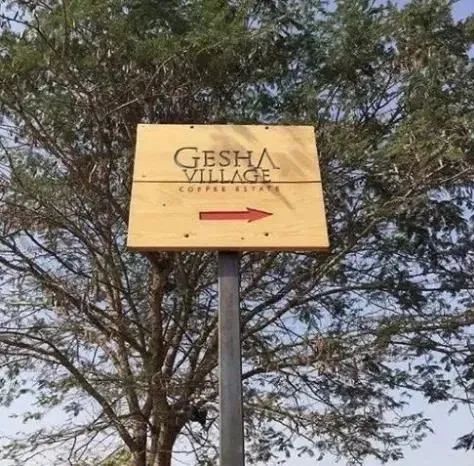
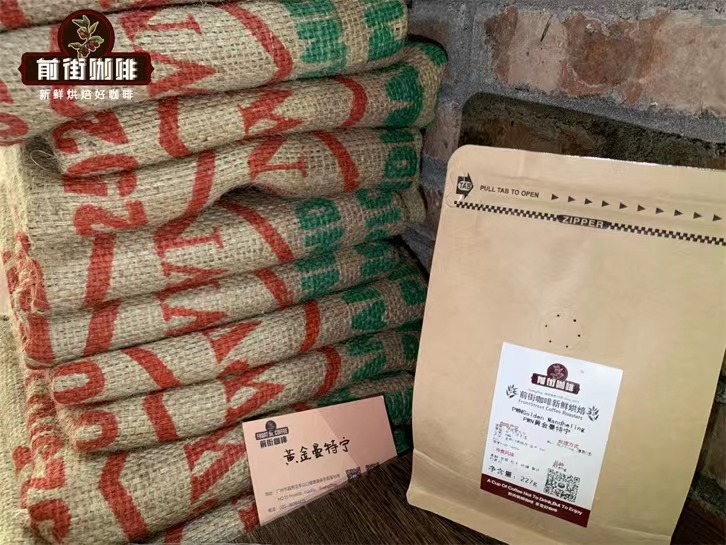
What are the flavor characteristics of Guodingding coffee beans? Is Ethiopian Yirgacheffe coffee good to drink?

Many customers who walk into FrontStreet Coffee are drawn to the name "Guodingding" on the bean menu — charming and mysterious. Inevitably, they ask the staff what it is.
What is Guodingding?
Guodingding is the name of a small village in Ethiopia, in the Worka production area at the southeastern end of Yirgacheffe. The village's farmers formed an agricultural cooperative: originally part of the Worka Cooperative under the Yirgacheffe Union (YCFCU), it broke away as the pursuit of traceability grew and coffee hunters worldwide began unearthing "single origin" micro-regions one by one.

In 2012, Guodingding — with roughly 300 member farmers — established itself as the independent Guodingding Cooperative, one of the first villages to do so. Since many of its smallholders had been Worka Cooperative members, their production techniques were already well-honed. Known as "the last pristine land of Yirgacheffe," the cooperative sticks to traditional processing: washed and natural.
FrontStreet Coffee selected the washed lot from the Guodingding Cooperative, because we believe it carries the classic Yirgacheffe character — richer florals, citrus acidity, and the essence of green tea.

Ethiopia: The Origin of Coffee
Ethiopia is among the most popular coffee origins in the world. As the birthplace of coffee, it holds an enormous pool of native varieties — a true treasure trove. But variety identification is slow and painstaking, and most coffee is grown by small farmers who mix their harvests before processing, making varieties hard to separate. So Ethiopian export beans are generally lumped together as "Heirloom varieties."
The most representative of all Ethiopian coffees is arguably the washed Yirgacheffe. Ethiopia relies mainly on natural processing, but traditional natural methods are often crude and prone to defective flavors. So in the last century, Yirgacheffe introduced washed processing from the Americas, and the region's reputation soared.

Guodingding village originally had no processing plant of its own; harvested cherries had to be sent to the nearby Worka village station for washing. Later, as coffee hunters investigated more deeply, they judged Guodingding's beans to be of exceptional quality and partnered with local farmers to build a station belonging to the village itself. Washed processing demands serious water resources and specialized machinery that individual farmers cannot afford, so cherries are pooled and processed centrally. The payoff: consistent quality and a cup that transparently expresses the origin's fundamental flavors.
The Washed Processing Method
Washed Processing Steps: After harvest, cherries are placed in water, where buoyancy separates the underripe fruit. A pulping machine removes the skin and pulp, and the beans rest in fermentation tanks for 18-36 hours until the mucilage decomposes. The parchment beans are then washed in channels for 30-60 minutes; specially designed channels combined with water flow wash away low-density, poor-quality beans. The good beans are drained and spread on African raised beds to dry.

Because the skin, pulp and most of the mucilage are gone before drying, the bean's inherent aroma comes through clearer and more transparent: citrus and lemon notes with elegant florals, bright and delicate overall.
Roasting Philosophy
Unlike the era when "coffee meant bitterness," lightly roasted Yirgacheffe opened the "new era of fruity acidity." Heavy bitterness comes from deep roasting aimed at nuts and dark chocolate. With specialty coffee's rise, roasters now take Yirgacheffe only to an appropriate light level, letting it express pleasant fruit sweetness and white florals. FrontStreet Coffee believes Ethiopian coffee's greatest strength is exactly that fruity acidity and floral perfume — the reason professionals call it a "fruit bomb." To showcase those explosive aromatics, the roast cannot go deep, so we use a medium-light roast.

Cupping Notes and Brewing Recommendations
Cupping Notes: The dry aroma of the washed Guodingding lot offers fresh passion fruit, citrus and berry acidity; the wet aroma, citrus and berries. On tasting: citrus acidity, berry sweetness, almond notes and a tea-like texture, finishing with honeyed sweetness. Light body, bright acidity, clean and refreshing.
FrontStreet Coffee Recommended Brewing Method: Pour-over
Filter: Hario V60
Water Temperature: 90°C
Coffee Amount: 15 grams
Coffee-to-Water Ratio: 1:15
Grind Size: Medium-fine grind (80% pass-through rate on #20 sieve)
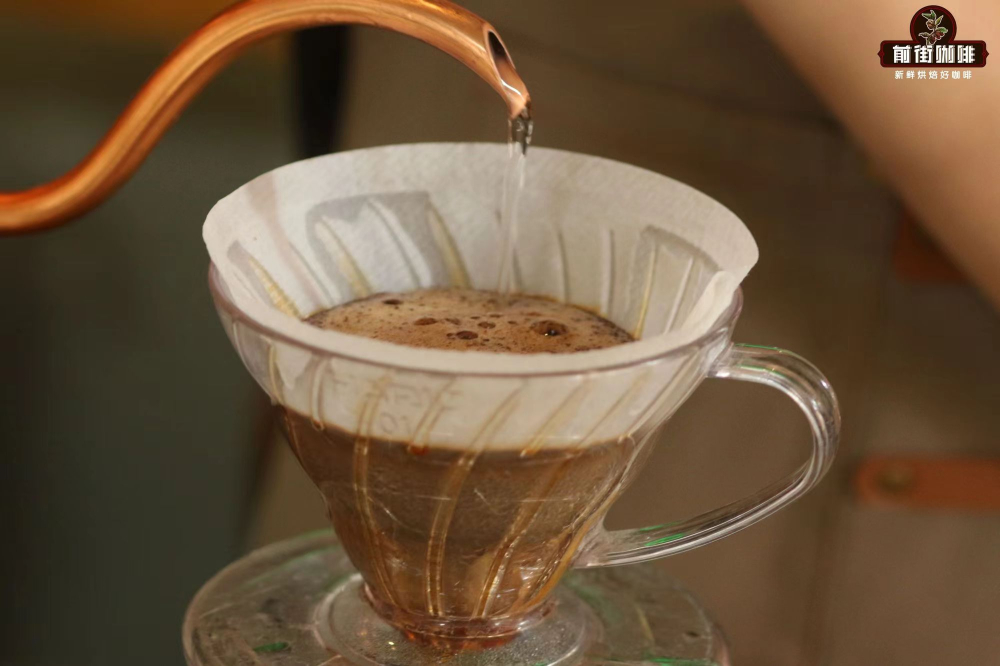
Brewing Technique: Using segmented extraction, bloom with 30g of water for 30 seconds. Continue pouring in small circles to 120g, then pause. When the level drops to just before exposing the coffee bed, pour on to 225g and stop. When the bed is about to be exposed again, remove the dripper. Total extraction time from the start of the bloom: 1'50". Brewed this way, the washed Yirgacheffe Guodingding reveals fresh, elegant florals and clear sweetness, with a gently astringent finish much like unfermented green tea.
FrontStreet Coffee Recommendation
For newcomers to Ethiopia, start with the classic FrontStreet Washed Yirgacheffe — white jasmine, bright citrus-lemon acidity and tea body at an accessible price, the first bean for countless specialty coffee drinkers. Yirgacheffe town itself sits in the Sidama zone of southern Ethiopia at 1,700–2,100 m, with coffee planted above 1,800 m — among the highest coffee elevations on Earth; its fame grew so great that in 2010 the Ethiopian Commodity Exchange officially separated it from Sidama.
Craving more fruit? The FrontStreet Natural Red Cherry from the same region uses fully ripe cherries sun-dried on raised beds — turned every 2-3 hours in the early days to prevent uneven fermentation — for three to five weeks. The cup keeps classic Yirgacheffe citrus acidity while adding tropical fruit, berry juiciness, honeyed sweetness and a creamy smoothness.
Important Notice :
FrontStreet Coffee is a long-established specialty coffee roaster in Guangzhou China, selling freshly roasted beans from its own farm in Yunnan as well as dozens of carefully selected single-origin beans from around the world for both pour-over and espresso. The products deliver consistently excellent quality and great value, with shipping within 24 hours. Guangzhou's FrontStreet Coffee shop is recommended by many coffee lovers, and the beans are now available online at the Tmall 。
FrontStreet Coffee has moved to a new address:
FrontStreet Coffee Address: 315,Donghua East Road,GuangZhou
Tel:020 38364473
 Scan and follow the En Gafei WeChat official account. Please indicate that the reprint comes from "En Gafei".