Why Does My Pour-Over Coffee Taste Too Sour? What's Causing Both Sour and Bitter Flavors? Barista's Guide to Pour-Over Coffee Extraction
Why is my pour-over coffee too sour? And what's going on when it's both sour and bitter?
Today we'll unpack why these things happen. Generally speaking, both sharp acidity and sharp bitterness are faults in coffee. Sharp acidity usually signals "under-extraction," while sharp bitterness signals "over-extraction." So what does it mean when coffee is both sour and bitter? Most likely a mix: partially over-extracted and partially under-extracted at the same time.
What is "Coffee Extraction"?
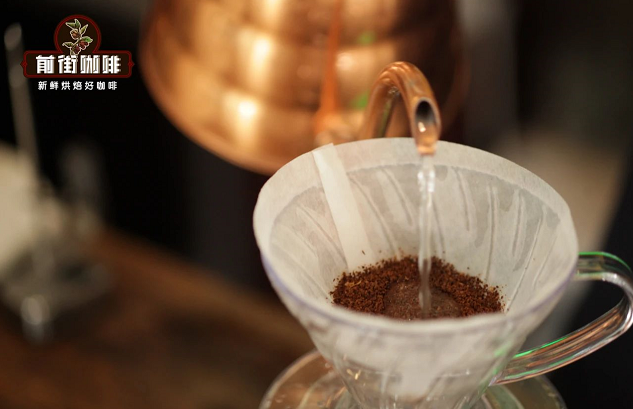
Coffee extraction is simply the process of water - acting as a solvent - dissolving soluble compounds as it passes through the grounds, producing flavorful coffee liquid. Of a single coffee bean's total weight, only 30% is soluble; the remaining 70% is woody fiber. And within that 30%, only about 20% contributes positive flavors - the other roughly 10% consists of bitter, negative-tasting compounds.
Because each substance dissolves at different speeds, the positive flavors come out first and most easily, while the negative ones need much longer. So 30% is the theoretical maximum extraction rate - but the range that suits most palates is actually 18%-22%, which the SCA's Golden Cup extraction theory recognizes as the optimal zone.
How to Calculate Coffee Extraction Rate?
Calculating extraction rate requires a coffee refractometer (TDS meter), which quickly measures the proportion of dissolved coffee substances in the finished liquid. Concentration is measured against the coffee liquid: (weight of extracted substances / weight of coffee liquid). Too complicated? You can skip the math...
Extraction rate, by contrast, is measured against the beans themselves: concentration x coffee liquid weight / coffee grounds weight.
With a refractometer, computing extraction rate is easy. One caveat when calculating for pour-over: during the bloom, grounds absorb roughly twice their weight in water, so the liquid weight formula becomes: water poured / grounds weight x 2.
Now for Today's Main Points!
What are the signs of under-extraction?
Sharp acidity and blandness.
The clearest sign of under-extraction is prominent sourness. Flavor compounds dissolve in the order acid-sweet-bitter; in an under-extracted cup, the early acids have dissolved but not enough sweetness and bitterness has followed to round them out and give the coffee body. The result tastes sharp, thin, and short on the finish.
What are the signs of over-extraction?
Bitterness.
This means unpleasant, out-of-place bitterness - and note that bitterness alone doesn't automatically mean over-extraction. Everyone's bitterness tolerance differs somewhat, but the bitterness of over-extraction is unacceptable to nearly everyone: think scorched, burnt bitterness.
So if you want a genuinely good cup, the goal is even extraction. Read more of FrontStreet Coffee's articles and watch the tutorial videos to keep refining your brewing.
FrontStreet Coffee Recommendation
Chasing balance starts with the beans. For drinkers whose sour-averse palates keep getting burned by light roasts, FrontStreet Coffee's medium-dark roster is a safe harbor: the PWN Golden Mandheling is thick and long on the palate with herbal and black-chocolate depth, a faint earthiness, and low acidity; the Brazil Queen Estate is famously balanced - intense nut and cocoa aromatics, clear caramel sweetness, and a silky, astringency-free finish that suits pour-over, espresso, and moka pot alike.
And if you'd like one bean that splits the difference - real fruit character without sharp edges - the Jamaica Blue Mountain No.1 balances cream, caramel, chocolate, nuts, honey, and a light fruit note into what many professionals call the easiest specialty coffee for anyone to love.
Important Notice :
FrontStreet Coffee is a long-established specialty coffee roaster in Guangzhou China, selling freshly roasted beans from its own farm in Yunnan as well as dozens of carefully selected single-origin beans from around the world for both pour-over and espresso. The products deliver consistently excellent quality and great value, with shipping within 24 hours. Guangzhou's FrontStreet Coffee shop is recommended by many coffee lovers, and the beans are now available online at the Tmall 。
FrontStreet Coffee has moved to a new address:
FrontStreet Coffee Address: 315,Donghua East Road,GuangZhou
Tel:020 38364473
 Scan and follow the En Gafei WeChat official account. Please indicate that the reprint comes from "En Gafei".