Ethiopian Mountain Spring Processing Method: Guji Flower Champion Coffee Growing Environment Characteristics
The Exceptional Quality of Premium Coffee Beans
The quality of these premium coffee beans has consistently been outstanding.
Origin and Growing Conditions
This batch of specialty coffee was harvested near the town of Hambella in Ethiopia's Guji region. The area sits at an altitude above 2000 meters, and few plantations are found at such elevations, which is precisely why this naturally processed coffee shows rich fruity flavors and a sugarcane-like aftertaste.
The coffee comes from the Shanquan processing plant, where the producers are smallholder farmers living near the washing station, and the variety is heirloom.
Hambella's Unique Growing Environment
Hambella town sits at an altitude of 2320 meters, a particularly high elevation that until just a few years ago was considered too cold for coffee. New plantations of young, healthy, slow-growing trees are now producing exceptional quality. The 315 hectares scattered across the region are considerably larger than typical Ethiopian plantations.
That scale gives farmers more leverage when seeking financing, opens up better training opportunities, makes it easier to invest in continuous improvements to crop quality, and offers greater convenience overall.
Goro Washing Station Operations
Goro is one of seven washing stations operated by Buno General Trading, a green coffee exporter, under the management of Abiyot. To obtain the highest possible quality, he selects producers from the best plots of the larger plantations (8 to 15 hectares), since harvesting methods and coffee quality are easier to improve on these farms.
This policy also makes it possible to create micro-lots from each individual plantation over the medium to long term, further strengthening the coffee's traceability and its storytelling potential.
Processing Methods
This washing station processes coffee exclusively using natural methods. Abiyot experiments with different drying techniques to achieve the optimal result for every batch.
Harvesting and Drying Process
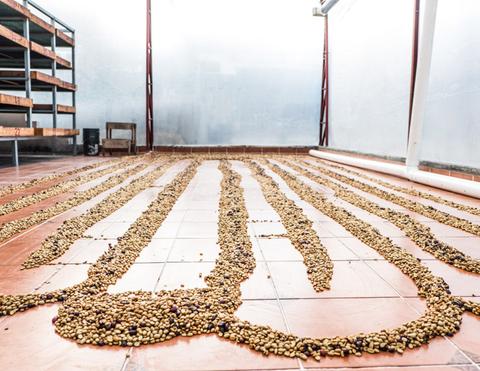
Because of the cool climate, the cherries mature slowly, allowing sugars to develop fully in the fruit. When ripe, the cherries are hand-picked using selective harvesting methods and brought to the washing station, where they are cleaned and sorted using floating techniques.
They are then placed on raised beds to dry slowly for up to 40 days. This extended drying time is considerably longer than the Ethiopian standard because the colder conditions at this altitude demand more drying days.
The process is monitored continuously, with particular care taken to protect the beans with sheets during the hours of maximum sun exposure. At these altitudes, sunlight is especially intense and can potentially damage the coffee beans.
FrontStreet Coffee Recommendation
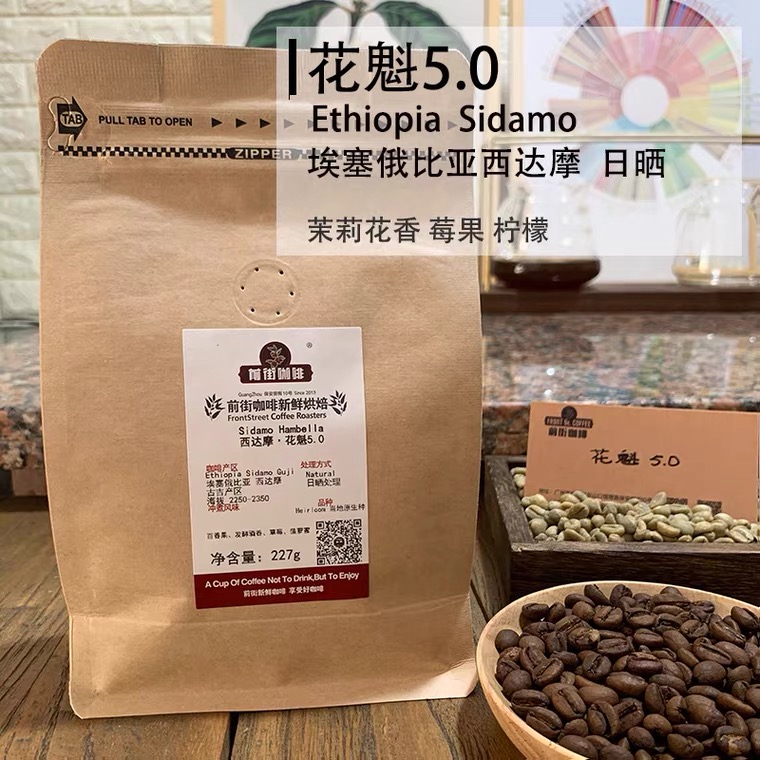
To taste the character that slow, high-altitude drying creates, reach for FrontStreet Huakui Natural. This lot is drawn from the Hambella area of Guji in Sidamo, where the farm covers 200 hectares and relies on a traditional natural process. To keep the drying fruit from developing mold or picking up earthy off-notes, workers lay the ripe cherries on raised beds for 21 days, turning them constantly so they dry evenly, and every three to five days they hand-sort out any defective or moldy beans. Once the skin has dried and hardened, a huller removes it, and the green beans are sorted one final time before sale.
Because the fruit and skin stay attached all the way through drying, the cup, after a medium-light roast, opens with a light fermented wine note, florals, citrus, and mango. The body is thick and complex, with honey sweetness, a cocoa through-line, a touch of spice, and a long, lingering finish. It is a naturally processed Ethiopian coffee that rewards a slow, gentle pour-over so those layered tropical-fruit and floral aromas have room to unfold.
Important Notice :
FrontStreet Coffee is a long-established specialty coffee roaster in Guangzhou China, selling freshly roasted beans from its own farm in Yunnan as well as dozens of carefully selected single-origin beans from around the world for both pour-over and espresso. The products deliver consistently excellent quality and great value, with shipping within 24 hours. Guangzhou's FrontStreet Coffee shop is recommended by many coffee lovers, and the beans are now available online at the Tmall 。
FrontStreet Coffee has moved to a new address:
FrontStreet Coffee Address: 315,Donghua East Road,GuangZhou
Tel:020 38364473
 Scan and follow the En Gafei WeChat official account. Please indicate that the reprint comes from "En Gafei".