Honduran Coffee History Story: Introduction to Flavor Characteristics of Honduran Marau Estate Godfather Coffee
Discovering Honduran Coffee
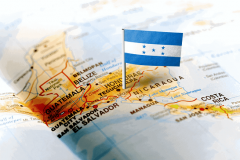
You have probably tasted coffee from Brazil or Colombia, but plenty of other coffee-producing countries deserve a place on your shelf — Honduras among them. In fact, Starbucks has featured Honduran coffee often in recent years, helping it reach a wider audience.
Honduran coffee comes from Honduras, a Central American country with a warm climate and remarkably diverse landscapes. The coffee it produces spans a wide flavor range, from fruity to chocolatey and beyond.
In recent years Honduran coffee has won more and more followers. You can find several Honduran brands in most grocery stores, with an even wider selection in specialty shops.
Honduras
Honduras is a Central American coffee-producing country with 280,000 hectares of coffee plantations. The country currently has about 565 million coffee trees in the ground, and more than 95% of them grow on small farms. Over 120,000 families take part in coffee production, yet most farms are modest: the majority of plantations are smaller than 3.5 hectares, and 70% of families work plots under 2 hectares. Smallholder production accounts for more than 60% of Honduras' total coffee output, while central farms contribute roughly 3% and large estates about 2%.
Since 2007, under the guidance of the national coffee institute IHCAFE, Honduras has been improving its cultivation conditions, modernizing its bean-processing facilities, and streamlining its coffee export ports. The results have been tangible: in the 2011–2012 harvest, Honduran coffee earned significant recognition across Central America, with roughly 3 million bags harvested each year.
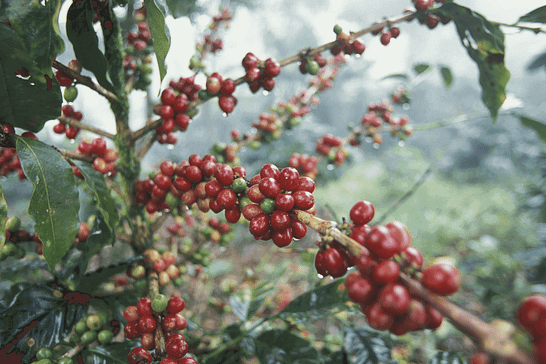
The story of how Honduran coffee got here is worth telling, because coffee cultivation has done more for the country than fill cups — it has helped raise national income during some genuinely difficult years.
Starting in 2009, a political coup pushed the country to the brink of bankruptcy and left its finances deeply unstable. Its excellent coffee crops became an important part of the recovery: growing coffee created jobs and generated money the country desperately needed.
Honduras' coffee trade dates back to the 18th century, when traders first brought coffee to the region. By the 19th century, farmers across the country had begun growing it, though volumes were still modest. The crop truly took off in the late 20th century.
In 1998, Hurricane Mitch devastated the country and dealt the thriving coffee industry a heavy blow. Much of the nation's agriculture was destroyed — including the coffee crop so many had come to depend on.
But when some farmers began taking their product to Guatemala to sell at better prices, the Honduran coffee industry revived — and then grew rapidly.
Next, FrontStreet Coffee would like to introduce you to a coffee from Honduras' Violet Morod estate. If you're a coffee enthusiast, chances are you'll fall for this one.
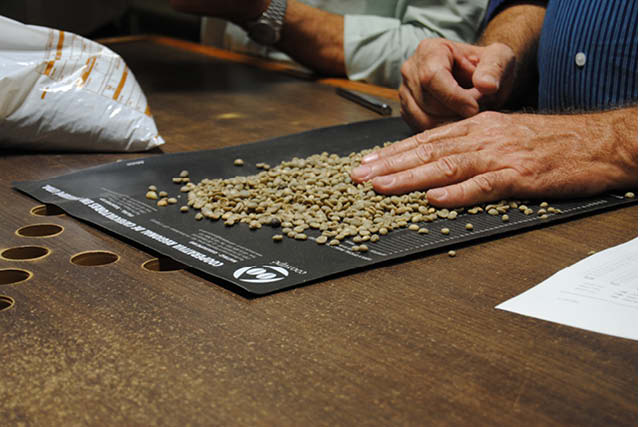
Violet Morod Estate Coffee Details
Region: Morod Manor, Lempira Region
Classification: SHG (Strictly High Grown)
Variety: Catuai
Altitude: 1600m
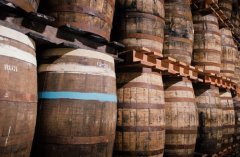
Processing: Oak barrel fermentation
Flavor: Rum, honeydew melon, oolong tea, vanilla
Morod Manor
Morod Manor sits in Lempira, a sub-region of western Honduras. The coffee grown here is Arabica — a compact plant that reaches up to about 3 feet tall, which makes hand-picking easy. The region's acidic soil and warm climate allow the farm to produce uniformly sized beans that extract cleanly in the brewer.
FrontStreet Coffee Recommendation
Brazil, the world's largest coffee producer, offers an enormous range of coffees, and FrontStreet's Brazilian beans showcase that breadth well. FrontStreet Brazil Cerrado Red Bourbon is a classic single-origin choice: with a medium roast it delivers rich notes of creamy peanut, toasted bread, caramel, and hazelnut, with a rounded mouthfeel, gentle bitterness, and only a touch of acidity. It works beautifully as a pour-over and is equally at home in a moka pot, as a single-origin espresso, or in a siphon or French press.
FrontStreet's Brazil Queen Estate Yellow Bourbon comes from the Mogiana region near southern Minas, where fertile red volcanic soil feeds deeply aromatic coffee. Yellow Bourbon, a natural mutation of Red Bourbon, gives a cleaner fruit character, and this cup reveals a sugarcane sweetness you won't find in most other origins, layered with fruit and chocolate notes. Brazil's low acidity and balance have also made its beans a staple of FrontStreet's espresso blends — from the crema-rich classic blend to the nutty premium blend and the cocoa-toned Black Cocoa blend — adding chocolate and cream aromatics along with a soft, stable sweetness that supports consistent extraction.
Important Notice :
FrontStreet Coffee is a long-established specialty coffee roaster in Guangzhou China, selling freshly roasted beans from its own farm in Yunnan as well as dozens of carefully selected single-origin beans from around the world for both pour-over and espresso. The products deliver consistently excellent quality and great value, with shipping within 24 hours. Guangzhou's FrontStreet Coffee shop is recommended by many coffee lovers, and the beans are now available online at the Tmall 。
FrontStreet Coffee has moved to a new address:
FrontStreet Coffee Address: 315,Donghua East Road,GuangZhou
Tel:020 38364473
 Scan and follow the En Gafei WeChat official account. Please indicate that the reprint comes from "En Gafei".