What Are the Benefits of Huangpi Fruit and Yougan Tea? The Next Niche Fruit in New-Style Tea Drinks...
On scorching summer days, stylish young men and women walking down the street might wonder whether to queue up when they pass a tea shop, while those at home debate whether to open one of those yellow or blue apps on their phones and order a cold drink.
Observant people might have noticed that recent tea brands have leaned toward niche fruits for their beverages, and niche fruits are becoming a new focus for emerging tea brands.
On March 22, 2021, Nayuki posted a preview of its new products on its official Weibo account. The item at the time was the "Overbearing Phyllanthus Drink," which later became so popular that it frequently sold out in its stores. Several new-style tea brands, such as Heytea and Coco, followed suit with their own phyllanthus beverages. Descriptions of phyllanthus special drinks all inevitably include words like "saliva-inducing" and "oil-scraping."
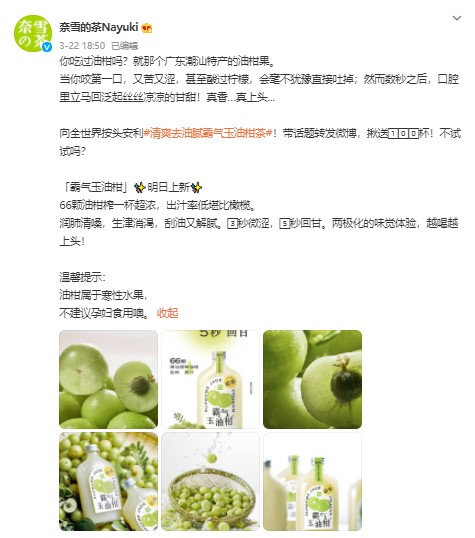
Not long after phyllanthus special drinks became bestsellers among new-style tea brands, a shortage of phyllanthus occurred. Even in Chaoshan, the origin area where phyllanthus is abundantly produced, the price skyrocketed and shortages appeared.
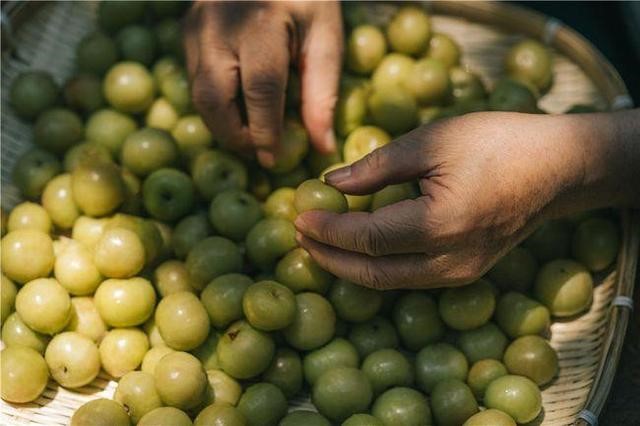
According to a report by Times Weekly on June 1, 2021, the price increase and shortage of phyllanthus began in March of that year, amid multiple pressures, competitions, and price hikes. Phyllanthus was purchased in large quantities by new-style tea brands, with prices soaring eightfold from the original 5 yuan per jin to 40 yuan per jin. Local residents in Chaoshan found themselves in a difficult situation: the fruit they could normally enjoy every year was suddenly swept away overnight, becoming almost impossible to find, and even when available, the prices were unacceptably high.
The Next Niche Fruit Trend
In this game of fierce competition among new-style tea brands, after the next season's phyllanthus was completely pre-ordered, another niche fruit from the south caught their attention. On June 24, 2021, Heytea posted a preview on its official Weibo account announcing the launch of wampee special drinks, stating that "Fleshy Wampee Nectar" would be released first on June 25, 2021, in four cities, Beijing, Shanghai, Guangzhou, and Shenzhen, with other cities following on June 30.
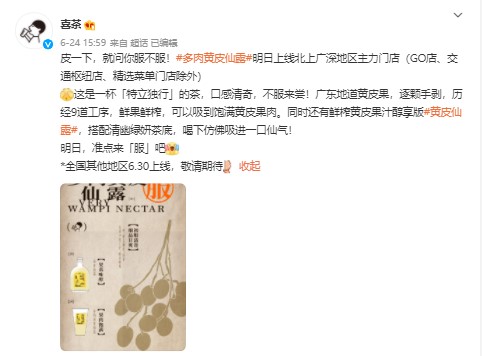
Not long after, wampee, originally a "Guangdong-exclusive" fruit, gained nationwide popularity and became an internet sensation. Milk tea shops across the country also followed suit with their own wampee special drinks.
According to a Times Weekly report on July 2, as soon as Heytea's "Fleshy Wampee Nectar" launched, multiple new-style tea brands rushed to introduce wampee tea beverages. Even unknown roadside tea shops put up advertisements featuring wampee tea drinks. On social platforms such as Xiaohongshu, Douyin, Weibo, and Douban, numerous articles and topics about wampee tea beverages emerged one after another.
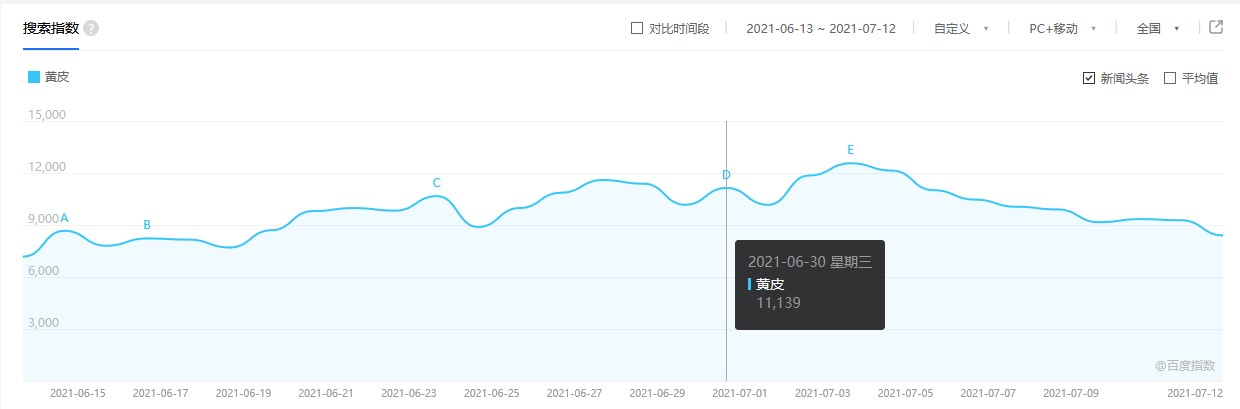
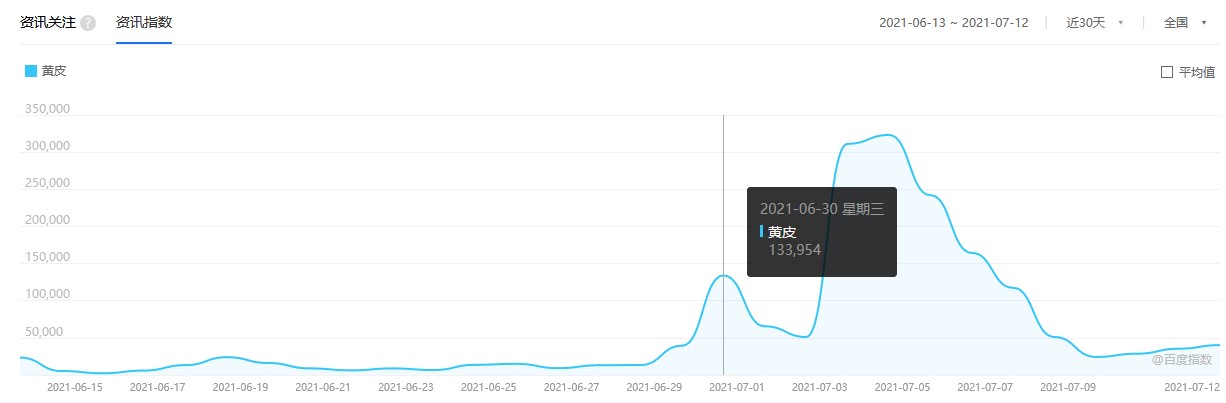
Baidu Index shows that with the nationwide launch of Heytea's "Fleshy Wampee Nectar," search and consultation indexes related to "wampee" have shown a significant upward trend since June 30.
There were even northern netizens paying more than five times the original price to try it. This fruit originally cost only 4 to 8 yuan per jin in the south, but some northern netizens paid as much as 66 yuan for two jin to have it shipped north.
The Future of Niche Fruits in Tea Beverages
As leading players in the tea industry successfully created buzz with niche fruits, more and more tea brands are following the same path. Recently, Yihetang also launched new tea beverages featuring fruits like jackfruit and lychee, both originally from southern regions.

As situations where people who would not normally eat wampee even with a refrigerator full of it immediately order a wampee tea drink once it appears become increasingly common, the path for niche fruits seems to have opened up. This year, phyllanthus and wampee made their debut. One wonders which niche fruit will be the next to emerge.
Image source: Internet
FrontStreet Coffee Recommendation
Ethiopia is Africa's largest coffee-producing country and the recognized birthplace of coffee, with a huge range of varieties usually named for their region or cooperative. The Yirgacheffe and Sidamo regions are the most famous. In the 1970s the government introduced washed processing to improve green bean quality, and Yirgacheffe has since been dominated by washed coffees, now often broken down further by cooperative. FrontStreet Coffee's Washed Gedingding Cooperative is a typical Yirgacheffe representative, with jasmine, lemon acidity, and berry notes, while Sidamo is best known for its naturals, where tropical fruit and fermented aromas stand out, as in FrontStreet Coffee's Sidamo Huakui with its traditional sun-drying and notes of berry, floral, jackfruit, melon, and honey.
Brazil is the world's largest coffee producer. Even though most of its output is commercial-grade, it also grows excellent specialty coffee. Because Brazilian coffee is often grown in full sun, the fruit ripens quickly, so the beans are softer with gentle fruit acidity, good sweetness, and a delicate, balanced cup. FrontStreet Coffee's Brazilian daily bean is an entry-level single origin from the famous Cerrado region, easy-drinking and affordable, with typical cream, peanut, and cocoa flavors, while the Queen Estate is grown at higher altitude as a rare Yellow Bourbon, layering butter, sunflower seed, macadamia, and almond notes over a sugarcane sweetness that stays smooth and syrupy whether drunk alone or with milk.
Indonesia is known not only for FrontStreet Coffee's Kopi Luwak but also for its Mandheling. FrontStreet Coffee's Mandheling uses the wet-hulled process, a technique invented for the local climate: because Indonesian weather is unpredictable and rainy and funds for washed processing were scarce, workers stripped the parchment from half-dry beans by machine to speed drying, creating the distinctive Mandheling flavor. The wet-hulled Mandheling tastes even richer and smoother than FrontStreet Coffee's Blue Mountain, with herbal and spice notes, and suits anyone who dislikes acidity. For a higher grade, the PWN Golden Mandheling goes through three rounds of hand sorting and one machine sorting to minimize defects, for a cleaner, smoother cup with clearer woody and caramel notes.
Colombia is one of the few single origins sold under a country name. Its mild climate and humid air create harvests throughout the year, and the coffee is generally rich, flavorful, and high quality. FrontStreet Coffee's Colombian daily bean comes from the Huila Department, the country's most famous specialty region, ringed by mountains and grown above 1,500 meters where the country's most important rivers meet. Colombian coffee tends toward soft florals and fruit acidity, and FrontStreet Coffee's Colombia Sidra and Colombia Big Navel are both worth recommending.
Costa Rica grows coffee at high altitude with large day-to-night temperature swings and fertile volcanic soil, producing plenty of SHB-grade beans with elegant aromas. It is best known for honey processing, where the beans are dried with the mucilage still attached, giving abundant sweetness and clear flavors. For a Costa Rican specialty, start with FrontStreet Coffee's Blackberry, a black-honey process, or the Mozart, a raisin-honey process; brewed, they show raisin and blueberry sweetness with osmanthus and rose aromas, and they shine as pour-over, cold brew, Americano, or latte.
China's Yunnan province is also home to a growing specialty scene, with many drinkers won over by its nut, brown sugar, and black tea notes. China has two coffee-growing regions, Hainan and Yunnan, but Hainan's hot, low-altitude coastal setting cannot support Arabica, so the country's specialty coffee is concentrated in Yunnan. FrontStreet Coffee's Yunnan Small Bean comes from Baoshan and is washed, showing traditional nut and chocolate flavors in a soft, balanced cup, while the 2013 Yunnan Typica is an ancient Arabica variety grown at 1,300 meters with a cleaner, medium-roasted profile of hazelnut, dried apricot, black tea, caramel, and ripe plum.
Panama is best known for the Geisha variety, above all from Hacienda La Esmeralda, whose citrus, berry, and floral flavors and balanced, smooth cup resemble a completely unsweetened fruit tea. For a beginner, an Emerald Estate coffee can feel like a luxury, so baristas often recommend the entry-level FrontStreet Coffee Boquete Geisha, from Panama's most representative specialty region. Pure in genetic heritage and washed in processing, it delivers the Geisha's characteristic orange-blossom honeyed note clearly, and its high value means drinkers can explore Panama Geisha through many different brewing methods.
Important Notice :
FrontStreet Coffee is a long-established specialty coffee roaster in Guangzhou China, selling freshly roasted beans from its own farm in Yunnan as well as dozens of carefully selected single-origin beans from around the world for both pour-over and espresso. The products deliver consistently excellent quality and great value, with shipping within 24 hours. Guangzhou's FrontStreet Coffee shop is recommended by many coffee lovers, and the beans are now available online at the Tmall 。
FrontStreet Coffee has moved to a new address:
FrontStreet Coffee Address: 315,Donghua East Road,GuangZhou
Tel:020 38364473
 Scan and follow the En Gafei WeChat official account. Please indicate that the reprint comes from "En Gafei".