How to Evaluate Specialty Coffee? Using Coffee Cupping to Assess the Quality and Flavor of Specialty Coffee
Coffee is one of the most complex beverages we drink. It holds more aromatic compounds than wine, hundreds of distinct aromas and flavors. Where the coffee was grown, which varieties went into it, how it was processed and roasted, even how it is brewed, all of it shapes what you can taste in a cup, and each of these variables highlights different facets of the coffee, which is why no two cups ever taste quite the same.
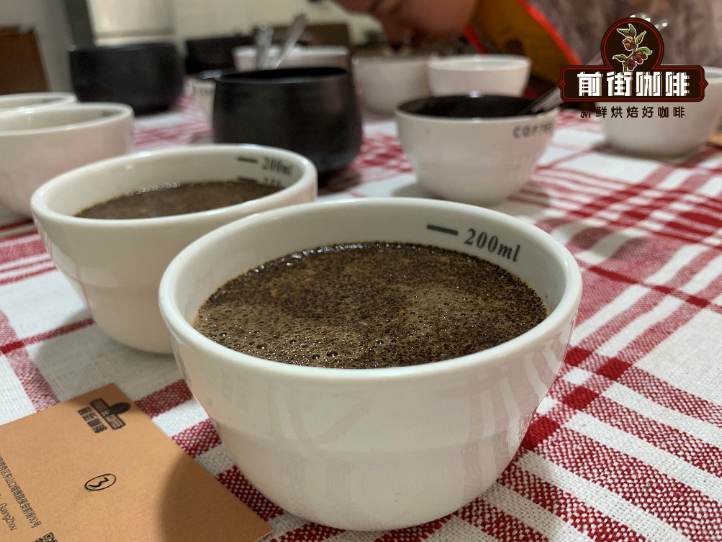
Coffee professionals use several methods to evaluate the quality and flavor of specialty coffee, and the most common is "cupping." Cupping is a sensory exercise that uses both mouth and nose to compare different coffees side by side. Every coffee in a cupping is brewed with the same set of variables, then tasters evaluate each one on fragrance, aroma, flavor, texture, acidity, and aftertaste. The tongue perceives five basic tastes, sweet, sour, bitter, salty, and umami, but everyone perceives them differently. As your palate accumulates experience, you become better and better at distinguishing finer, more subtle characteristics. Coffee evaluation typically focuses on the first four tastes plus touch as its main axes of measurement.
Cupping Method
The cupping steps in brief:
1. Measure an equal amount of ground coffee into each cup, still following the golden cup principle, roughly a 1:15-16 coffee-to-water ratio for immersion evaluation.
2. Smell the dry grounds and note any distinctive traits of the dry fragrance. It helps to arrange the coffees in a sensible order, saving the most intense flavors for last.
3. Pour an equal amount of 92-95°C water into each cup without stirring. After a few minutes, bring your nose close to the surface and smell the wet fragrance released as the grounds absorb water.
4. Break the crust: use a cupping spoon to push aside the floating crust, sweeping the spoon along the surface in three circles and pressing the grounds into the liquid. Then bring the cup close again and inhale the aroma released at close range. You can also flip the spoon after circling, the liquid clinging to the back of the spoon is especially expressive.
5. Gently skim away the remaining surface grounds with the cupping spoon (and rinse the spoon in the cleaning cup between samples).
6. Take a spoonful of coffee, about seven-eighths full, bring it to your lips, and slurp it loudly, drawing in a lot of air to spray the coffee across your palate. Try to let some of it reach the back of your mouth, then spit it out. Note the flavors at this stage, write down your impressions for later comparison, clean the spoon, and move on to the next cup.
Taste all the coffees quickly at the same temperature. You can then run further rounds at different temperature stages all the way down to room temperature, a high-quality coffee will show different flavors as it cools.
Evaluation System Introduction 1, COE Scoring Standards
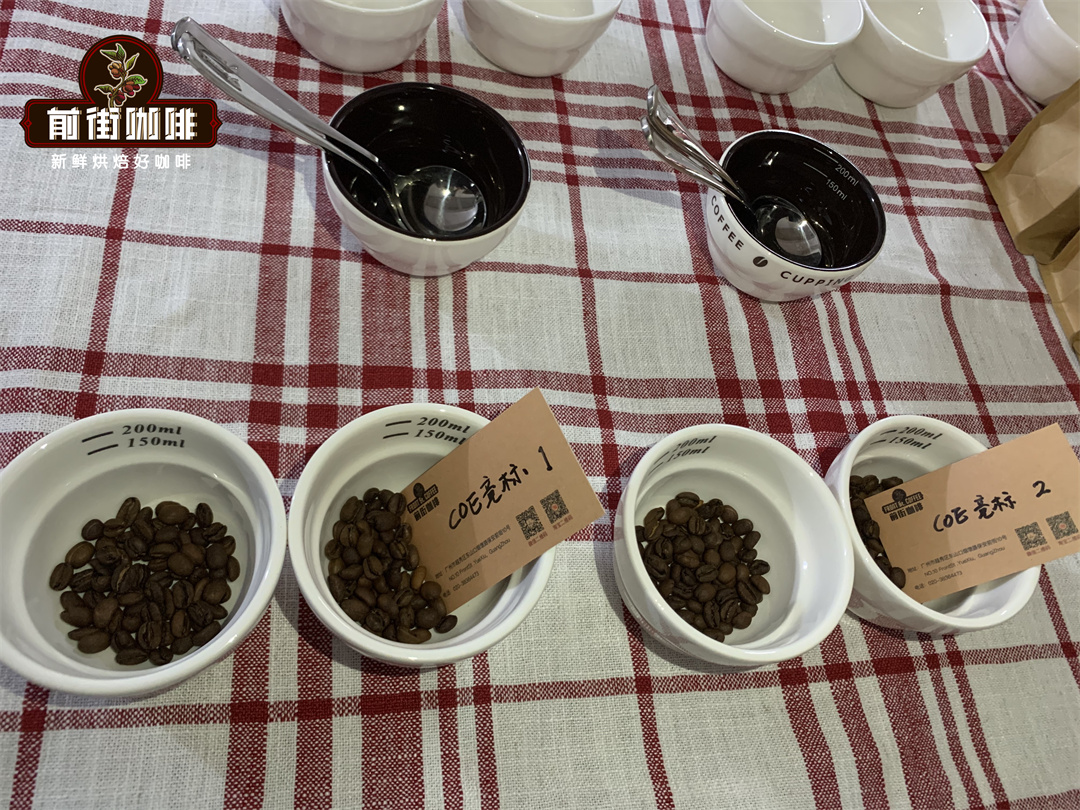
COE stands for Cup of Excellence. The cupping form used in the COE system was designed by flavor enthusiast George Howell, drawing on the wine book "Wine Taster's Secret," and it has deeply influenced coffee cupping ever since. There are 8 scored items plus a reference item for fragrance that is not scored directly. Each item is worth a maximum of 8 points; scores above 6 move in 0.5-point increments. 8 x 8 = 64 points, plus 36 base points, gives the 100-point total. The base points exist simply to make the scale reach 100, but if other quality problems turn up, points can also be deducted directly from the scored items.
The scored items are as follows:
Clean Cup
Cleanliness describes the texture of the coffee itself, the drinker should perceive clear, well-defined flavors with no off-notes. The cleaner the coffee, the greater the clarity and the layering of its flavors. The cup must be free of defective flavors that would interfere with evaluation: over-fermentation, phenolic, and moldy notes are all disqualifying, as are grassy, earthy, rough, and astringent tastes. A favorable microclimate at origin can add rich variation and push the Clean Cup item to at least 6 points, but very high cleanliness scores are rare. The usual path to a high mark is one extra point when the cleanliness supports excellent flavors and acidity, roughly speaking, cleanliness only earns 7 points when every other item earns 7. Within the COE system many items are interconnected, and cleanliness sits at the core of them all.
Sweetness
Sweet elements such as peach and vanilla make you think "this coffee is sweet." Sweetness is also shaped by acidity: tartaric acid gives the strongest impression of sweetness, followed by malic acid, then citric acid. So a coffee's "sweetness" is never a single factor, it is the combined result of several.
Coffee sweetness is also tied to aftertaste performance, which is why those items are linked too.
Many factors can undermine sweetness:
Whether harvesting picked only fully ripe red cherries of uniform maturity. Unripe beans mixed in show up as green pepper and potato notes; overripe ones bring rotten fruit and overripe banana.
Next is the impact of cleanliness. Negative flavors, bitterness, grassiness, astringency, all suppress perceived sweetness. This is why it is said that "cleanliness is the foundation and starting point of a good cup of coffee." If no serious negative flavors are detected, this item generally earns 6 points.
Acidity
In the acidity item, intensity has no direct relationship with the score, what counts is the quality of the acidity, and that matters enormously. Unlike wine, coffee never needs to push acidity for its own sake; the goal is quality. For both coffee and wine, flavor is built mainly on acidity and aroma. The acids divide into citric, malic, tartaric, succinic, lactic, and more, and each acid, paired with aroma, gives the coffee a different "impression." Improperly processed coffee with harsh acidity reads as green and grassy, accompanied by strong astringency and tannic bite. In the WBC (World Barista Championship), astringency, tannin, that rough feeling is classified under Mouthfeel, the texture category, but COE cupping allows it to be scored freely alongside flavor.
This item rewards the quality of acidity, not its strength. Excellent coffee feels pleasant, and its acidity drinks smoothly.
Accordingly, the astringent judgment can be assessed across three aspects: cleanliness, acidity, and texture. With no strong grassy flavor, irritation, or astringency, the item generally earns 6 points.
Mouthfeel
How the coffee feels in the mouth. This item scores viscosity, density, weight, and irritation. As with acidity, intensity and quality are separate judgments. During cupping, judges first rate "intensity" as high, medium, or low (High Body, Medium Body, Low Body), then evaluate the quality of the mouthfeel. Mouthfeel can be subdivided in different ways; the following is one classification.
Liquid weight (Body, Weight): the sensation of the liquid clinging to the tongue, its viscosity, describable as light, medium, heavy, thick, or thin.
The feeling of the liquid remaining in the mouth: how does the coffee feel against the oral membranes? Describable as sharp, round, creamy, and so on; the impression of holding the coffee in the mouth can be described as astringent, tannic, round, and so on.
The feeling of the liquid in motion, when swallowing or swishing: describable as syrupy, silky, smooth, and the like.
Flavor
"Flavor" is itself a composite of taste and aroma. Its basic components are "acidity" and "aroma," and together with "sweetness" and "mouthfeel" they form the full flavor experience.
Aftertaste
Aftertaste is the flavor that lingers after swallowing, and the impression left by the coffee's other attributes: whether the swallow feels smooth or obstructed, how quickly the sweetness fades. A long, elegant aftertaste generally scores well, but a clear, rich one is equally appealing.
Balance
Balance asks whether the coffee's flavors are harmonious:
It is a genuinely difficult item. On flavor: alongside excellent flavors, does the coffee also have the sweetness and cleanliness that let those flavors shine? Balance does not reward "stronger is better", it rewards harmony. It can be judged across the coffee's sourness, sweetness, bitterness, mouthfeel, and aftertaste: not skewed toward sour or sweet, not fixated on a single sensation.
Overall
As the name suggests, this is the item that reflects personal preference:
What impression does the coffee make? Is it highly complex, or simple and direct? Do you personally like it? Personal preference does move the score, though it should not stray far from the other items. It also serves to fine-tune the final result: 84 points qualifies as Exemplary Coffee, 86 is the COE recognition score, and 90 earns the Presidential Award, so at nodes like 89.5, a flexible adjustment can be made.
Final Points
The biggest difference between coffee and red wine or craft beer is that coffee flavors change as the cup cools. And beyond everything described above, the greatest difference between specialty and commercial coffee is that the evolution of flavor across temperatures is itself an important consideration.
Coffee flavors grow more distinct as temperature falls, because the temperature drops into the range human perception handles best. Nobody drinks hot coffee in one gulp, the scalding risk rules it out, so over the course of drinking, the impression typically follows one of three patterns:
(Consistent)
The flavor does not change over time; it tastes good from hot to cold.
(Improve)
The coffee tastes better and better as it cools, unremarkable when hot, its flavor and sweetness bloom once the temperature reaches the 50°C range.
(Decent)
A superb first sip, but as it cools, flaws in cleanliness and mouthfeel surface too. This is why, when judging a coffee, you must drink it all the way down to cold.
Total score of 69 or below: slightly inferior commercial or industrial beans.
Total score between 70-74: ordinary commercial beans.
Total score between 75-79: superior commercial beans, generally called high-end commercial beans.
Total score between 80-84: specialty coffee, eligible to enter COE competition.
Total score of 85 or above: COE competition level, the winning coffees of the Cup of Excellence, currently recognized as the highest tier in the international coffee world.
Evaluation System Introduction 2, SCA Scoring Standards
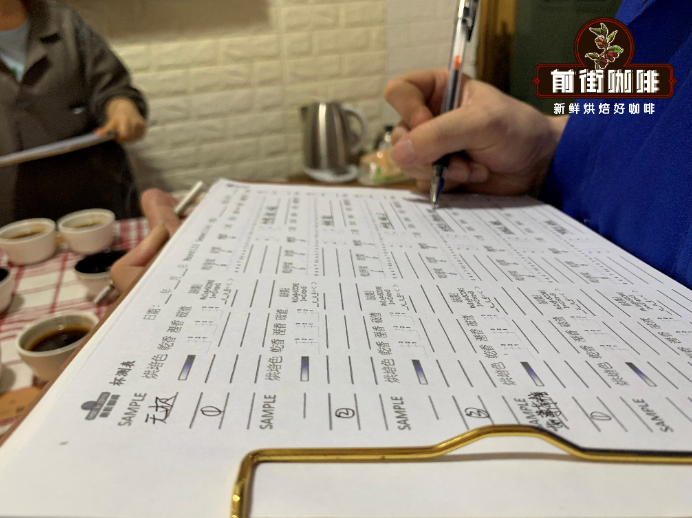
SCA, the Specialty Coffee Association, was formed by the merger of the European (SCAE) and American (SCAA) specialty coffee associations. Scores of 80 or above earn the specialty coffee grade.
Fragrance (Dry) / Aroma (Wet)
First classify the aroma into broad families, floral, fruity, nutty, woody-distillate, and so on, then score based on the richness and intensity of the aromatics. Note that the aroma section carries a vertical intensity scale that must be marked. Judgment rests mainly on the dry fragrance before water is added and the wet aroma after, and the aroma released when breaking the crust can be recorded here as well.
Acidity
Here you judge whether the acidity is good or bad by the stimulation the coffee delivers, its layering and persistence. Intensity does not equal quality. Some coffees hit the palate with an obvious, lively snap, grapefruit, plum-like sweet-sour, and the sensation still lingers along the sides of the tongue after swallowing: excellent acidity. Others show little obvious acidity yet combine into something very smooth, like the sweet-tartness of ripe fruit, also excellent.
Flavor
The flavor experience the coffee delivers, aroma and taste together, judged for complexity and layering. Across the whole slurp you can log the flavors of each stage, and adjust the score segment by segment.
Body
The smoothness, viscosity, and thickness of the liquid. This sensation comes from the water-insoluble oils in the coffee, the woody structure of the bean (extremely fine particles after grinding), and proteins; compare different samples to feel the differences in body. In daily life you can train this sense by comparing mineral water against pure water, skim milk, low-fat milk, whole milk, and juices with pulp, each shows a different weight and smoothness from its insoluble content.
Aftertaste
What remains in the mouth after swallowing, aroma, taste, and mouthfeel alike. It might be a creamy persistence, a lingering acidity, a smooth texture, or even a relatively dry one. The sweetness and aftertaste concepts from the COE system can be folded into this item for scoring.
Sweetness
On the current form, sweetness is scored per cup across 5 samples, 5 small boxes for the 5 cups, worth 2 points per cup. The criterion is simply whether the coffee tastes sweet, with "sweet" calibrated to the sweetness of 15g of sugar dissolved in 2 liters of water.
Balance
The balance of aroma, taste, and mouthfeel.
Clean Cup
Like sweetness, scored across 5 cups at 2 points each, with deductions for any impurities from external contamination. It is the SCA counterpart of cleanliness in the COE system.
Uniformity
Also scored across 5 cups at 2 points each; the purpose is to catch inconsistent flavor across the multiple cup samples. If one or more cups deviate, points are deducted per cup. Note that for uniformity you are specifically hunting inconsistent bad flavors, if one of the 5 cups tastes better than the other 4, no points are deducted.
Overall
Once again an item that reflects personal preference:
Personal preference does affect the score, but as before, it should not diverge greatly from the other items.
Defect Definition and Scoring
The current SCA cupping form records two classes of defect: minor (Taint) and severe (Fault). The difference lies in the degree of offense: if a taste is so unpleasant you could not swallow it, it is severe; if the discomfort is milder, it is minor.
Coffee contaminated by external factors, mold, or chemical changes in the bean's organic acids, typically shows excessive sourness, bitterness, even chemical, medicinal smells. Such coffee is genuinely unpleasant to drink, sometimes enough to make you want to spit it out, and it earns an explicit defect.
Minor level: counted at 2 points per cup.
Severe level: counted at 4 points per cup.
A worked example: if two cups show unpleasant tastes, one minor and one severe, the defect is tallied at the severe rate, 2 x 4 = 8, for 8 total defect points.
Professional cupping is not just a way to decide whether a coffee is good or bad. More importantly, it analyzes a coffee objectively enough that its flavor map appears clearly before you, and from that map you can find ways to improve the coffee itself. The next time you buy coffee, the cupping grade can also serve as your reference for judging specialty coffee.
FrontStreet Coffee Recommendation
Want to practice cupping at home? Start with a medium roast. During roasting, three elements determine the final flavor: acidity, sweetness, and bitterness, the darker the roast, the more bitterness and body; the lighter, the more acidity and the lighter the cup. For a balanced reference sample, medium-roast beans are the sweet spot, which is exactly what you want when comparing coffees side by side.
FrontStreet Coffee suggests its Queen Estate coffee from Brazil, the world's largest coffee producer: a local Yellow Bourbon variety, gently sweet and mellow, with aromas and sweetness of creamed peanuts, chocolate, toast, and sugarcane after a medium roast. It extracts well as pour-over, in a moka pot, or through an espresso machine, and its even, forgiving balance makes it an excellent cupping reference. For a slightly sweeter comparison sample, try FrontStreet Coffee's Strawberry Candy Gesha blend, which joins a honey-processed coffee from Costa Rica with washed Gesha from Panama; at a medium roast it shows orange-blossom honey notes and a rounded sweetness, and works for cold brew, pour-over, or espresso. Line these up against any other bean, run the cupping protocol above, and you will quickly hear what the scores are trying to say.
Important Notice :
FrontStreet Coffee is a long-established specialty coffee roaster in Guangzhou China, selling freshly roasted beans from its own farm in Yunnan as well as dozens of carefully selected single-origin beans from around the world for both pour-over and espresso. The products deliver consistently excellent quality and great value, with shipping within 24 hours. Guangzhou's FrontStreet Coffee shop is recommended by many coffee lovers, and the beans are now available online at the Tmall 。
FrontStreet Coffee has moved to a new address:
FrontStreet Coffee Address: 315,Donghua East Road,GuangZhou
Tel:020 38364473
 Scan and follow the En Gafei WeChat official account. Please indicate that the reprint comes from "En Gafei".