Blue Mountain Coffee Price Guide and Instant Coffee Review
Jamaican Blue Mountain Coffee: A World-Renowned Treasure
Jamaican Blue Mountain coffee is legendary, recognized as one of the world's finest coffees. Nearly every coffee enthusiast is familiar with Blue Mountain coffee.
Blue Mountain coffee possesses all the characteristics of exceptional coffee - not only is it rich and mellow in flavor, but its harmonious taste, excellent flavor and aroma leave it completely free of harsh bitterness, with only moderate, well-judged acidity. It is typically consumed as a single-origin coffee. However, due to its extremely limited production and steep price, similar-tasting coffees are generally used as substitutes in the market.
The Geographic Environment of Blue Mountain Coffee
Blue Mountain coffee is among the world's coffees grown under the most superior conditions. Jamaica's weather, geological structure, and topography collectively provide an exceptionally ideal setting. The mountain range running through Jamaica extends to the eastern part of the island, with the Blue Mountains reaching over 2,100 meters. The cool, foggy weather with frequent precipitation nourishes this fertile soil. Here, coffee trees are cultivated using mixed farming methods, growing alongside banana and avocado trees on terraced slopes.
The earliest "Jamaican Blue Mountain" referred to coffee produced by "Wallenford Estate" and "Silver Hill Estate," with the former offering the highest quality. Today's Jamaican Blue Mountain refers to coffee beans grown in the Blue Mountain region east of Jamaica's capital "Kingston" (at altitudes exceeding 1,000 meters). Currently, Mavis Bank is the largest estate, with its wooden barrels marked M.B.C.F., and its products are commonly found in Taiwan. The quality control of Jamaican Blue Mountain is extremely strict, with certification work handled by the government's "Coffee Industry Board."
Coffee beans grown at lower altitudes or in other regions can only be called "Jamaican High Mountain" or "Jamaican Washed" beans. Compared to Jamaican Blue Mountain, their flavor differs significantly. However, the area of these production regions is twice that of the true Blue Mountain area, accounting for 75% of the country's total output. So when purchasing Jamaican coffee, do not assume you are getting Blue Mountain coffee.
Types of Blue Mountain Coffee
Jamaica is one of the world's smaller coffee-producing countries, with an annual harvest of approximately 40,000 bags of 60 kg each (Jamaican Blue Mountain coffee is actually shipped in 70kg wooden barrels - it is the last country to still use this traditional packaging method, but its production is measured by 60 kg bags, as this is the international standard for coffee production measurement).
Coffee from the Jamaican Blue Mountain region has three grades: Blue Mountain Coffee
② Jamaica High Mountain Supreme Coffee Beans
③ Jamaica Prime Coffee Beans
Both Blue Mountain coffee and High Mountain coffee are further divided into two grades each.
Ranked from highest to lowest quality:
Blue Mountain No. 1, Blue Mountain No. 2,
High Mountain No. 1, High Mountain No. 2,
Jamaica Prime Coffee.
Typically, only coffee grown at altitudes up to 1,600 meters is called Blue Mountain coffee.
Coffee grown at altitudes between 274 and 457 meters is usually called Jamaica coffee. In terms of price, Blue Mountain coffee is several times more expensive than High Mountain coffee.
Why Blue Mountain Coffee Is So Expensive
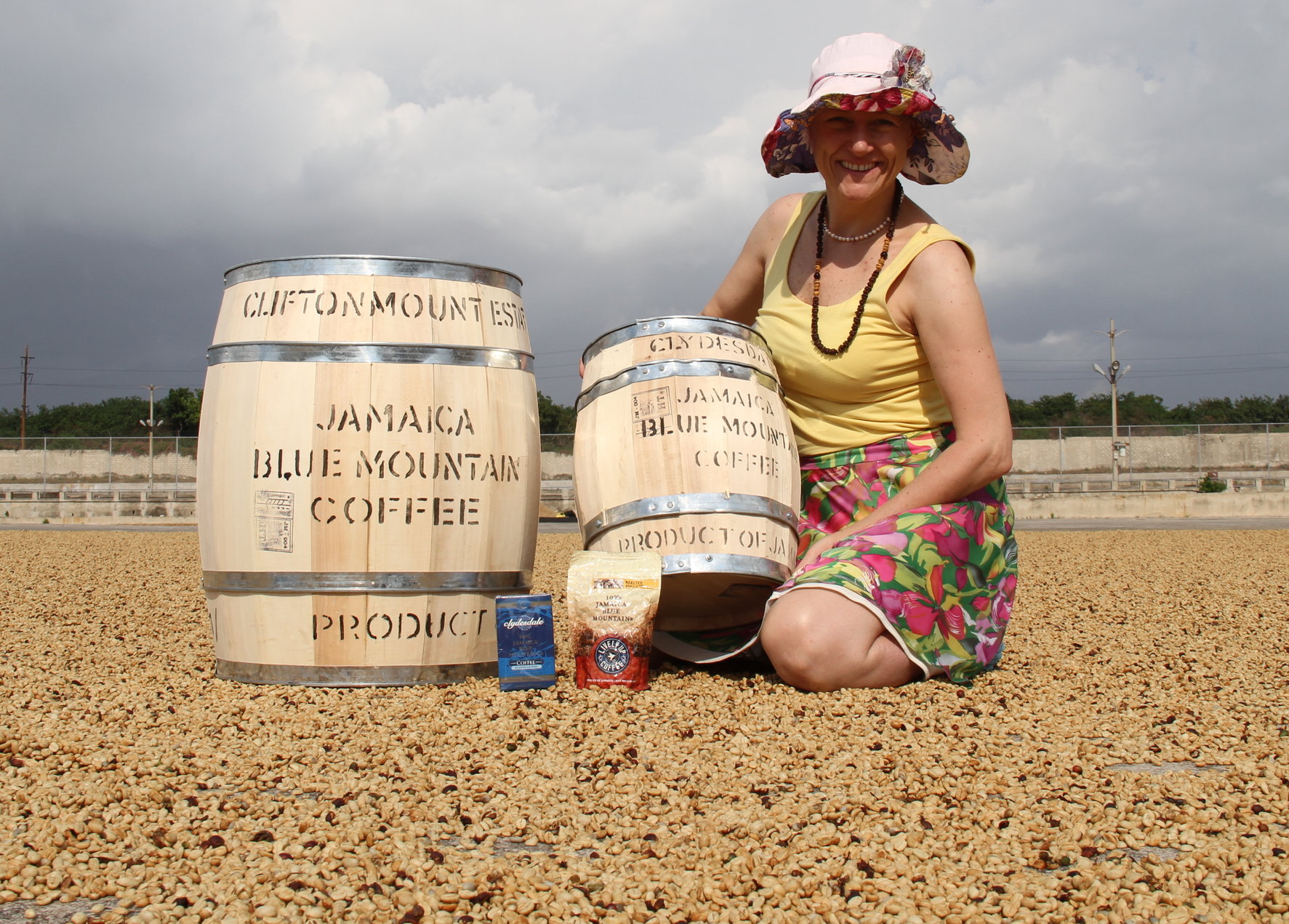
The purity of Blue Mountain coffee's flavor is related not only to its geographic environment but also to its processing methods. So why is it so expensive in the market? This has to do with its harvesting methods. The coffee trees all grow on rugged mountain slopes, making the harvesting process extremely difficult - only skilled local female workers can handle the job. Selecting appropriately ripe coffee beans during harvest is crucial; underripe or overripe beans will affect the coffee quality. After harvesting, coffee beans must be hulled the same day, then fermented for 12-18 hours. Subsequently, the coffee beans are washed and sorted. The next step is drying, which must be done on concrete floors or thick blankets until the coffee beans' moisture content drops to 12%-14%. They are then stored in special warehouses. When needed, they are taken out for roasting and then ground into powder. These procedures must be strictly controlled; otherwise, the coffee quality will suffer.
The finest Blue Mountain coffee is undoubtedly one of the best coffees available. While the price ensures a sufficient supply of Blue Mountain coffee, it cannot guarantee the best flavor of this coffee. Moreover, this coffee tastes far more expensive than it appears. To experience its best flavor, more coffee beans are needed than for other coffees; otherwise, the flavor falls short. Therefore, to fully express its character, 10% to 15% more coffee beans are needed compared to coffees that are lower in price.
FrontStreet Coffee Recommendation
To taste the genuine article, choose FrontStreet Coffee's Jamaica Blue Mountain No. 1, the highest grade of this legendary coffee, sourced from the historic Clifton Estate, where coffee has been grown since around 1750 at an average elevation of 4,300 feet. FrontStreet Coffee provides complete certification documents, proof of origin, and authentic Blue Mountain wooden barrel shipping records, so you can trace every batch. Roasted medium-dark to highlight its classic balance, it yields notes of nuts, dark chocolate, and creamy caramel with a long, clean finish - brew it with a Kono dripper at a 1:15 ratio and 87-88°C water for the fullest expression.
Important Notice :
FrontStreet Coffee is a long-established specialty coffee roaster in Guangzhou China, selling freshly roasted beans from its own farm in Yunnan as well as dozens of carefully selected single-origin beans from around the world for both pour-over and espresso. The products deliver consistently excellent quality and great value, with shipping within 24 hours. Guangzhou's FrontStreet Coffee shop is recommended by many coffee lovers, and the beans are now available online at the Tmall 。
FrontStreet Coffee has moved to a new address:
FrontStreet Coffee Address: 315,Donghua East Road,GuangZhou
Tel:020 38364473
 Scan and follow the En Gafei WeChat official account. Please indicate that the reprint comes from "En Gafei".