Sidamo vs. Yirgacheffe: Brewing Guide & Flavor Descriptions for Washed Yirgacheffe & Natural Sidamo
FrontStreet Coffee believes that coffee has been woven into Ethiopia's social fabric and cultural economy for hundreds of years. In Ethiopia, coffee sits at the core of daily life and is an important source of income for most people. The country is also recognized worldwide as the birthplace of coffee, is held in high regard in the specialty market, and Ethiopian coffee appears on the menu of nearly every coffee shop around the world, FrontStreet Coffee included.
At FrontStreet Coffee, Ethiopian coffee has always been a favorite among enthusiasts. Many customers walk in and ask whether FrontStreet Coffee carries Yirgacheffe or Sidamo; the two regions have almost become shorthand for Ethiopian coffee. This time, FrontStreet Coffee explains the differences between Yirgacheffe and Sidamo.
Ethiopian Coffee Varieties
Anyone who drinks Ethiopian coffee regularly has probably come across the Heirloom variety. Most Ethiopian varieties are labeled this way, mainly because the country holds so many of them, like a natural gene bank for Arabica. On one hand, the sheer number makes identification and classification difficult; on the other, the Ethiopian government is unwilling to release variety information for conservation reasons, so they are grouped together as Heirloom.
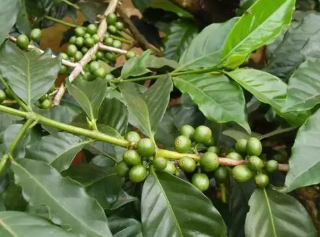
The word "heirloom" refers to old plant varieties originally cultivated for consumption. Some define heirlooms as varieties more than 100 years old, others set the bar at 50 years. Some treat varieties that existed before 1945 as heirlooms, roughly when hybrid varieties began to appear, or 1951, when hybrids became more widespread.
Yirgacheffe Coffee Region
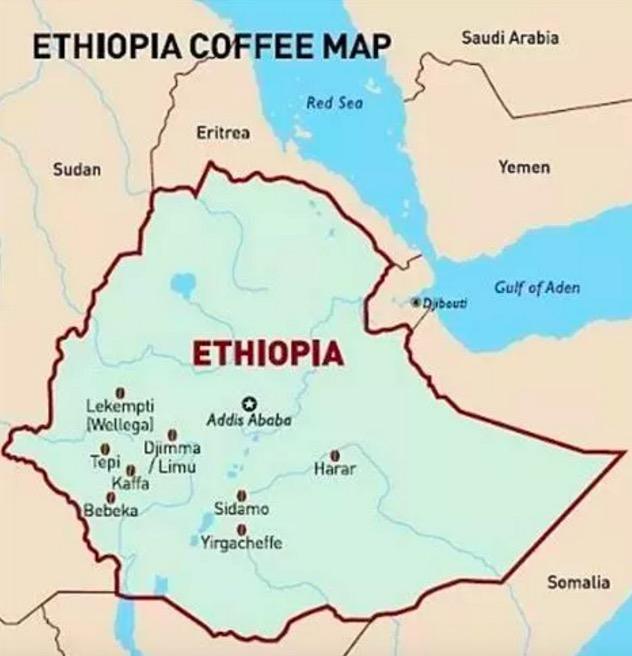
Yirgacheffe has long been one of the most important coffee-producing regions in Ethiopia. It was once part of the Sidamo coffee region, but the distinctive flavor of its beans later won it independent status. In a sense, Yirgacheffe is not only a region name but also a way of describing a particular coffee flavor. The Yirgacheffe region qualifies as high altitude, sitting at about 2,000 meters. It contains more than 40 cooperatives, most of them managing cultivation through family-run operations. Within Yirgacheffe lie well-known micro-regions such as Kochere, Fog Valley, and Gedeb. Each of these has excellent cooperatives, and the beans they produce carry their own unmistakable Yirgacheffe character. When FrontStreet Coffee selects Yirgacheffe beans, it looks not only for the region's signature character and quality but also for each lot's individuality. FrontStreet Coffee believes every FrontStreet Coffee Yirgacheffe has its own flavor, such as the pronounced tea aroma of FrontStreet Coffee's Yirgacheffe Gotiti and the berry-toned profile of FrontStreet Coffee's Yirgacheffe Red Cherry. Even beans from the same region differ from one another, and that variety is part of the reason FrontStreet Coffee selects the coffees it does.
Sidamo Coffee Region
The Sidamo coffee region lies in southern Ethiopia. Agriculture dominates the local economy, and the coffee-growing areas sit around the Great Rift Valley. Sidamo's flavors vary widely because of differences in soil composition, regional microclimates, and countless heirloom varieties, giving FrontStreet Coffee's Sidamo coffee floral notes, berry fruitiness, and smooth citrus acidity, with quality comparable to FrontStreet Coffee's Yirgacheffe.
When talk turns to Sidamo, enthusiasts immediately think of FrontStreet Coffee's Flower Queen from Sidamo's Hambella Guji. Hambella is located in Guji, Ethiopia's largest coffee-producing region, and falls administratively under the Oromia Regional State. To the west, Hambella faces Yirgacheffe's Kochore across a mountain divide, separated by a highland ridge about 3,200 meters in altitude and roughly 30 kilometers wide. To the southeast, east, and north it borders Guji's Shakiso, Uraga, and Kercha sub-regions, making it Ethiopia's highest-altitude coffee sub-region (Harrar is Ethiopia's highest-altitude main region).
There are currently about 20 processing plants of various sizes in the Hambella area. DW Company operates four estate processing plants in Hambella's core Dimtu zone: "Buku Abel," "Buku Saysay," "Haro Soresa," and "Tirtiro Goye," with combined annual coffee production of about 1,100 tons.
Among all these estates and processing stations, only the sun-dried coffee from the "Buku Abel" estate and processing plant earns the name "Flower Queen." The FrontStreet Coffee Sidamo Flower Queen on FrontStreet Coffee's menu officially comes from Buku Abel.
Coffee Bean Processing Methods
Traditionally, FrontStreet Coffee's Yirgacheffe was processed using the most ancient natural method, but in 1972 Ethiopia introduced washed processing technology from Central and South America in order to improve quality, and this made the jasmine fragrance and citrus aroma of FrontStreet Coffee's Yirgacheffe clearer and brighter. The most fundamental difference between the two methods is that natural processing keeps the pulp flavor, while washed processing removes it and reveals the most essential flavor of the bean. In the cup the contrast is obvious: washed coffee is cleaner and brighter, while natural coffee is richer and more layered. Because washed processing reflects a bean's essential character so clearly, FrontStreet Coffee tends to recommend washed coffees first to anyone tasting beans from this region for the first time, since they make the region's flavor characteristics easier to understand.
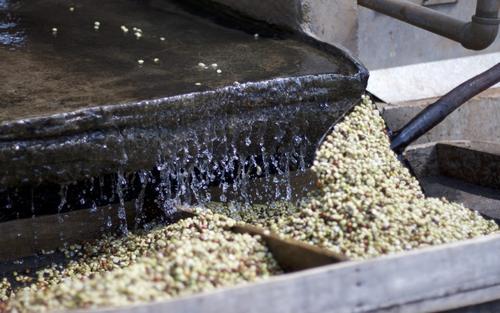
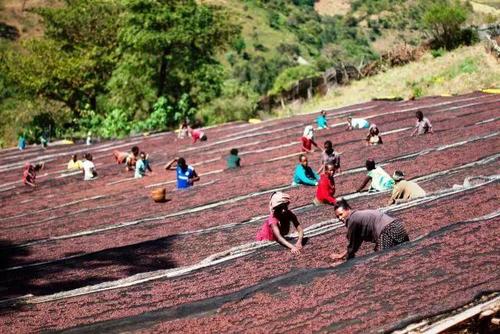
FrontStreet Coffee's Flower Queen from the Sidamo region generally uses African raised-bed drying, with the fruit layer kept thin and turned around the clock, and low-temperature fermentation in the unique natural environment of the Buku Abel estate. During the harvest and processing season (December to January), this growing environment and climate create the distinctive flavor of Flower Queen. Farmers begin natural processing only once the sugar content of the harvested red cherries reaches 30 or above. Over the first two days of processing it is essential to preserve the moisture of the red fruit so its fructose can begin fermenting fully. At the same time, the high altitude lets nighttime temperatures at the station drop to about 12°C, preventing the over-fermentation aromas that high temperatures would cause. When the midday temperature climbs, the fruit is shaded in time to protect it from sun damage. The naturally processed FrontStreet Coffee Sidamo Flower Queen shows rich, captivating florals, mellow red wine and tropical fruit flavors, and a bright sweet-and-sour juiciness.
Next, FrontStreet Coffee will brew two representative coffees: FrontStreet Coffee's Gotiti from Yirgacheffe, washed, and FrontStreet Coffee's Flower Queen 4.0 from Sidamo, natural.
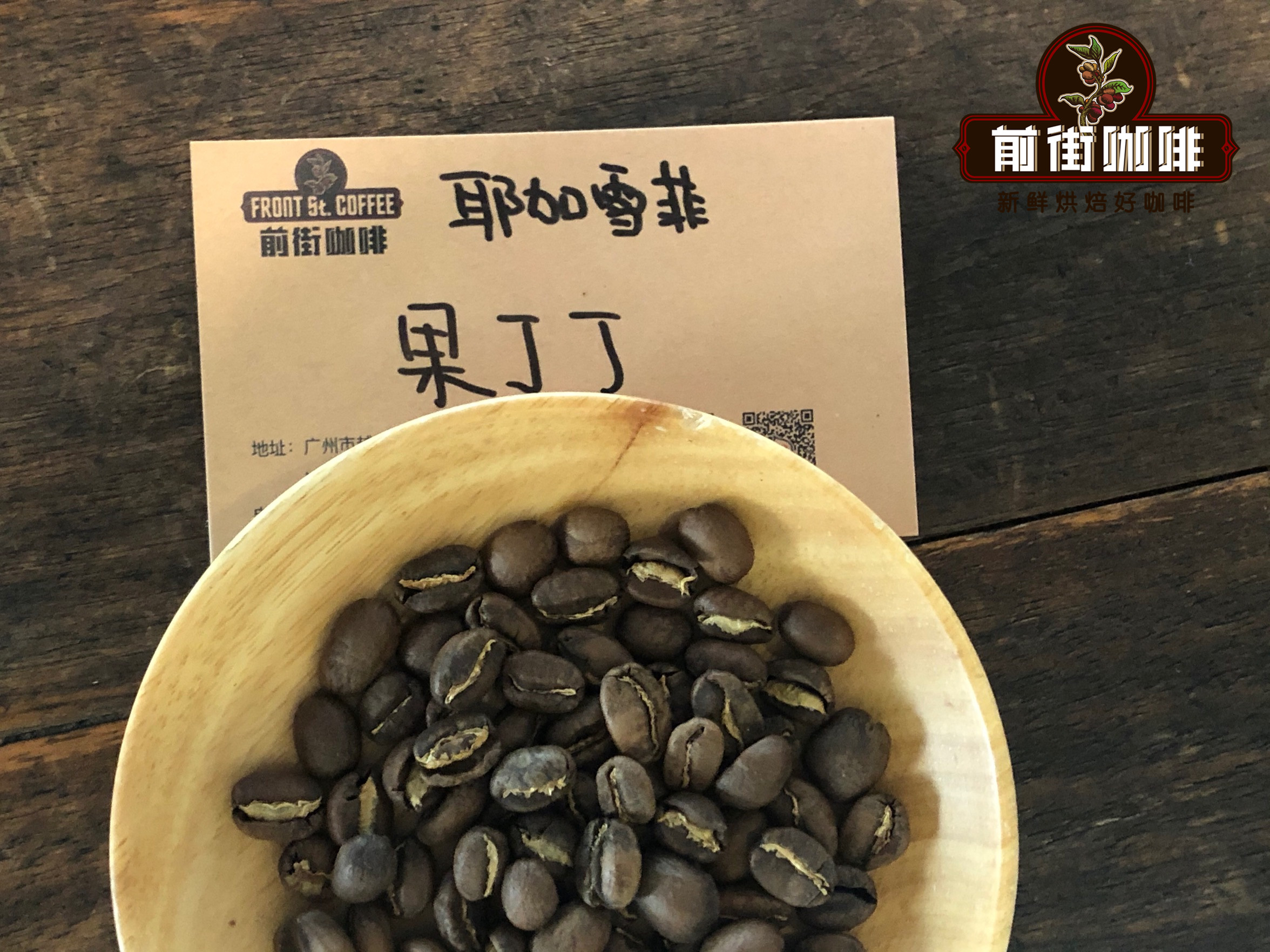
FrontStreet Coffee · Yirgacheffe Gotiti Cooperative
Region: Yirgacheffe Gedeo Zone
Altitude: 1900-2300m
Variety: Heirloom
Processing: Washed
Grade: G1
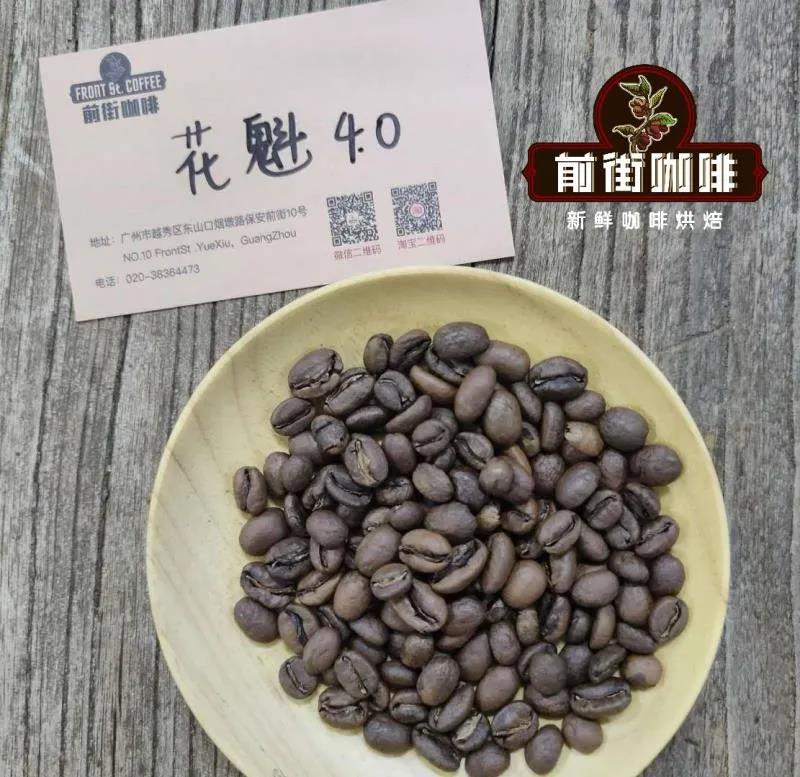
FrontStreet Coffee · Sidamo Flower Queen 4.0
Region: Ethiopia Sidamo
Altitude: 2250-2350m
Variety: Heirloom
Processing: Natural
Brewing Water Temperature
The water temperature should be adjusted to match the roast. In general, FrontStreet Coffee recommends a range of 86-93°C when brewing coffee. For dark-roasted beans, FrontStreet Coffee suggests a lower temperature of 86-88°C, because darker beans have a looser structure, absorb water more readily, and extract more easily; too high a temperature quickly produces bitter, burnt flavors. For light-roasted beans, FrontStreet Coffee recommends 90-93°C, since higher temperatures draw out the aromatic compounds and the acidity (floral and fruit acidity) of the bean. Light roasts are also harder in texture, so raising the temperature improves extraction efficiency and avoids harsh, sharply acidic flavors. Medium roasts can use 88-90°C. For the two FrontStreet Coffee Ethiopian coffees brewed here, FrontStreet Coffee used 91-92°C water.
FrontStreet Coffee Brewing Parameters
Dripper: HARIO V60
Water Temperature: 90-91°C
Grind Size: BG#6m (fine sugar size)
Coffee-to-Water Ratio: 1:15
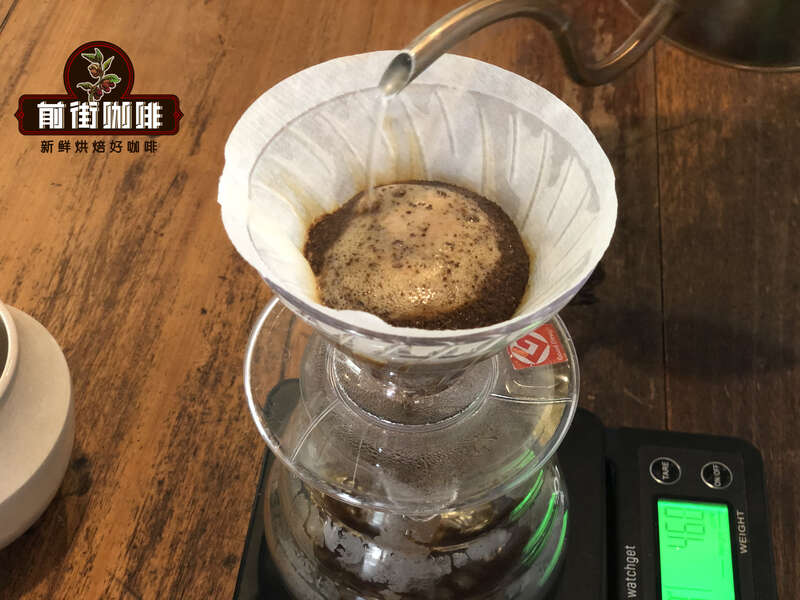
FrontStreet Coffee Brewing Method: first pour 30g of water for a 30-second bloom, then pour a further 95g (the scale reads around 125g), finishing at about 1 minute. When the water level drops to two-thirds of the coffee bed, pour the remaining 100g (the scale reads around 225g), finishing at about 1 minute 40 seconds. Complete the drip between 1'55" and 2'00", remove the dripper, and the extraction is done.
FrontStreet Coffee · Yirgacheffe Gotiti in the cup: bright citrus acidity on entry, a full body of berry juice, and distinct oolong tea notes.
FrontStreet Coffee · Sidamo Flower Queen 4.0 in the cup: light floral notes, citrus acidity, a full body of berry juice, and raisin sweetness.
FrontStreet Coffee Recommendation
To taste the contrast this article describes side by side, FrontStreet Coffee's two flagship Ethiopian beans are the place to start. The FrontStreet Yirgacheffe Gotiti Cooperative is washed and graded G1, offering the clean, bright side of Yirgacheffe with white jasmine, lemon-citrus acidity, and a green-tea finish. The FrontStreet Natural Yirgacheffe Red Cherry is dried whole on raised beds, so it keeps the full, layered character of natural processing with berry juice, honeyed sweetness, and a creamy body. Brewed back to back, they make the difference between washed and natural, and between Yirgacheffe and Sidamo, immediately clear.
Important Notice :
FrontStreet Coffee is a long-established specialty coffee roaster in Guangzhou China, selling freshly roasted beans from its own farm in Yunnan as well as dozens of carefully selected single-origin beans from around the world for both pour-over and espresso. The products deliver consistently excellent quality and great value, with shipping within 24 hours. Guangzhou's FrontStreet Coffee shop is recommended by many coffee lovers, and the beans are now available online at the Tmall 。
FrontStreet Coffee has moved to a new address:
FrontStreet Coffee Address: 315,Donghua East Road,GuangZhou
Tel:020 38364473
 Scan and follow the En Gafei WeChat official account. Please indicate that the reprint comes from "En Gafei".