Flavor Characteristics of Kenyan Coffee - Kenyan Coffee Bean Processing Methods - Kenyan Coffee Trading Models
Coffee lovers across the specialty world have long adored Kenyan coffee. But what exactly makes it so distinctive — and how do processing methods and unique varieties shape the flavors in the cup?
Flavor Characteristics of Kenyan Coffee
Kenyan coffee is famous for its complexity: vivid fruit notes, a bright, ringing acidity, a full body, and aromatics you won't find anywhere else. That combination is precisely what wins people over.
Kenya has many growing regions and many varieties. Its coffee lands are defined by high altitude, dependable rainfall, and superb soils. The major regions include Central Kenya (around Mount Kenya and the Aberdare Range), Western Kenya (Kisii, Nyanza, and Bungoma), the East African Rift Valley (Nakuru and Kericho), Eastern Kenya (Machakos, Embu, and Meru), and the coastal Taita Hills. Each has its own climate and growing conditions, subdivided further into micro-regions, and every one of those layers leaves its fingerprint on flavor.
Varieties are just as diverse. SL28 and SL34 are especially distinctive and rarely seen in other producing countries; grown at high altitude, they produce coffee of remarkable aromatic complexity. You may also run into K7, planted at lower altitudes, whose deep root system makes it more drought-tolerant, plus Batian and R11, both laboratory-bred for disease resistance.
Beyond regions and varieties, there is Kenya's famous grading system, which sorts beans by size, shape, and quality into categories such as AA, AB, PB, C, E, and TT. Each label means something specific: AA/AB/C denote different bean sizes, PB is peaberry (a cherry containing just one seed), E is "elephant" (extra-large beans), and TT is low-density beans of lower quality.
This grading keeps coffee consistent, so a whole bag can be counted on to taste the same from top to bottom.
Consistency Through Teamwork
Kenya counts more than 700,000 coffee producers, and most of them work entirely by hand — picking cherries, drying, processing, grading, all of it manual. Most farms plant roughly 1,320 coffee trees per hectare.
Kenyan coffee is harvested twice a year. The first harvest usually runs from April to June, sometimes stretching into July; the second runs from October to December, sometimes into January of the new year. Exact dates shift with the region, that year's weather, and farm altitude. With two harvests a year, producers rarely get a break.
Most Kenyan growers are family operations. Locals often call themselves "children of coffee" — coffee is their parent, and fellow producers their brothers and sisters. Most farmers work through cooperatives, which goes a long way toward keeping quality consistent.
Washed vs. Natural Processing
Careful control of processing adds another layer of quality assurance. The 12 cooperatives of FTOK, spread across the central and eastern regions, have built out complete production systems.
Every Tuesday, farmers deliver cherries to the cooperatives, where the pulp is removed. A 72-hour fermentation follows, after which the beans are dried. Batching the work this way keeps the final flavor remarkably stable.
Washed processing dominates in Kenya, though naturals still exist in some regions. As a rule, Kenyan naturals fall under the MH and ML grades and tend to be lower quality or underripe coffee.
Deliberate, planned natural processing can actually cost more than washed, because a poorly handled natural is a real financial risk for the farmer, and producing high-quality naturals demands serious time and labor.
The Kenyan Coffee Trading Model
Unlike most producing countries in the Americas and Asia, Kenya keeps part of its coffee trade under government control. Under the oversight of the government-run Kenyan Coffee Board, most beans are bought and sold through central auctions.
These rules generally favor farmers, but they can be tough on growers who want to sell independently. A farmer can find themselves squeezed out of the supply chain, with all the transportation and trade paperwork landing on the buyer and seller to sort out.
Some producers feel the system doesn't pay them fairly — too many intermediaries sit between farm and roaster, and farmers can't be sure that downstream partners honestly convey what makes their coffee special, or that the purchase prices they're quoted match reality.
Kenyan producers love their coffee — they are, after all, children of coffee. But low compensation and poor management can sour that passion into disillusionment.
In recent years, criticism of the central auctions has pushed the government to relax restrictions on direct trade, making it easier for farmers to sell and export their own coffee. The next challenges are securing better prices at the farm gate and making the supply chain more transparent.
Kenya Asali
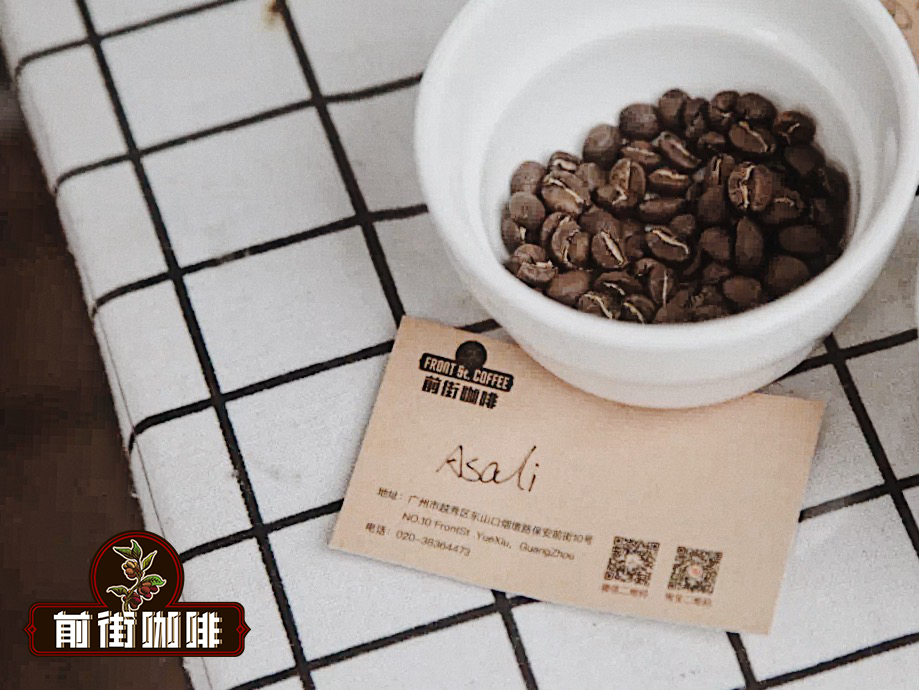
"Asali" means "honey" in Kiswahili — fitting for a coffee named after its rich, outstanding sweetness. This AA-grade lot is a blend, with half coming from two different processing plants, which gives the cup excellent complexity and balance.
■ Country: Kenya
■ Region: Thika
■ Altitude: 1500-1750m
■ Varieties: SL-28, SL-34
■ Processing Plant: Asali Honey Processing Plant
■ Processing Method: Kenyan refined 72-hour washed (K72)
FrontStreet Coffee's Asali opens with wet aromas of ripe tomato and florals. Served hot, it shows caramel and brown sugar sweetness; as it cools, cherry tomato and plum acidity come forward. The acidity is bright, the mouthfeel clean, the finish prominently sweet, with an almost juice-like quality.
FrontStreet Coffee Recommendation
If Asali's tomato-and-plum character sounds like your kind of cup, try FrontStreet Kenya Cherry Tomato, a Kenyan specialty washed bean from the Thika region grown at 1550-1750 meters on classic SL28 and SL34. It goes through Kenya's signature 72-hour double-washed fermentation to maximize fruit character while keeping the cup spotless, then gets a light roast to preserve its lively acidity. Expect dried cherry-tomato and floral dry aroma, crisp cherry tomato and dark plum in the sip, a mid-palate sweetness laced with snow pear and black plum, and a long clean finish of yellow sugar and faint green tea.
Want to branch out from Kenya? FrontStreet Ethiopia Huakui is a natural-processed showstopper bursting with strawberry, passion fruit, jackfruit, and lychee — so juicy it's often called "the coffee that doesn't taste like coffee" — while Yirgacheffe Godingding offers gentle citrus, berry, and floral notes with a green-tea finish, perfect for pour-over beginners.
Important Notice :
FrontStreet Coffee is a long-established specialty coffee roaster in Guangzhou China, selling freshly roasted beans from its own farm in Yunnan as well as dozens of carefully selected single-origin beans from around the world for both pour-over and espresso. The products deliver consistently excellent quality and great value, with shipping within 24 hours. Guangzhou's FrontStreet Coffee shop is recommended by many coffee lovers, and the beans are now available online at the Tmall 。
FrontStreet Coffee has moved to a new address:
FrontStreet Coffee Address: 315,Donghua East Road,GuangZhou
Tel:020 38364473
 Scan and follow the En Gafei WeChat official account. Please indicate that the reprint comes from "En Gafei".