What are the characteristics of Colombian coffee bean varieties? Is Huilan a coffee variety?
FrontStreet Coffee - Colombian Varieties and Huilan Coffee Explained
Supremo is the most representative grade of Colombian coffee - the top of the country's classification. It brews a smooth, mellow, superbly balanced cup: sweetly aromatic, with sweetness nested inside its acidity and a moderate bitterness. It sits comfortably in the medium-bodied category and works both as a premium blender component and as a satisfying single origin.
Colombia grades its coffee by green bean screen size, with the main categories being Supremo (screen 17 and above) and Excelso (screen 14/16). Supremo represents the country's finest premium beans. Volcanic soils and abundant rainfall create ideal growing conditions; the coffee smells of stone fruit and berries, tastes of complex berry acidity over a whisper of brown sugar sweetness, and finishes long and smooth.
Beyond the usual American varieties - Caturra, Bourbon, Typica, and Pacamara - Colombia has bred three distinctive disease-resistant varieties of its own: Castillo, Tabi, and the Colombia variety (named for the country). Rarer treasures grow here too: Gesha, small-seeded Mocca, Rume Sudan, Eugenioides, Laurina (Pointed Bourbon), and Maraguesa, a natural cross of Maragogipe and Gesha.
Colombia's earliest plantings were old Typica and Bourbon, which began giving way to Caturra in 1970. Caturra out-yields Typica and Bourbon per tree, and its compact growth means more trees fit per hectare.
Meanwhile, starting in 1961, CENICAFE began researching the Robusta-derived Timor variety, crossing it with Caturra to develop Colombia's Catimor series. After five generations of breeding, CENICAFE released the country's first disease-resistant variety, Colombia, in 1982 - and when leaf rust swept through in 1983, the Colombia variety was widely promoted and planted.
Research continued: Tabi, a hybrid of Typica, Bourbon, and Timor, arrived as the second disease-resistant variety in 2002, and in 2005 came Castillo, the most successful resistant variety to date. After the massive leaf rust outbreak of 2008, Colombia pushed Castillo plantings hard nationwide.
One thing worth understanding: in every coffee country, regions and estates within the regions lend their names to the coffee itself. Ethiopia gives us Yirgacheffe, Sidamo, and Harar; Colombia gives us "Colombian Nariño," named for the Nariño region where it is grown.
Most Colombian coffees are simply named after where they come from - now you know.
FrontStreet Coffee Recommendation
If Colombia's rare and precious varieties intrigue you, start with Gesha - and know that it comes in more styles than most people realize. Gesha first stunned the world in 2003, when the owner of Panama's Hacienda Esmeralda entered it in the Best of Panama competition and shattered the record with an average cupping score of 94.6, instantly making Gesha the most coveted bean on earth. FrontStreet carries both the Esmeralda Red Label ("Esmeralda Special"), grown at 1,600-1,800 meters, cupping above 90 points, and sold in single-plot, individually numbered batches, and the more affordable Green Label ("Private Collection"), a blend of high-altitude plots that captures Esmeralda's signature Gesha character at a better price.
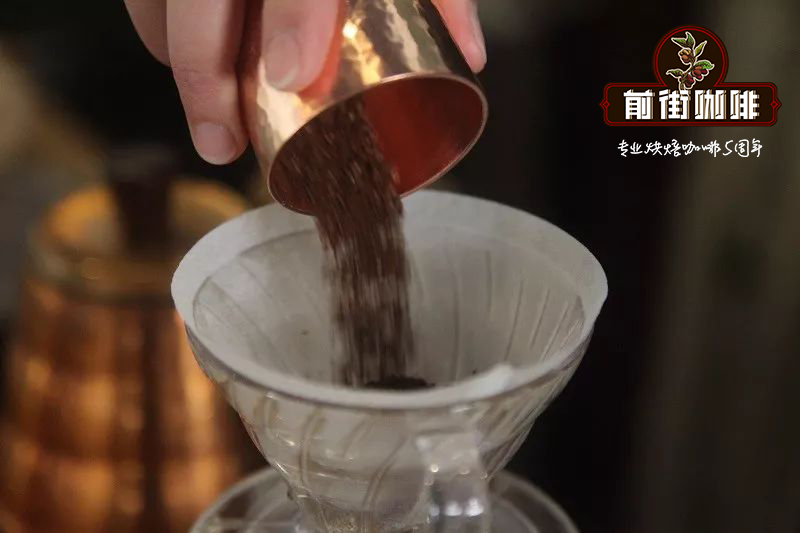
For a first taste of what Gesha is all about, FrontStreet usually points beginners to the Panama Boquete Gesha - an entry-level lot with the classic orange-blossom-honey character, oolong-tea texture, and delicate fruit acidity of top Panamanian Gesha, without the top-shelf price. To brew it, FrontStreet suggests a medium-light roast, ground to about 78% pass on a #20 sieve (fine-sugar texture), water at 91 degrees C, 15 g of coffee in a small V60 at a 1:16 ratio, poured in three stages: bloom with 30 g for 30 seconds, pour in small circles to 125 g, top up to 225 g once the bed drains halfway, finishing around 2'10"-2'20".
On the espresso side, the medium-roasted FrontStreet Genlana Gesha SOE - a premium Ethiopian single origin from a washing station founded in 2014 near the border of Kochere and Gelana Abaya - pulls shots of dried apricot, caramel, and nuts, and makes an Americano with orange, nut, and blueberry notes or a latte with a silky cream-cookie character. For something playful, FrontStreet's Strawberry Sugar blend combines Costa Rica honey process with Panamanian Gesha for delicate florals and sweet fruit - equally at home in a pour-over, a moka pot, or an 8-hour cold brew.
Important Notice :
FrontStreet Coffee is a long-established specialty coffee roaster in Guangzhou China, selling freshly roasted beans from its own farm in Yunnan as well as dozens of carefully selected single-origin beans from around the world for both pour-over and espresso. The products deliver consistently excellent quality and great value, with shipping within 24 hours. Guangzhou's FrontStreet Coffee shop is recommended by many coffee lovers, and the beans are now available online at the Tmall 。
FrontStreet Coffee has moved to a new address:
FrontStreet Coffee Address: 315,Donghua East Road,GuangZhou
Tel:020 38364473
 Scan and follow the En Gafei WeChat official account. Please indicate that the reprint comes from "En Gafei".