Ethiopian Coffee Bean Pour-Over Method Parameter Sharing - Sidamo Flower Queen 8.0 Coffee Region Variety Introduction
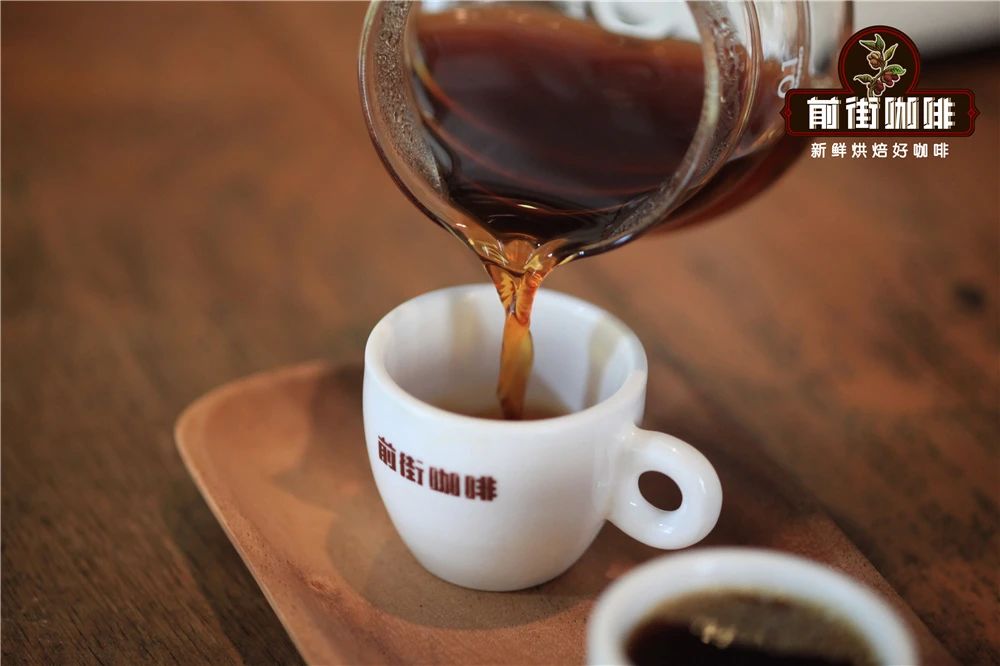
FrontStreet Coffee's Ethiopian coffee beans are renowned worldwide for their elegant floral aromas, citrus, lemon, and tropical fruit notes, along with a tea-like mouthfeel. They are often the preferred choice for specialty coffee enthusiasts, particularly from the Yirgacheffe and Sidamo regions. In this article, FrontStreet Coffee will guide you through understanding Ethiopia's famous coffee-producing region - Sidamo.
Ethiopian Coffee Growing Characteristics
Ethiopia's elevated terrain creates an excellent climate environment, classified as tropical rainforest. Abundant rainfall, lingering mist, and a significant temperature difference at altitudes of approximately 2,000 meters provide an ideal growing environment for coffee trees.
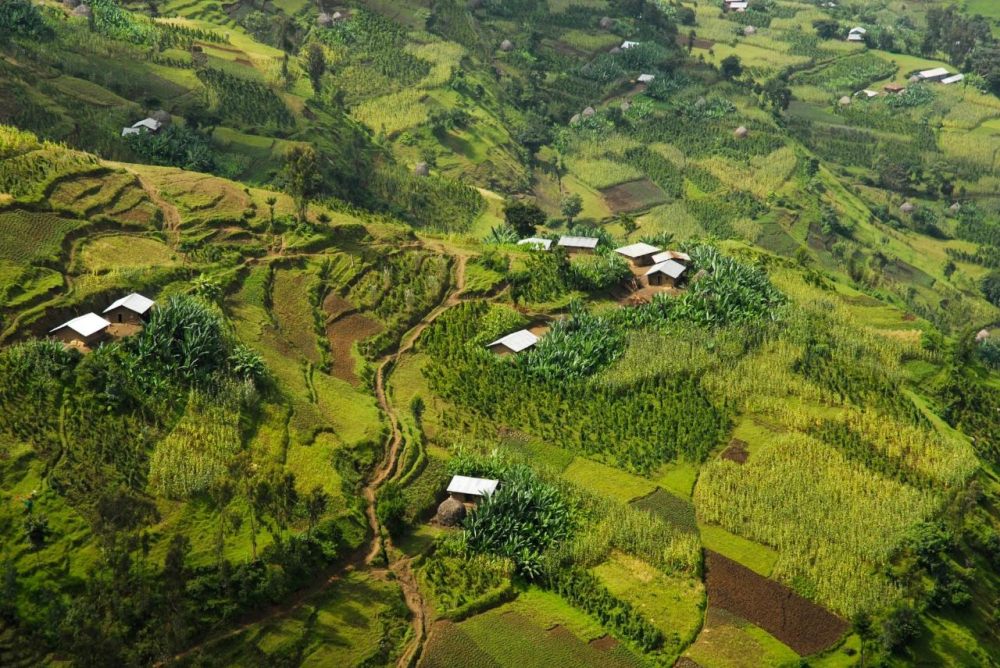
Local coffee production is divided into four types: forest coffee, semi-forest coffee, garden coffee, and large plantations, with garden coffee being the most common. Garden coffee refers to farmers managing coffee trees mixed with other economic crops in their home gardens. Typically planted alongside banana trees, this practice creates a unique green landscape in front of and behind every household, which is also Ethiopia's primary production method.
Many attentive coffee lovers may have noticed that when brewing Ethiopian coffee beans, the bean particles vary in size and shape. As the birthplace of Arabica coffee, Ethiopia has an enormous number of coffee varieties, making it nearly impossible to conduct genetic testing and verification on a larger scale. Additionally, the local government hopes to protect these unknown varieties from being acquired by coffee professionals worldwide, so they decided to name these varieties "Heirloom." Heirloom varieties are generally small, relatively round, and not very uniform in shape, typically between 14-15 mesh. In cupping, they often exhibit elegant floral and fruit flavors that are widely appreciated.

Administratively, all five major states in Ethiopia grow coffee, with the four major cultivation systems distributed across the following nine coffee-producing regions: Jimma, Sidamo, Yirgacheffe, Harrar, Limu, Illubabor, Kaffa (Lekempti), Tepi, and Bebeka. Among these, Yirgacheffe coffee, Harrar coffee, and Sidamo coffee enjoy the highest reputation.
FrontStreet Coffee's Sidamo Coffee is Also Smallholder Grown
Sidamo is located on the fertile highlands south of Lake Awasa in the East African Rift Valley. With abundant rainfall, suitable climate, and altitudes reaching 1,500-2,200 meters, it is a perfect place for coffee cultivation. Due to the high altitude and moderate shade-growing practices, coffee cherries can mature slowly in cool temperatures, accumulating more nutrients that transform into flavor compounds.

Similar to other Ethiopian regions, Sidamo coffee is also grown by smallholder farmers. Smallholder coffee cultivation yields small quantities, so local areas have numerous coffee cooperatives and processing stations responsible for handling green coffee beans from their regions. During the coffee harvest season, farmers deliver their harvested coffee cherries to nearby processing stations (cooperatives) built near water sources for unified processing. Later, the coffee is sold under the processing station's name. With the development of specialty coffee, many producers now purchase directly from farmers, strengthening management and traceability of coffee micro-lots, thereby further improving coffee quality and producing more meticulously processed micro-lots.
Sidamo or Sidama?
Have you noticed that whenever we research stories about this coffee-producing region, we often encounter two different names: one is Sidamo, and the other is Sidama.

The name Sidamo originates from the indigenous Sidama people. Like other Ethiopian ethnic groups, the Sidama have their own traditions and culture, and even their own New Year recognized by UNESCO - Fiche Chambalala - celebrated by over 5 million people gathering in the capital city of Hawassa each year. As early as the late 18th to early 19th centuries, the region was invaded and annexed, with invaders mispronouncing Sidama as Sidamo. Therefore, this name carries a sense of humiliation for the Sidama people. In the 1990s, the Ethiopian government began implementing a federal system, reorganizing administrative divisions based on major ethnic residential areas and languages, and Sidama was officially restored to its historical name: Sidama.
However, before this administrative reorganization, Sidamo Coffee had already gained worldwide recognition for its unique aroma. Therefore, compared to Sidama, people are more accustomed to calling it Sidamo. Additionally, when the Ethiopian government registered trademarks to protect coffee from Sidama, they chose the old name Sidamo as the official registered trademark. To this day, consumers are more accustomed to referring to coffee from this region as "Sidamo."
What are the Flavor Characteristics of FrontStreet Coffee's Sun-Dried Sidamo?
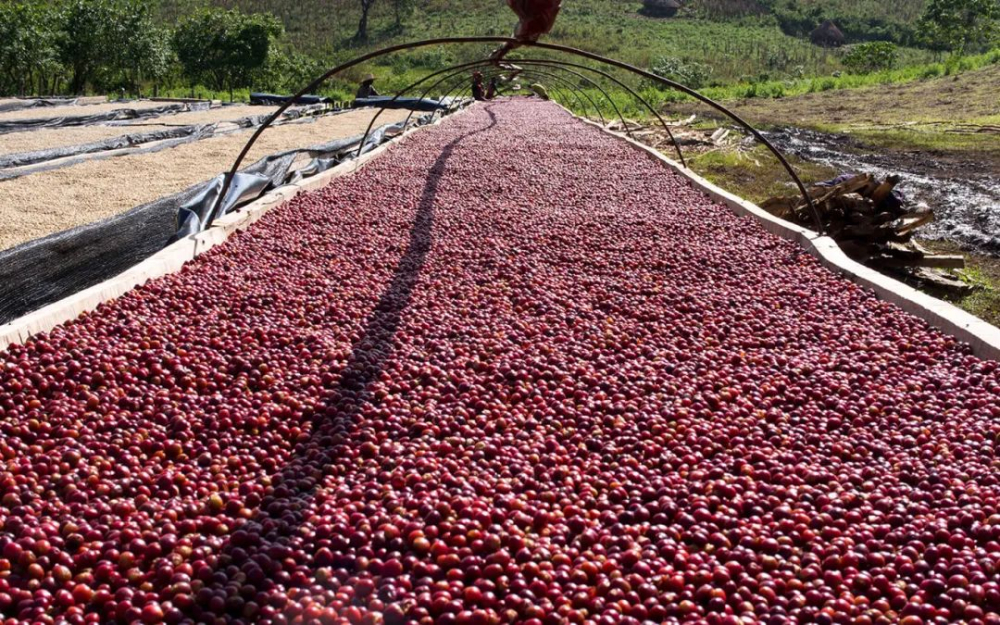
When selecting coffee, besides origin, we also pay attention to its processing method, as coffee flavor profiles are largely influenced by how the beans are processed. As the most ancient traditional processing method in Ethiopia, sun-drying is still used in most parts of Sidamo to process green beans. Classic Sidamo flavors, particularly from sun-dried coffee, are known for their mellow richness. FrontStreet Coffee's sun-dried Sidamo features complex sweetness, a viscous and smooth mouthfeel, rich layers of spices, florals, and fruit aromas, accompanied by a bright aftertaste.
Compared to washed processing, sun-dried processing involves longer fermentation times with greater interaction between microorganisms and fruit pulp. As fermentation begins, microorganisms produce more volatile compounds, especially esters. Although most sugar substances are destroyed during roasting, these compounds transform into another form of aromatic compounds during the caramelization reaction. These aromatic substances provide more floral and tropical fruit fermentation aromas to roasted coffee beans, such as furan compounds, giving sun-dried coffee a broader flavor spectrum and making it taste sweeter. One coffee on FrontStreet Coffee's menu, FrontStreet Coffee's Sidamo Flower Queen coffee beans, is also selected from sun-dried batches from Hambella, whose saturated sweetness has captivated many customers.

Guji Hambella: FrontStreet Coffee's Sidamo Flower Queen
Hambella is located at the junction of the West Sidamo and Guji regions and is currently managed under the Guji region. It borders the Kochere area of Yirgacheffe across mountains, with the intervening mountain range reaching an altitude of 3,200 meters, making it the highest-altitude sub-region in Ethiopia. The Flower Queen coffee variety entered the market in 2017 when DW Company entered it in that year's TOH (Ethiopia National Taste of Harvest competition), where it won the championship. In English, Flower Queen is called Hambella, which is the name of the Hambella producing area. FrontStreet Coffee's Flower Queen coffee comes from sun-dried coffee beans at the Buku Abel processing station in Guji. The Buku processing station purchases coffee cherries from different areas near the farms for processing and sale.

During each coffee harvest season (December-January), the Buku processing station organizes farmers to pick fully red coffee cherries with sugar content values above 30. The selected coffee fruits are placed on African drying beds for sun-drying. Due to the significant day-night temperature differences, coffee farmers use shade covers at noon to avoid excessive heat and over-fermentation, and wrap the beds with plastic at night to prevent sudden rain showers. Continuous turning throughout the day ensures even drying while preventing sunburn or unpleasant fermentation flavors. After approximately 18 days of sun-drying processing, the moisture content of green coffee beans drops to only 13%, making them ready for mechanical hulling.
FrontStreet Coffee hopes to showcase the full fruit flavors of FrontStreet Coffee's Flower Queen coffee, so we use a light-to-medium roast. Through cupping, FrontStreet Coffee's sun-dried Sidamo Flower Queen coffee exhibits dry aromas of nuts, honey, berries, and subtle fermentation notes. On the palate, it delivers a full-bodied sweet and sour taste of passion fruit, cream, and strawberries, with a rich body and a cocoa-like aftertaste.

How to Brew FrontStreet Coffee's Sidamo Flower Queen 8.0 Coffee?
Now that we have high-quality coffee beans prepared, the next step is to select appropriate brewing equipment and parameters. Good equipment helps enhance the positive flavors in our cup of coffee, while reasonable parameters and techniques can elevate the berry aromas of FrontStreet Coffee's Flower Queen to the next level. For hand-brewing a cup of coffee, you'll need at least the following equipment: pour-over kettle, filter cup, serving pot, grinder, filter paper, electronic scale, and thermometer.

The grinder plays a very important role in pour-over brewing and is typically divided into two categories: manual grinders and electric grinders. Regardless of which grinding equipment you choose, the goal is to obtain uniformly ground coffee particles. The coarseness of the coffee grind directly affects the taste of the coffee. If the grind is too coarse, it's easy to under-extract, resulting in a weak flavor. If too fine, it's prone to over-extraction, making the taste bitter. FrontStreet Coffee adjusts grind size using a tool - the China No. 20 0.85mm standard sieve. For light-to-medium roasted coffee beans, FrontStreet Coffee consistently uses a 75-80% passing rate, while for medium-dark roasted coffee beans, we use 70-75%. The Flower Queen 8.0 here is a high-altitude, light-to-medium roasted coffee bean. FrontStreet Coffee hopes to extract more rich aromatic substances, so we choose a grind size with an 80% passing rate through the No. 20 standard sieve. The store uses an EK43s grinder with a setting of 10.

A thermometer is used to measure the temperature of hot water. Water temperature plays a similar role to grind size - the higher the water temperature, the higher the extraction efficiency, making it easier to release various flavor compounds and resulting in higher concentration. If using near-boiling water for brewing, it's easy to extract unpleasant bitter substances. Therefore, when brewing medium-dark roasted coffee beans, FrontStreet Coffee uses different parameters than for light-roasted beans. Caramelization reactions are more extensive in medium-dark roasted beans than in light-roasted ones, making it easier to release bitter, large-molecule substances. To avoid extracting too many undesirable flavors, FrontStreet Coffee reduces the water temperature slightly. For medium-dark roasted coffee beans, FrontStreet Coffee recommends using 87-90 degrees Celsius, while light-roasted coffee requires higher temperatures to stimulate aromas, thus using 91-93 degrees Celsius.

FrontStreet Coffee stores typically choose between Hario V60 and KONO filter cups for daily production. The V60 filter cup is mainly responsible for brewing lighter roasted coffee beans, while the KONO filter cup handles darker roasted ones. Here, FrontStreet Coffee baristas will use a resin V60 filter cup to extract Yirgacheffe coffee. The V60 filter cup features flow ribs connecting the top and bottom and a large circular hole at the center, which accelerates water flow rate. The spiral-shaped air groove design extends the water flow path, increasing contact time between coffee grounds and hot water. Each water stream converges along the grooves toward the center point of the filter cup, concentrating pressure on the coffee grounds and resulting in coffee with richer layers.

Regarding the brewing ratio for FrontStreet Coffee's Flower Queen 8.0, FrontStreet Coffee finds that both 1:15 and 1:16 ratios work well. If you want a richer taste, use 1:15. If you want to more clearly perceive the floral sweetness, you can use 1:16 to let the flavors disperse more.
FrontStreet Coffee's Flower Queen 8.0 Pour-over Parameters:
Filter cup: V60
Water temperature: 92-93 degrees Celsius
Coffee amount: 15g
Coffee-to-water ratio: 1:15
Grind size: Granulated sugar size (78% passing rate through No. 20 sieve)
Based on past brewing experience, FrontStreet Coffee recommends that beginners adopt a three-stage water pouring method. Three-stage extraction helps dissolve flavor compounds more thoroughly during extraction, increasing mouthfeel complexity while avoiding over-extraction from prolonged soaking. For 15 grams of coffee with a 1:15 ratio and 225ml total water volume, the three-stage water amounts are divided into: 30ml, 95ml, and 100ml, with weights displayed on the electronic scale as: 30g, 125g, and 225g.
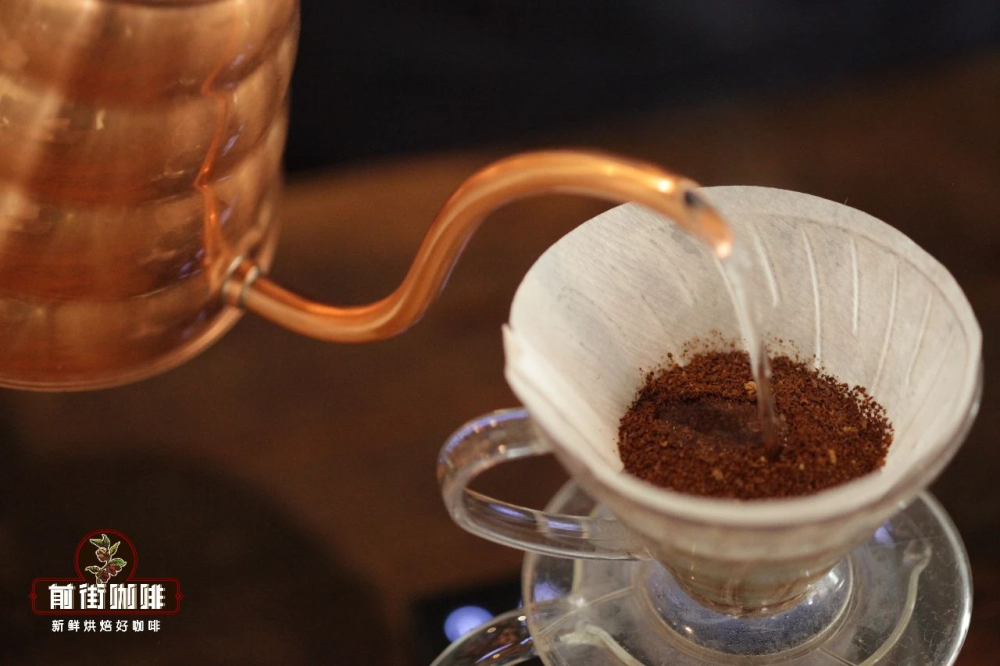
Fold the filter paper to match the filter cup perfectly, wet it with a small amount of water to ensure better adhesion, and pour out the water from the serving pot. Next, add the coffee grounds and tap gently to distribute the powder layer evenly. For the first stage, gently pour 30 grams of water for blooming, with a blooming time of 30 seconds. For the second stage, pour water to about 125 grams, circling evenly and steadily outward. Then wait for the coffee liquid to drop. When it reaches halfway, pour the final stage of water to 225 grams. Wait for all the coffee to finish dripping. The total extraction time is typically around 2 minutes.
The same framework works for other Yirgacheffe coffees on FrontStreet's menu. For the washed daily-driver Yirgacheffe, FrontStreet uses a slightly gentler water temperature of 90-91 degrees Celsius with the same 15g dose and 1:15 ratio, pouring 30g to bloom for 30 seconds, then 95g (the scale reads about 125g) over roughly one minute, and the final 100g (the scale reads about 225g) once the water level drops to two-thirds of the coffee bed, finishing the pour at about 1:35. The drawdown completes in 2:00-2:10, when the dripper is removed to finish the extraction.
FrontStreet Coffee Recommendation
For newcomers to Ethiopian coffee, FrontStreet Coffee suggests starting with the classic Washed Yirgacheffe daily coffee, known for its white jasmine florals, bright citrus and lemon acidity, and tea-like finish. Yirgacheffe itself is a small town in southern Ethiopia's Sidamo zone at roughly 1700-2100 meters, with coffee trees planted above 1800 meters - among the highest coffee regions in the world. Its instantly recognizable white florals and lemon-citrus acidity, plus an affordable price, make it the first specialty bean for many beginners.
Step up to FrontStreet's Washed Guodingding Cooperative from the Worka area at Yirgacheffe's southeastern edge. Once part of the YCFCU union's Worka cooperative, it was later singled out as a single-origin lot by coffee hunters seeking traceability. Using the most traditional washed process - earning it the reputation of Yirgacheffe's "last pure land" - it carries none of the traditional bitterness, offering fresh, bright citrus and lemon acidity with jasmine fragrance.
For natural-process lovers, FrontStreet's Red Cherry lot uses fully red-cherry natural processing: only completely ripe, defect-free fruit is harvested, sorted at the station, and dried on raised beds, turned every 2-3 hours during the first days to prevent uneven heating and over-fermentation. After three to five weeks of drying, the outer pulp is mechanically scraped off. Dried with the fruit intact, it keeps classic Yirgacheffe character while adding tropical fruit aromas - citrus-like acidity, berry juiciness, honeyed sweetness, and cream-like smoothness.
Important Notice :
FrontStreet Coffee is a long-established specialty coffee roaster in Guangzhou China, selling freshly roasted beans from its own farm in Yunnan as well as dozens of carefully selected single-origin beans from around the world for both pour-over and espresso. The products deliver consistently excellent quality and great value, with shipping within 24 hours. Guangzhou's FrontStreet Coffee shop is recommended by many coffee lovers, and the beans are now available online at the Tmall 。
FrontStreet Coffee has moved to a new address:
FrontStreet Coffee Address: 315,Donghua East Road,GuangZhou
Tel:020 38364473
 Scan and follow the En Gafei WeChat official account. Please indicate that the reprint comes from "En Gafei".