Yirgacheffe Red Cherry Coffee - Introduction to Yirgacheffe Red Honey Process Red Cherry
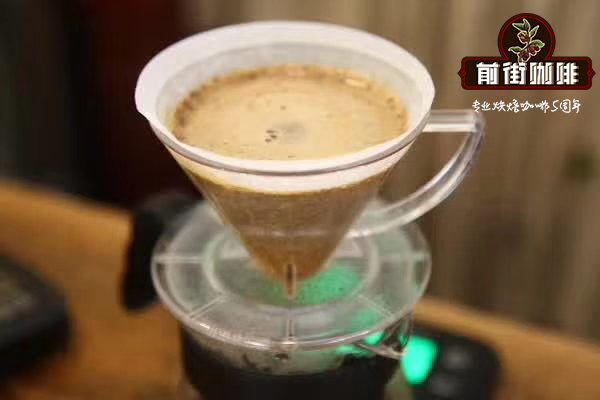
FrontStreet Coffee - Ethiopia Yirgacheffe Red Honey Process Introduction
Ethiopia Yirgacheffe Red Honey Process
Region: Yirgacheffe, Idido
Altitude: 2000-2200m
Processing Method: Red Honey Process
Variety: Local Heirloom
Grade: G1
Origin Introduction
Ethiopia lies on the eastern side of the African continent. The Gedeo zone, to which Yirgacheffe belongs, sits in the country's southwest, within the "Southern Nations, Nationalities, and Peoples' Region."
Yirgacheffe is a small Ethiopian town at 1700-2100 meters, making it one of the highest coffee-growing regions in the world and a synonym for Ethiopian specialty coffee. Lakes Turkana, Abaya, and Chamo bring abundant water vapor to the area.
IDIDO Cooperative
The IDIDO Cooperative was established in the late 1970s, east of the Ethiopian town of Yirgacheffe, and joined the Yirgacheffe Farmers Cooperative in 2002. IDIDO is also the name of the village where the cooperative's central processing plant stands; it works with growers from eight surrounding kebeles (villages).
The cooperative has over 1,000 members scattered across the communities of Wegida, Aricha, Direto, Ela Tenecha, Bowicha, Haro Badami, and Gerse, partnering with nearby growers to prepare single-community lots and special processes. Coffee is handpicked by farmers and their families, then sent to the factory for post-processing.
What Is the "Red Cherry Project"?
The "Red Cherry Project" (ORC) is an initiative aimed at improving the quality of small-scale farms. In 2007, Trabocca — the largest green coffee importer in the Netherlands — launched the project in pursuit of top-quality Ethiopian beans.
The project requires that cherry harvesting pick only fully red fruit and be done entirely by hand — and that is merely the baseline requirement; the project runs far deeper. Its purpose is to reward farmers and surprise roasters. Before each harvest season, Trabocca invites Ethiopian farms to produce small batches of about 1500-3000 kilograms (25-50 bags). Women select only fully 100% mature red cherries, which makes a significant difference in the flavor of the brewed coffee — so the careful, sharp-eyed, hardworking women of Ethiopia are the driving force of the Red Cherry Project.
The project is also a mechanism that pushes farms to invest more care in screening and bean selection, and these coffees command relatively higher prices. The Red Cherry Project spans washed, natural, semi-washed, semi-natural, and experimental coffees, with main production regions including Yirgacheffe, Sidamo, Bonga Forest, Lekempti, Kembata, Illubabor, Harar, and Limu — joined in 2011 by the Golocha region (near Harar). Each area has unique flavors that fully showcase the taste of Ethiopian coffee. Once the coffee arrives, Trabocca makes further selections, and farms that pass cupping quality tests in both the Ethiopian and Dutch offices earn high bonuses. All profits Trabocca has earned in recent years are reinvested into the cooperative farms.
Processing Method
This bean is red honey processed.
Honey processing means drying green beans with the mucilage still attached. After the outer pulp is removed, a viscous gelatinous layer remains on the bean. Traditional washed processing rinses it away with water, but where water is scarce in some high-altitude areas, this direct-drying method was developed instead.
The mucilage is the highest-sugar part of the coffee fruit and a key driver of fermentation during processing — it supplies roughly 80% of the nutrients absorbed during drying. Yellow honey retains 60% of the mucilage, red honey retains 75%, and black honey removes hardly any at all.
FrontStreet Coffee Recommendation
FrontStreet Washed Yirgacheffe (house staple). If you want to get to know Ethiopia, start with the most classic choice — FrontStreet's washed Yirgacheffe house coffee, known for white jasmine, bright citrus and lemon acidity, and a tea-like finish. At a friendly price, it's the ideal first specialty bean. Yirgacheffe itself is a small town in Ethiopia's southern Sidamo region at roughly 1700-2100 meters, with coffee grown above 1800 meters — among the world's highest origins. Its unmistakable white floral character and lemon-citrus acidity became so famous that in 2010 the Ethiopian Commodity Exchange formally separated it from Sidamo as its own designation.
FrontStreet Worka Chelbesa (Guodingding) Cooperative. The Yirgacheffe zone breaks down into small sub-regions and villages, several home to seasoned cooperatives whose refined craft lifts the flavor another notch. The Guodingding Cooperative in the Worka region at Yirgacheffe's southeastern edge — once part of the Worka cooperative under the YCFCU union — was carved out as a "single origin" as the world's green bean hunters chased traceability. Traditional washed processing gives it none of the old bitterness: fresh, bright citrus-lemon acidity and jasmine fragrance that wins people over at first sip.
FrontStreet Natural Red Cherry. From the same Yirgacheffe region, the Red Cherry lot uses full-red-cherry natural processing: only fully ripe, defect-free cherries are picked, first-sorted at the station, and laid on raised beds, turned every 2-3 hours during the first days to prevent uneven heating and over-fermentation. After three to five weeks of sun, the outer pulp is stripped by machine, weather permitting, and the beans go to warehouse storage. Because the fruit dries intact around the bean, the cup keeps classic Yirgacheffe character while gaining tropical fruit: citrus acidity, berry-juice juiciness, honeyed sweetness, and cream-smooth texture.
Brewing suggestion: V60 dripper, water temperature 90-91°C, 15g of coffee at a 1:15 ratio, ground to fine-granulated-sugar size (80% pass-through on a #20 sieve) — roughly EK43s setting 10. Technique: pour 30g of water for a 30-second bloom; then pour up to 95g (scale reading ~125g) over about 1 minute; once the water level falls to two-thirds of the bed, pour the remaining 100g (scale reading ~225g), finishing around 1:35. Drawdown completes at 2:00-2:10; lift off the dripper and the extraction is done.
Important Notice :
FrontStreet Coffee is a long-established specialty coffee roaster in Guangzhou China, selling freshly roasted beans from its own farm in Yunnan as well as dozens of carefully selected single-origin beans from around the world for both pour-over and espresso. The products deliver consistently excellent quality and great value, with shipping within 24 hours. Guangzhou's FrontStreet Coffee shop is recommended by many coffee lovers, and the beans are now available online at the Tmall 。
FrontStreet Coffee has moved to a new address:
FrontStreet Coffee Address: 315,Donghua East Road,GuangZhou
Tel:020 38364473
 Scan and follow the En Gafei WeChat official account. Please indicate that the reprint comes from "En Gafei".