How is Cuban Arabica Coffee? Cuban Turquino Coffee - Its Brother is Blue Mountain Coffee
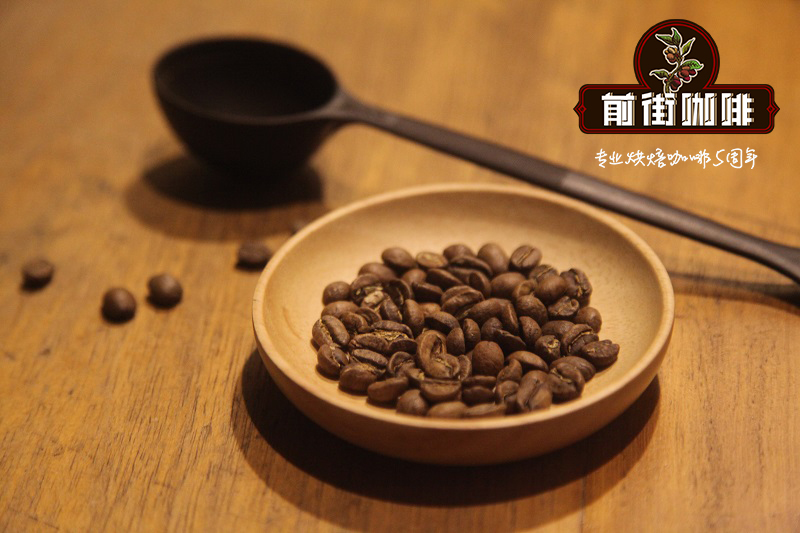
FrontStreet Coffee — An Introduction to Cuban Coffee
Cuban coffee is celebrated as "a coffee with a one-of-a-kind Caribbean character" and "a special bean among island coffees." The beans are full and plump, brightly colored, even in taste, and carry a distinctive tobacco note.
Cubita is the brand that best represents it — served at the Cuban Embassy and present at the 50th anniversary celebration of China–Cuba friendship. Cubita is like an elegant princess: noble, gentle, and graceful, with superb balance in which bitterness and acidity complement each other perfectly, delivering a delicate, smooth, refreshing, and refined cup. Today, Crystal Mountain Cubita has become synonymous with premium Cuban coffee.
Cubita also enjoys a strong reputation within the industry. Cuban Crystal Mountain coffee ranks among the world's best, and Cubita sticks to a principle of perfection, focusing only on single-origin specialty coffee. The beans are hand-picked and washed to guarantee quality, and all of it comes from the unpolluted Crystal Mountain in Cuba's highlands.
In Cuba, coffee cultivation is state-managed. The country's best growing area lies in the central mountain range, which produces not only coffee but also quartz and crystal — hence the name Crystal Mountain.
Crystal Mountain sits geographically adjacent to Jamaica's Blue Mountains, with similar climate conditions, and its flavor profile resembles Blue Mountain coffee closely enough to compete with it — earning Crystal Mountain the nickname "Cuba's Blue Mountain." Many coffees are sold under the Cuban Blue Mountain banner, but the authentic Crystal Mountain product, Cubita, is the one permitted to use the "Crystal Mountain Coffee" designation, and it serves as the Cuban Embassy's coffee of choice. A telltale trait of Crystal Mountain coffee is its large, bright-green beans.
The Republic of Cuba lies in the West Indies, with a pristine natural environment, the beautiful Caribbean Sea, and the world-renowned Crystal Mountain coffee.
Coffee arrived in Cuba from Dominica in 1748, and cultivation began from that point. Cuba's fertile land, humid climate, and abundant rainfall make it a natural gift for coffee growing, and the trees thrive there.
Harvesting is mostly done by hand: during the ripening period, cherries are picked roughly every half month, and during or after harvest the beans are sorted to remove immature and defective ones. Cubans process coffee two ways — natural (dry) and washed. Natural is the simplest, cheapest, and most traditional method, drying whole cherries in the sun without fermentation, typically for about four weeks. Washing lets more fruit character into the bean, adding a robust fruity aroma to the cup.
Crystal Mountain coffee is extremely scarce today, for two reasons. First, the United States' economic sanctions against Cuba prohibit imports of Cuban goods. Second, most Cuban beans are bought up by the French and Japanese markets — Japan especially — making direct purchase from Cuba difficult. Even so, Cuban coffee holds a place in the hearts of coffee lovers worldwide comparable to Jamaican Blue Mountain.
In Summary
FrontStreet Coffee is a coffee research workshop dedicated to sharing coffee knowledge openly, hoping to help more people fall in love with coffee. That has been our mission for six years!
FrontStreet Coffee Recommendation
If Crystal Mountain's kinship with Blue Mountain intrigues you, go straight to the original: FrontStreet Jamaica Blue Mountain No.1, the highest grade of Jamaica Blue Mountain, from the historic Clifton Estate, which has grown coffee since around 1750. The plantation sits at an average of 4300 feet (1310.64 meters), where high altitude, mild afternoon cloud, ample sun, and mineral-rich soil slow the cherries' ripening and build their flavor. Authenticity is easy to verify: FrontStreet displays the estate's certificates alongside the traditional wooden shipping barrels — Blue Mountain coffee traditionally travels in 15, 45, and 70kg barrels, and the barrels themselves are proof of the real thing. Genuine green beans are also uniform, plump, slightly upturned at both ends, and green in color.
To brew it, FrontStreet recommends a Kono dripper to emphasize the body: 15g of coffee rested 4-7 days from roast date, ground coarser than a light roast — about white-sugar texture — with water at 87-88°C and a 1:15 ratio (a tighter ratio like 1:13 tastes stronger but trims the finish). Use a three-pour method: 30g bloom for 30 seconds, then to 120g with a slow vertical spiral, then to 225g with a slightly faster flow to keep fines from clogging the bed and over-extracting. The cup is clean, complex, and remarkably gentle — chocolate sweetness, strong body, with sweetness, acidity, and bitterness in near-perfect proportion, a modest but perfect acidity, and a long fruity finish. That balance is why professionals keep calling Blue Mountain the easiest great coffee for almost anyone to love.
Important Notice :
FrontStreet Coffee is a long-established specialty coffee roaster in Guangzhou China, selling freshly roasted beans from its own farm in Yunnan as well as dozens of carefully selected single-origin beans from around the world for both pour-over and espresso. The products deliver consistently excellent quality and great value, with shipping within 24 hours. Guangzhou's FrontStreet Coffee shop is recommended by many coffee lovers, and the beans are now available online at the Tmall 。
FrontStreet Coffee has moved to a new address:
FrontStreet Coffee Address: 315,Donghua East Road,GuangZhou
Tel:020 38364473
 Scan and follow the En Gafei WeChat official account. Please indicate that the reprint comes from "En Gafei".