What are the coffee varieties in Kenya? Why are Kenya AA coffee beans so acidic?

When customers order pour-over at FrontStreet Coffee without any particular flavor in mind, they tend to reach for African beans. But Africa is a vast continent, and choosing the right bean takes some thought. Newcomers most often start with Yirgacheffe or Sidamo from Ethiopia; seasoned drinkers, however, often hold a special affection for Kenya, drawn by its signature wild berry acidity. Below, FrontStreet Coffee goes deep on Kenyan coffee.
History
Coffee originated in Ethiopia, and although Kenya sits right next door, its own coffee history is not especially long. There are two accounts of how cultivation began. The commonly held one is that coffee arrived in the late 19th century with the Holy Ghost Fathers. The more widely accepted version is that in 1893 French Holy Ghost Fathers brought coffee from Réunion Island — Bourbon Island, where the Bourbon variety was discovered — to Kenya, though some believe it came instead from Ethiopia.
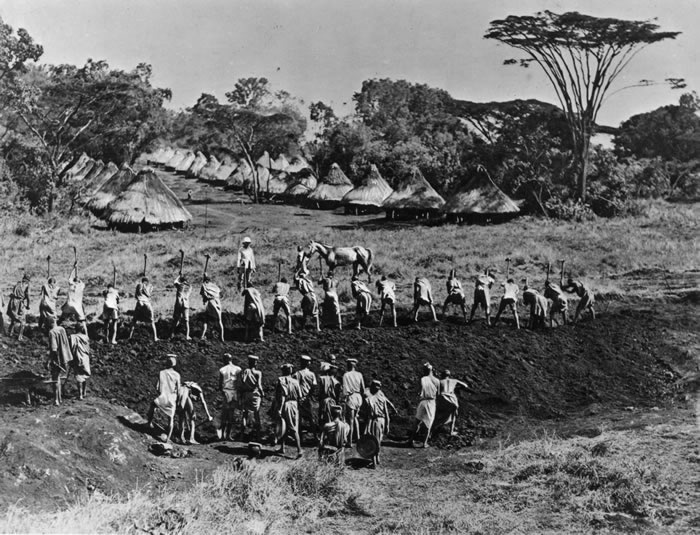
There is a third theory, from an article titled "Coffees from Africa and Arabia: Kenya Coffee" published in 2001 by Kenneth Davids, founder of Coffee Review, which holds that coffee was introduced to Kenya by the British around 1900.
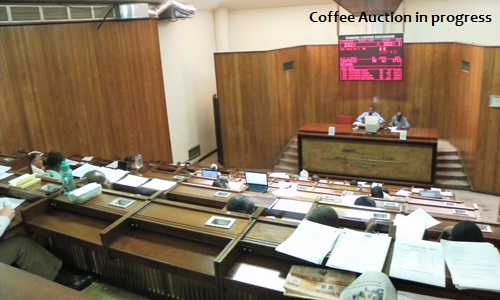
What is certain is that Kenya became a British colony in 1895, administered by Britain as part of the "East Africa Protectorate." During that period the British controlled the region's agriculture, coffee included. In 1933 the Kenya Coffee Board was established, and in 1934 the auction system was created — it is still in use today. Only in the 1960s did Kenyans gain the right to grow and process their own coffee.
By the late 1980s Kenyan coffee had reached its peak, with annual output of up to 130,000 tons. In recent years, however, the industry has shown signs of decline, with annual output down to only about 40,000 tons. The good news is that Kenyan authorities have drawn up a coffee revitalization plan to rescue the sector.
Growing Regions
According to James Hoffmann's "The World Atlas of Coffee," which FrontStreet Coffee references, most of Kenya's coffee — and its highest-quality coffee — comes from the central growing regions.
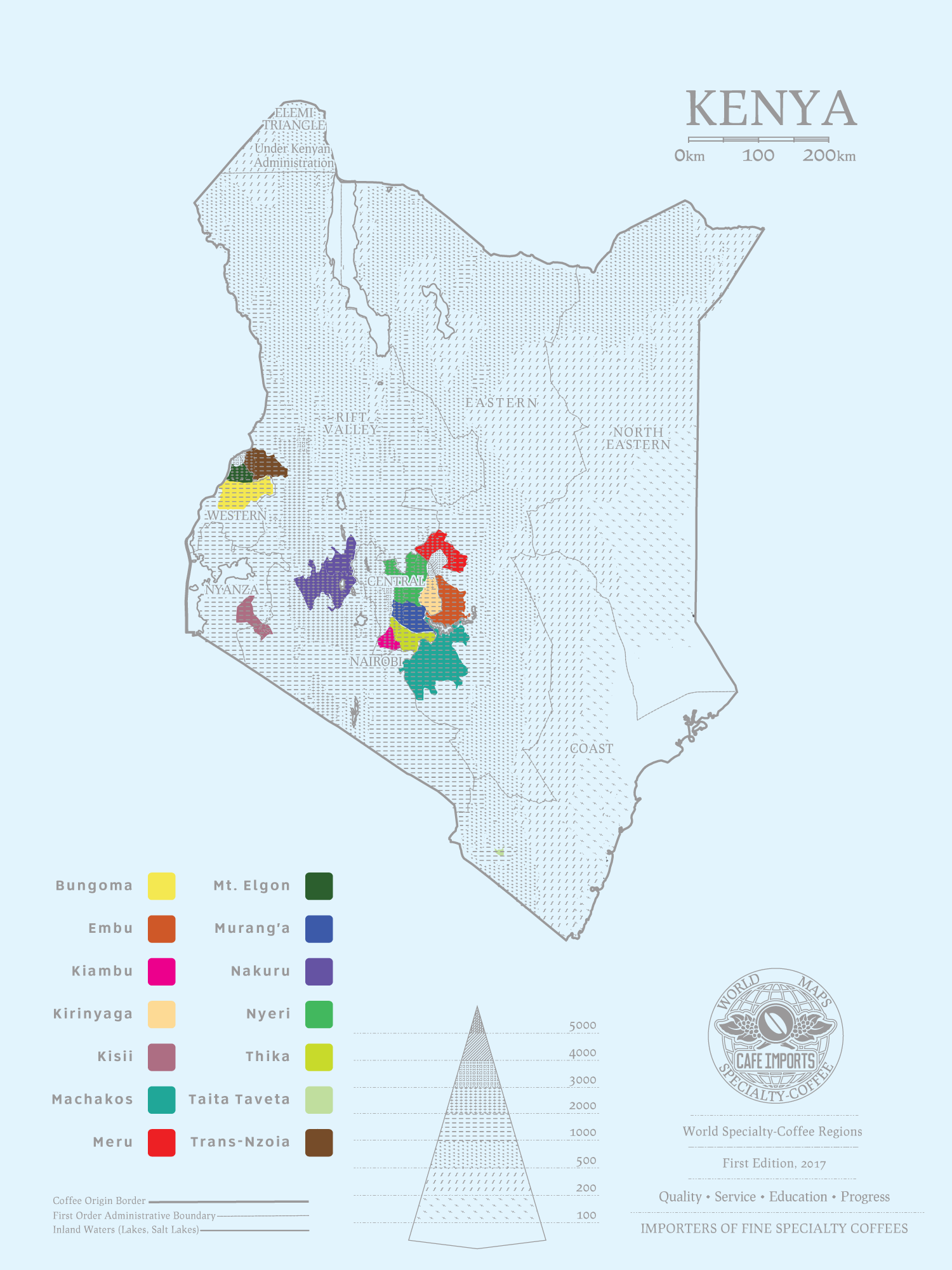
Of Kenya's 14 coffee growing regions, Kiambu and Muranga produce coffee with bright acidity and a full body. Nyeri is known for bright blackberry notes and a heavy, oily texture, with citrus and even floral aromas. Kirinyaga shows bright fruit acidity with moderate oiliness and delicate sweetness. Embu has appropriate acidity with balanced, clear flavors and a surprising aftertaste. Machakos offers refreshing fruit acidity, delicate flavors, a moderate texture, and a fresh, delicate aftertaste. Kisii and Elgon have solid sweetness and gentle flavors.

Grading System
Order Kenyan coffee in a café and you will quickly notice the letters "AA" in the grade column. Baristas at FrontStreet Coffee are frequently asked by newcomers whether Kenya AA is the highest grade, and how the grades are told apart.
Kenyan beans are roughly divided into eight grades by bean size: E, PB, AA, AB, C, TT, T, and MH/ML. One thing worth stressing: grade is determined before roasting, so there is no point trying to sieve roasted beans.
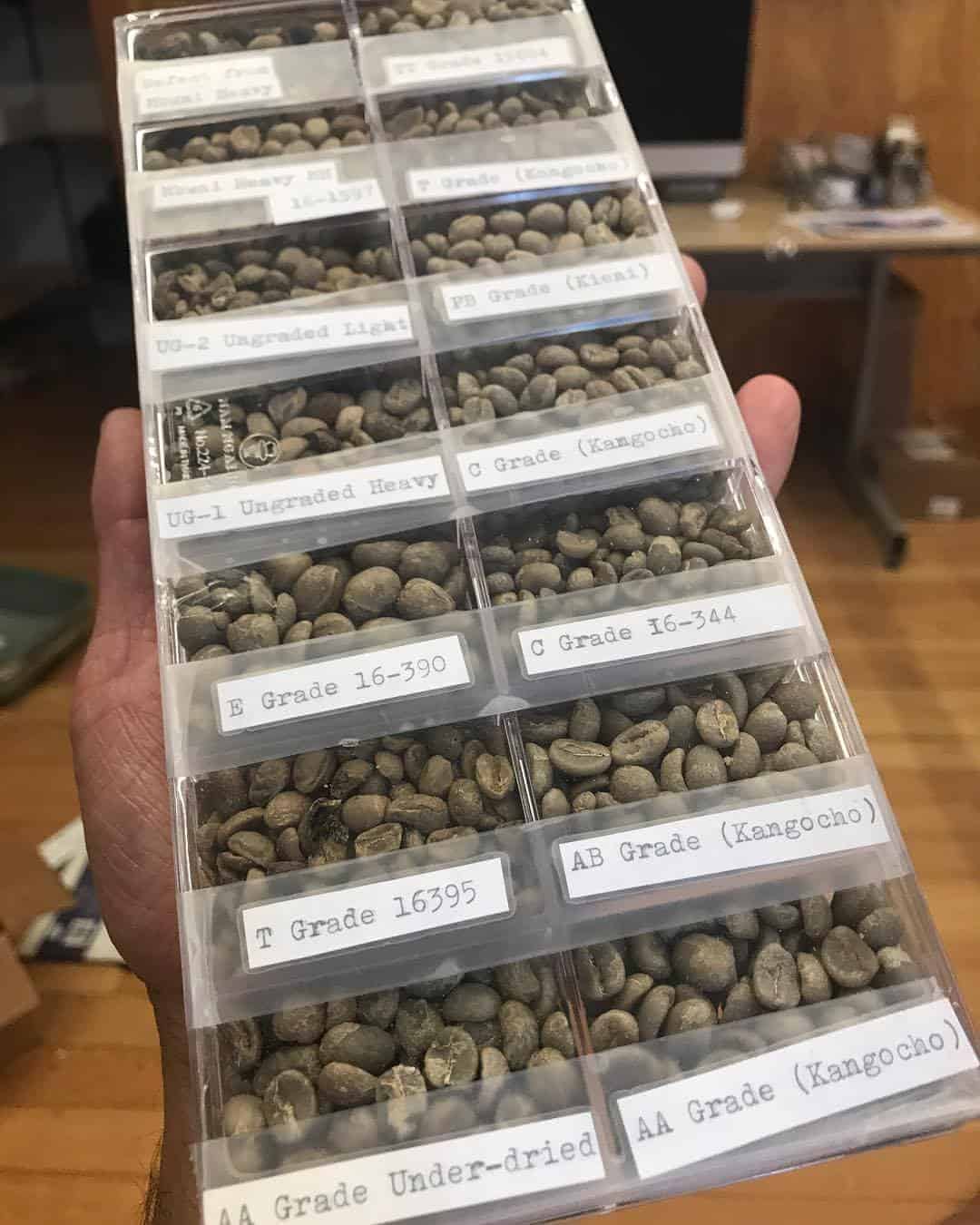
E: Known as Elephant beans — large, and relatively rare.
PB: Peaberry, the round beans: elliptical in shape, where a normal cherry holds two seeds and a peaberry only one.
AA: Arguably the most common grade, with larger beans sized at 17/18 screen.
AB: Beans sized at 16/17 screen.
C: Beans sized below 14 screen.
TT: Large screen size but low density — quality sufficient to be classed as specialty coffee.
T: Below 14 screen; small beans whose density and quality fall short of specialty classification.
MH/ML: Low-quality natural-process beans, mostly overripe fruit dried on the tree.
Why Kenyan Coffee Is So Acidic
When someone asks a FrontStreet Coffee barista for "the most acidic bean," the first recommendation from the menu is Kenya Assalia. The bright, clean acidity of Kenyan coffee is regarded as its defining taste.

FrontStreet Coffee: Kenya · Assalia Coffee Beans
Region: Thika, Kenya
Altitude: 1550m-1750m
Processing: K72 Washed
Varieties: SL28, SL34
To understand where that acidity comes from, you have to look at Kenya's growing environment, its varieties, and its processing.
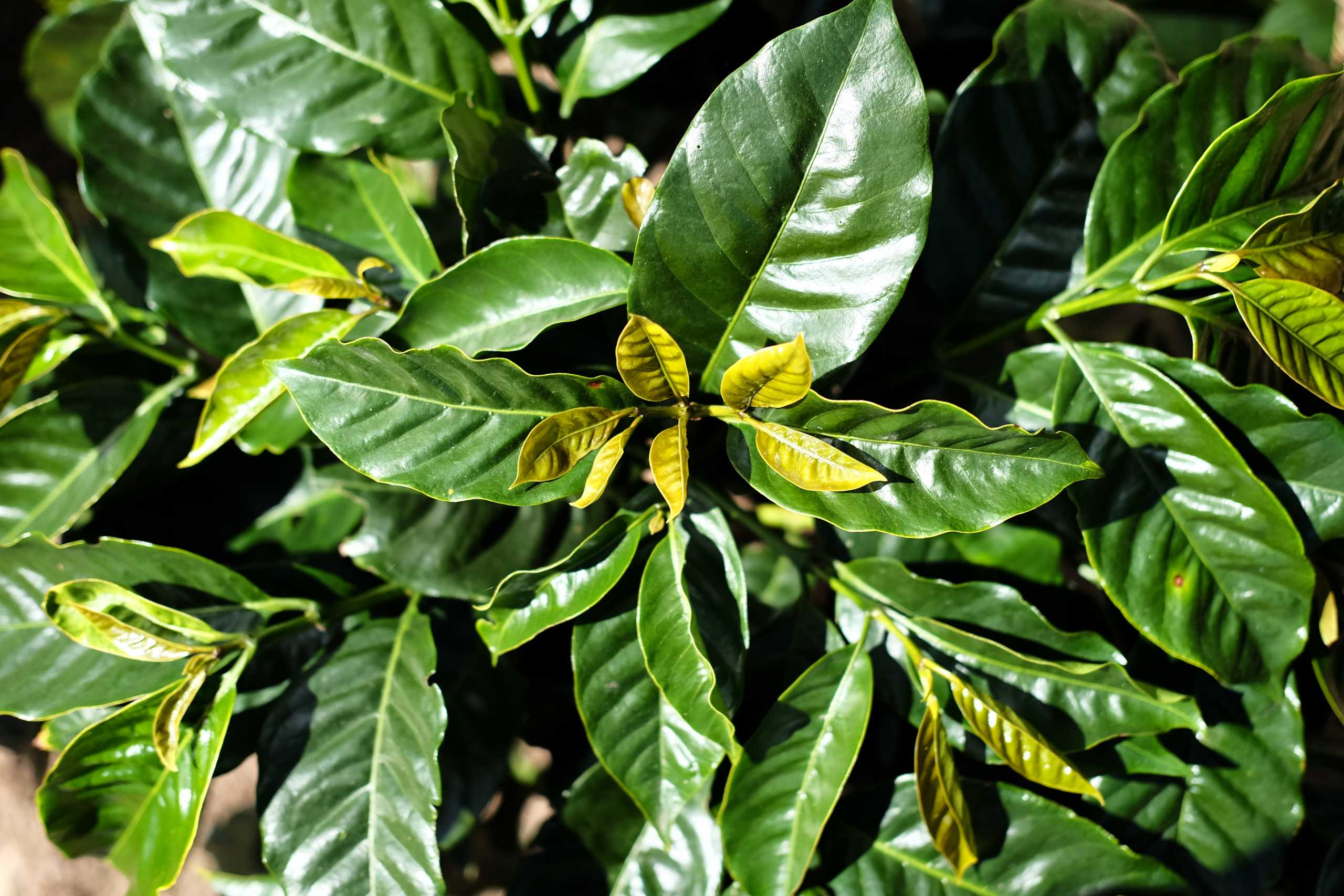
The red volcanic soil where Kenyan coffee grows holds large amounts of phosphate. Beyond that, Kenya's two common varieties, SL28 and SL34, are Bourbon variants, and cupping across many Kenyan beans shows FrontStreet Coffee that the berry acidity in these two is particularly prominent.
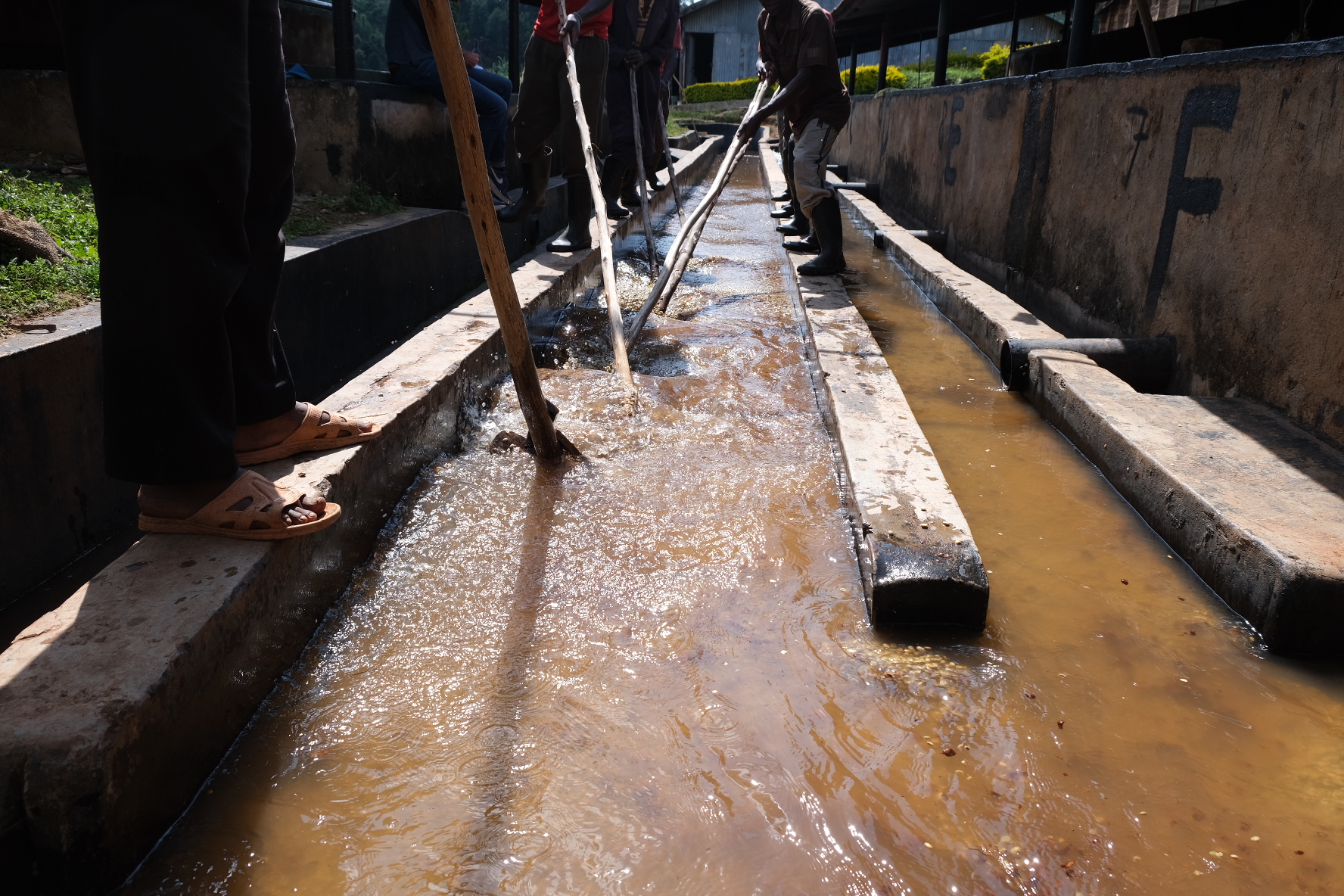
The exceptionally clean, bright profile of Kenyan coffee comes down to the country's unique post-harvest method: the Kenya 72-hour washed process, or K72.
After the cherries are depulped, the parchment beans with their mucilage go into fermentation tanks for dry fermentation with no water added. Every 6-8 hours water is run in to wash the parchment and then drained, and the dry fermentation repeats. This stage takes 24 hours.

In the second stage, the tank is not filled to capacity and fermentation runs for 12-24 hours; the beans are then moved by hand into washing channels, where most of the mucilage is removed by stirring.
The third stage repeats the fermentation, with the tank filled more fully with water and a secondary fermentation in clean water. That secondary soak lasts 12-24 hours, letting the small amounts of residual sugar and mucilage on the parchment continue to ferment until they are completely gone. Finally the beans go to drying beds for sun drying.
In FrontStreet Coffee's view, the Kenya 72-hour washed method produces a cup that is cleaner and brighter yet fuller in flavor at the same time.
FrontStreet Coffee's brewing parameters for Kenya Assalia are as follows.
Dripper: Hario V60
Water temperature: 90°C-93°C
Dose: 15g
Ratio: 1:15
Grind size: EK43s #10 (80% pass-through on a China standard #20 sieve)
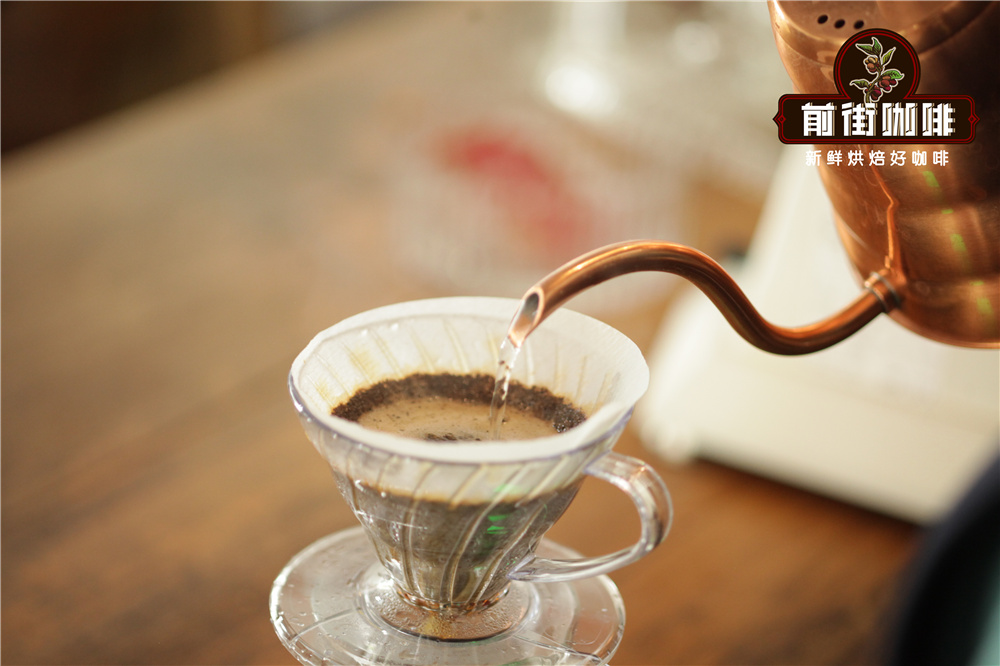
The technique is three-stage pouring: bloom with 30g of water for 30 seconds, then a circular pour to 125g, wait for the level to drop until the coffee bed is about to show, then pour on to 225g and stop. When all the liquid has drained into the server, lift off the dripper. Total extraction time is 2 minutes.
For single-origin coffee, pour-over is not the only route. SOE — single-origin espresso — has grown steadily in coffee shops in recent years and has become a home extraction option for many. Customers have asked FrontStreet Coffee whether a fruit-forward Kenyan bean like this can be made into an SOE Americano or SOE latte. The answer is certainly yes.

In FrontStreet Coffee's view, a good SOE needs good beans first, then a roast level suited to an espresso machine, and finally ideal extraction and presentation. A "suitable roast" for SOE must do three things: preserve the region's flavor, produce an espresso with good balance, and — crucially — offer the maker greater extraction stability. Fail on that third point and the coffee either tastes poor or lacks SOE character, or it is simply too hard to extract, so the whole bag is gone before a satisfactory shot appears.
To demonstrate, FrontStreet Coffee uses the equipment in its store and the Kenya · Assalia beans introduced above.

The machine at FrontStreet Coffee is the commercial single-group "Lelit Bianca," which allows extraction to be adjusted by changing pressure, up to a maximum of 11 bar. Home machines need only reach 9 bar to satisfy extraction and milk-frothing functions, paired with an espresso grinder.
FrontStreet Coffee uses a double basket at about 18-20g, and doses 20g for its drinks. The ratio of grounds to liquid is typically between 1:1.5-1:2.5. FrontStreet Coffee extracts at 1:2, meaning 20g of grounds yields 40g of coffee. Time relates to the flow rate of the grounds: a single extraction is generally controlled within 20-35 seconds, because under 20 seconds the coffee usually tastes thin, while past 35 seconds it tends to over-extract and turn sour and bitter. Most of FrontStreet Coffee's espresso extracts in the 28-30 second range.

FrontStreet Coffee wipes the portafilter dry, starts the grinder, and grinds a double dose, setting it on an electronic scale and adjusting to exactly 20g. A distribution tool then levels the grounds, and the puck is tamped firmly for more stable extraction. The extraction switch is turned on to release water, moistening the group head and washing away any residual grounds, and the portafilter is attached gently to begin extraction. When the scale reads 40g of liquid — about 30 seconds — the switch is turned off. Pour into an espresso cup and it is ready.

The Kenya · Assalia SOE can be drunk straight, but the taste is intense — pair it with a glass of water to cleanse the palate. When tasting, look for the light-colored crema and the berry, tomato, and cookie aromas in the liquid beneath. If the strong bitterness of espresso is too much, FrontStreet Coffee suggests adding ice water or warm water at a 1:4 ratio to taste, for a refreshing, mellow Kenya SOE Americano, or adding frothed fresh milk at a 1:6 ratio to soften the texture into a fine Kenya SOE latte.
FrontStreet Coffee Recommendation
Ethiopia is where African coffee — and all coffee — begins, and it remains the most natural starting point for the bright, clean acidity this article describes. Three FrontStreet selections worth knowing.
FrontStreet Washed Yirgacheffe. The classic introduction to Ethiopian coffee, known for white jasmine, bright citrus and lemon acidity, and a tea-like body. With its accessible price, it has become the first specialty bean for a great many drinkers.
FrontStreet Gedeb Cooperative. Yirgacheffe is not one place but many small districts and villages, some of them home to experienced cooperatives. Gedeb is the best known — a station at the southeastern edge of Yirgacheffe that began as part of the Worka cooperative under the YCFCU umbrella before being singled out as a single origin as buyers pushed for traceability. It follows the most traditional washed processing, and the result has none of the old bitterness: clean, bright citrus and lemon acidity with jasmine fragrance.
FrontStreet Natural Red Cherry. Also from Yirgacheffe, and fully ripe cherry, sun-dried. Only whole, healthy, fully ripe fruit is picked; it is sorted again at the mill, then spread on raised beds to dry, turned every 2-3 hours during the first days so uneven heat does not over-ferment it. After three to five weeks of sun drying, the dried fruit is stripped off mechanically and the beans go to storage. Because they dry with the fruit still on, the cup keeps the classic Yirgacheffe profile while gaining sun-dried tropical fruit: citrus acidity, berry juiciness, honey sweetness, and a creamy smoothness.
Important Notice :
FrontStreet Coffee is a long-established specialty coffee roaster in Guangzhou China, selling freshly roasted beans from its own farm in Yunnan as well as dozens of carefully selected single-origin beans from around the world for both pour-over and espresso. The products deliver consistently excellent quality and great value, with shipping within 24 hours. Guangzhou's FrontStreet Coffee shop is recommended by many coffee lovers, and the beans are now available online at the Tmall 。
FrontStreet Coffee has moved to a new address:
FrontStreet Coffee Address: 315,Donghua East Road,GuangZhou
Tel:020 38364473
 Scan and follow the En Gafei WeChat official account. Please indicate that the reprint comes from "En Gafei".