Price Differences Between Washed and Natural Yirgacheffe - Brewing Methods for Best Flavor
FrontStreet Coffee - Yirgacheffe Grading and Brewing Introduction
When Ethiopian coffee beans come up, most people picture a bright, refreshing acidity. And it's true: their vivid fruit acidity and gentle florals have won over countless enthusiasts, making them a darling of the third-wave coffee movement. Yirgacheffe is the classic example. Its beans are rather distinctive — honestly a bit plain-looking, small and rough, haha! — neat, compact, and short-round in shape. Yirgacheffe is processed in two common ways, washed and natural, which is why many cafés offer both a washed and a natural Yirgacheffe side by side. The core difference lies in the processing: washed Yirgacheffe shows more pronounced, bright fruit acidity — that crisp, "invigorating" sourness you can clearly pick out — while natural Yirgacheffe is much softer with boosted sweetness. Each has its own charms.
Ethiopian Coffee Bean Grading System
Ethiopia grades coffee by defect count. The evaluation method calls for randomly drawing a 300-gram sample and spreading it on black paper, which best avoids glare. Professional graders then screen the sample and score the defective beans according to type: 1 black bean counts as 1 point, 1 small stone counts as 1 point, 1 large stone counts as 5 points, 5 broken beans count as 1 point, 5 insect-damaged beans count as 1 point, 2 sour beans count as 1 point, 1 large piece of dried pulp counts as 1 point, 2 medium pieces count as 1 point, 3 small pieces count as 1 point, 5 unhulled beans count as 1 point, 3 shell beans count as 1 point, and so on.
Ethiopian coffee is sorted into 5 grades, written as "Grade" — hence designations like G1 and G2. Specifically, G1 and G2 apply to washed beans: G1 allows 0-3 defective beans per 300 grams of green coffee, while G2 allows 4-12. How much do defects actually affect flavor? That's a hard question to answer, since defective beans usually stem from insect damage, mold, or immaturity. Their presence certainly raises the odds of off-flavors in the cup, but it doesn't mean a G2 washed lot is poor or undrinkable. In everyday drinking, the gap is roughly like the difference between pre-rain Longjing tea and ordinary Longjing tea.
Natural processed beans are graded G3, G4, and G5. In practice, though, some excellent natural Yirgacheffes meet the standards of G1 or G2 washed beans. They still carry a few defects, but compared with natural Harar or Sidamo lots, they are already quite precious. Honestly, a good natural coffee of any origin is rare: natural processing involves too many uncontrollable variables and depends heavily on local climate, and the slightest carelessness leads to rot and mold — which naturally pushes up the defect count. Ethiopian beans graded G4 and G5 are typically not released as single origins at all; they're sold as "commercial bulk beans," often blending hundreds of varieties from various growing regions, so the mixed bean appearance is obvious and even roasting becomes a challenge.
Recommended Brewing Method
Method: Pour-over
Dripper: V60
Water Temperature: 92°C
Dose: 15 grams
Ratio: 1:15
Grind Size: Medium-fine grind (BG 6S: 58% pass-through rate on China standard #20 sieve)
Brewing Technique: Three-Pour Extraction
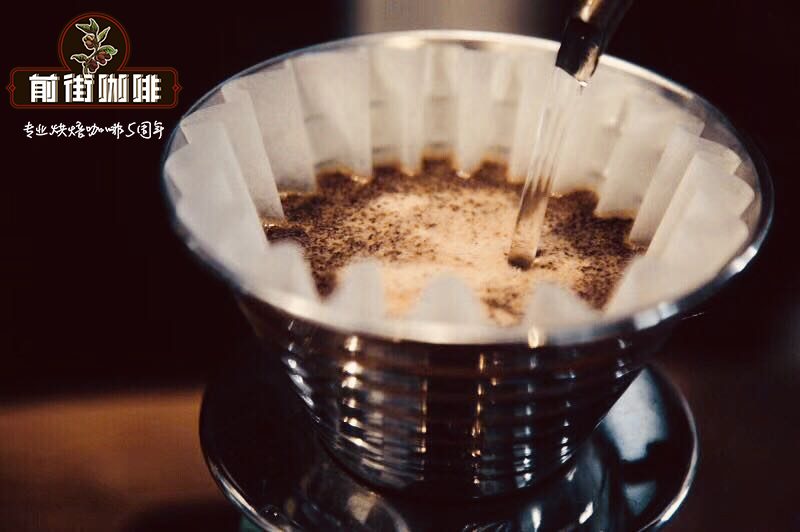
For the first pour, use 30 grams of water and bloom for 30 seconds. For the second pour, use a small stream in slow circles until the scale reaches 120 grams, then stop. When the water level drops to just above the coffee bed, make the third pour up to 225 grams, then stop again. When the level drops to just above the bed, lift the dripper. (Timing starts from the bloom.) Total extraction time is 2'00".
Knowledge Point
Ethiopia holds an ancestral position in the coffee world — it is the birthplace of Arabica coffee and currently Africa's largest Arabica producer. Its Kaffa Forest is famously known as the "coffee gene bank."
In Brief
FrontStreet Coffee is a coffee research house dedicated to sharing coffee knowledge with everyone, openly and unreservedly, to help more people fall in love with coffee.
FrontStreet Coffee Recommendation
FrontStreet Coffee's washed Yirgacheffe everyday lot is the perfect place to start with washed processing: known for white jasmine florals, bright citrus and lemon acidity, and a tea-like finish, at an approachable price that has made it many drinkers' first specialty coffee. Yirgacheffe itself is a small town in Sidamo province at roughly 1,700-2,100 meters, with the coffee planted above 1,800 meters — among the highest coffee regions on Earth — and its signature white floral notes and lemon-citrus acidity became so famous that in 2010 the Ethiopian Commodity Exchange formally separated it from Sidamo.
If you prefer the natural side, the FrontStreet Red Cherry lot uses fully ripe, sun-dried cherries turned every 2-3 hours in the first days and dried for three to five weeks. Because the fruit dries on the bean, it keeps classic Yirgacheffe character while adding tropical fruit: citrus-like acidity, berry juiciness, honeyed sweetness, and a cream-smooth body. For either style, FrontStreet brews 15g at a 1:15 ratio in a V60 with 90-91°C water, a grind the fineness of granulated sugar (80% pass on a #20 sieve), in three pours — 30g bloom for 30 seconds, to 125g by about 1 minute, then to 225g by about 1:35, with drip-out finishing at 2:00-2:10.
Important Notice :
FrontStreet Coffee is a long-established specialty coffee roaster in Guangzhou China, selling freshly roasted beans from its own farm in Yunnan as well as dozens of carefully selected single-origin beans from around the world for both pour-over and espresso. The products deliver consistently excellent quality and great value, with shipping within 24 hours. Guangzhou's FrontStreet Coffee shop is recommended by many coffee lovers, and the beans are now available online at the Tmall 。
FrontStreet Coffee has moved to a new address:
FrontStreet Coffee Address: 315,Donghua East Road,GuangZhou
Tel:020 38364473
 Scan and follow the En Gafei WeChat official account. Please indicate that the reprint comes from "En Gafei".