Does Pour-Over Coffee Have Rich Floral and Fruity Aromas? Sidamo Guji Brewing Recommendations
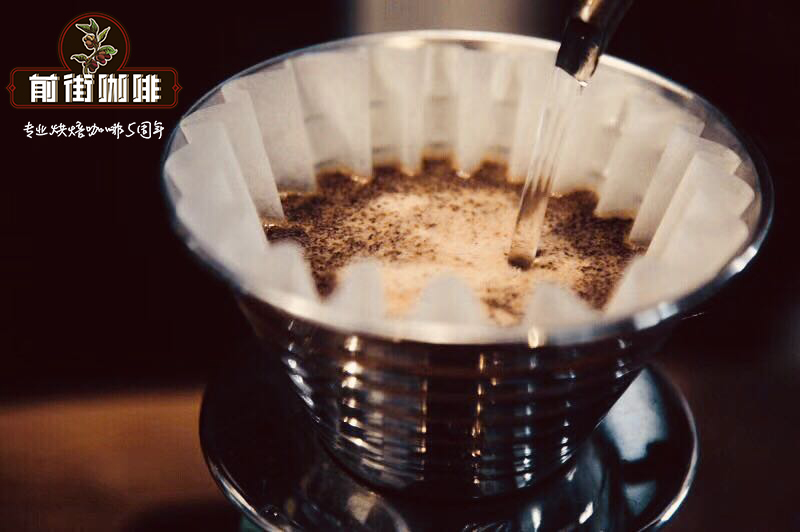
FrontStreet Coffee - Sidamo Flower Champion Brewing Guide
Hambella sits in Guji, Ethiopia's largest producing region, and falls administratively under the Oromia Regional State. To the west, Hambella faces the Yirgacheffe Kochore region across the mountains, with the two producing areas separated by a highland 3,200 meters high and about 30 kilometers wide. To the southeast, east, and north it borders Guji's Shakiso, Uraga, and Kercha sub-regions respectively, which makes it the highest-altitude coffee sub-region.
Today there are roughly 20 processing plants of various scales in the Hambella area. DW Company runs four estate processing plants in Hambella's core Dimtu region: Buku Abel, Buku Saysay, Haro Soresa, and Tirtiro Goye.
During the annual harvest season from December to January, the first two days of natural processing call for maintaining the red cherries' moisture content to ensure complete fructose fermentation. At the same time, the high-altitude geography lets the processing plant's nighttime temperature drop to around 12°C, which prevents the over-fermentation odors that would develop in warmer conditions. At midday, when temperatures climb, shading is applied promptly to keep the sun from damaging the red cherries. At night, thick plastic sheets are used to wrap the beds against sudden rainfall.
The cherries ferment and dehydrate at relatively low temperatures. After 18 days of natural processing, once the green beans' moisture content falls to around 13%, the natural process is stopped and the beans are packed into jute bags. Under natural conditions of 12-22°C and 45-55% humidity, they rest in warehouses for about 50 days of further dehydration. When the green-bean moisture content reaches around 11%, they are moved to processing plants for hulling and screening before sale.
Coffee Information
Coffee Origin: Africa, Ethiopia
Coffee Estate: Guji, Hambella Wamena region, Dimtu city, Buku Abel estate
Production Altitude: 2250-2350 m
Green Bean Grade: G1
Processing Method: Natural (African drying beds)
Cupping Notes: Rose floral aroma, strawberry jam, peach pulp, and a black tea finish. Rose, strawberry, passion fruit.
Brewing Recommendations
Brewing Parameters: 91°C / grind size BG-6S / 1:15 / V60 dripper / segmented extraction
Technique: After blooming 15 g of coffee grounds with 30 g of water for 30 seconds, pour water to 125 g. Once the coffee bed shows, continue pouring to 225 g. Remove the dripper when the coffee bed is visible. Total extraction time: 2 minutes.
Knowledge Point
Arabica coffee is generally believed to originate from the Ethiopian highlands and is now widely distributed across the tropics. Through repeated mutation and breeding, it has given rise to a great many varieties.
FrontStreet Coffee Recommendation
This Hambella lot is a textbook natural Ethiopian coffee - floral, jammy, and deeply fruity - and if that profile is what you are after, FrontStreet's Yirgacheffe range is the natural companion. FrontStreet's washed Yirgacheffe everyday lot is the classic starting point, known for white jasmine, bright citrus and lemon acidity, and a tea-like body, and its friendly price makes it a favorite first bag for newcomers. Yirgacheffe itself is a small town in southern Ethiopia within the Sidamo zone, at roughly 1,700-2,100 meters, with coffee trees planted above 1,800 meters.
Because Yirgacheffe is really a patchwork of smaller districts and villages, cooperative lots can lift the flavor another level. FrontStreet's washed Gudingding Cooperative coffee sits in the Worka area at the southeastern edge of Yirgacheffe and was once part of the Worka cooperative under the YCFCU alliance, before being singled out as a single-origin lot; it stays true to traditional washed processing, and the cup is clean and bright, with citrus and lemon acidity and jasmine fragrance and none of the bitterness of more conventional coffees.
For another natural expression, FrontStreet's Natural Red Cherry follows a fully ripe-cherry natural process: only fully ripe, defect-free cherries are chosen, given a first sort at the mill, then dried on raised beds - turned every 2-3 hours over the first days to prevent uneven heat and over-fermentation. After three to five weeks of sun-drying, the dried fruit is machine-stripped and moved to storage. Because the cherries dry with the fruit attached, it keeps the classic Yirgacheffe character alongside tropical natural fruit, with citrus acidity, berry-juice body, honeyed sweetness, and a creamy smoothness.
For brewing Yirgacheffe, FrontStreet recommends a V60 with water at 90-91°C, 15 g of coffee, and a 1:15 ratio, ground to caster-sugar size (an EK43s setting of about 10, or roughly 80% passing a No. 20 sieve). Pour 30 g for a 30-second bloom, then add 95 g (about 125 g on the scale) over roughly one minute; once the water drops to about two-thirds down the bed, add the remaining 100 g (about 225 g total), finishing the pour at around 1:35 and completing the drawdown in 2:00-2:10. Remove the dripper and the brew is done.
Important Notice :
FrontStreet Coffee is a long-established specialty coffee roaster in Guangzhou China, selling freshly roasted beans from its own farm in Yunnan as well as dozens of carefully selected single-origin beans from around the world for both pour-over and espresso. The products deliver consistently excellent quality and great value, with shipping within 24 hours. Guangzhou's FrontStreet Coffee shop is recommended by many coffee lovers, and the beans are now available online at the Tmall 。
FrontStreet Coffee has moved to a new address:
FrontStreet Coffee Address: 315,Donghua East Road,GuangZhou
Tel:020 38364473
 Scan and follow the En Gafei WeChat official account. Please indicate that the reprint comes from "En Gafei".