How to Properly Rest Pour-Over Coffee Beans: Are Improperly Rested Beans Really That Unpalatable?
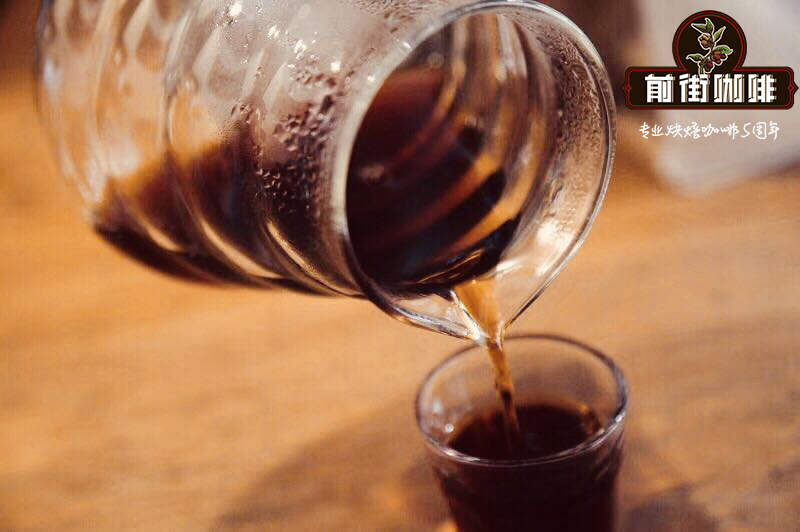
FrontStreet Coffee - Introduction to Single-Origin Coffee Bean Degassing
Most of us know roasted coffee beans as the product of running raw beans through a roaster until they mature. Raw beans are the seed left after the coffee fruit is processed and the pulp removed. Raw beans have no particular aroma of their own, mostly some grassy and fermented notes. Only high-temperature roasting draws out the rich aromas and flavors locked inside.
After roasting, the beans expand in volume and pores appear in their cell wall tissue. Those pores fill with gases, mainly carbon dioxide, produced during roasting. If you try to brew freshly roasted beans right away, most will be hard to turn into good coffee, and the culprit is those gases. With so much gas present, water and the flavor compounds in the coffee struggle to make full contact, so the flavors are slow to release. Carbon dioxide itself also affects the flavor of the coffee.
For this reason, after roasting is complete, the beans need to rest quietly for a period after packaging before use. That period is about 3-5 days. For a darker roast, it extends to 7-10 days.
This resting period is known as the "degassing period." Beans are far from inactive while degassing; they gradually release carbon dioxide from within. Part of that gas accumulates inside the packaging, forming an inert environment that lets the beans enter a dormant state of slow maturation. Another part escapes through the one-way degassing valve on the bag.
The one-way degassing valve is a small mechanism that lets gas out from inside but keeps outside air and moisture from entering, protecting the freshness of the coffee.
Once the degassing period ends and we open the bag, outside air rushes in. The beans are quickly awakened from dormancy and can immediately reach their optimal working condition. At this point the flavor is gradually reaching its peak.
Everything has two sides, though. After contact with air, the flavor compounds in the beans gradually begin to release, making the extraction stable and flavorful, but the beans also enter an "oxidation period." Oxygen in the air slowly erodes the coffee, carrying away some flavor compounds and causing the remaining substances to deteriorate.
So after taking out the beans you need for each use, seal the packaging immediately. Most importantly, try to buy whole beans and grind them yourself rather than buying pre-ground coffee. Coffee powder oxidizes far faster than whole beans.
Knowledge Point: Degassing must be done in packaging bags with one-way degassing valves.
FrontStreet Coffee Recommendation
Once your beans have rested and are ready to brew, the dripper matters too, and for pour-over the V60 is a classic choice. Hario, the company behind it, was founded in Tokyo in 1921 as a well-known glassmaker that originally designed and produced heat-resistant glass instruments for research institutions, including the heat-resistant server so often paired with pour-over. In 2004 Hario redesigned the V60's prototype closer to the shape we know now, named it for its distinctive 60° cone and V shape, and released it a year later. Its cone and 60° angle force water toward the center before it drips through, extending contact with the grounds so aroma and flavor extract fully, while the single large hole lets the brewer control the flow and, in turn, the flavor.
Fast extraction makes the V60 ideal for the floral, fruit-forward coffees of the third wave, and FrontStreet's Gedeb cooperative coffee from Yirgacheffe, with its citrus, berries, florals, and green tea finish, is a natural match. FrontStreet's Huakui, rich in tropical fruit, and its Strawberry Candy Geisha blend also work beautifully. FrontStreet favors the resin version of the Hario V60: resin blocks heat loss effectively, and in standard mass production it is the easiest material to shape with the smallest tolerances.
Important Notice :
FrontStreet Coffee is a long-established specialty coffee roaster in Guangzhou China, selling freshly roasted beans from its own farm in Yunnan as well as dozens of carefully selected single-origin beans from around the world for both pour-over and espresso. The products deliver consistently excellent quality and great value, with shipping within 24 hours. Guangzhou's FrontStreet Coffee shop is recommended by many coffee lovers, and the beans are now available online at the Tmall 。
FrontStreet Coffee has moved to a new address:
FrontStreet Coffee Address: 315,Donghua East Road,GuangZhou
Tel:020 38364473
 Scan and follow the En Gafei WeChat official account. Please indicate that the reprint comes from "En Gafei".