What is the Optimal Water Temperature for Coffee Extraction? The Impact of Water Temperature on Pour-Over Coffee is a Key Factor for Delicious Results
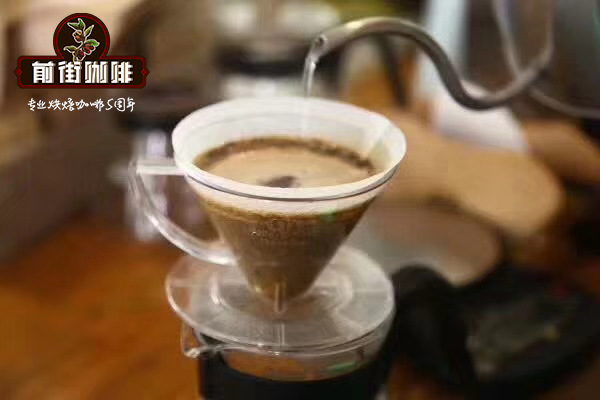
FrontStreet Coffee - Introduction to Pour-Over Coffee Water Temperature Requirements
Whether you are pulling a shot of espresso or brewing a pour-over, both methods come with their own ideal temperature ranges that are worth respecting. When it comes to pour-over coffee, though, there is one important factor that has to be considered ahead of water temperature: roasting. Once beans leave the roaster, we end up with what we call "light roast," "medium roast," and "medium-dark roast" coffee. These roast levels have a direct bearing on the water temperature you use during extraction. Whatever the roast level or the temperature, the goal never changes - to bring out the best characteristics of a given coffee.
Let us walk through an example to show just how much water temperature matters.
We chose Brazil Santos medium roast beans, ground to a medium consistency (Fuji #4), and had the same person brew them at 88°C, 90°C, and 92°C. Here is what we found:
Extraction at 88°C: The cup felt noticeably watery - what we would call "weak" - and the flavor was not full enough; it came across as somewhat thin.
Extraction at 90°C: We tasted rich nutty notes, caramel sweetness, and an elegant balance. Both flavor expression and body were full and satisfying.
Extraction at 92°C: Concentration went up, but so did the "devil's tail" - a bitter, burnt edge that masked some of the other flavors.
A cup of pour-over coffee brews in roughly 2.5 to 3 minutes, which is exactly why a relatively high water temperature is used for extraction.
Practical Parameters for the Pour-Over Coffee Ratio
[Bold Flavor] 1:10 to 1:11 (grams of coffee to milliliters of brewed black coffee), which corresponds to 1:12.5 to 1:13.5 on the Golden Cup scale (bean weight to raw water volume)
[Medium Flavor] 1:12 to 1:13 (1:14.5 to 1:15.5 on the Golden Cup scale)
[Light Flavor] 1:14 to 1:16 (1:16.5 to 1:18.5 on the Golden Cup scale)
Even with precise measurements, a poorly judged ratio will keep you from brewing a delicious cup. As you learn, you will need to taste repeatedly and measure concentration to zero in on the ideal pour-over ratio - that is, the ratio of coffee dose to brewed black coffee volume, somewhere between 1:12 and 1:13. This is equivalent to the four major European and American Golden Cup systems, where the ratio of grams of beans to raw water is 1:14.5 to 1:15.5, making it easiest to land inside the "Golden Cup Square" - an extraction yield of 18% to 22% and a concentration of 1.15% to 1.35% within the golden range. Hit that sweet spot and you avoid both a muddy, over-concentrated cup and one that is thin and watery.
Knowledge Point
Pour-over coffee is wonderfully versatile - even dark-roasted espresso blends can be brewed this way. That said, if you really want to experience the charm of pour-over, we still recommend choosing specialty beans with a cupping score above 80 points.
In Brief
FrontStreet Coffee is a research hall for coffee, happy to share coffee knowledge with everyone. We share without reservation simply to help more friends fall in love with coffee, and every month we hold three low-discount coffee events, because FrontStreet Coffee wants more people to drink the best coffee at the lowest price - a principle we have upheld for 6 years!
FrontStreet Coffee Recommendation
The Brazil Santos used in the temperature test above is a classic illustration of what Brazilian beans do best: a gentle, well-rounded cup that responds beautifully to medium roasting. If you would like to explore that profile at home, FrontStreet's Brazil Cerrado Red Bourbon is an excellent place to start. Grown in the well-known Cerrado region and processed as a pulped natural, this medium-roast single origin delivers rich aromas of creamy peanut, toasted bread, caramel, and hazelnut. The body is round and smooth, with very little acidity and a faint bittersweet edge. It is forgiving in the pour-over setup described above, and just as comfortable in a moka pot, as an espresso SOE, in a siphon, or in a French press.
For a sweeter, fruitier expression of Brazil, look to FrontStreet's Queen Estate Yellow Bourbon, grown in Mogiana near South Minas. The fertile red volcanic soil there lets the cherries take up plenty of nutrients and develop a full aroma. This rare Yellow Bourbon - a natural mutation of Red Bourbon - offers a notably clean fruit character and a sugarcane-like sweetness you will not find in most other origins, alongside soft fruit and chocolate notes. It works well as pour-over, in a moka pot, or on a home espresso machine.
Important Notice :
FrontStreet Coffee is a long-established specialty coffee roaster in Guangzhou China, selling freshly roasted beans from its own farm in Yunnan as well as dozens of carefully selected single-origin beans from around the world for both pour-over and espresso. The products deliver consistently excellent quality and great value, with shipping within 24 hours. Guangzhou's FrontStreet Coffee shop is recommended by many coffee lovers, and the beans are now available online at the Tmall 。
FrontStreet Coffee has moved to a new address:
FrontStreet Coffee Address: 315,Donghua East Road,GuangZhou
Tel:020 38364473
 Scan and follow the En Gafei WeChat official account. Please indicate that the reprint comes from "En Gafei".