Introduction to Flavor Characteristics of Geji Habela Coffee from Ethiopia's Producing Region

For more specialty coffee knowledge, please follow the WeChat official account: FrontStreet Coffee
Because of issues with translation, ever since Floral Queen coffee beans rose to fame many coffee enthusiasts have confused Floral Queen coffee with Geisha coffee.
Simply put, "Floral Queen" (Flower Champion) is merely the name given in China to sun-dried native varieties from the Buku Albe processing plant in the Hambella region of Sidamo, Ethiopia. This coffee bean cannot be found internationally, because when it is exported the sacks are marked with "Hambella" as the region of origin.

The reason so many people confuse Floral Queen with Geisha is that Geisha coffee has another Chinese translation. This translation arose because the original name "Geisha" sounds the same as a Japanese word, so it was rendered that way in the Taiwan region of China. Meanwhile, the name "Guixia" was coined by Mr. Yuan, the former head of Camerun Green Bean Company's mainland China operations.
Geisha represents an independent variety within Arabica coffee; it is not tied to a specific region or origin but is the name of a coffee plant variety. Floral Queen coffee, on the other hand, corresponds to Ethiopian native varieties, which are naturally mixed populations.

What is the Geisha Variety?
The origin of Geisha also lies in Ethiopia. In 1929, Britain sent a colonel to collect coffee samples from an area called Gesha on old maps in the Bendi Maki region of Ethiopia. He also purchased other coffee varieties at local markets. At the time, however, there was no concept of distinguishing coffee varieties, so in 1931 the colonel mixed all the collected and purchased samples and sent them to British plantations in Kenya.
In 1935, after completing his mission, the colonel mistakenly wrote "Geisha" in a letter to the British minister—a spelling that has been widely cited ever since. What we now know as the Geisha variety (grown in Latin America), with its captivating floral and fruit aromas, is one of the varieties continuously cultivated and domesticated over generations, cataloged as Geisha T2722.
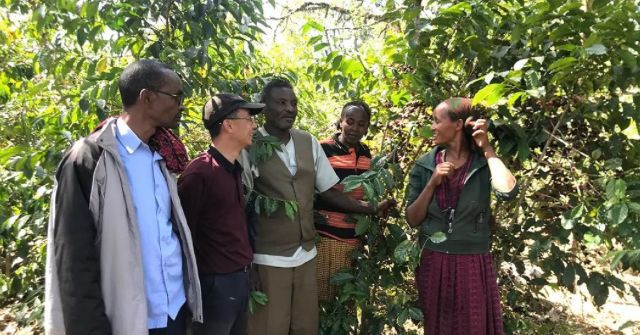
In Ethiopia, the area where the original Gesha samples were collected still holds many native coffee varieties that share a certain (if very slight) blood relationship with Geisha T2722, though their flavors are completely different. Native Geisha shows flavors of berries, nuts, and spices.
To distinguish domesticated from native Geisha varieties, the Ethiopian region officially uses the term "Gesha" for the local native type.
What are Ethiopian Heirloom Varieties?
While native Geisha varieties (Gesha) must be specified as coming from Bendi Maki, Ethiopian Heirloom refers to coffee from the entire Ethiopia region that is undifferentiated, mixed-planted, and mixed-harvested.
Most Ethiopian varieties are named this way mainly because Ethiopia has too many of them—it is like a natural gene bank for Arabica. On one hand there are so many varieties that identification and classification are difficult; on the other, the Ethiopian government, out of conservation concerns, is unwilling to disclose information about them. So they are collectively called Ethiopian Heirloom, implying "family treasure."

Because so many varieties are mixed-planted and mixed-harvested, FrontStreet Coffee has noticed that Ethiopian Heirloom beans vary in size. Most beans of this type show floral and fruity aromas together with citrus acidity.
Why is Floral Queen Coffee Called "Floral Queen"?
This coffee bean was originally the 2017 TOH (Taste of Harvest) natural process champion, first named Ethiopian Hambella Natural Process Coffee Bean. In the same year, after the champion batch of green beans was introduced by a Beijing green bean trader, it was given the name "Floral Queen" (Flower Champion), implying "the leader of all flowers" and enchanting beauty.
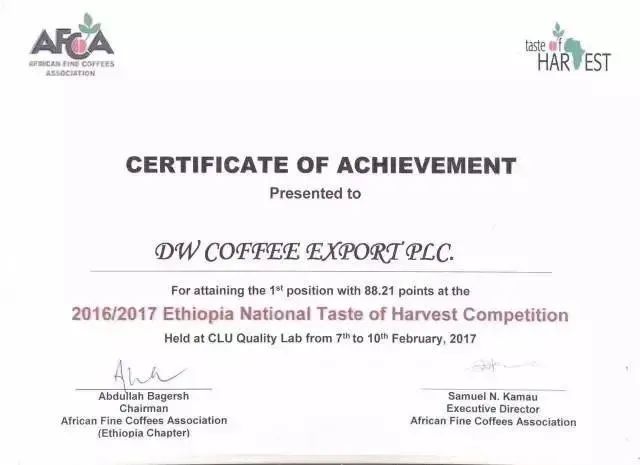
Coffee enthusiasts truly came to know Floral Queen beans in 2017, when Li Jianfei, runner-up in the China region of the World Brewers Cup, used this batch to defeat the Geisha coffees of many other competitors. In an era when Geisha dominated the major competitions, a natural process coffee from Ethiopia managed to beat so many Geisha coffees. Naturally, everyone began to look at this unassuming bean with new respect, and from that moment the term "Floral Queen" entered common use.

Can All Coffee Beans from Sidamo Hambella Region Be Called "Floral Queen"?
After winning the championship in 2017, DW company increased the number of processing plants in the Dimtu core area of Hambella, including "Buku Abel," "Buku Saysay," "Haro Soresa," and "Tirtiro Goye," with annual coffee production of about 1,100 tons. As for growing region and processing plants, among all these estates and stations only the processing area of the "Buku Abel" plant covers the small origin that originally produced the natural process "Floral Queen" bean. Therefore FrontStreet Coffee believes that only natural process Ethiopian Heirloom varieties from the Hambella Buku plant can be called Floral Queen coffee.
Why Do Floral Queen Coffee Beans Have an X.0 Number?
Coffee is an agricultural product, so its flavor characteristics change each year with variations in weather, soil, and rainfall. To distinguish the 2017 champion Floral Queen, each subsequent year's batch is given an X.0 number. For example, 2018's is called Floral Queen 2.0 coffee beans, and 2022's is called Floral Queen 6.0 coffee beans.
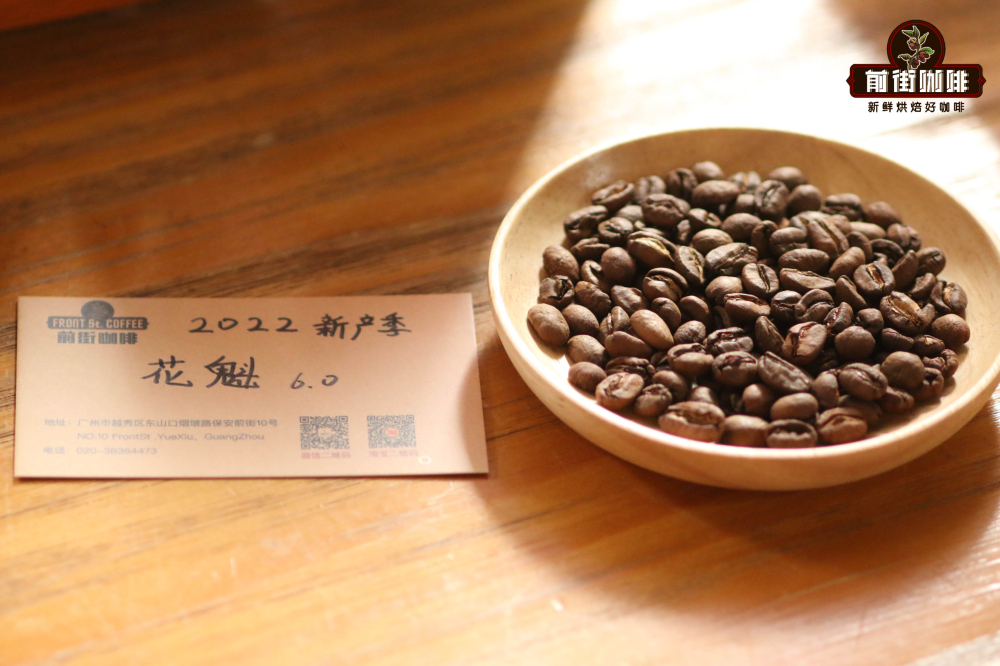
Are Floral Queen Small Beans Part of the Floral Queen Coffee Beans?
Yes. Through cupping, FrontStreet Coffee found that the flavor and aroma of small-bean Floral Queen are very similar to the 2017 champion Floral Queen. Initially, FrontStreet Coffee tasted flavors similar to the 2017 Floral Queen in the 2018 and 2019 batches, but the body and aftertaste were not as rich as the 2017 Floral Queen.
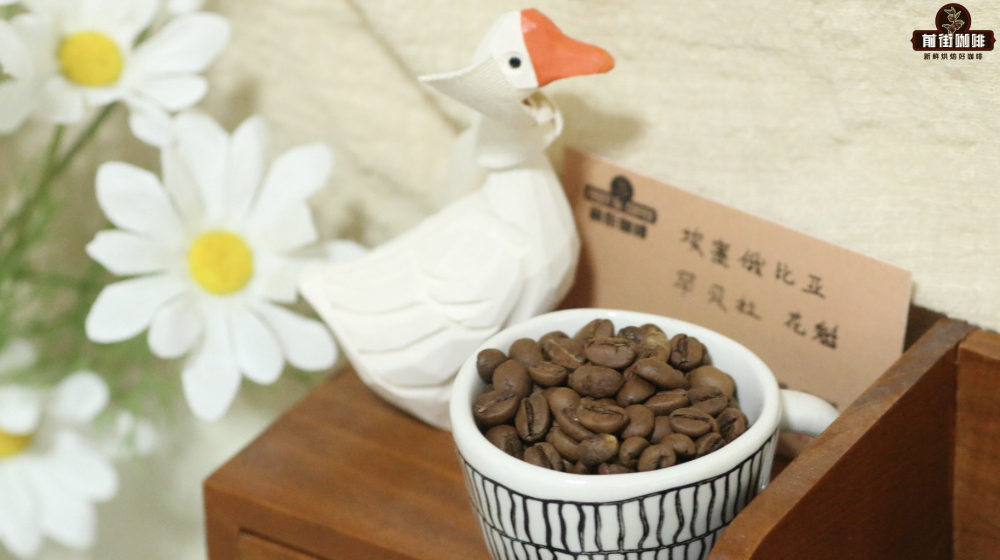
By comparing different batches, we realized that the main source of the 2017 Floral Queen's aroma was some particularly small-bean varieties among the Floral Queen coffee beans. Similar small beans also appeared in the 2018 and 2019 batches—sometimes several bags of similar small beans would show up among ten bags. In 2019 we confirmed this and informed the green bean supplier. Starting from 2020, Floral Queen was split into two types, 4.0 and Small Bean Floral Queen. So Small Bean Floral Queen does not belong to the [X.0] series, but it is still Floral Queen coffee.
Today you can buy authentic Floral Queen coffee beans at FrontStreet Coffee physical stores and its Taobao store. To help everyone better experience the rich floral and fruity aromas of Floral Queen and the appeal of freshly roasted beans, orders placed online are guaranteed to be shipped within 5 days of roasting.
How to Roast Floral Queen Coffee Beans?
FrontStreet Coffee has noticed that Floral Queen green beans carry a fermented wine aroma of coffee flowers, completely unlike the grassy aroma of typical green beans. Floral Queen green beans also vary in size, with many pointed ends (Ethiopian Heirloom), good moisture content around 11%, but they are not the very hard SHB beans. Because the beans are dense and hard, the dehydration time is extended in the early stage, with the temperature increase placed before first crack to minimize the loss of small-molecule aromatic compounds such as floral aromas.
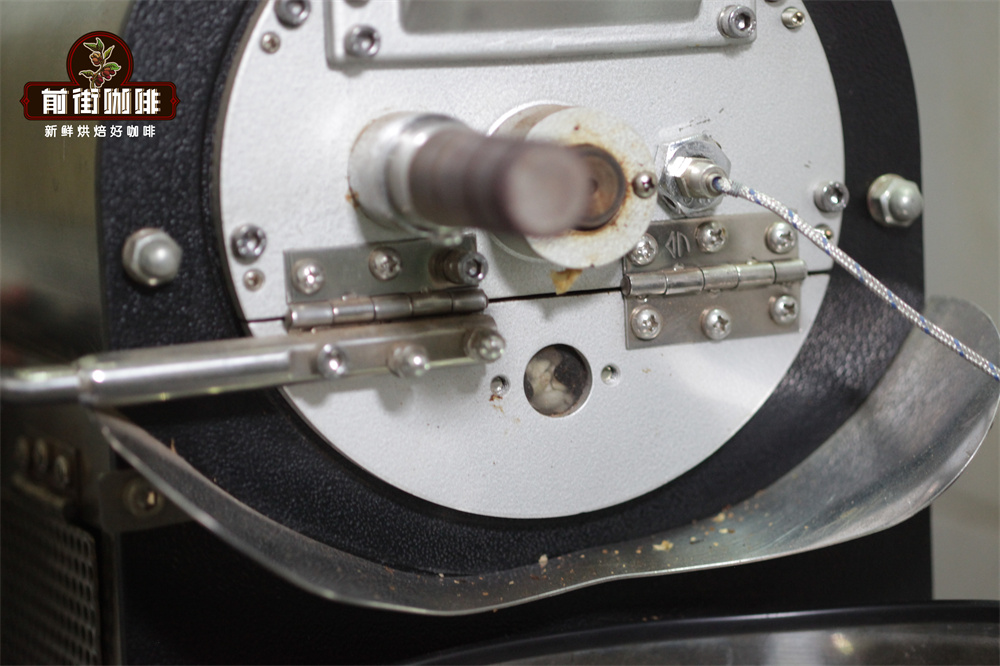
Therefore the following roasting approach is used: Yangjia 800N, roasting amount 550g, bean-in temperature 190°C, yellowing point 151°C at 5 minutes 51 seconds, out at 193°C, first crack development 1 minute 30 seconds. The first crack point is at 9'50, and the development time after first crack is best kept under 1 minute 30 seconds but not less than 1 minute. (Opening the air damper and reducing heat is recommended to control the rate.) When smelling with the sampling spoon, you should detect a strawberry jam aroma around 193°C, at which point you can discharge the beans. It is best to keep the overall time within 11 minutes.
How to Brew Delicious Floral Queen Coffee?
FrontStreet Coffee stores use pour-over for extraction. Using a V60 dripper, the coffee is ground to a medium-fine consistency (fine-sugar size, 80% passing a No. 20 standard sieve), with a water temperature of 90°C, a coffee-to-water ratio of 1:15, and three-stage pouring.
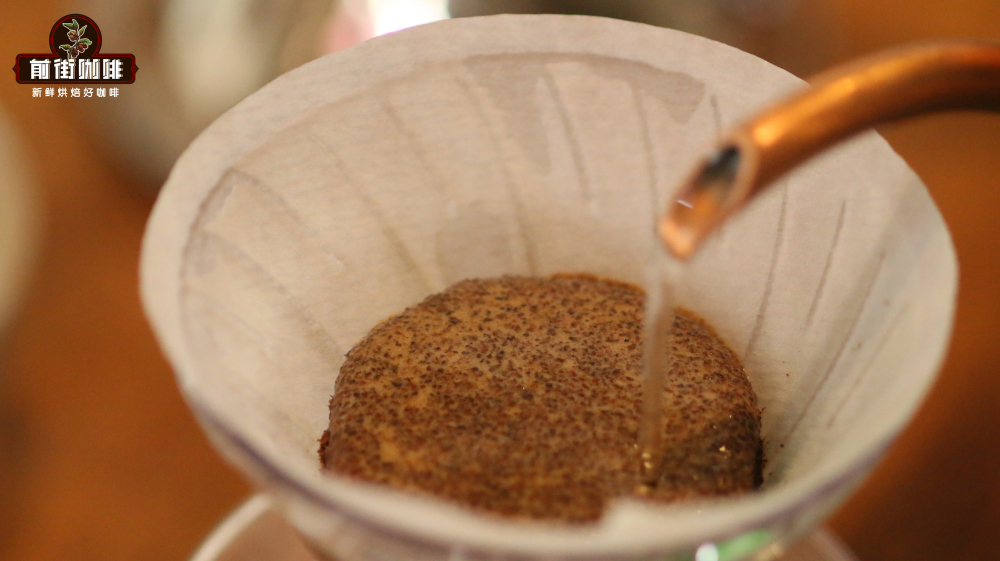
Start the timer, first pour 30g for blooming, with a 30-second bloom; second pour to 125g, with a 10-second interval, then pour the remaining water to 225g. Total extraction time is about 2 minutes. Wait until all the poured water passes through the coffee bed before removing the dripper. Remember to stir well before tasting!
Floral Queen coffee brewing flavor characteristics: berry and tropical fruit aromas, a sweet-and-sour juice sensation, and an oolong-tea-like sweet aftertaste.
FrontStreet Coffee Recommendation
If you enjoy the floral-and-fruit style of Floral Queen, FrontStreet Coffee's Geisha lineup is a natural next step, since the two are so often compared. FrontStreet Coffee's Panama Boquete Geisha is the entry point beginners prefer: it delivers the classic Panamanian orange-blossom honey character, an oolong-tea sensation, delicate fruit sweet-sourness, and clearly defined layers at an accessible price.
For the top of the range, FrontStreet Coffee offers the Esmeralda Red Label and Green Label Geisha. Red Label, officially "Esmeralda Special," is grown at 1600-1800 meters, must score above 90 points in every cupping, and every lot carries its own number, all beans in a lot coming from one plot—for instance the FrontStreet Coffee Red Label Geisha comes from the Harimiyo plot, so buyers can pick a batch to match a fine flavor preference. Green Label, originally "Private Collection," blends several plots rather than stressing detailed plot information, expressing the estate's signature high-altitude Geisha profile at a more affordable price.
FrontStreet Coffee also offers the Ethiopia Geisha Village Gold Label and Red Label. The Gold Label is the Gesha 1931 variety, making up 10% of Geisha Village's total output, its top non-auction production; the Red Label is the Gori Gesha variety, 15% of output, cupping at 88 points or above on the SCA 100-point scale as a single-terroir series with full traceability. For a more affordable introduction, FrontStreet Coffee's Strawberry Candy blends Costa Rican honey-processed coffee with Panamanian Geisha for delicate florals and sweet fruit.
Important Notice :
FrontStreet Coffee is a long-established specialty coffee roaster in Guangzhou China, selling freshly roasted beans from its own farm in Yunnan as well as dozens of carefully selected single-origin beans from around the world for both pour-over and espresso. The products deliver consistently excellent quality and great value, with shipping within 24 hours. Guangzhou's FrontStreet Coffee shop is recommended by many coffee lovers, and the beans are now available online at the Tmall 。
FrontStreet Coffee has moved to a new address:
FrontStreet Coffee Address: 315,Donghua East Road,GuangZhou
Tel:020 38364473
 Scan and follow the En Gafei WeChat official account. Please indicate that the reprint comes from "En Gafei".